Types of Sentences Teaching Resources
Teach the types of sentences in your English classes with printable worksheets, writing activities and more teacher-created and curriculum-aligned teaching resources!
Our teacher team has created this extensive collection of teaching resources to help students understand how to create various sentence types from simple to compound-complex and use the proper punctuation. Aligned to the Australian National curriculum, the English collection includes editable worksheets and teaching presentations and more to save teachers time on lesson planning.
Created by expert teachers, each resource in this grammar collection has been carefully reviewed and curated by our team. That means it's ready to use in the classroom! You'll even find editable resources, plus differentiated options.
New to teaching sentence types, or just looking for fresh ways to engage your students? Read on for a primer from our teaching team!
What Are the 4 Types of Sentences?
So what types of sentences do kids typically learn about in primary school, and why do they matter? It's often said there are four basic types, and it's technically true. But the four types you're teaching will depend on the year level you're teaching!
Sentence Types for Early Years
Students in Year 1 will typically learn one batch of sentence types, broken out by their function and punctuation type.
Declarative Sentences
Declarative sentences make statements or express facts, opinions, or information. This sentence type also ends with a period.
Interrogative Sentences
An interrogative sentences asks questions. They end with a question mark and start with either an auxiliary verb or one of the following question words:
- What
- When
- Why
- Where
- Who
- How
Imperative Sentences
An imperative sentence gives commands, instructions, or requests. They can be phrased in a way that sounds polite or forceful. Imperative sentences usually lack a subject because the pronoun you is implied.
Exclamatory Sentences
The final type of sentence taught at this grade level is exclamatory. These convey strong emotions, surprise, excitement or emphasis. They often begin with "What" or "How" and end with an exclamation mark.
Sentence Types for Middle and Upper Years
Middle and upper year students learn more complex sentence types, including a type that's literally named complex!
Simple Sentence
A simple sentence contains one independent clause and expresses a complete thought.
A good starting point for teaching sentence types, these sentences all contain a subject and a predicate, and they provide the foundation for understanding the basic structure of a sentence.
Compound Sentence
Compound sentences contain two or more independent clauses, and a coordinating conjunction joins them together. This type offers an entrance into discussing the different comma rules, as compound sentences always need a comma inserted before the conjunction.
Teaching compound sentences also allows students to explore relationships between ideas by connecting two or more independent clauses, and expressing contrasting, additive or causal relationships.
Complex Sentence
A complex sentence contains one independent clause and at least one dependent clause.
This type not only helps students better understand the difference between independent and dependent clauses, but it can help kids better understand subordination. With complex sentences, students learn to express cause and effect and conditionality in their writing.
Compound-Complex Sentence
A sentence that contains two or more independent clauses and at least one dependent clause is considered a compound-complex sentence.
These help our students express more intricate relationships between ideas.
- Plus Plan
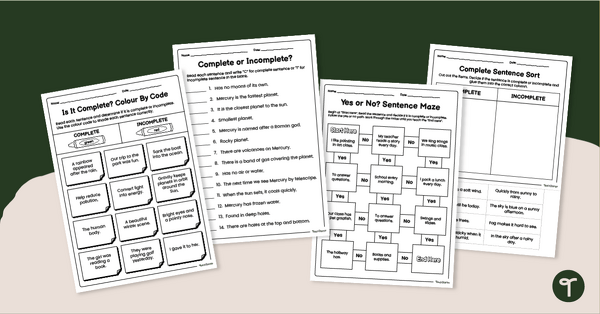
Complete or Incomplete Sentences Worksheet
Download our printable Complete or Incomplete Sentences Worksheet Pack to help your students practise identifying examples of complete and incomplete sentences.
- Plus Plan
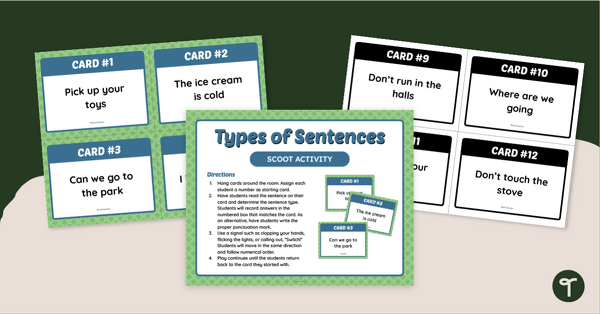
Types of Sentences Game - Year 1-2 SCOOT!
Play a round of Types of Sentences SCOOT! To help your students practise identifying types of sentences.
- Plus Plan
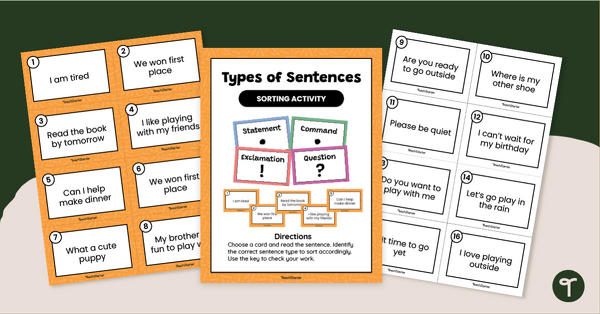
Sort It Out! - Types of Sentences Practice Activity
Practise sorting and matching examples of the four types of sentences (command, statement, question, exclamation) with a Year 1 Types of Sentences Practice Game.
- Plus Plan
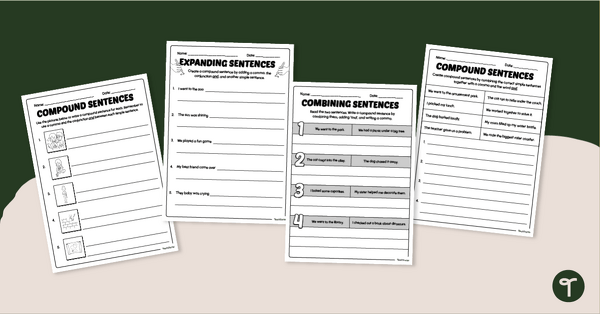
Combining Sentences With 'And' Worksheets
Use these printable Combining Sentences With ‘And’ Worksheets to help your students practise using the conjunction ‘and’ to form compound sentences.
- Free Plan
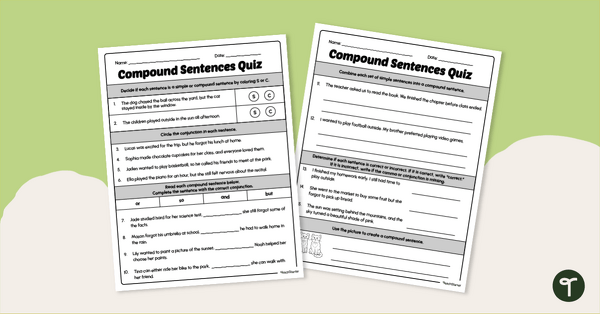
Compound Sentences Quiz
Assess your students ability to identify, write, and edit compound sentences with a printable Compound Sentence Quiz.
- Plus Plan
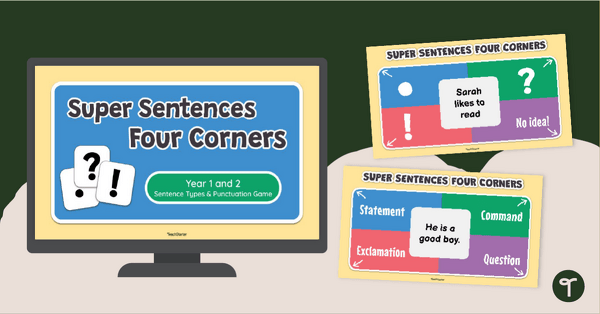
Sentence Types & Punctuation for Grade 1 - Four Corners Game
Review sentence types and punctuation for grade 1 students with an engaging Four Corners Punctuation Game.
- Plus Plan
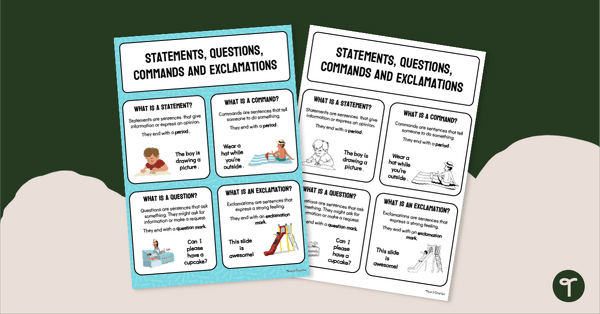
Statement, Question, Command, Exclamation – Poster
Discover the features of statement, question, command, and exclamation sentences with a printable Types of Sentences poster.
- Plus Plan
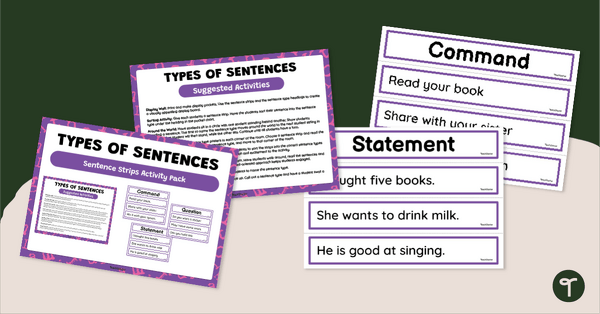
Types of Sentences - Sentence Strips Activity Pack
Use our Sentence Types - Sentence Strip Activity pack to teach your students about statements, commands, questions, and exclamation sentences.
- Plus Plan
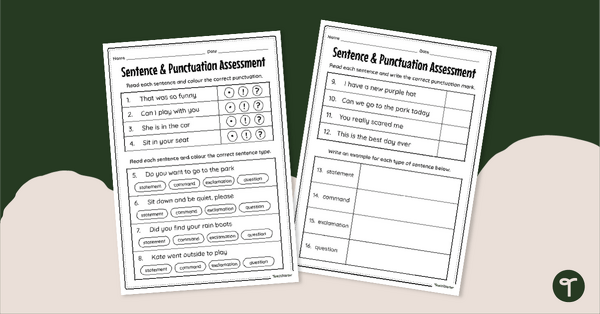
Sentence Types Quiz (Year 1)
Assess your students ability to identify types of sentences and their matching punctuation with a printable Sentence Types Quiz for Year 1.
- Plus Plan
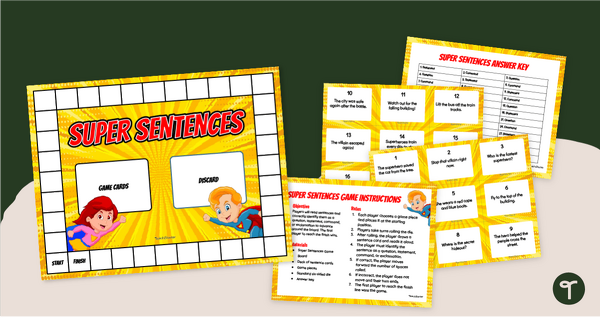
Super Sentence Game - Statement, Command, Exclamation & Question
Turn sentence structure practice into an exciting game with the Super Sentence Game for Year 1 and 2.
- Plus Plan
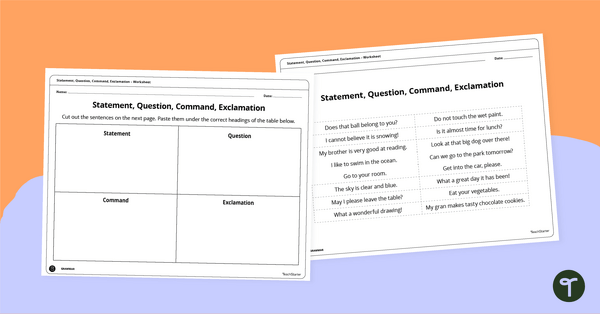
Statement, Question, Command, Exclamation Cut and Paste Worksheet
Identify statement, command, question, and exclamation sentences with a Types of Sentences Cut and Paste worksheet for Year 2.
- Free Plan
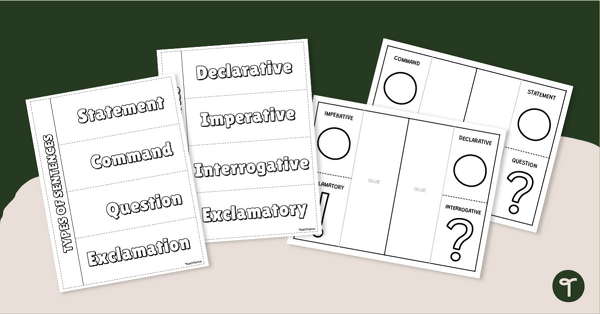
4 Types of Sentences Flipbook
Create a helpful types of sentences flipbook with our Differentiated 4 Kinds of Sentences foldable graphic organisers.
- Plus Plan
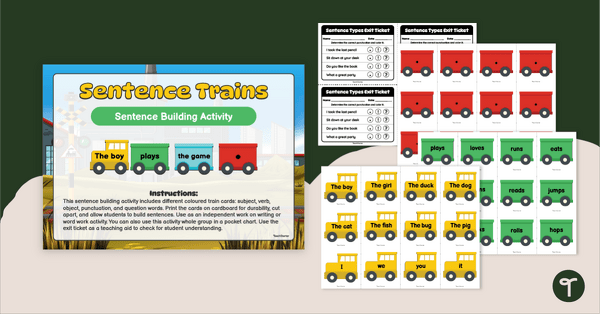
Sentence Trains - Sentence Building Activity
Teach your year 1 students about sentence types and punctuation with Sentence Trains, a fun Sentence Building Activity.
- Plus Plan
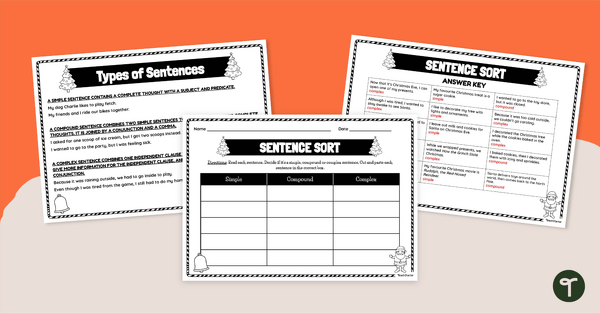
Christmas - Simple, Complex, and Compound Sentence Sort
Read, identify and write simple, compound and complex sentences with a dash of Christmas.