ACELT1610
Recognise that ideas in literary texts can be conveyed from different viewpoints, which can lead to different kinds of interpretations and responses
Elaborations
- identifying the narrative voice (the person or entity through whom the audience experiences the story) in a literary work, discussing the impact of first person narration on empathy and engagement (Skills: Literacy, Critical and Creative Thinking, Personal and Social Capability)
- examining texts written from different narrative points of view and discussing what information the audience can access, how this impacts on the audience's sympathies, and why an author might choose a particular narrative point of view (Skills: Literacy, Critical and Creative Thinking, Personal and Social Capability)
- examining the narrative voice in texts from Aboriginal and Torres Strait Islander traditions, which include perspectives of animals and spirits, about how we should care for the Earth, for example reflecting on how this affects significance, interpretation and response (Skills: Literacy, Critical and Creative Thinking, Intercultural Understanding)
- Plus Plan
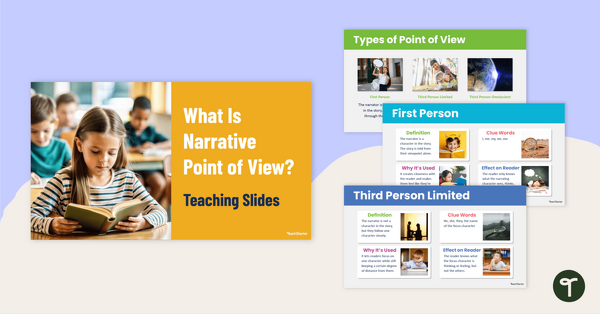
What Is Narrative Voice? Teaching Slides
Answer the question “What is narrative voice?” with this engaging slide deck that helps students understand first person, third person limited and third person omniscient narration.
- Plus Plan
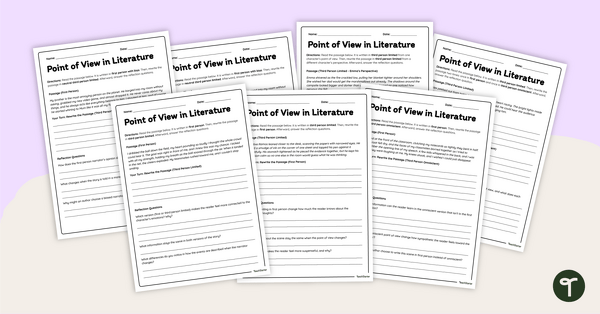
Voice in Narrative Writing Prompts
Explore voice in narrative with this set of engaging worksheets that require students to write literary passages in different points of view.
- Plus Plan
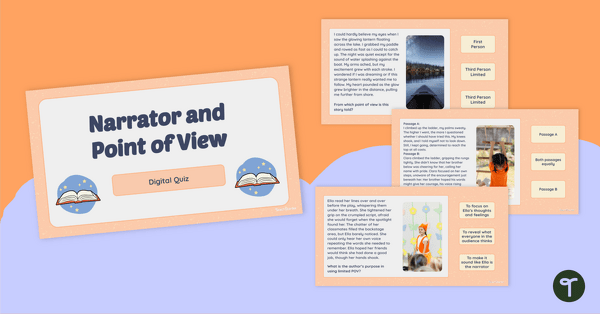
Narrator and Point of View Digital Quiz
Discover how narrator and point of view can be taught in a fun and engaging way with this interactive quiz designed to help primary students become confident readers and critical thinkers.
- Plus Plan
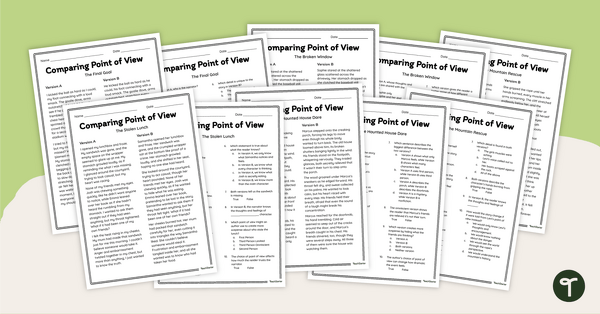
Comparing Narrative Voice Worksheets
Teach how narrative voice shapes the reader's experience of texts with this set of worksheets where students compare passages written from different points of view.
- Plus Plan
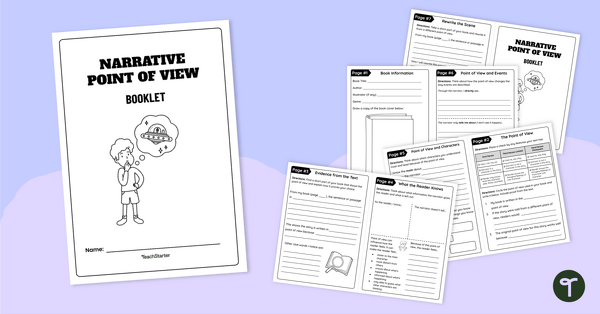
Point of View in a Narrative Booklet
Explore point of view in a narrative with this engaging mini book that helps students analyse the narrative voice of a book they have recently read.
- Plus Plan
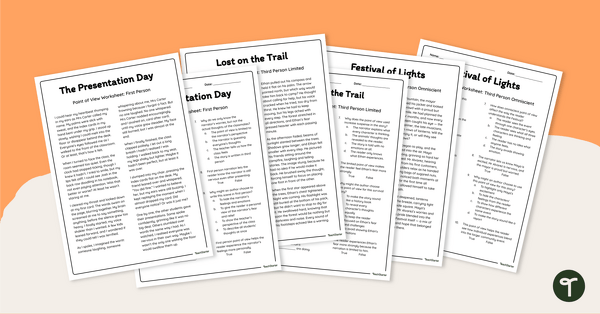
Narration and Point of View Worksheets
Use these narration and point of view comprehension passages to help students explore different narrative voices in literary texts.
- Plus Plan
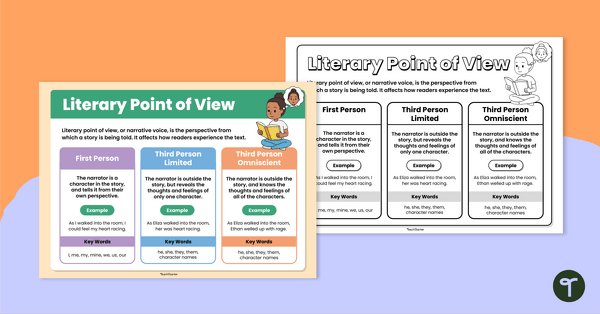
Types of Point of View in Literature Poster
Teach the types of point of view in literature with this classroom poster that explains first person, third person limited, and third person omniscient narration.
- Plus Plan
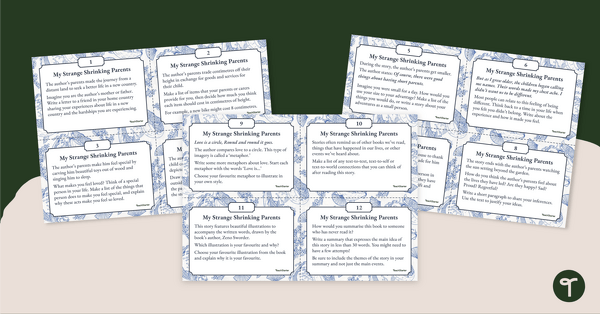
My Strange Shrinking Parents – Literature Task Cards
Deep dive into the characters and themes of Zeno Sworder’s highly acclaimed book, My Strange Shrinking Parents, with this set of 12 literature task cards.