Weather Teaching Resources
Browse printable weather worksheets, activities, science vocabulary resources, experiments for kids, resources about floods and natural disasters and more ideas for teaching students in primary school about the weather outside your classroom and around the world.
This collection of curriculum-aligned weather teaching resources was created by teachers with teachers in mind. That means every printable and digital resource has been carefully checked by a member of our expert teacher team to ensure it's classroom-ready, so you save time on your lesson plans!
Looking to get started on the weather, or just need more ways to make this science topic more engaging in your classroom? Read on for a primer from our teacher team!
What Is Weather? A Kid-Friendly Definition
When it comes to defining weather for students, here's a kid-friendly definition you can use to explain what weather is:
Weather refers to the conditions in the Earth's atmosphere, such as temperature, wind, precipitation and cloudiness. The weather outside your classroom or home is affected by many things, including the amount of sunlight reaching the Earth's surface, the rotation of the Earth and the presence of water vapour in the atmosphere.
Weather can change rapidly, and it can be unpredictable, so it's important to stay informed about current weather conditions and be prepared for different types of weather.
What Is Weather Science?
Meteorology — also known as weather science — is the study of the Earth's atmosphere and the weather conditions that occur within it. This includes studying temperature, air pressure, wind, precipitation and other atmospheric phenomena.
Weather scientists known as meteorologists use a variety of tools, such as satellites, radar and weather balloons, to collect data about the atmosphere and predict what the weather will be like in the future. These predictions are called weather forecasts and help us decide what to wear or how to plan for outdoor activities that might be affected by rain or excessive heat.
Weather science isn't just important for telling us what to wear, however! It helps us prepare for extreme weather events, provides important information for transportation and aviation safety and helps scientists better understand the Earth's climate.
Students can act as amateur meteorologists as they learn to record weather information to keep track of what is going on outside of your classroom, including relative temperatures such as hot or cold, clear or cloudy, calm or windy and rainy or icy!
Is Climate the Same as Weather?
The two words are often used interchangeably, but it's important to impress upon your students that weather and climate are two very different things!
Weather, as we already explained, deals with the conditions of Earth's atmosphere at any given time. It can be termed as the short-term atmospheric conditions of a specific place — such as temperature, wind, humidity, precipitation and cloud cover — over a short period of time, usually a few hours or days.
Climate, on the other hand, is a look at those conditions over a long period of time. It can be termed as the long-term average weather patterns of a specific region or location, usually over a period of at least 30 years.
What Do Kids Need to Learn About Weather?
Weather is a broad, broad topic — to say the least! So what's going on during primary school weather lessons? Before kids move on to high school, they should have a basic understanding of the different elements that make up the weather and how they interact with each other. They'll also need to understand weather forecasts and how to use them to plan.
With that in mind, here are the biggest topics to cover:
- Temperature — Learning how to measure temperature using a thermometer and how temperature changes over time, as well as the difference between Celsius and Fahrenheit, are part of weather lessons at this stage of kids' education.
- Precipitation — Young students learn about different types of precipitation — such as rain, snow, sleet and hail — and how they form in the atmosphere.
- Wind — Wind direction and speed, how wind is measured and how it affects the weather should all be covered before kids head off to secondary school.
- Clouds — From cumulus to strato-form, students learn about the different types of clouds and how they form plus how clouds affect the weather.
- Extreme Weather — Extreme weather events such as hurricanes, floods and thunderstorms are typically part of the science curriculum at this stage, and depending on where you are teaching instruction on how to stay safe during these events may well be on the agenda.
- Plus Plan
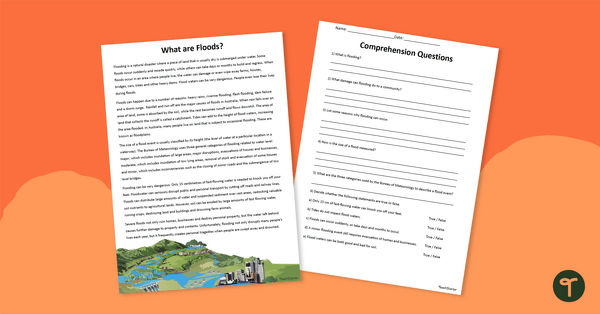
What Are Floods? Comprehension Worksheet
Read and learn about flooding with a printable reading comprehension worksheet.
- Plus Plan
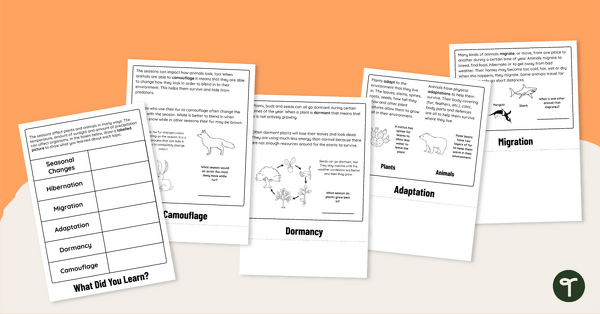
Seasons Affect Plants and Animals Flipbook
Use this fun flipbook to teach students how the seasons affect plants and animals while allowing them to connect to prior knowledge by answering questions on each page.
- Plus Plan
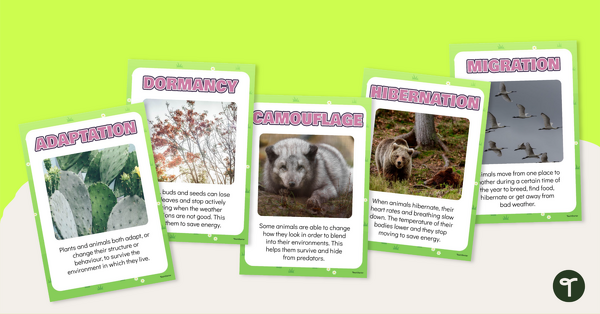
How Seasons Affect Plants and Animals Poster Set
Display these informative posters in your Grade One classroom to remind students of the five ways animals and plants adapt to seasonal changes in their environment.
- Plus Plan
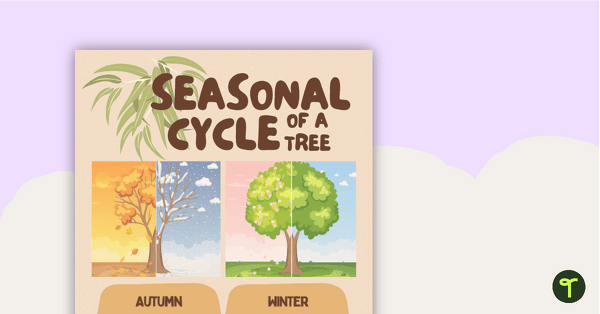
Seasonal Cycle of a Tree Poster
Help your students investigate seasonal changes undertaken by trees throughout the year with this infographic-style poster.
- Plus Plan
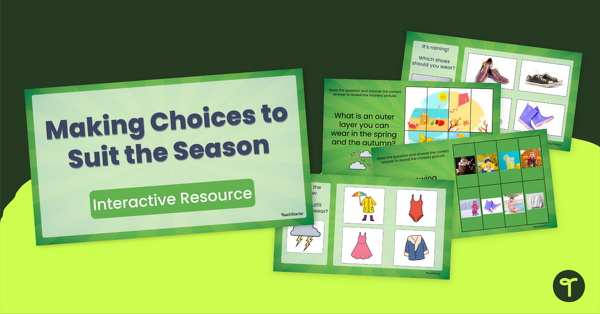
Seasons, Weather and Our Choices Interactive Activity
Complete this whole-class interactive activity to teach students the connection between the seasonal conditions and their daily choices.
- Plus Plan
Seasonal Change Display Banner Lettering
Create a science display board for your Seasons unit, beginning with this visually engaging Seasonal Changes banner.
- Plus Plan
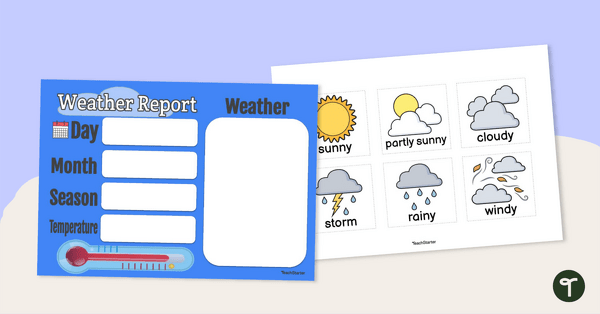
Classroom Weather Chart for Identifying Environmental Conditions
Use this fun classroom weather chart in your morning meetings to help students visualise the weather and changes in the environment due to the changing seasons.
- Plus Plan
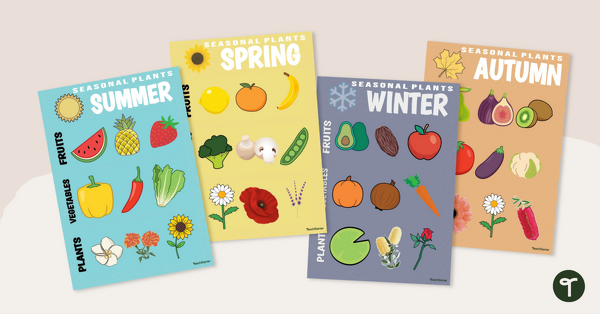
Seasonal Changes in Plants Posters
Display these seasonal plants posters to show your students the variations in fruit, vegetable and plant growth across Earth’s four seasons.
- Plus Plan
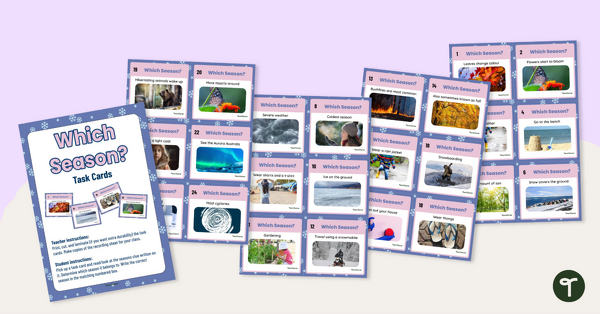
Season Characteristics Task Cards
Give your students the clues and watch them select the mystery season with this set of 24 task cards.
- Plus Plan
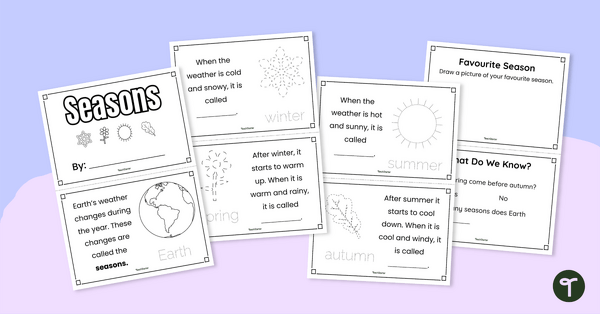
Four Seasons Mini Book
Make learning about the four seasons fun with this marvellous minibook for your Foundation students!
- Plus Plan
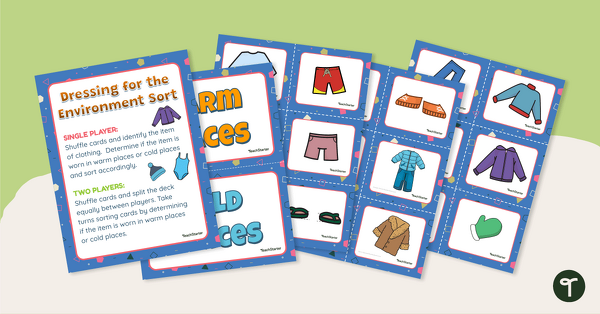
Dressing for the Physical Environment Sorting Activity
Help children learn about dressing for the environment by sorting clothing items into categories for warm climate and cold climate.
- Plus Plan
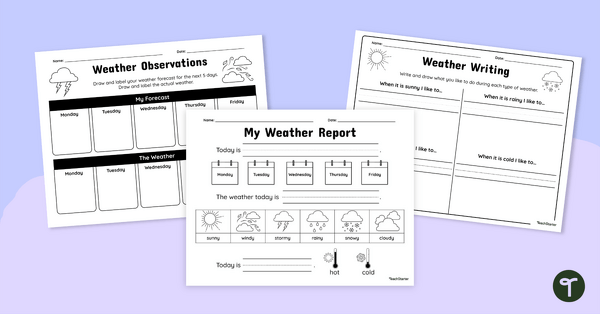
Wonderful Weather – Foundation and Year 1 Worksheets
Make weather predictions, create a weather report and write about the weather with this set of printable worksheets.
- Plus Plan
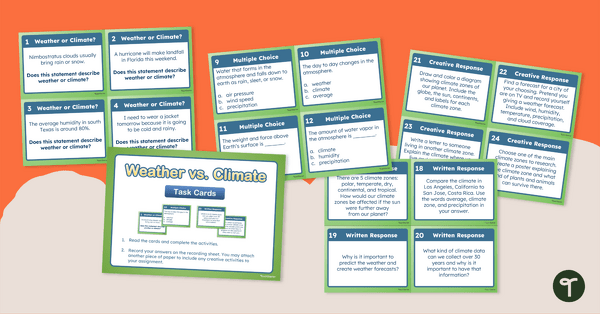
Weather vs. Climate – Task Cards
Differentiate between weather and climate by answering questions and responding to writing prompts and with this set of 24 task cards.
- Plus Plan
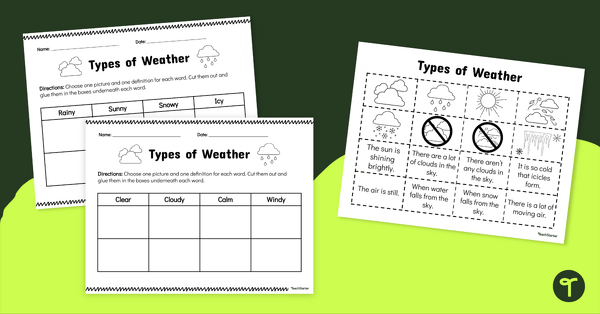
Types of Weather – Cut and Paste Worksheet
Use this cut-and-paste science worksheet to match a picture and description with each weather condition.
- Plus Plan
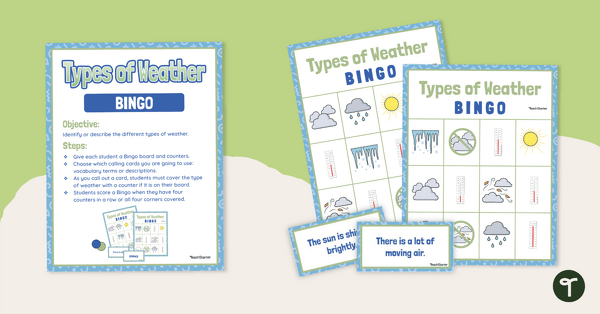
Types of Weather Bingo
Identify basic weather vocabulary terms such as windy, cloudy, snowy, cold, etc., with an exciting game of Bingo!
- Free Plan
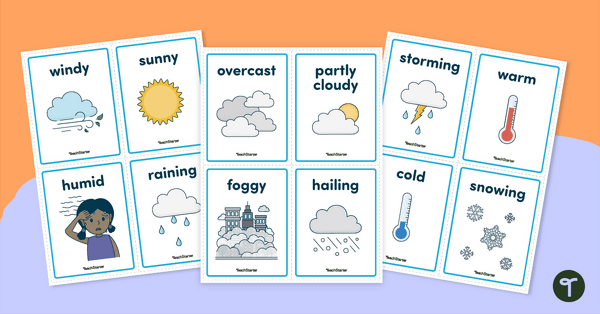
Flashcards About Weather - Printable Picture Cards
Use this set of 12 flashcards about weather to explore words that cover terms such as sunny, humid, overcast and foggy.
- Plus Plan
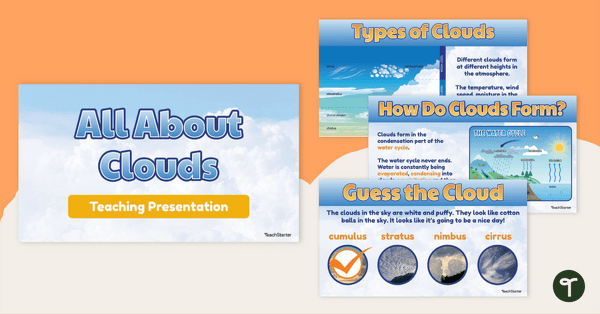
All About Clouds PowerPoint
Teach your students about the different types of clouds with this 19-slide teaching presentation.
- Plus Plan
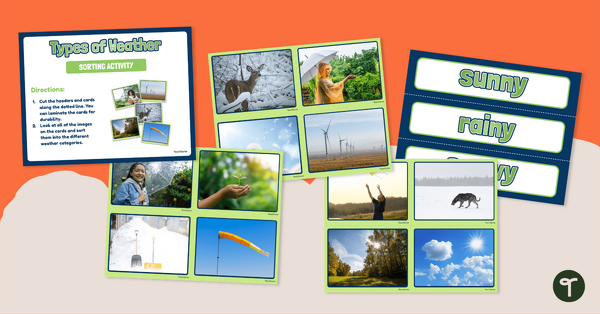
Types of Weather – Sorting Activity
Observe and categorise pictures showing different types of weather with this sorting activity.
- Free Plan
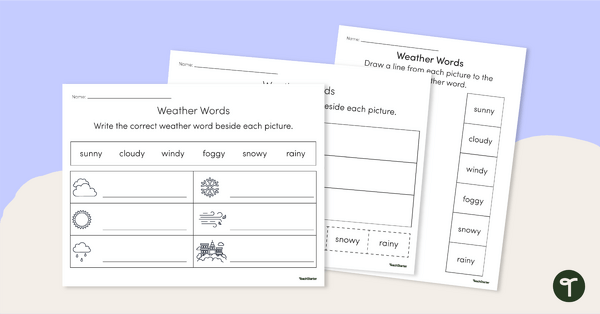
Weather Words – Worksheet Pack
A set of worksheets to use when teaching weather vocabulary to your students.
- Plus Plan
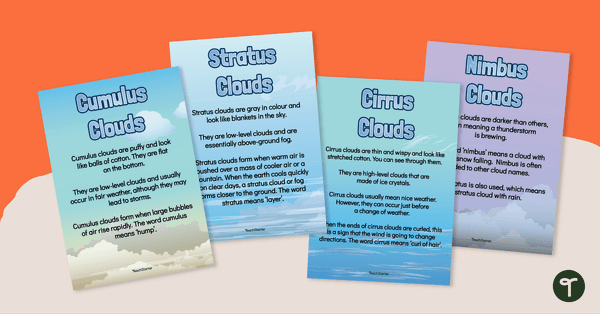
Types of Clouds – Poster Pack
Learn about nimbus, cirrus, stratus, and cumulus clouds with this set of 4 printable cloud posters.
- Free Plan
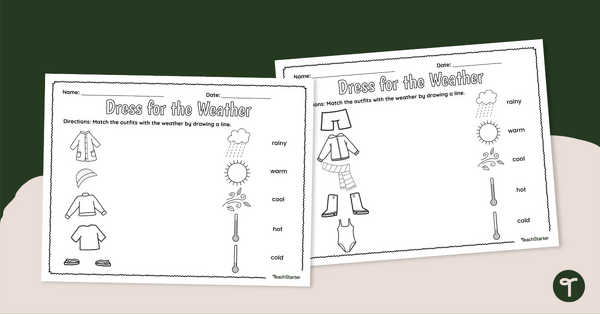
Dress for the Weather Worksheet
Identify proper clothing choices for different weather conditions with this worksheet.
- Free Plan
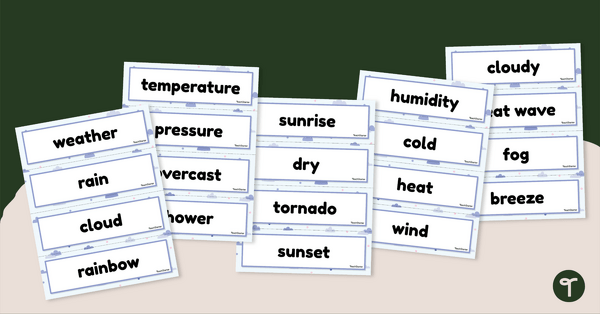
Weather Word Wall Vocabulary
Use this teacher-created weather resource to teach weather vocabulary. Build a weather word wall with your students during your weather lessons.
- Plus Plan
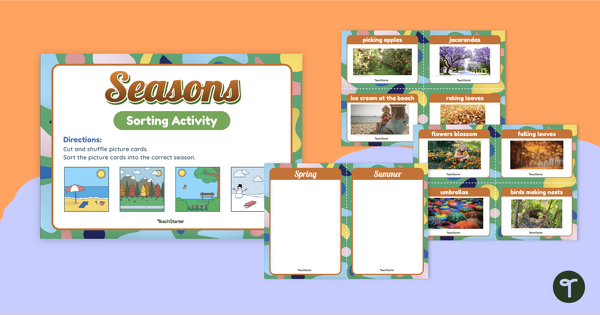
Seasons of the Year Sorting Activity
Year 1 students can identify proper clothing, activities and objects for different types of weather with this four seasons activity.
- Plus Plan
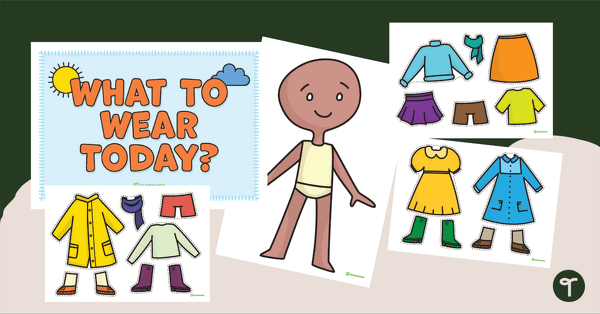
What to Wear Today? – Classroom Display
An interactive classroom display where students update the clothes the character is wearing each day based on the weather.
- Plus Plan
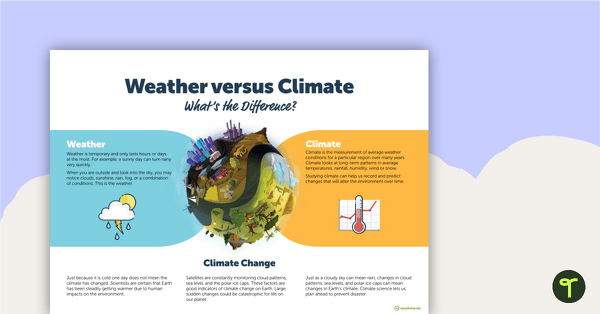
Weather versus Climate Poster
A poster explaining the difference between weather and climate.
- Plus Plan
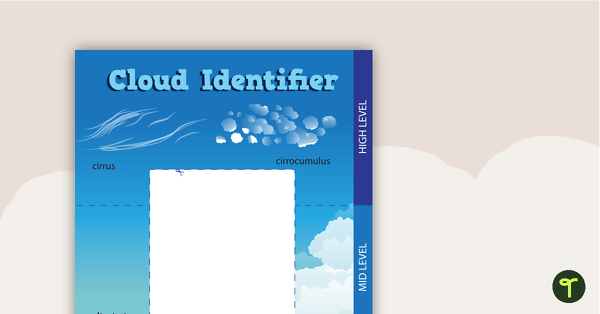
Types of Clouds - Identifier
Help your students identify the clouds in the sky with this cloud identifier.
- Free Plan
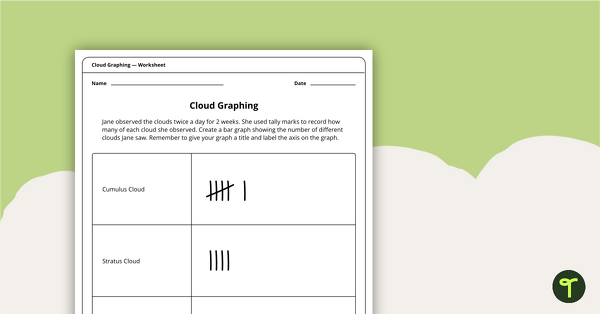
Cloud Graphing Activity
A worksheet to use when graphing cloud observations.