
Get your students to compare assertions with this engaging set of worksheets designed to help students distinguish between strong and weak persuasive writing.
Teach Your Students to Compare Assertions
Did you know that not all opinions are created equal? Some opinions are presented without any supporting evidence – these are called ‘bare assertions’, and they are not the type of opinions we want to see in our students’ persuasive writing! We want our students to write supported assertions, that is, opinions backed by solid evidence. The trick is knowing one from the other!
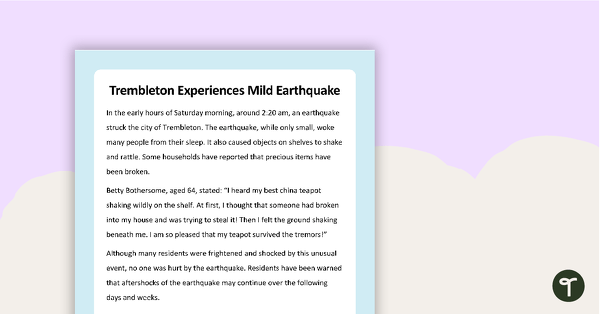
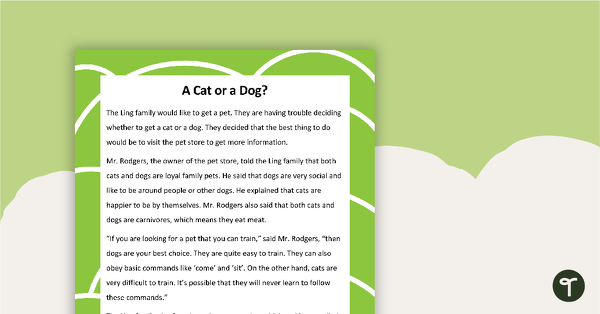
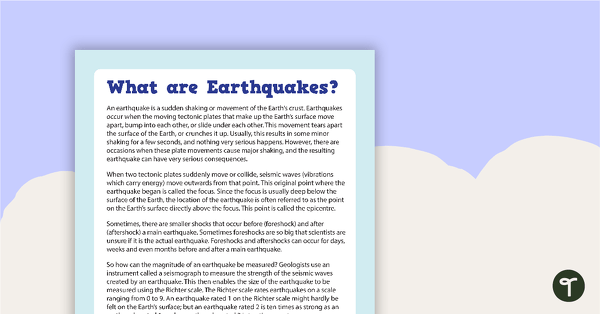
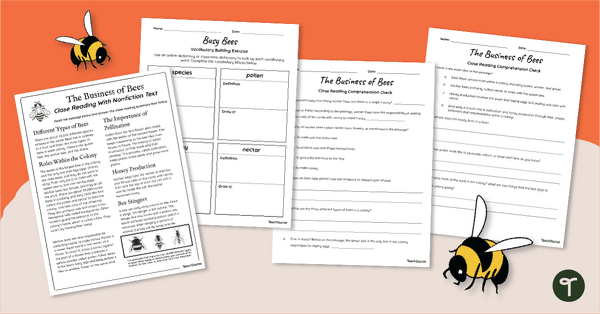
This resource has been designed by our team to help your students distinguish between weak, opinion-based arguments and strong, evidence-based ones. The pack includes three worksheets where students compare two persuasive passages written with differing levels of opinion. After reading the texts, students answer questions that help them identify the key differences, evaluate the strength of each argument and reflect on what makes a persuasive text effective.
The texts featured in this resource are:
- School Uniforms
- Homework
- Technology in the Classroom
This resource downloads as a black-and-white PDF or editable Google Slides file. Answers are also included in the download. By engaging in this activity, learners will develop critical reading skills, learn to assess the credibility of written arguments, and gain confidence in applying persuasive writing techniques.
A Guide to Using This Persuasive Writing Resource
This resource makes it easy to introduce the concept of comparing assertions in a structured and supportive way. Here’s how you might use it in a lesson:
- Introduce the concept – Discuss what makes an argument persuasive. Define ‘assertions’ and explain the difference between strong and weak ones.
- Distribute the worksheet – Hand out one of the three worksheets to each student or pair. Read both texts aloud or have students read independently.
- Guided analysis – Work through the questions, prompting students to highlight evidence and opinion. Encourage them to justify their answers using examples.
- Group reflection – Discuss which text was more persuasive and why. Invite students to share thoughts and consider how they might improve the weaker text.
- Extension activity – Have students write their own persuasive paragraph using strong assertions and evidence.
This step-by-step approach ensures students are supported while developing essential literacy skills.
Download These Comparing Assertions Worksheets
Getting started with this resource is simple. Use the Download button above to access the full set of passages, accompanying questions and associated answer pages.
As this resource contains answer pages, we recommend printing one copy of the entire file, then selecting and removing the pages you wish to photocopy for the students.
With three ready-to-use worksheets included, you’ll have enough material to cover whole-class lessons, small-group practice or individual tasks.
This resource was created by Kaylyn Chupp, a teacher and a Teach Starter collaborator.
Teaching Persuasive Writing? We Have You Covered!
Looking for more resources to use when exploring persuasive writing with your students? Click below to browse a sample from our extensive library.
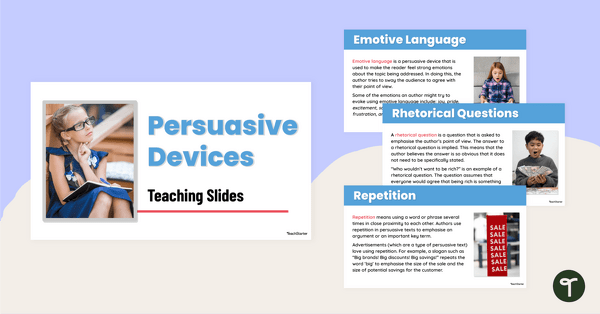
teaching resource
Persuasive Devices Teaching Slides
Explore persuasive language devices with your students using this detailed and age-appropriate slideshow perfect for your persuasive writing unit.
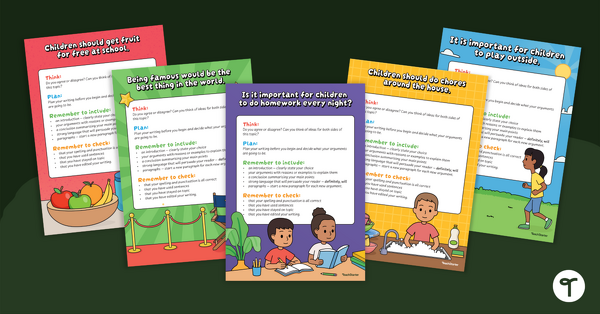
teaching resource
5 Persuasive Writing Prompts
Inspire your students through these relevant persuasive writing prompts.

0 Comments
Write a review to help other teachers and parents like yourself. If you'd like to request a change to this resource, or report an error, select the corresponding tab above.