ELAR 2.11
Composition: listening, speaking, reading, writing, and thinking using multiple texts--writing process. The student uses the writing process recursively to compose multiple texts that are legible and uses appropriate conventions. The student is expected to:
- (1) plan a first draft by generating ideas for writing
such as drawing and brainstorming;
- (A) develop drafts into a focused piece of writing by:
- (B) organizing with structure; and
- (i) developing an idea with specific and relevant details;
- (ii) revise drafts by adding, deleting, or rearranging words, phrases, or sentences;
- (C) edit drafts using standard English conventions, including:
- (D) complete sentences with subject-verb agreement;
- (i) past, present, and future verb tense;
- (ii) singular, plural, common, and proper nouns;
- (iii) adjectives, including articles;
- (iv) capitalization of months, days of the week, and the salutation and conclusion of a letter;
- (v) adverbs that convey time and adverbs that convey place;
- (vi) prepositions and prepositional phrases;
- (vii) pronouns, including subjective, objective, and possessive cases;
- (viii) coordinating conjunctions to form compound subjects and predicates;
- (ix) end punctuation, apostrophes in contractions, and commas with items in a series and in dates; and
- (x) correct spelling of words with grade-appropriate orthographic patterns and rules and high-frequency words; and
- (xi) publish and share writing.
- Plus Plan
Procedural Texts - Language Features
A 60 minute lesson in which students will identify and explore the language features of procedures.
- Plus Plan
Personal Recounts - Independent Writing
A 60 minute lesson in which students will independently construct a simple personal recount about a familiar experience.
- Plus Plan
Adding Detail Using Describing Words
A 60 minute lesson in which students will investigate how descriptive words, such as adjectives, can add detail to a personal recount.
- Plus Plan
Action Verbs in Simple Past Tense
A 60 minute lesson in which students will investigate how action verbs can be expressed in simple past tense.
- Plus Plan
Sequencing Ideas Using Time Connectives
A 60 minute lesson in which students will investigate how events can be sequenced using time connectives.
- Plus Plan
Eat Your Peas - Independent Writing
A 60 minute lesson in which students will independently construct a simple opinion piece about a familiar situation.
- Plus Plan
What Pet Should I Get? - Shared Writing
A 60 minute lesson in which students will construct a simple opinion piece on a familiar situation in pairs.
- Plus Plan
Strong Words Make Strong Opinions
A 60 minute lesson in which students will explore how word choice can be used to strengthen an opinion.
- Plus Plan
Opinion Piece Language Features
A 60 minute lesson in which students will identify and explore the language features of opinion pieces.
- Plus Plan
Let's Build a Sentence
A 60 minute lesson in which students will write simple and compound sentences.
- Plus Plan
Building Compound Sentences
A 60 minute lesson in which students will identify that a compound sentence is made up of two or more main clauses joined together by a conjunction.
- Plus Plan
Using Adjectives to Describe a Character
A 60 minute lesson in which students will use adjectives to describe the personality and appearance of characters.
- Plus Plan
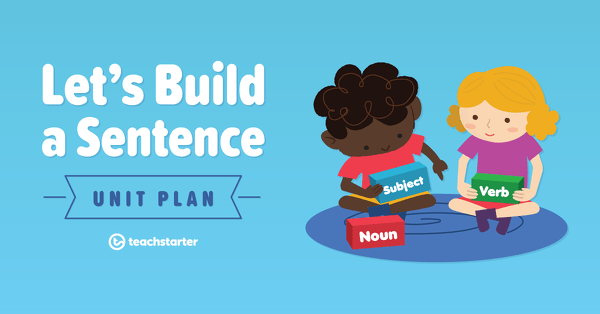
Using Adjectives
A 60 minute lesson in which students will identify that an adjective provides information about a noun and is often called a describing word.
- Plus Plan
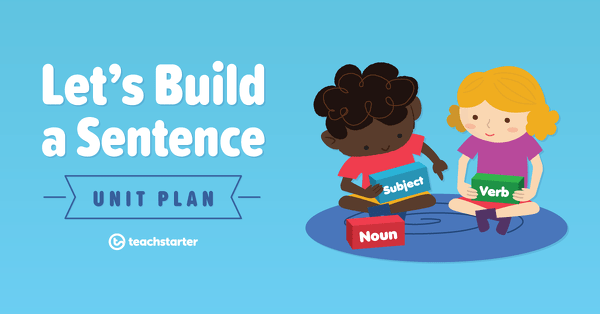
Building Simple Sentences
A 60 minute lesson in which students will build a simple sentence.
- Plus Plan
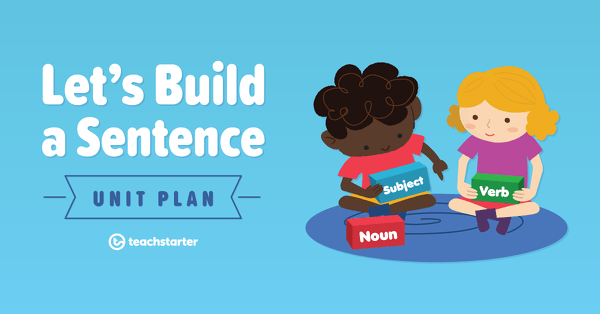
Capital Letters and Punctuation - Fix It!
A 60 minute lesson in which students will identify that capital letters and punctuation are used to build sentences.
- Plus Plan
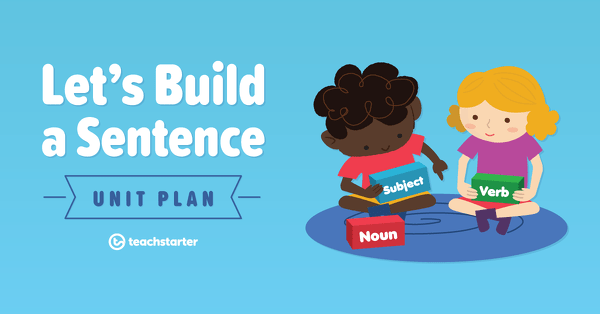
Capital Letters and Punctuation
A 60 minute lesson in which students will identify that capital letters and different types of punctuation are used to build sentences.
- Plus Plan
Common and Proper Nouns
A 60 minute lesson in which students will identify that a noun is a naming word used for a person, place, or object.
- Plus Plan
Very Important Verbs
A 60 minute lesson in which students will identify that a verb describes an action in clauses or sentences.
- Plus Plan
What is a Sentence?
A 60 minute lesson in which students will identify that a simple sentence is a group of words that contains a subject, a verb, and expresses a complete thought.