Victorian Curriculum
VC2E6LA02
understand the uses of objective and subjective language, and identify bias
- identifying language choices that evoke emotion and judgements in direct and indirect ways, and how they are used to persuade different audiences to take a position and/or action
- understanding when to share feelings and opinions (for example, in a personal recount) and when to remain more objective (for example, in a factual recount)
- differentiating between reporting facts (for example, in a factual recount or unedited photograph) and providing a commentary (for example, in an editorial)
Show more
3
teaching resources for those 'aha' moments
- Plus Plan
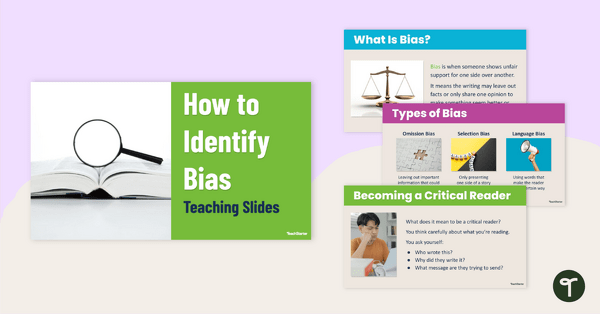
How to Identify Bias Teaching Slides
Teach your students how to identify bias in writing with this engaging slide deck, designed to help upper primary students develop critical reading skills.
- Plus Plan
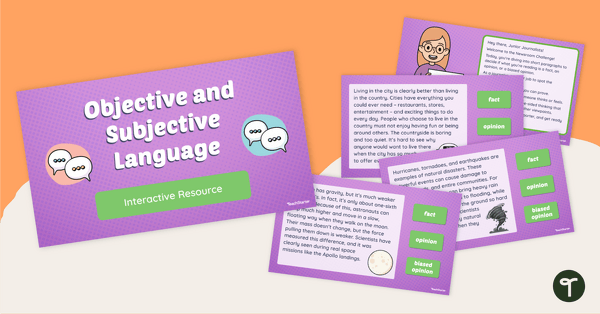
Objective and Subjective Language Digital Quiz
Spark deeper thinking about objective and subjective language with this interactive digital quiz that helps students distinguish between fact, opinion and biased opinion in real-world texts.
- Plus Plan
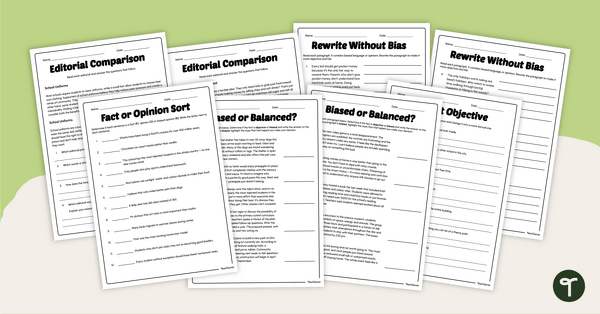
Bias in Writing Worksheet Pack
Teach bias in writing with ease using this engaging worksheet pack designed to help upper primary students recognise and analyse bias across different texts.