Victorian Curriculum
VC2E6LA06
understand how the choice of verb, elaborated tenses and a range of adverb groups can expand and sharpen ideas
- knowing that the simple present tense is typically used to talk about present states (for example, ‘He lives in Darwin.’) or actions that happen regularly in the present (for example, ‘He watches television every night.’) or that represent ‘timeless’ happenings, such as in informative reports (for example, ‘Bears hibernate in winter.’)
- knowing that there are various ways in English to refer to future time, such as using the auxiliary ‘will’ (for example, ‘She will call you tomorrow.’), using the present tense (for example, ‘Tomorrow, I leave for Hobart.’) and using adverbials of time (for example, ‘She arrives in the morning.’)
- using precise verbs (for example, ‘slice’, ‘dice’, ‘fillet’ and ‘segment’) rather than general words (for example, ‘cut’)
Show more
5
teaching resources for those 'aha' moments
- Plus Plan
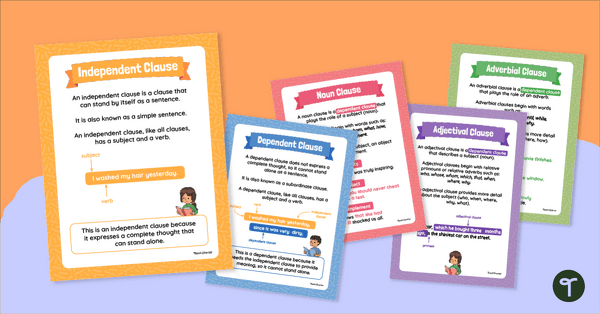
Types of Clauses Posters
Introduce your students to the types of sentence clauses with a set of printable Types of Clauses Anchor Charts.
- Plus Plan
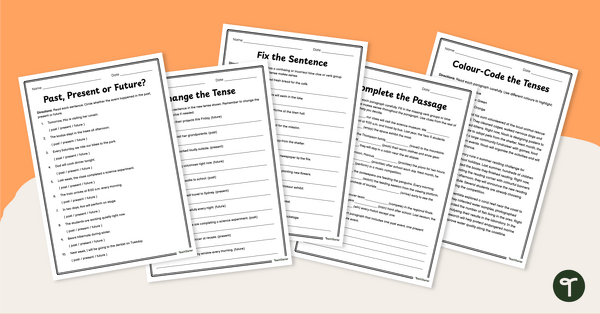
Verb Tense Consistency Worksheet Pack
Download this verb tense consistency worksheet pack to help your students use past, present and future tenses correctly in sentences and paragraphs.
- Plus Plan
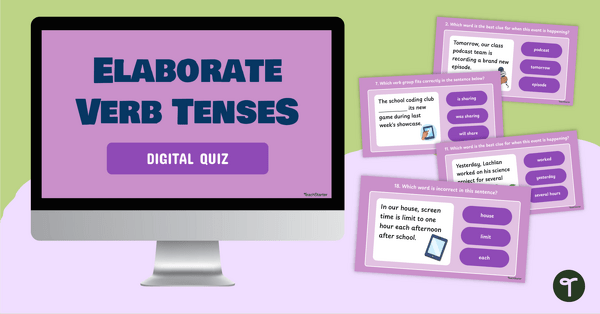
Elaborate Verb Tenses Digital Quiz
Download this engaging verb tenses quiz to help your students confidently identify and apply past, present and future forms in real sentences.
- Plus Plan
Writing Narrative Texts Unit Plan - Year 5 and Year 6
This English unit addresses the narrative text type; specifically, how to write an engaging narrative text.
- Plus Plan
Narrative Texts - Language Features
A 60 minute lesson in which students will identify and explore the language features of narrative texts.