VC2S4U04
solids, liquids and gases have observable properties; adding or removing heat energy leads to a change of state between solids, liquids and gases
- investigating observable changes of state between solids and liquids, such as investigating ice melting or water freezing in a sealed bag and explaining their observations, or using ice cubes, butter or chocolate to explore how changes of state involve the removal or addition of heat
- holding a balloon near a heat source and observing its inflation, then placing the balloon in a bucket of iced water to observe it deflating
- demonstrating a chemical reaction that shows a change in state, for example reacting baking soda (a solid) with vinegar (a liquid) in a bottle and showing the production of carbon dioxide (a gas) by placing a balloon over the mouth of the bottle and watching the balloon inflate
- observing the properties of substances and classifying the substances as solids (which hold their shape), liquids (which take the shape of their containers) or gases (which expand to fill the available space in a container)
- investigating how changes of state in some materials used by Aboriginal and/or Torres Strait Islander Peoples are important for their use (e.g. beeswax and resins are heated to increase their malleability and subsequently used in the manufacture and repair of implements); to attach decorative materials to the hair, body and regalia; to waterproof items; and to improve the durability and longevity of such items
- exploring how changes from solid to liquid and from liquid to solid can help in the recycling of materials such as glass, aluminium and plastics
- Plus Plan
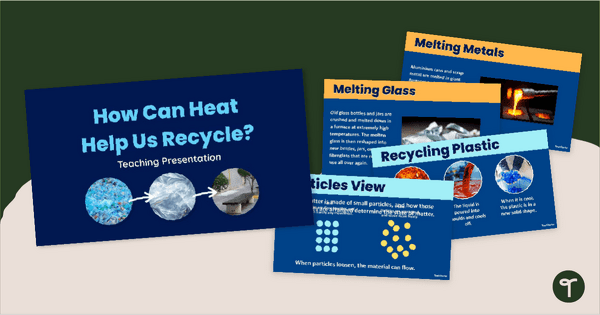
Using Heat to Recycle PowerPoint
Explore how heat contributes to the recycling process with an interactive Using Heat to Recycle PowerPoint.
- Plus Plan
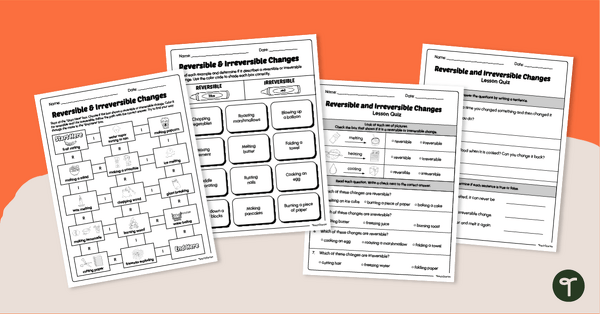
Reversible and Irreversible Changes Worksheet Pack
Download our Reversible and Irreversible Changes Worksheet Pack to help your students learn about temporary and permanent changes in matter.
- Plus Plan
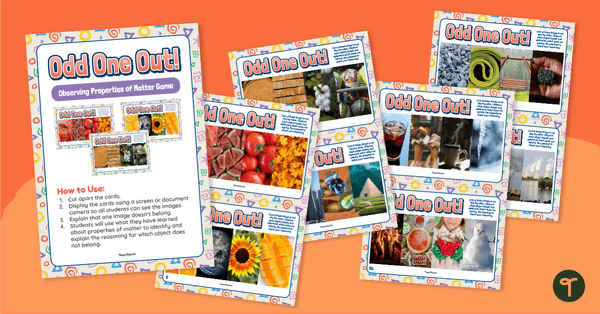
Odd One Out Game- Observable Properties of Matter
Use an exciting 'Odd One Out' Game to practise identifying the observable properties of matter.
- Plus Plan
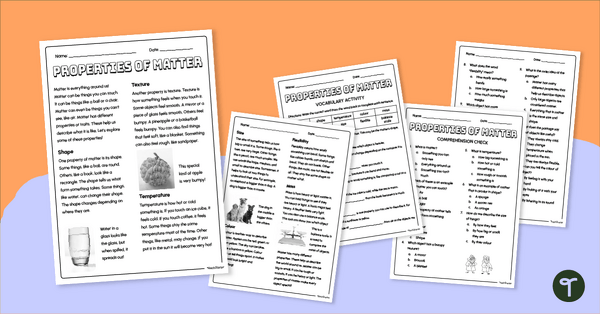
Properties of Matter Reading Comprehension Pack (Year 3)
Read and discover the properties of matter with a set of Year 3 Reading Comprehension Worksheets.
- Plus Plan
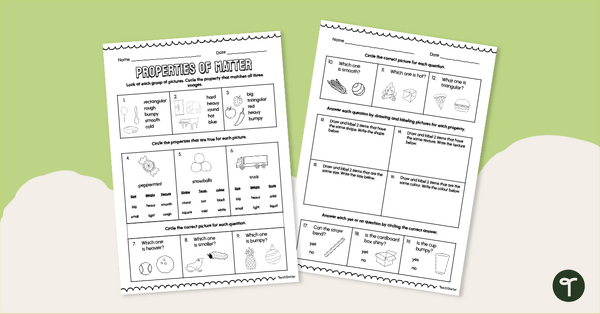
Observing Properties of Matter Quiz
Assess students’ knowledge of basic observable properties of matter with a printable Properties of Matter quiz.
- Plus Plan
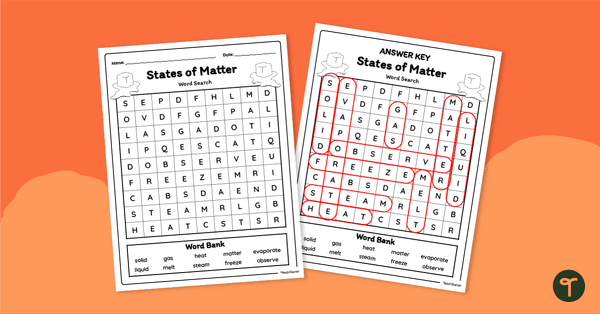
States of Matter Word Search - Year 3
Use a States of Matter word search to introduce your early learners to new academic vocabulary.
- Plus Plan
Recycling Plastic and Glass Worksheet Pack
Explore the role of heat in recycling materials and boost reading comprehension skills with a Recycling Plastic and Glass worksheet pack.
- Plus Plan
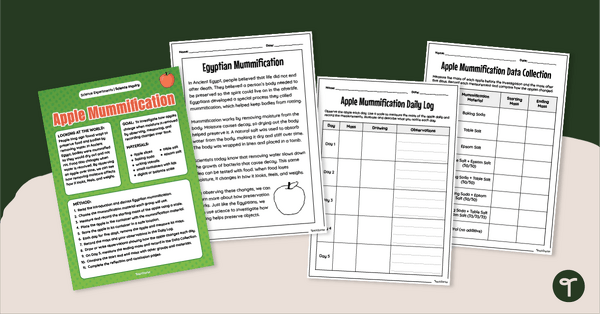
Apple Mummification Experiment
Explore and observe physical changes to materials with an engaging Apple Mummification Experiment.
- Plus Plan
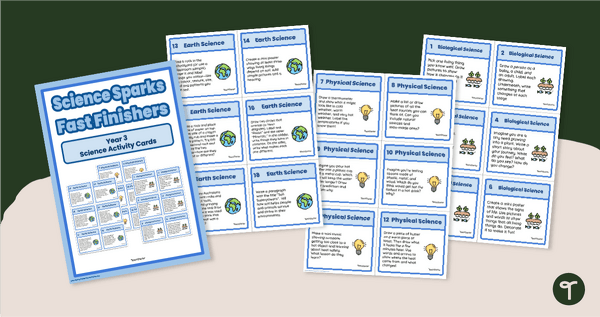
Science Sparks - Year 3 Science Activity Cards
Give your students a little science boost with Science Sparks 3 – our newest set of fast finisher science activities for Year 3!
- Plus Plan
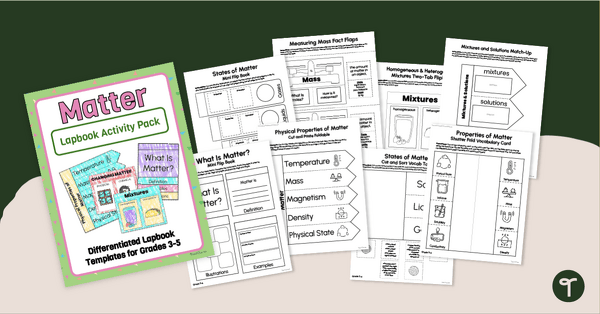
Matter Lapbook - Foldables for Science
Use our printable Matter Lapbook Foldables to teach your students about the states of matter, characteristics of matter, and changes in matter.
- Plus Plan
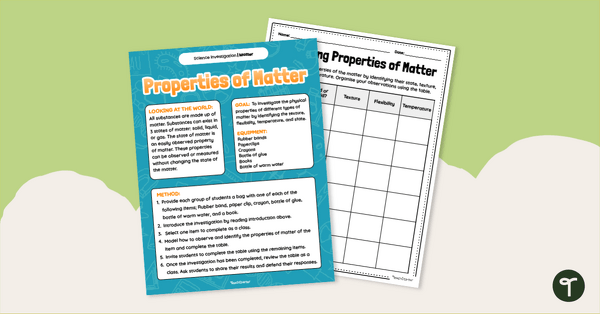
Observing Properties of Matter Investigation
Investigate properties of matter, including temperature, state, flexibility and texture, with a hands-on Matter Investigation activity.
- Plus Plan
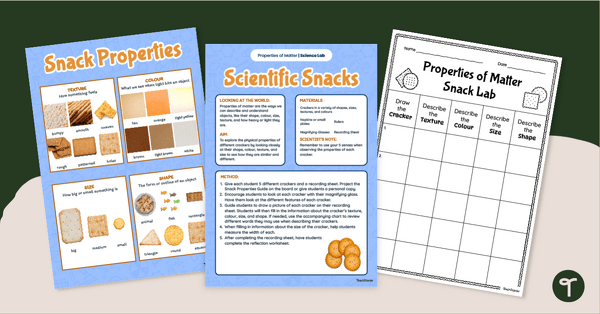
Observing Matter – Edible Science Experiment
Discover the observable properties of matter with an exciting edible science experiment!
- Plus Plan
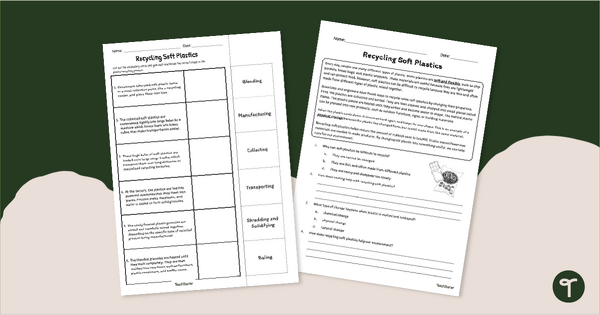
How is Plastic Recycled? – Recycling Worksheets
Explore the process of recycling plastic with a printable recycling worksheet.
- Plus Plan
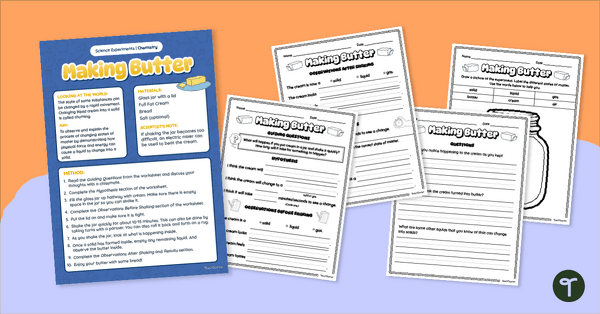
Making Butter in a Jar – States of Matter Lab Activity
Have fun making butter in a jar in this exciting Changing States of Matter Lab Activity.
- Plus Plan
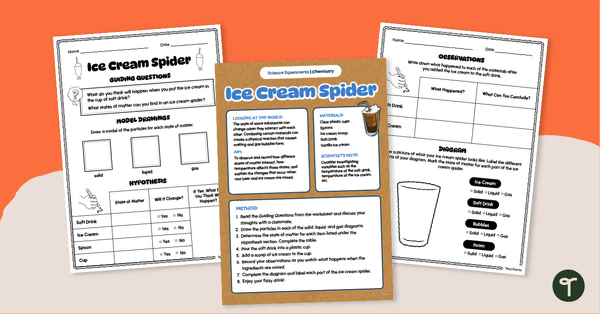
Making an Ice Cream Spider – Matter Experiment
Have fun making ice cream spiders in this exciting Changing States of Matter Science Experiment for Kids.
- Plus Plan
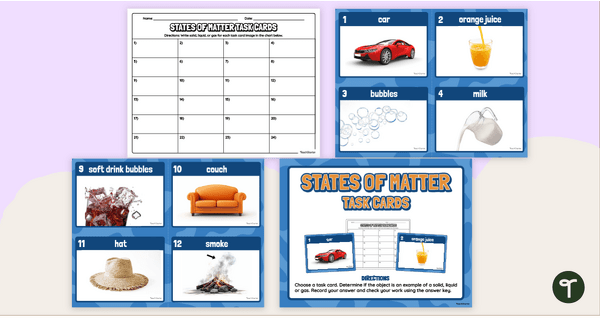
States of Matter Task Cards for Year 3
Help your students identify the three states of matter with a set of engaging Science task cards for Year 3.
- Plus Plan
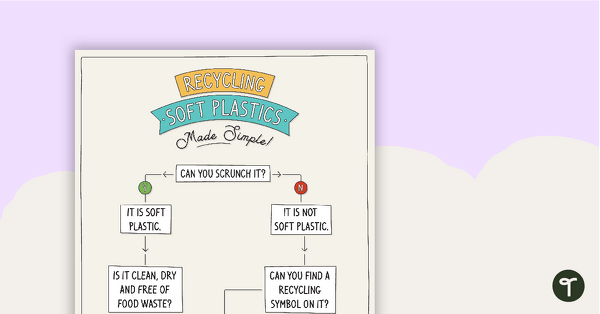
Recycling Soft Plastics Made Simple Poster
A poster that shows an effective way to identify soft plastics when recycling waste.
- Plus Plan
The Three States of Matter
A 60-minute lesson in which students will explore the properties of solids, liquids and gases.
- Plus Plan
Changing States Unit Plan
This Chemical Sciences unit addresses how changes in state from solid to liquid and liquid to solid can be caused by adding or removing heat.
- Plus Plan
Changing States – Assessment
An assessment task in which students will demonstrate knowledge and understanding of how adding and removing heat can cause solids and liquids to change states.
- Plus Plan
Recycling Case Study – Soft Plastics
A 60-minute lesson in which students will explore how changes from solid to liquid and liquid to solid can help in the process of recycling plastic.
- Plus Plan
Observing Matter Changes
A 60-minute lesson in which students will investigate what happens when heat is added or removed from a substance.
- Plus Plan
Adding Heat
A 60-minute lesson in which students will investigate what happens when heat is applied to a range of solids.
- Plus Plan
Changing States
A 60-minute lesson in which students will observe how a change of state between solid and liquid can be caused by adding or removing heat.
- Plus Plan
What State?
A 60-minute lesson in which students will establish that matter can be classified as solid, liquid or gas.