VC2S6U03
the observable properties of matter (solids, liquids and gases) can be explained by modelling the motion and arrangement of their particles; mixtures (including solutions) can be formed by combining 2 or more different substances
- using role-play to model the arrangement and motion of particles in solids, liquids and gases, and exploring, with guidance, ideas about what exists between particles
- using a large plastic syringe to observe the compressibility of air compared with that of liquids, and observing a virtual demonstration of coloured gases being compressed and providing an explanation for the change in colour intensity
- exploring examples that demonstrate that gases have mass, such as blowing air through straws to move objects and using a balance to compare an empty balloon to one filled with air
- investigating mixtures by setting up sensory bins with a variety of materials that can be sorted and mixed, such as beads, rice, pasta, buttons, coins and plastic lids
- identifying common examples of mixtures and solutions in their daily lives
- making lemonade (a solution) by dissolving lemon juice and sugar (solutes) into water (a solvent)
- recognising Aboriginal and/or Torres Strait Islander Peoples’ knowledges and understandings of solids, liquids and gases, and how these knowledges are applied in a range of processes and practices, including the use of ochres and in cooking
- Plus Plan
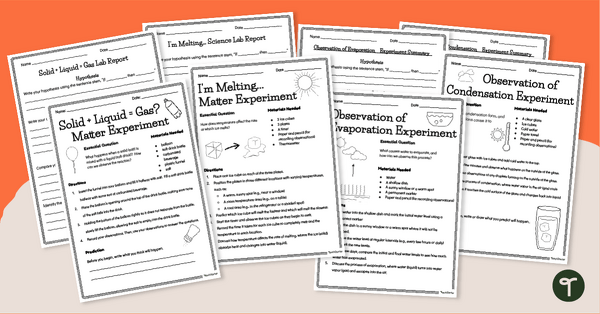
Matter States and Changes Science Lab Activity Pack
Discover the states and changes of matter with a printable pack of Science Lab Activities for Kids!
- Free Plan
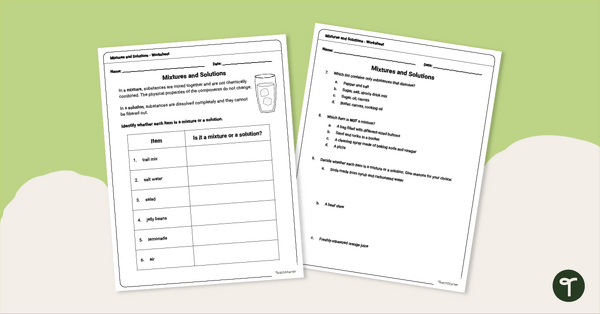
Mixtures and Solutions Worksheet
Identify the differences between a solution and a mixture with a printable Mixtures and Solutions worksheet for year 7.
- Plus Plan
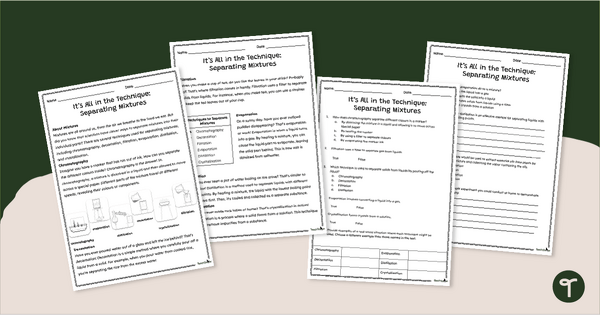
Techniques for Separating Mixtures Worksheet Pack
Explore the concept of separating mixtures with this worksheet pack for upper primary.
- Plus Plan
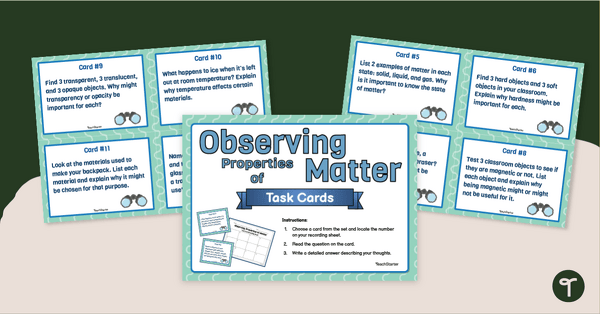
Observing Properties of Matter Task Cards - Year 5
Practise observational skills and discover the characteristics of matter with a set of printable Year 5 Properties of Matter Task cards.
- Plus Plan
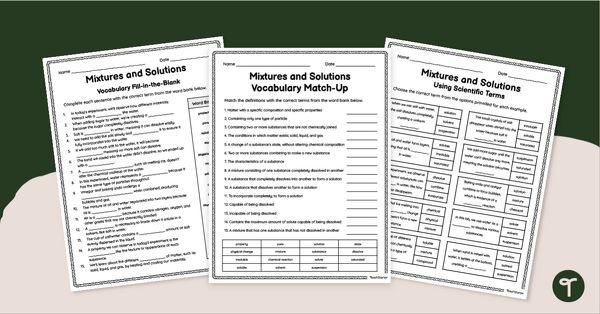
Mixtures and Solutions Worksheet Pack - Vocabulary Review
A vocabulary matching task relating to pure substances and mixtures.
- Free Plan
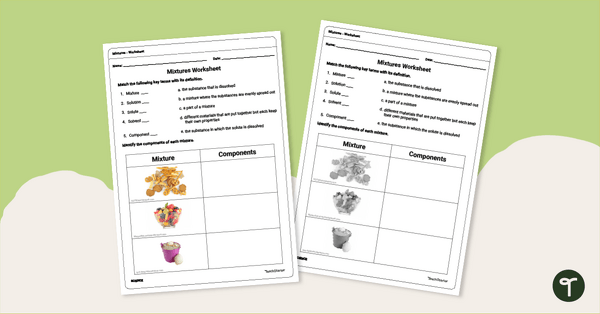
Mixtures Worksheet
Practise identifying mixtures and their components with a printable Mixtures Worksheet.
- Free Plan
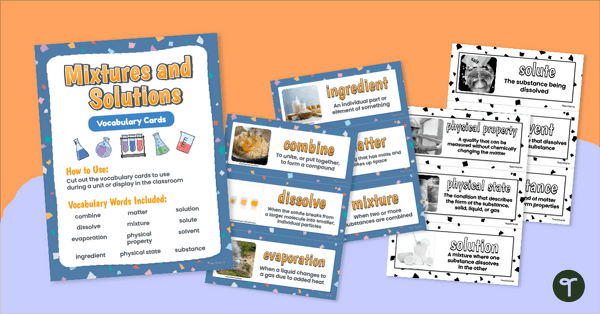
Mixtures & Solutions – Vocabulary Cards
Reinforce science vocabulary in your classroom with this set of word wall cards that focus on mixtures and solutions.
- Plus Plan
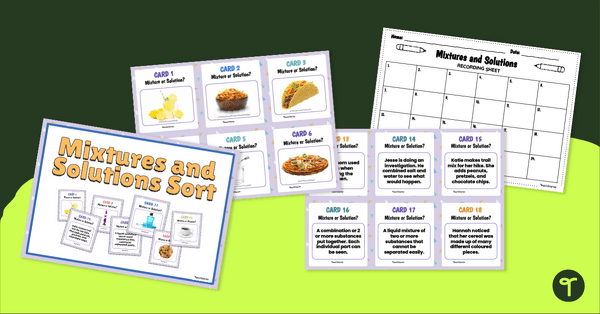
Mixtures and Solutions Sorting Activity
Distinguish between mixtures and solutions with this 24-card sorting activity.
- Plus Plan
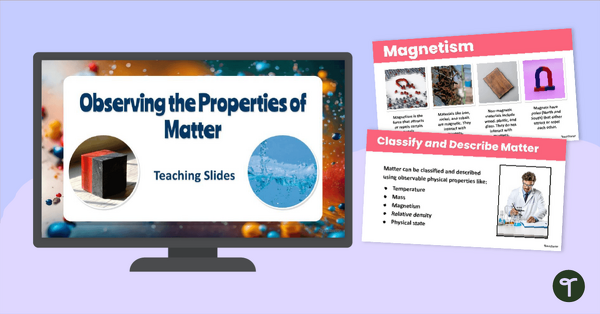
Observing Properties of Matter Teaching Slides
Introduce your students to the classification of matter based on measurable, testable, and observable physical properties with an interactive teaching slide deck.
- Plus Plan
Solids
A 60 minute lesson in which students will identify the observable characteristics of solids and how they behave in different ways.
- Plus Plan
Understanding States of Matter
An assessment task designed to assess students' knowledge and understanding of solids, liquids and gases, their properties and their behaviour.
- Plus Plan
Facts of the Matter
This Chemical Sciences unit explores the concept that solids, liquids and gases have different observable properties and behave in different ways.
- Plus Plan

Matter Matters!
Introduce key terms and concepts related to matter and states of matter with this Year 5 lesson plan.
- Plus Plan
Slime - Solid, Liquid or Gas?
A 60 minute lesson in which students will recognise that not all substances can be easily classified on the basis of their observable properties.
- Plus Plan
Liquids
A 60 minute lesson in which students will identify the observable characteristics of liquids and how they behave in different ways.
- Plus Plan
Knowing Matters!
A 60 minute lesson in which students will explore how knowledge of states of matter and their changes can help inform practices and decision making.
- Plus Plan
Going, Going, Gone!
A 60 minute lesson in which students will recognise that substances exist in different states depending on the temperature.
- Plus Plan
Changing States of Matter
A 60 minute lesson in which students will explore the way solids, liquids and gases change in different situations.
- Plus Plan
Gases
A 60 minute lesson in which students will observe that gases have mass and take up space.