ACELA1476
Understand that successful cooperation with others depends on shared use of social conventions, including turn-taking patterns, and forms of address that vary according to the degree of formality in social situations
Elaborations
- identifying roles and collaborative patterns in students' own groups and pair work (for example initiating a topic, changing a topic through negotiation, affirming other speakers and building on their comments, asking relevant questions, providing useful feedback, prompting and checking individual and group understanding) (Skills: Literacy, Critical and Creative Thinking, Personal and Social Capability)
- Plus Plan
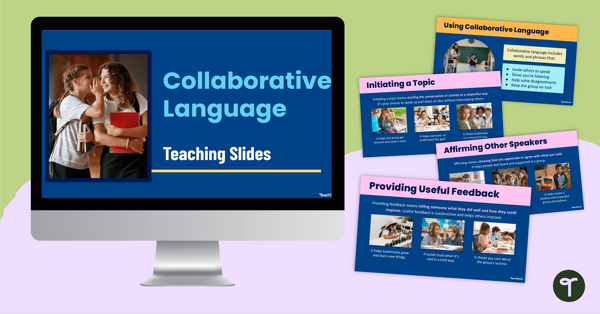
Collaborative Language Teaching Slides
Introduce collaborative language to your students with this easy-to-use slide deck that provides practical examples for developing confident, respectful communication.
- Plus Plan
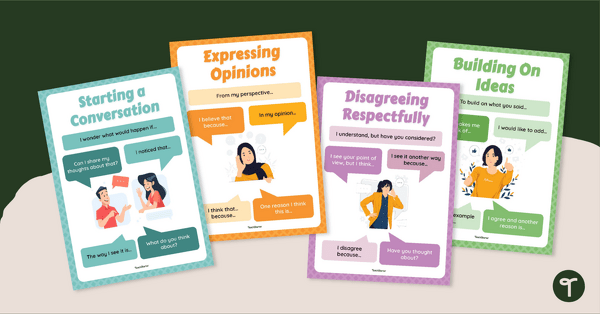
Conversation Stems Poster Set
Display this set of Conversation Stems Posters to assist students with their oral language development.
- Plus Plan
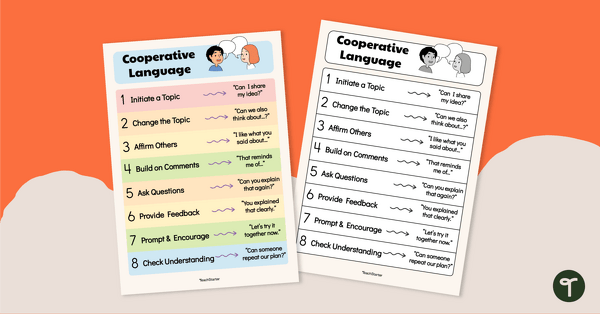
Cooperative Language Poster
Teach cooperative language to help students build essential communication skills with this easy-to-read classroom poster.
- Plus Plan

What is Poetry?
A 60 minute lesson in which students will develop a definition of poetry.
- Plus Plan

Exploring Poetry - Year 3 and Year 4 Unit Plan
This English unit addresses common poetic devices such as sound play, word play and imagery and explores how these may be applied to narrative poetry.