ACELA1501
Understand that patterns of language interaction vary across social contexts and types of texts and that they help to signal social roles and relationships
Elaborations
- identifying ways in which cultures differ in making and responding to common requests, for example periods of silence, degrees of formality (Skills: Literacy, Critical and Creative Thinking, Intercultural Understanding)
- Plus Plan
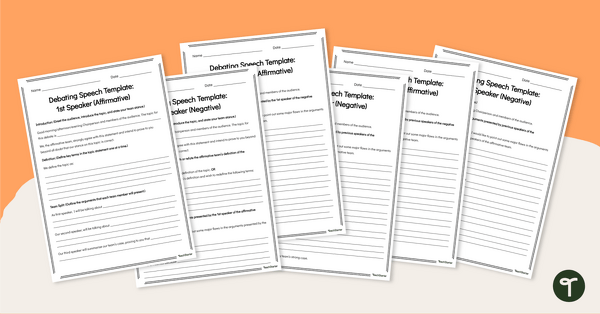
Debate Speech Template Pack
Support student success with a debate speech template that guides them through writing and delivering persuasive speeches in every debate role.
- Plus Plan
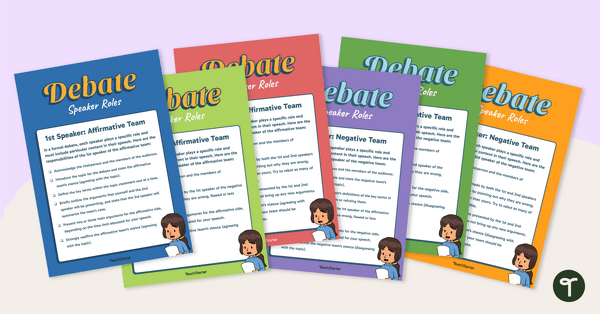
Debate Speaker Roles Poster Pack
Download and display these colourful classroom posters that clearly explain every debate speaker role for each member of a debating team.
- Plus Plan

Formal vs Informal Language Sorting Activity
Engage students in identifying formal vs informal language with this sorting activity that helps build understanding through real-world sentence examples.
- Plus Plan
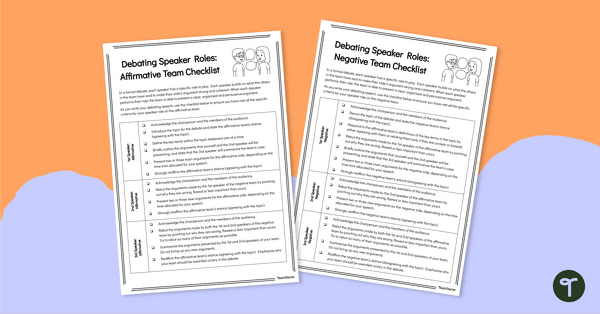
Debate Team Roles Checklists
Support students to understand debate team roles with this clear speech-writing checklist designed to guide each speaker through their responsibilities.
- Plus Plan
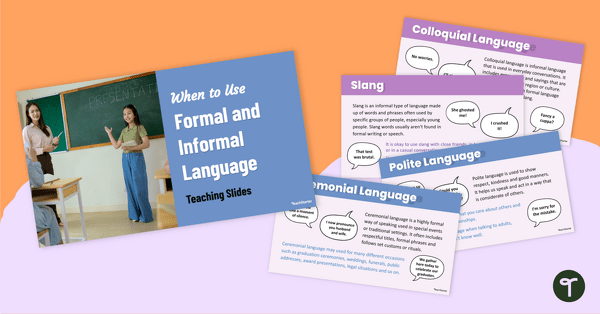
When to Use Formal and Informal Language Teaching Slides
Teach your students when to use formal and informal language with this engaging set of teaching slides designed to help students confidently distinguish between language styles in real-world contexts.
- Plus Plan
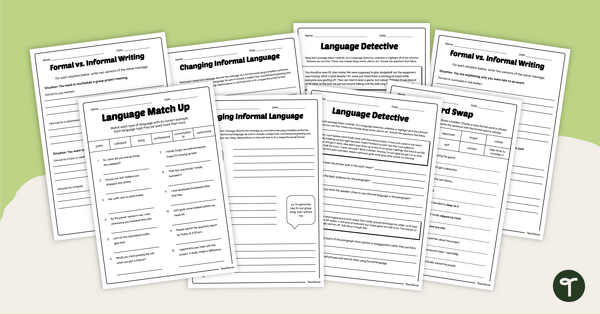
Formal vs Informal Language Worksheet Pack
Download this formal vs informal language worksheet pack to help students strengthen their understanding of language in real-world contexts.
- Plus Plan
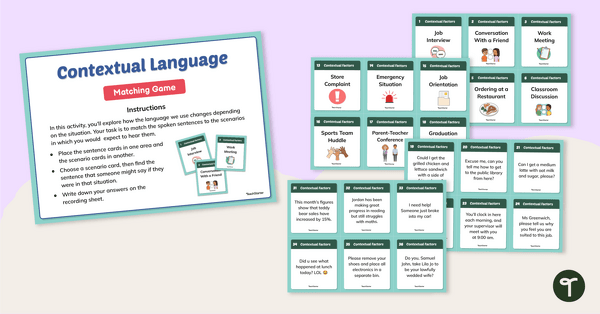
Language and Social Contexts Matching Game
Explore language and social contexts with this fun matching activity that helps students understand how our speech changes depending on the situation.