Australian Curriculum V8
ACELT1606
Understand, interpret and experiment with a range of devices and deliberate word play in poetry and other literary texts, for example nonsense words, spoonerisms, neologisms and puns
Elaborations
- defining spoonerisms, neologisms and puns and exploring how they are used by authors to create a sense of freshness, originality and playfulness (Skills: Literacy, Critical and Creative Thinking)
- discussing poetic language, including unusual adjectival use and how it engages us emotionally and brings to life the poet's subject matter, for example 'He grasps the crag with crooked hands' (Alfred, Lord Tennyson); 'Wee ... tim'rous beastie' (Robert Burns) (Skills: Literacy, Critical and Creative Thinking)
Show more
2
teaching resources for those 'aha' moments
- Plus Plan
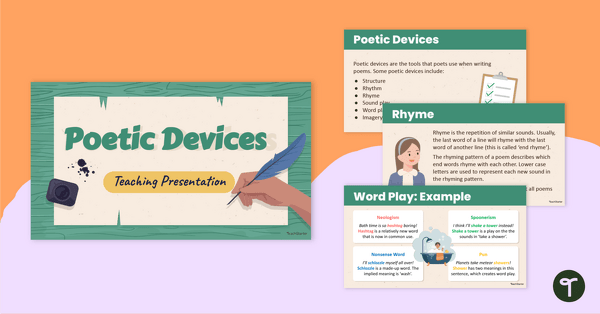
Poetic Devices Teaching Slides
Explore examples of poetic devices using this comprehensive and age-appropriate slide deck perfect for your poetry writing unit.
- Plus Plan
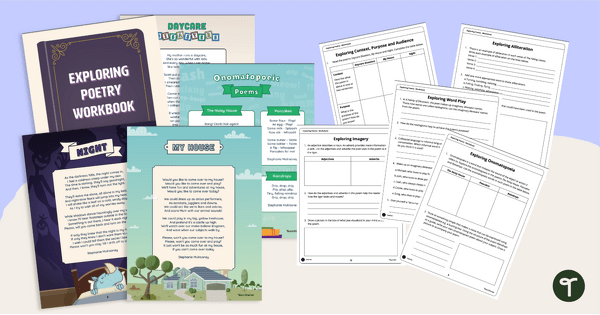
Exploring Poetry Workbook
Teach your students about all things poetry with this jam-packed poetry workbook created especially for primary school students.