ACELY1658
Describe some differences between imaginative informative and persuasive texts
Elaborations
- comparing and discussing texts identifying some features that distinguish those that 'tell stories' from those that 'give opinions' (Skills: Literacy, Critical and Creative Thinking, Personal and Social Capability)
- selecting texts for a particular purpose or task, for example a website that will give information about whales, a book that will tell a story about a possum (Skills: Literacy, Critical and Creative Thinking)
- Plus Plan
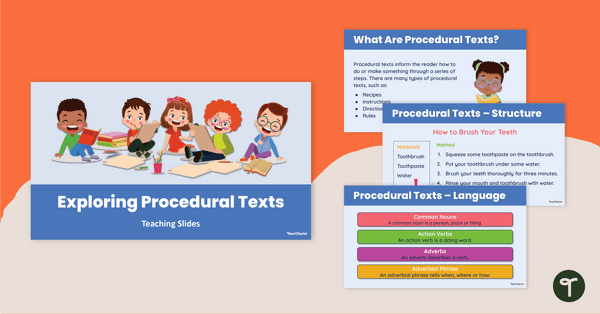
Exploring Procedural Writing Teaching Slides
Teach your students how to write a procedure using this detailed slideshow targeted at lower primary school students.
- Plus Plan
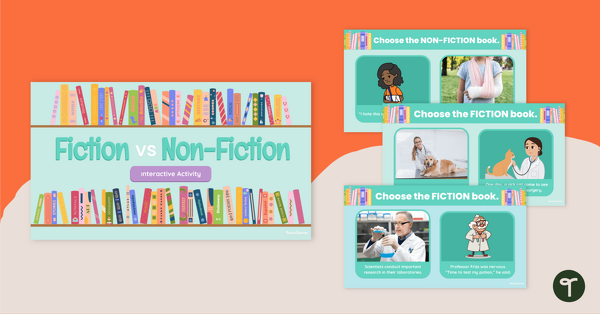
Fiction vs Non-Fiction Interactive Activity
Explore fiction and non-fiction examples with your students using this digital game for early years students.
- Plus Plan
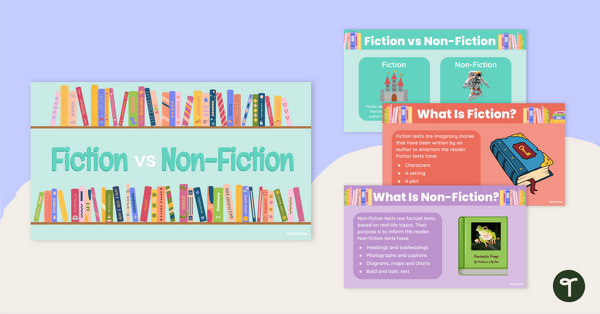
Fiction vs Non-Fiction Teaching Slides
Teach your students the difference between fiction and non-fiction books with this age-appropriate teaching presentation for early years literacy lessons.
- Free Plan
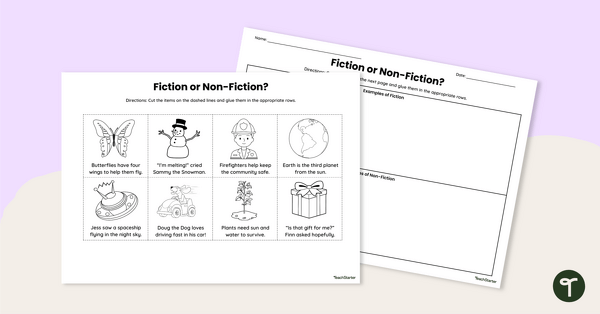
Fiction or Non-Fiction? Cut and Paste Worksheet
Use this fiction and non-fiction worksheet when teaching your students about the differences between fiction and non-fiction texts.
- Plus Plan
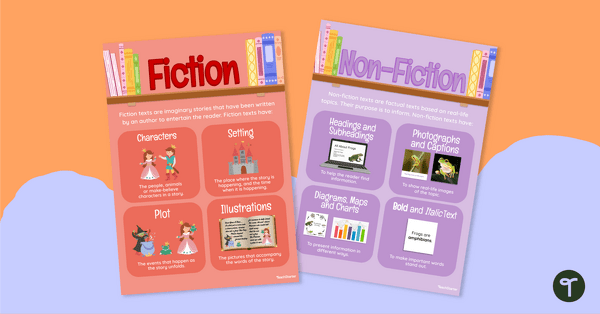
Fiction vs Non-Fiction Posters
Teach students the difference between fiction and non-fiction with this set of two classroom posters perfect for early years classrooms.
- Plus Plan
Exploring Procedural Texts Unit Plan
This English unit has been designed to introduce procedural texts to younger students. It addresses the purpose, structure and language features of instructions and recipes.
- Plus Plan
Procedural Texts - Language Features
A 60 minute lesson in which students will identify and explore the language features of procedures.