Years 3 and 4
In Years 3 and 4, learning in The Arts builds on the experience of the previous band. It involves students making and responding to artworks independently and collaboratively with their classmates and teachers.
As they experience The Arts, students draw on artworks from a range of cultures, times and locations. They explore the arts of Aboriginal and Torres Strait Islander Peoples and of the Asia region and learn that they are used for different purposes. While the arts in the local community should be the initial focus for learning, students are also aware of and interested in the arts from more distant locations and the curriculum provides opportunities to build on this curiosity.
As they make and respond to artworks, students explore meaning and interpretation, elements and forms, and social and cultural contexts of the arts. They make personal evaluations of their own and others' artworks, making connections between their own artistic intentions and those of other artists.
Students continue to learn about safe practices in the arts and in their interactions with other artists. Their understanding of the role of the artist and the audience builds on their experience from the previous band. As an audience, students focus their attention on the artwork and respond to it. They consider why and how audiences respond to artworks.
In Years 3 and 4, students' awareness of themselves and others as audiences is extended beyond the classroom to the broader school context.
In Visual Arts, students:
- extend their awareness of visual conventions, and observe closely visual detail as they use materials, techniques and technologies and processes in visual arts forms
- explore and experiment with visual conventions such as line, shape, colour and texture to develop an individual approach to a theme or subject matter
- explore, observe and identify ideas and symbols used and adapted by artists in their artworks as they make and respond to visual arts
- consider how and why artists, craftspeople and designers realise their ideas through different visual representations, practices, processes and viewpoints.
(source: www.australiancurriculum.edu.au)
Achievement Standard
By the end of Year 4, students describe and discuss similarities and differences between artworks they make and those to which they respond. They discuss how they and others organise the elements and processes in artworks.
Students collaborate to plan and make artworks that communicate ideas.
(source: www.australiancurriculum.edu.au)
Achievement Standard
By the end of Year 4, students describe and discuss similarities and differences between artworks they make, present and view. They discuss how they and others use visual conventions in artworks.
Students collaborate to plan and make artworks that are inspired by artworks they experience. They use visual conventions, techniques and processes to communicate their ideas.
(source: www.australiancurriculum.edu.au)
- Plus Plan
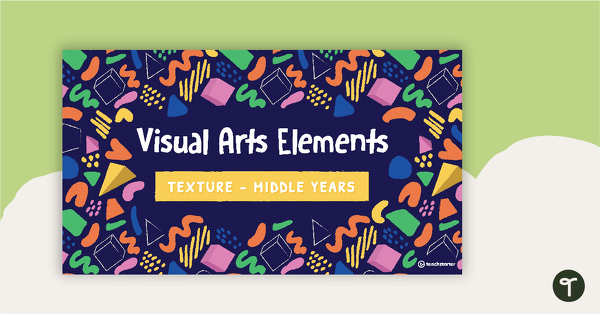
Visual Arts Elements Texture PowerPoint - Middle Years
A 28 slide teaching presentation to use when investigating texture in Visual Art.
- Plus Plan
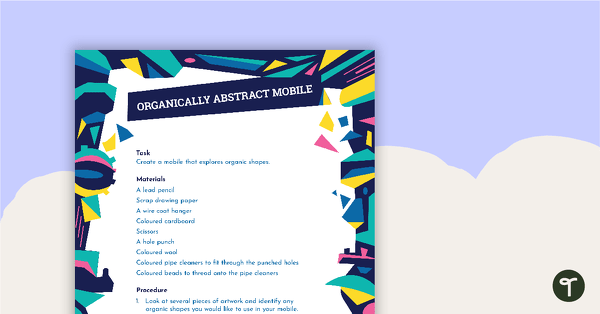
Organically Abstract Mobile Activity
A fun art activity to explore organic shape.
- Plus Plan
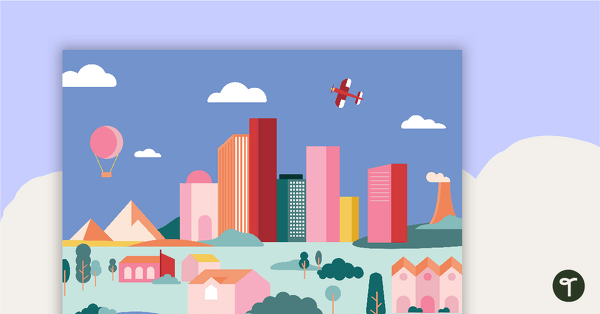
Organic Shape Search Worksheet
A fun art activity to explore organic shape.
- Plus Plan
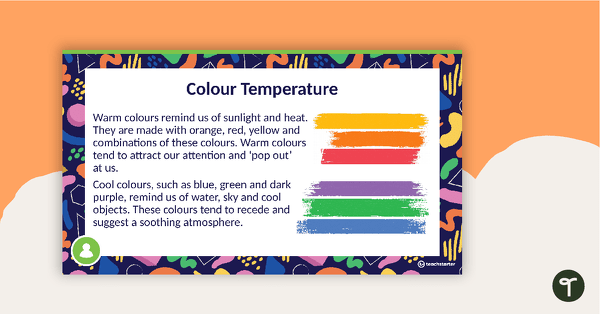
Visual Arts Elements Colour PowerPoint - Middle Years
A 22 slide teaching presentation to use when investigating colour in Visual Art.
- Free Plan
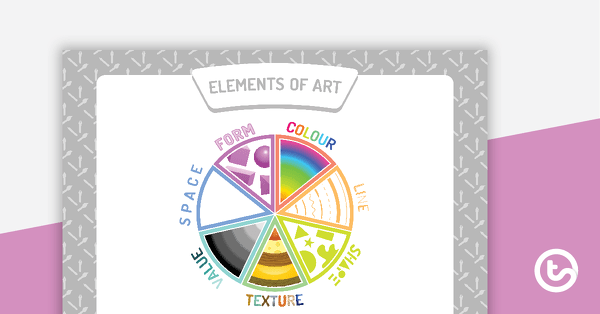
Art Elements Poster
A poster that visually explains the different art elements.
- Free Plan
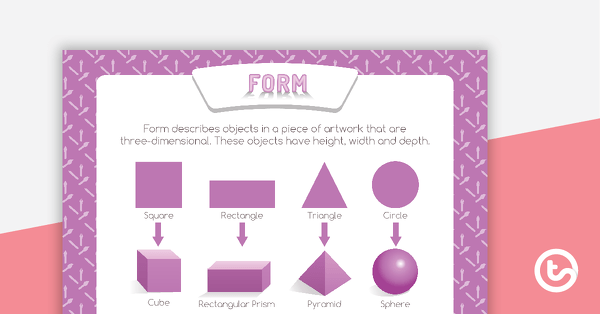
Form Art Element Poster
A poster that explains the term 'form' as an art element.
- Free Plan
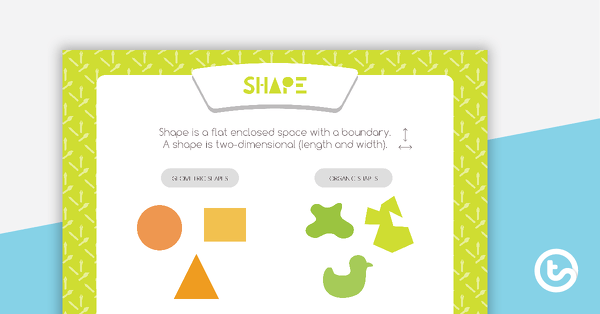
Shape Art Element Poster
A poster that explains the term 'shape' as an art element.
- Free Plan
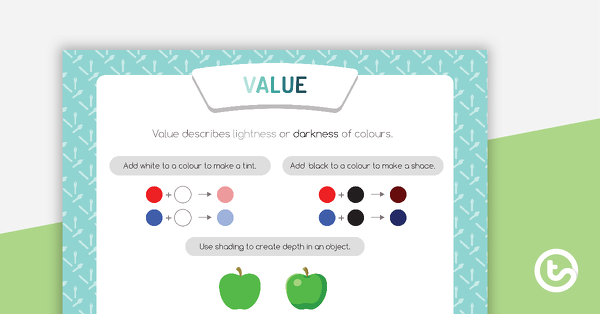
Value Art Element Poster
A poster that explains the term 'value' as an art element.
- Free Plan
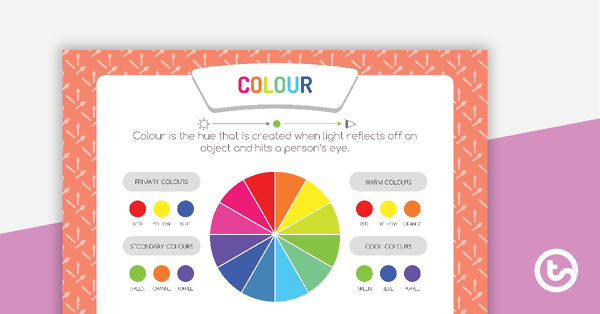
Colour Art Element Poster
A poster that explains the term 'colour' as an art element.
- Plus Plan
Visual Arts Elements Resource Pack - Middle Years
A comprehensive pack of resources to use with the middle years when studying the elements of Visual Art.
- Plus Plan
Visual Art Elements Unit - Middle Years
This Visual Arts unit investigates the Elements of Visual Art. Demonstrations and artistic techniques are explored, with particular attention given to line, shape, form, colour and texture.
- Plus Plan
Aboriginal Dot Painting
A 60 minute lesson in which students will understand the history and traditional techniques of Aboriginal dot painting.
- Plus Plan
Aboriginal X-Ray Art
A 60 minute lesson in which students will understand the history and traditional techniques of Aboriginal x-ray art.
- Plus Plan
Aboriginal Rock Art
A 60 minute lesson in which students will understand the history and traditional techniques of Aboriginal rock art.
- Plus Plan
An Introduction to Aboriginal Art
A 60 minute lesson in which students will identify the different types of Aboriginal art in Australia.
- Plus Plan
Applying Aboriginal Art Techniques - Assessment Task
An assessment task in which students will demonstrate their understanding of Aboriginal art techniques.
- Plus Plan
Aboriginal Cross-Hatching
A 60 minute lesson in which students will understand the history and traditional techniques of Aboriginal cross-hatching.
- Plus Plan
Aboriginal Wandjina Artworks
A 60 minute lesson in which students will understand the history and traditional techniques of Aboriginal Wandjina artworks.
- Plus Plan
Aboriginal Body Painting
A 60 minute lesson in which students will understand the history and traditional techniques of Aboriginal body painting.
- Plus Plan
Aboriginal Bark Paintings
A 60 minute lesson in which students will understand the history and traditional techniques of Aboriginal bark paintings.
- Plus Plan
Aboriginal Sand Drawings
A 60 minute lesson in which students will understand the history and traditional techniques of Aboriginal sand drawings.
- Plus Plan
Exploring Line
A 60-minute lesson in which students will investigate how lines are used to define objects, add detail and express emotion in visual arts.
- Plus Plan
Working with Texture – Textured Mandala
A 60-minute lesson in which students will create a patterned mandala by experimenting with a variety of textures.
- Plus Plan
Exploring Texture
A 60-minute lesson in which students will investigate how texture can be achieved in visual arts.
- Plus Plan
Working with Colour – Marvellous Monochrome
A 90-minute lesson in which students will create a rainforest scene using tints and shades of green.
- Plus Plan
Exploring Colour
A 60-minute lesson in which students will investigate how colour is used to express feeling and evoke a response in visual arts.
- Plus Plan
Working with Form – Crazy Clay Critter
A 90-minute lesson in which students will create an imaginary creature from clay by experimenting with shape and form.
- Plus Plan
Exploring Form
A 60-minute lesson in which students investigate how form can be achieved in visual arts.
- Plus Plan
Working with Shape – Organically Abstract Mobile
A 90-minute lesson in which students will create a mobile artwork using organic shapes.
- Plus Plan
Exploring Shape
A 60-minute lesson in which students will investigate how geometric and organic shapes are used in visual arts.
- Plus Plan
Working with Line – Pattern to Picture
A 60-minute lesson in which students will create a class artwork by experimenting with line and pattern.