Years 5 and 6
In Years 5 and 6, students draw on artworks from a range of cultures, times and locations. They explore the arts of Aboriginal and Torres Strait Islander Peoples and of the Asia region and learn that they are used for different purposes. While the arts in the local community should be the initial focus for learning, students are also aware of and interested in the arts from more distant locations and the curriculum provides opportunities to build on this curiosity.Â
As they make and respond to the arts, students explore meaning and interpretation, and social and cultural contexts of the arts. They evaluate the use of forms and elements in artworks they make and observe.
Students extend their understanding of safety in the arts. In Years 5 and 6, their understanding of the roles of artists and audiences builds on previous bands. They develop their understanding and use of performance or technical skills to communicate intention for different audiences. They identify a variety of audiences for different arts experiences as they engage with more diverse artworks as artists and audiences.
In Visual Arts, students:
- develop understanding of use and application of visual conventions as they develop conceptual and representational skills
- test and innovate with properties and qualities of available materials, techniques, technologies and processes, combining two or more visual arts forms to test the boundaries of representation.
- explore a diversity of ideas, concepts and viewpoints as they make and respond to visual artworks as artists and audiences
- draw ideas from other artists, artworks, symbol systems, and visual arts practices in other cultures, societies and times
- extend their understanding of how and why artists, craftspeople and designers realise their ideas through different visual representations, practices, processes and viewpoints.Â
(source: www.australiancurriculum.edu.au)
Achievement Standard
By the end of Year 6, students explain how ideas are communicated in artworks they make and to which they respond. They describe characteristics of artworks from different social, historical and cultural contexts that influence their art making.
Students structure elements and processes of arts subjects to make artworks that communicate meaning. They work collaboratively to share artworks for audiences, demonstrating skills and techniques.
(source: www.australiancurriculum.edu.au)
Achievement Standard
By the end of Year 6, students explain how ideas are represented in artworks they make and view. They describe the influences of artworks and practices from different cultures, times and places on their art making.
Students use visual conventions and visual arts practices to express a personal view in their artworks. They demonstrate different techniques and processes in planning and making artworks. They describe how the display of artworks enhances meaning for an audience.
(source: www.australiancurriculum.edu.au)
- Plus Plan
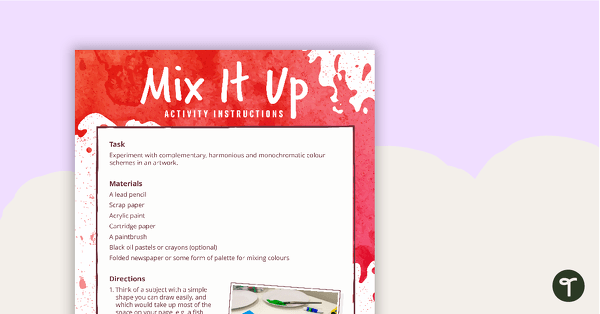
Mix It Up Activity
A fun art activity to experiment with the use of specific colour schemes.
- Plus Plan
Visual Arts Elements Space PowerPoint - Upper Years
A 28 slide teaching presentation to use when investigating space in Visual Art.
- Plus Plan
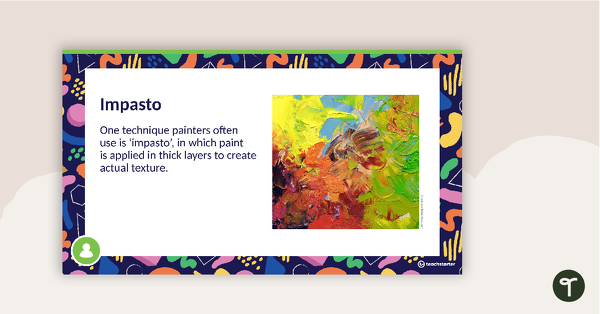
Visual Arts Elements Texture PowerPoint - Upper Years
A 26 slide teaching presentation to use when investigating texture in Visual Art.
- Plus Plan
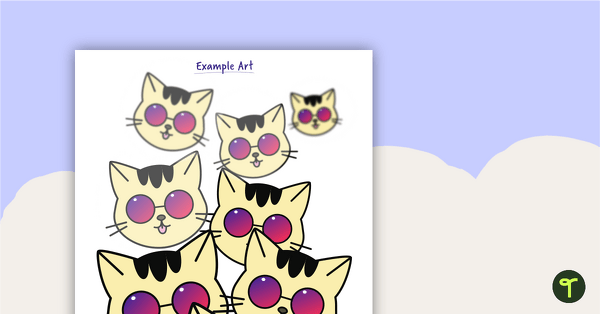
Designing for Depth Drawing Templates
A fun art activity to explore the creation of depth in two-dimensional work.
- Plus Plan
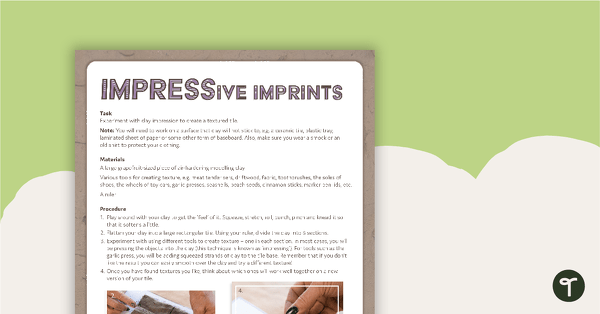
IMPRESSive Imprints Activity
A fun art activity to explore texture.
- Plus Plan
Visual Arts Elements Shape and Form PowerPoint - Upper Years
A 25 slide teaching presentation to use when investigating shape and form in Visual Art.
- Plus Plan
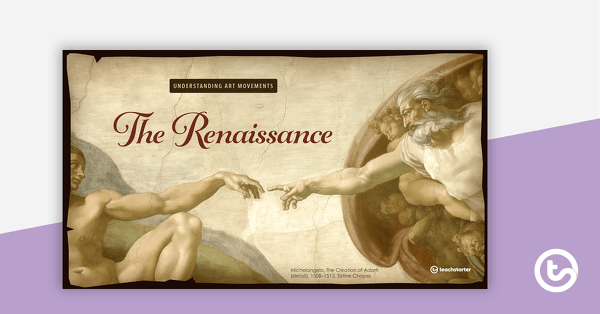
Artistic Movements PowerPoint – The Renaissance
A 48-slide editable PowerPoint template exploring the famous artists and signature artistic techniques of the Renaissance.
- Plus Plan
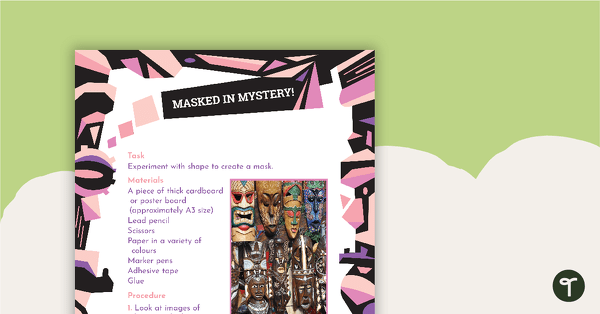
Masked in Mystery Activity
A fun art activity to explore shape through the creation of a mask.
- Plus Plan
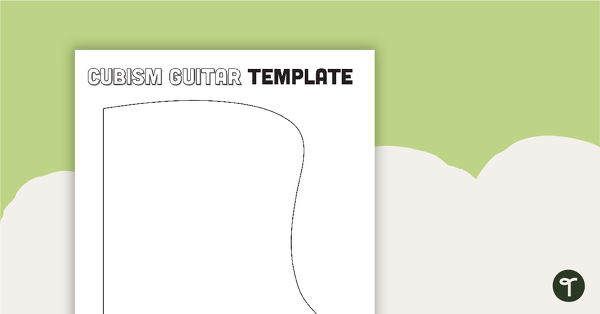
Cubism Guitar – Template
A paper craft template of a Cubism style guitar.
- Plus Plan
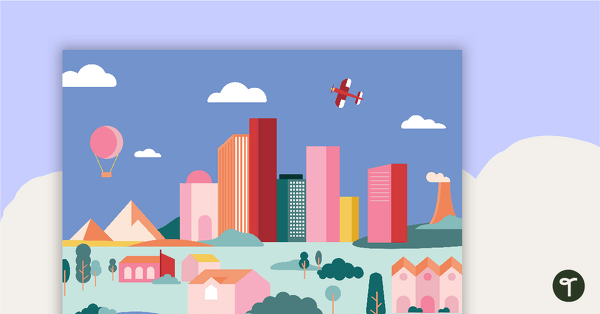
Organic Shape Search Worksheet
A fun art activity to explore organic shape.
- Free Plan
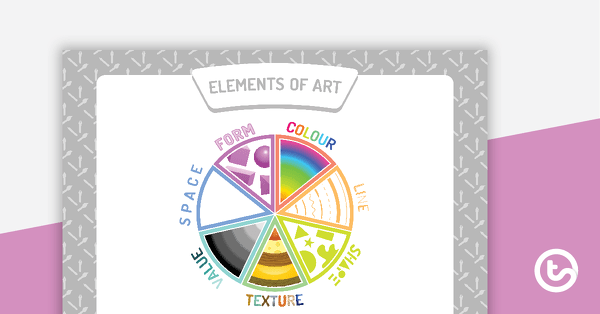
Art Elements Poster
A poster that visually explains the different art elements.
- Free Plan
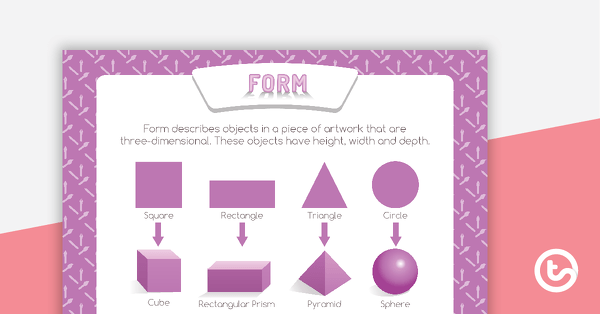
Form Art Element Poster
A poster that explains the term 'form' as an art element.
- Free Plan
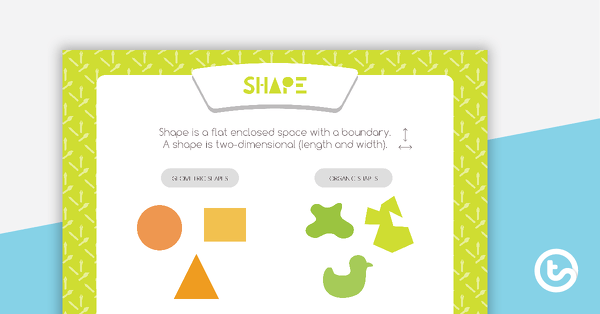
Shape Art Element Poster
A poster that explains the term 'shape' as an art element.
- Free Plan
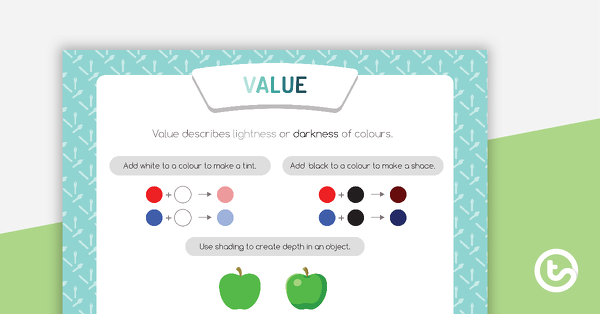
Value Art Element Poster
A poster that explains the term 'value' as an art element.
- Free Plan
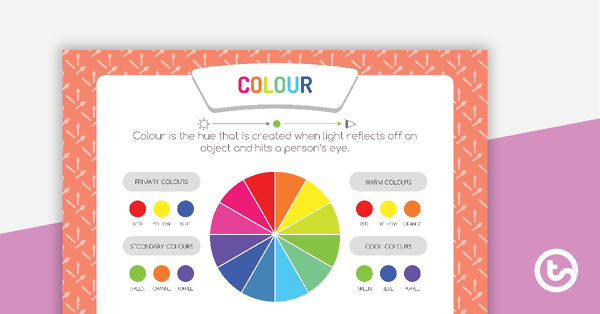
Colour Art Element Poster
A poster that explains the term 'colour' as an art element.
- Plus Plan
Visual Arts Elements Resource Pack - Upper Years
A comprehensive pack of resources to use with the upper years when studying the elements of Visual Art.
- Plus Plan
Visual Art Elements Unit – Upper Years
This Visual Arts unit investigates the Elements of Visual Art. Demonstrations and artistic techniques are explored, with particular attention given to line, shape, form, colour, texture and space.
- Plus Plan
Aboriginal Dot Painting
A 60 minute lesson in which students will understand the history and traditional techniques of Aboriginal dot painting.
- Plus Plan
Aboriginal X-Ray Art
A 60 minute lesson in which students will understand the history and traditional techniques of Aboriginal x-ray art.
- Plus Plan
Aboriginal Rock Art
A 60 minute lesson in which students will understand the history and traditional techniques of Aboriginal rock art.
- Plus Plan
Applying Aboriginal Art Techniques - Assessment Task
An assessment task in which students will demonstrate their understanding of Aboriginal art techniques.
- Plus Plan
Aboriginal Cross-Hatching
A 60 minute lesson in which students will understand the history and traditional techniques of Aboriginal cross-hatching.
- Plus Plan
Aboriginal Wandjina Artworks
A 60 minute lesson in which students will understand the history and traditional techniques of Aboriginal Wandjina artworks.
- Plus Plan
Aboriginal Body Painting
A 60 minute lesson in which students will understand the history and traditional techniques of Aboriginal body painting.
- Plus Plan
Aboriginal Bark Paintings
A 60 minute lesson in which students will understand the history and traditional techniques of Aboriginal bark paintings.
- Plus Plan
Aboriginal Sand Drawings
A 60 minute lesson in which students will understand the history and traditional techniques of Aboriginal sand drawings.
- Plus Plan
An Introduction to Aboriginal Art
A 60 minute lesson in which students will identify the different types of Aboriginal art in Australia.
- Plus Plan
Working with Space – Balancing Act
A 60-minute lesson in which students will create an artwork that explores the interplay between positive and negative space.
- Plus Plan
The Element of Space
A 60-minute lesson in which students will investigate how space can be used to create the illusion of depth.
- Plus Plan
Working with Texture – Impressive Imprints
A 60-minute lesson in which students will create a three-dimensional textured tile artwork using impressions.
- Plus Plan
The Element of Texture
A 60-minute lesson in which students will investigate how texture can be achieved in visual arts.
- Plus Plan
Working with Colour – Mix It Up
A 90-minute lesson in which students will create an artwork using complementary, harmonious and monochromatic colour schemes.