Solar System Teaching Resources
Rocket your students into your next space lesson with solar system projects and diagrams, activities designed around the planets and moon phases, and hundreds more teaching resources created by primary teachers for your classroom!
Aligned with Australian science standards, each solar system-focused teacher resource has undergone the Teach Starter teacher team's thorough review process to ensure it's ready to use in your classroom.
This collection of curriculum-aligned teaching resources makes teaching about the planets, sun, moon, and the rest of the galaxy easy with editable templates that can be easily adapted to differentiate instruction for your individual students.
New to this part of the science curriculum or just looking for fresh ideas to inspire kids about space? Read on for a primer from our teacher team!
What Is the Solar System? A Kid-Friendly Definition
To start you off, our teacher team has created a definition you can use in the classroom to introduce the solar system to your students.
The solar system is made up of a single star with planets orbiting around it.
The solar system that we call home has the sun at the center — yes, the sun is a star! — and it includes planet Earth, plus other planets, moons, asteroids, comets and other outer space objects.

The sun, which is seen at left, is the only star in our solar system.
Solar System vs. Galaxy — What's the Difference?
If a solar system is made up of the sun and the planets, what's a galaxy?
The easiest way to explain the difference between these two is to tell your class that a galaxy is a gigantic group of solar systems, all gathered together.
Kids can think of the galaxy as a big, extended family of solar systems.
Earth is located in the Milky Way galaxy, which includes a huge number of different solar systems — more than 3000!
How Many Planets Are in Our Solar System?
The solar system that we call home as residents of Earth is made up of eight planets — Mercury, Venus, Earth, Mars, Jupiter, Saturn, Uranus and Neptune — plus one dwarf planet, Pluto!
- Plus Plan
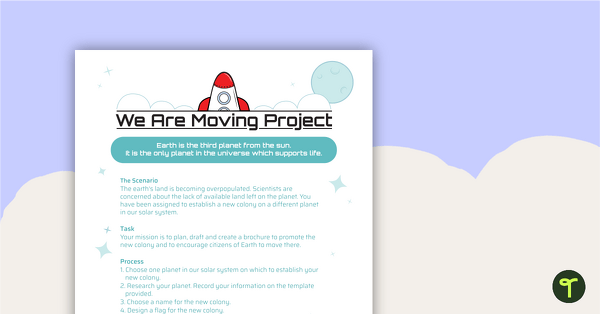
We Are Moving Project
An Earth and Space project that develops knowledge and understanding of scientific concepts, research skills and writing skills.
- Plus Plan
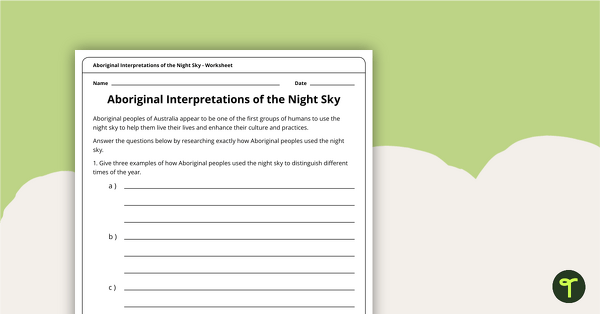
Aboriginal Interpretations of the Night Sky Worksheet
A worksheet that explores how Aboriginal peoples interpreted the night sky.
-
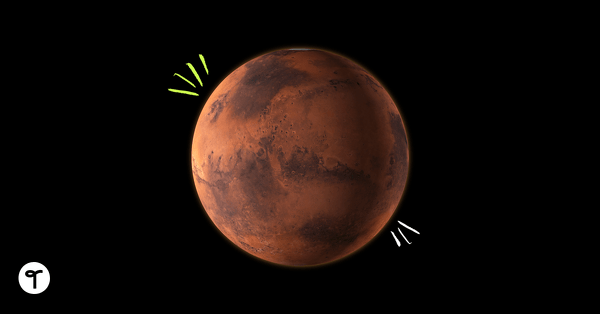
20 Fun Facts About Mars to Get Kids Excited About Your Space Lessons
Add these fun facts about Mars to your lesson plans — plus see our teacher team's favourite ways to use them in classroom activities.