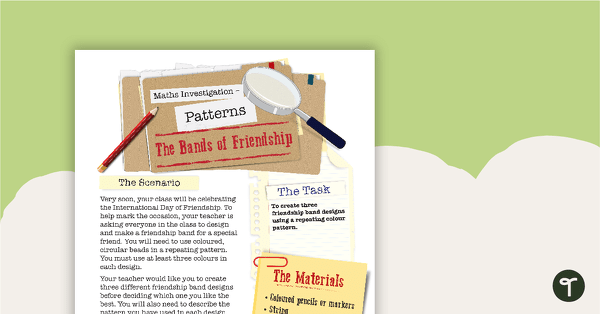
Support early maths learning with this pattern investigation, designed to help Foundation students recognise and create repeating patterns through a hands-on friendship bracelet activity.
Pattern Investigation That Builds Early Pattern Understanding
Understanding repeating patterns is an important part of early maths, helping Foundation students notice and describe what comes next. To build this skill, students need opportunities to explore patterns in visual and hands-on ways.
This pattern investigation supports Foundation students to explore repeating patterns through a creative friendship bracelet design task. Students create bead patterns using at least three colours, design more than one option and reflect on their choices.
This resource is ideal for Foundation classrooms because it:
- Encourages student choice within a structured maths task
- Supports mathematical talk and simple reasoning
- Requires minimal preparation for teachers
This pattern practice includes step-by-step student instructions, a design template, student reflection questions and a rubric. Once students complete this investigation, they will be able to create, recognise and describe simple repeating patterns using appropriate mathematical language.
Flexible Classroom Uses for This Pattern Investigation
This pattern investigation fits easily into your Foundation maths block and can be used in a range of teaching contexts, including:
- Whole-class exploration – Model the task together and discuss pattern rules as a class.
- Small-group learning – Use the templates at maths rotations with hands-on materials like counters or beads.
- Independent investigation – Have students design and reflect on their own patterns once the concept has been introduced.
The open-ended nature of the task supports a range of abilities while keeping the focus on core pattern concepts.
Download This Pattern Investigation
This resource is available as a print-ready PDF and an editable Google Slides file. Use the Download button above to access the resource. (Please note: you will be prompted to make a personal copy of the Google Slides file before accessing.)
Pattern Investigation: Related Resources
You may also like:
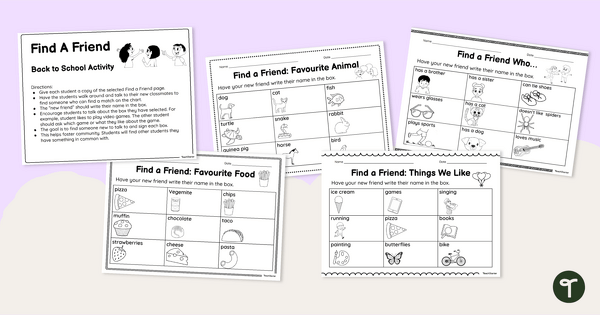
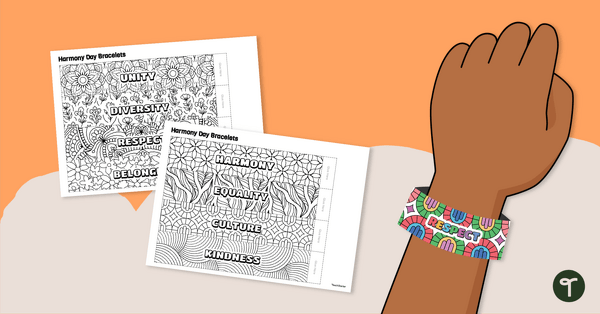
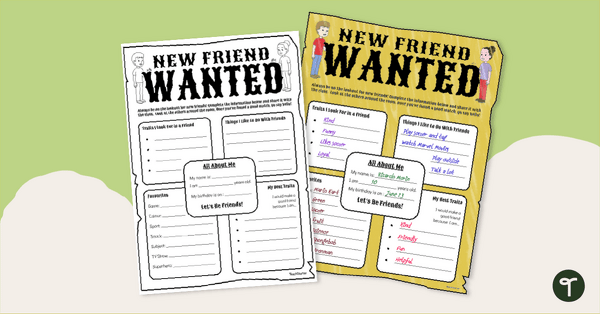
[resource:4233446] [resource:5189226] [resource:4120386]

0 Comments
Write a review to help other teachers and parents like yourself. If you'd like to request a change to this resource, or report an error, select the corresponding tab above.