Teks
ELAR K.1
Developing and sustaining foundational language skills: listening, speaking, discussion, and thinking--oral language. The student develops oral language through listening, speaking, and discussion. The student is expected to:
- (1) Composition: listening, speaking, reading, writing, and thinking using multiple texts--writing process. The student uses the writing process recursively to compose multiple texts that are legible and uses appropriate conventions. The student is expected to:
- (2) plan by generating ideas for writing through class
discussions and drawings;
- (A) develop drafts in oral, pictorial, or written form by organizing ideas;
- (B) revise drafts by adding details in pictures or words;
- (C) edit drafts with adult assistance using standard English conventions, including:
- (D) complete sentences;
- (i) verbs;
- (ii) singular and plural nouns;
- (iii) adjectives, including articles;
- (iv) correct spelling of words with grade-appropriate orthographic patterns and rules and high-frequency words; and
- (v) prepositions;
- (vi) pronouns, including subjective, objective, and possessive cases;
- (vii) capitalization of the first letter in a sentence and name;
- (viii) punctuation marks at the end of declarative sentences; and
- (ix) share writing.
- (E) Composition: listening, speaking, reading, writing, and thinking using multiple texts--genres. The student uses genre characteristics and craft to compose multiple texts that are meaningful. The student is expected to:
- (3) dictate or compose literary texts, including
personal narratives; and
- (A) dictate or compose informational texts.
- (B) Inquiry and research: listening, speaking, reading, writing, and thinking using multiple texts. The student engages in both short-term and sustained recursive inquiry processes for a variety of purposes. The student is expected to:
- (4) generate questions for formal and informal inquiry
with adult assistance;
- (A) develop and follow a research plan with adult assistance;
- (B) gather information from a variety of sources with adult assistance;
- (C) demonstrate understanding of information gathered with adult assistance; and
- (D) use an appropriate mode of delivery, whether written, oral, or multimodal, to present results.
- (E) listen actively and ask questions to understand information and answer questions using multi-word responses;
- (F) restate and follow oral directions that involve a short, related sequence of actions;
- (G) share information and ideas by speaking audibly and clearly using the conventions of language;
- (H) work collaboratively with others by following agreed-upon rules for discussion, including taking turns; and
- (I) develop social communication such as introducing himself/herself, using common greetings, and expressing needs and wants.
Show more
6 of 38
teaching resources for those 'aha' moments
- Plus Plan
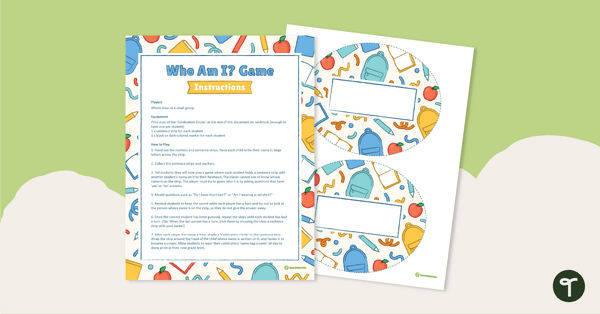
Who Am I? Icebreaker Game
Make day 1 a success with this fun icebreaker game.
- Plus Plan
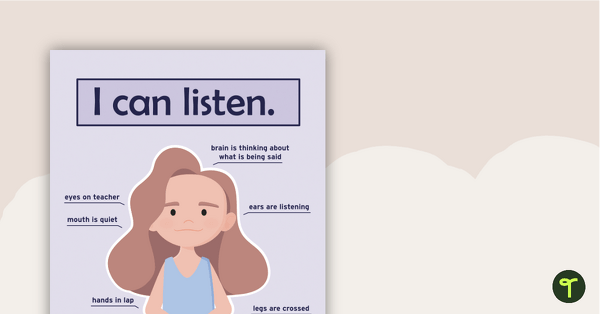
I Can Listen Poster
A poster to scaffold appropriate behavior for students when listening in class.
- Plus Plan
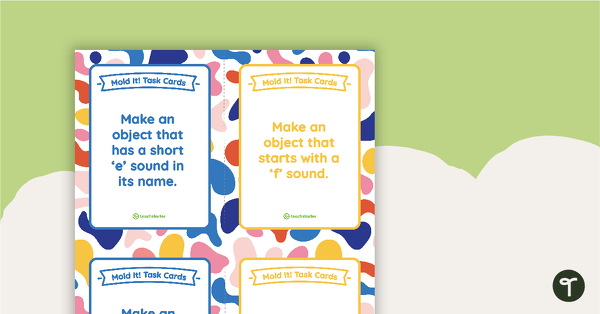
Mold It! Task Cards
A set of 28 task cards to use with modeling clay.
- Plus Plan
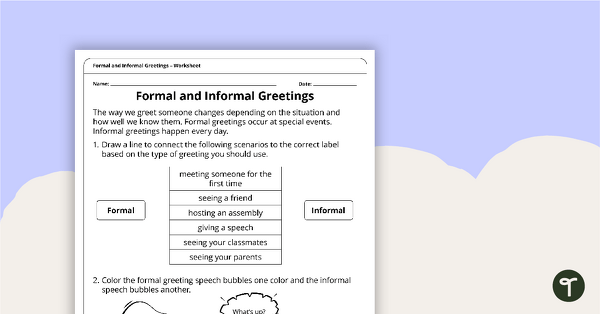
Formal and Informal Greetings – Worksheet
A sorting worksheet where students distinguish the differences between formal and informal greetings.
- Plus Plan
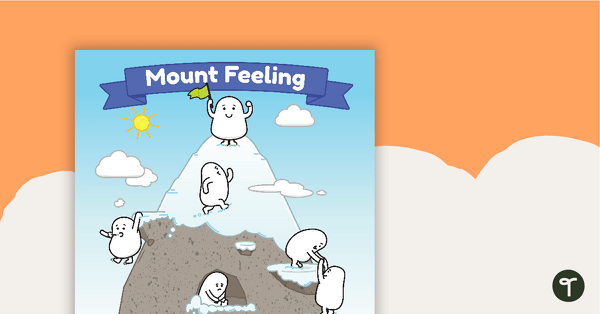
Mount Feeling - Feelings Poster and Flashcards
Mount Feeling poster and flashcards to help students vocalize how they are feeling using a visual aid.
- Plus Plan
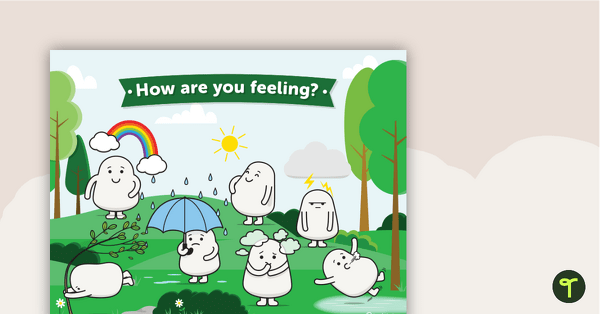
Weather-Themed How Are You Feeling? Poster and Flashcards
A visual resource to help students verbalize how they are feeling.