VC2M2A03
recall and demonstrate proficiency with multiplication facts for twos; extend and apply facts to develop the related division facts using doubling and halving
- recognising and relating terms such as ‘double’, ‘twice’ and ‘multiply by 2’, and ‘halve’ and ‘divide by 2’ using physical and virtual materials; for example, colouring numbers on a hundreds chart to represent doubles and using it to recognise halves or recognising the doubling pattern and applying the pattern to find related facts such as ‘For 8 twos, think 2 eights’
- doubling and halving collections to practise and develop fluency with multiplication and division facts for twos, leading to recall of these facts
- establishing an understanding of doubles and near doubles using physical or virtual manipulatives; for example, using manipulatives to establish that doubling 5 gives you 10, then extending this doubling fact to respond to the question ‘How can you use this fact to double 6 or double 4?’
- developing fluency with doubling and halving numbers within 20 using physical or virtual materials and playing doubling and halving games; for example, using a physical or virtual dice and choosing whether to double or halve to reach a target number
- Plus Plan
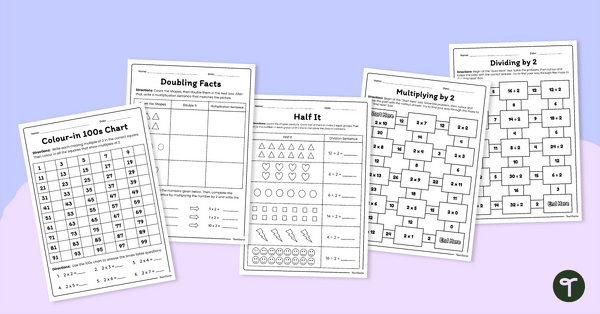
Multiplication and Division Practice by 2s Worksheet Pack
Incorporate multiplication and division practice in your classroom with this Year 2 worksheet pack that helps teachers strengthen students’ fluency with the two times table and related division facts using doubling and halving strategies.
- Plus Plan
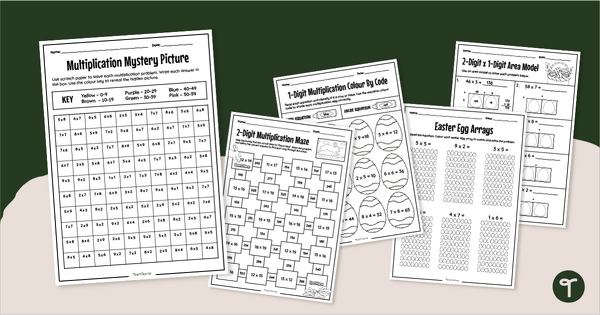
Differentiated Easter Multiplication Worksheets (2-4)
Hop into the Easter season with differentiated Easter Multiplication Worksheets for middle-and-upper primary students.
- Plus Plan
Multiplication Facts PowerPoint - Two Times Tables
A 30 slide PowerPoint to use when learning about multiplication.
- Plus Plan
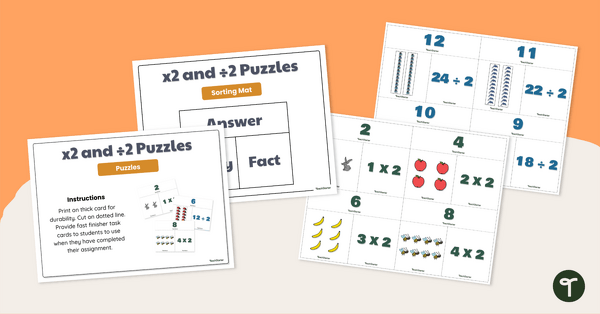
Multiplication and Division Puzzles
Incorporate multiplication and division puzzles that help students build fluency with the 2× facts and related ÷2 facts.
- Plus Plan
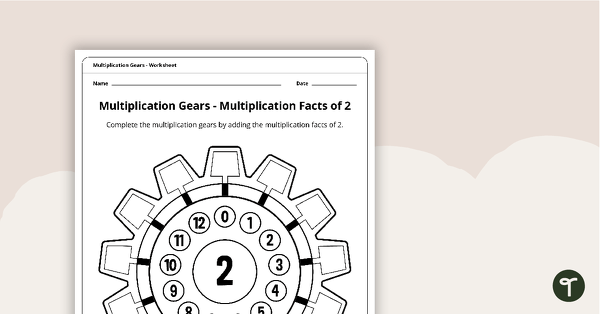
Multiplication Gears Worksheet - Multiplication Facts of 2
A worksheet to use when learning the multiplication facts of two.
- Free Plan
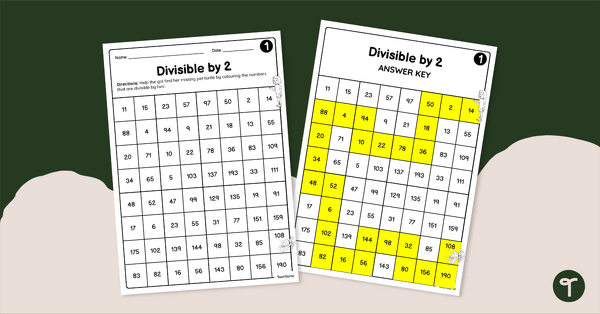
Divisible by 2 Maze Worksheets
Help students practise determining if a number is divisible by 2 with this fun set of maze worksheets.
- Plus Plan
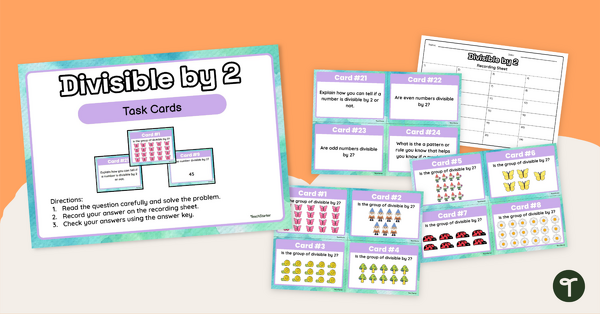
Divisible by 2 - Task Cards
Help your students practice determining if a number is divisible by 2 with this set of task cards.
- Plus Plan
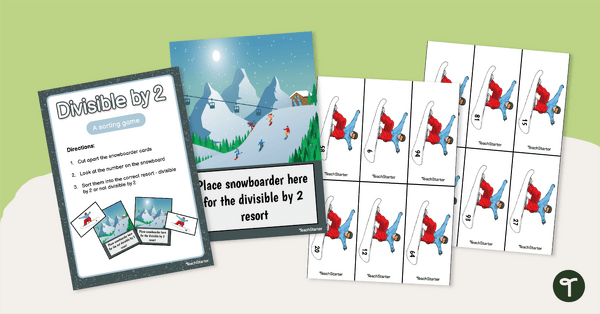
Divisible by 2 Sorting Activity
Explore numbers divisible by 2 with this fun snowboard-themed sorting activity.
- Plus Plan
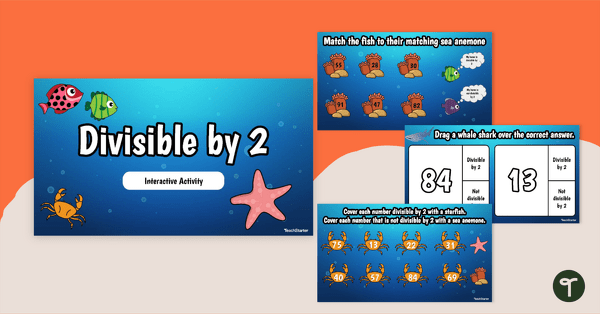
Divisible by 2 Interactive Activity
Explore the divisibility rule of 2 with your students using this fun ocean-themed interactive activity.