Victorian Curriculum
VC2S2H01
scientific knowledge is based on observations of the natural world using the senses, and scientific tools and instruments
- exploring what an observation is, and different ways to make observations using the 5 senses, through guided discussion
- viewing examples of observations, for example recorded in rock paintings, bark drawings, age-appropriate written reports, labelled drawings or photographs, to explore ways that people make and record observations
- listening to people involved in scientific work – such as arborists, nurses, engineers and meteorologists – and asking questions about the importance of observations in their work
- interacting with stories or documentaries about scientists and noticing the ways that they make their observations, such as through drawings, collections, sound recordings and photography, and how they ask questions about what they think they will observe and find
- recognising that astronomers use patterns of movement of celestial objects, such as stars and comets, in the sky to make predictions about future appearances
Show more
5
teaching resources for those 'aha' moments
- Free Plan
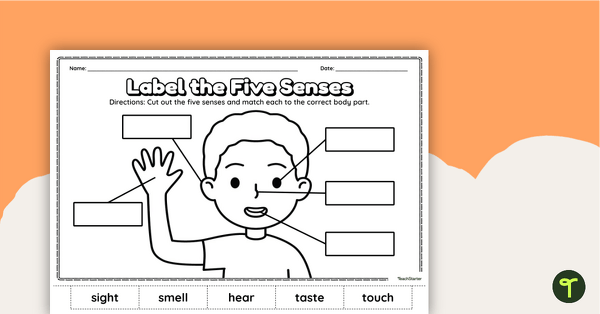
Free 5 Senses Worksheet
Identify the body parts used to sense things with a free 5 Senses Cut and Paste Worksheet.
- Plus Plan
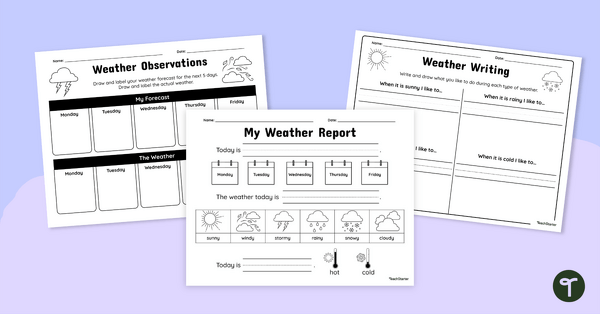
Wonderful Weather – Foundation and Year 1 Worksheets
Make weather predictions, create a weather report and write about the weather with this set of printable worksheets.
- Plus Plan
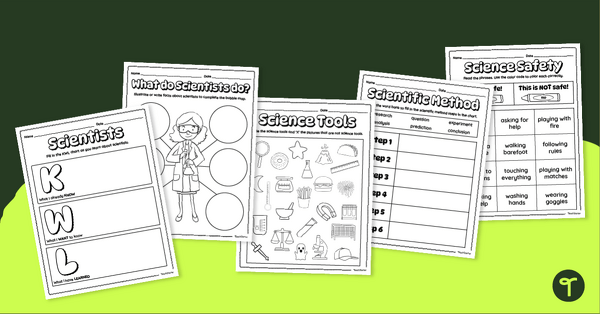
Scientists and What They Do Worksheet Pack
Help your students learn what a scientist is and what scientists do with a set of printable science worksheets for early learners.
- Plus Plan
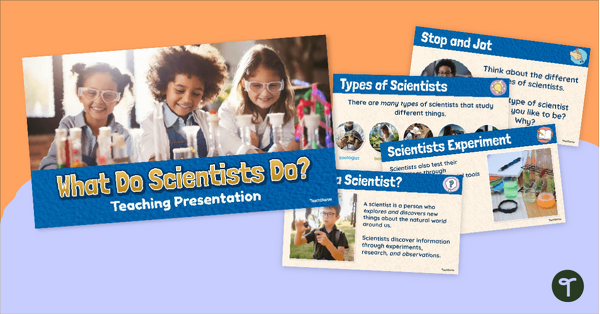
What Do Scientists Do? Teaching Slides
Discover what scientists do, the tools they use, and more with our 'What Do Scientists Do?' Teaching Presentation.
- Plus Plan
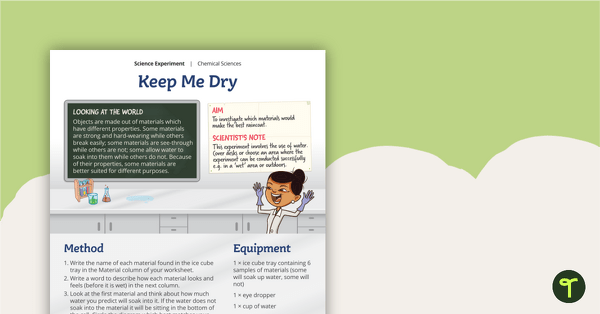
Science Experiment - Keep Me Dry
A science experiment which explores the absorptive properties of materials.