VC2S6U07
the force of gravity keeps Earth and other planets in the solar system in orbit around the Sun; cyclic observable phenomena, including variable day and night length, can be related to Earth’s tilt, rotation on its axis and revolution around the Sun
- exploring simulations of the solar system, such as a pocket solar system, to appreciate the distances and relationships between the Sun and planets
- recognising that gravity keeps the planets in orbit around the Sun
- using three-dimensional models or role-play to model how Earth’s rotation on its axis causes day and night
- using virtual simulations or real-time views of Earth from space to investigate why different regions on Earth, such as the South Pole, have a long period of sunlight and a long period of darkness during one revolution of Earth around the Sun
- using three-dimensional models to investigate how the tilt of Earth points one hemisphere towards the Sun and the other away at different times of the year, and predicting how this affects the amount of sunlight on the surface of different regions on Earth
- researching Aboriginal and/or Torres Strait Islander Peoples’ understandings of the night sky and its use for timekeeping purposes as evidenced in oral cultural records, rock paintings, paintings and stone arrangements
- Plus Plan
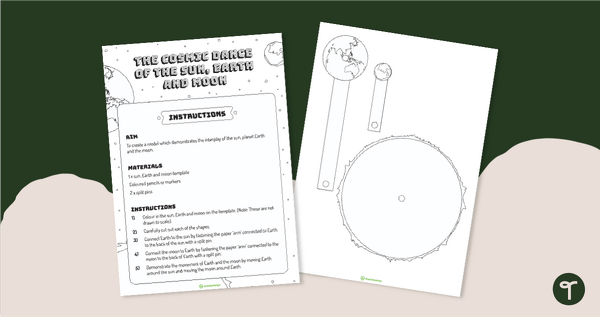
Movement of the Sun, Earth and Moon Model
Demonstrate the interplay and movements of the sun, Earth and moon with this hands-on model.
- Free Plan
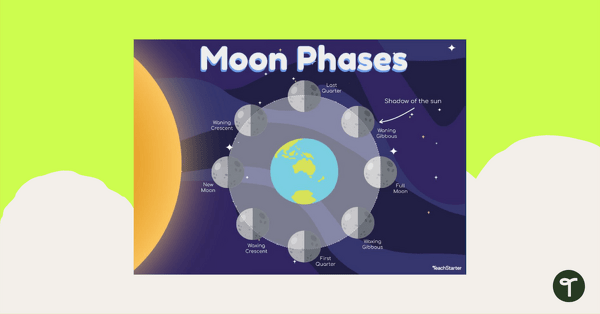
Moon Phases Diagram
Learn the phases of the moon in the southern hemisphere with this set of two posters.
- Free Plan
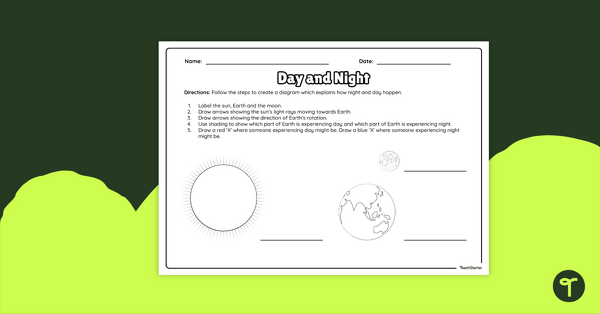
Day and Night – Worksheet
Encourage your students to illustrate the day and night cycle with this free worksheet.
- Plus Plan
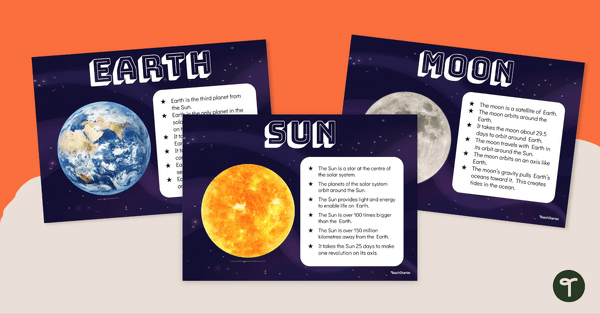
Earth, Sun and Moon – Poster Pack
Display these posters with information about the Earth, Sun and moon in your science classroom.
- Plus Plan
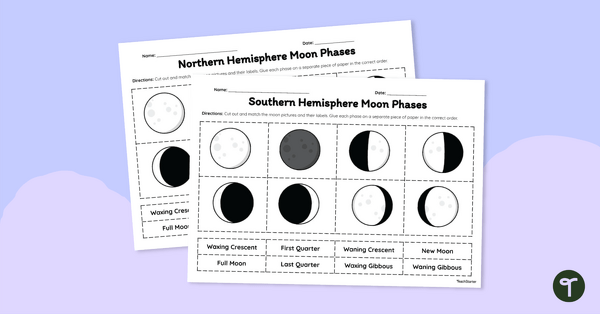
Moon Phases – Cut and Paste Activity
Create a diagram showing the different moon phases and their names with this cut-and-paste activity sheet.
- Plus Plan
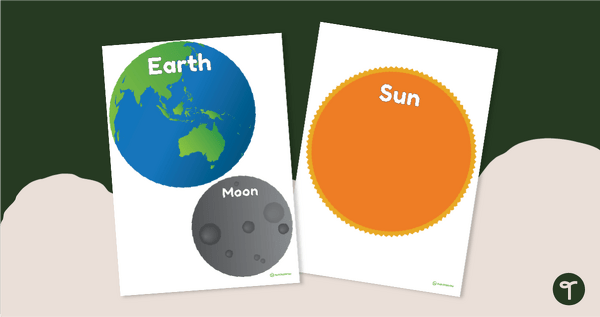
Earth, Sun and Moon Pictures
Colourful pictures of the sun, Earth and moon.
- Plus Plan
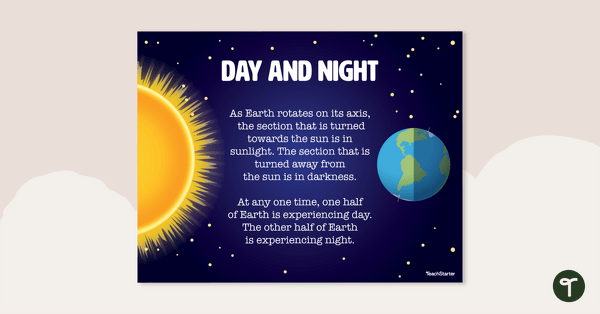
Day and Night Cycle Poster
Display information about Earth’s day and night cycle with this colourful science poster.
- Plus Plan
Earth Day - Acrostic Poem Template Pack
An acrostic poem template to use in the classroom to celebrate Earth Day and National Poetry Month.
- Free Plan
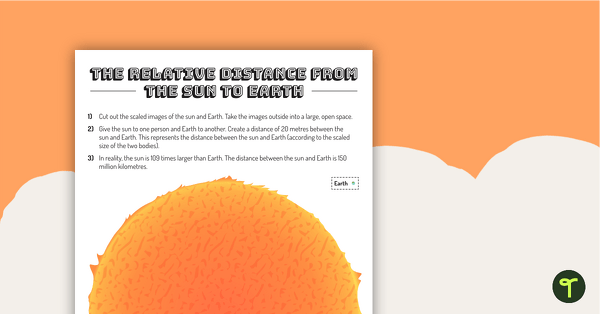
The Relative Distance From the Sun to Earth
Scaled images of the sun and Earth to use when exploring relative size and distance.
- Plus Plan
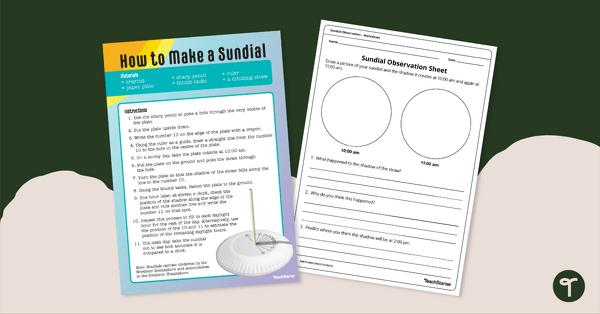
How to Make a Sundial - Template
Print this sundial template, and follow the instructions to make a sundial with your students when exploring concepts of time.
- Plus Plan
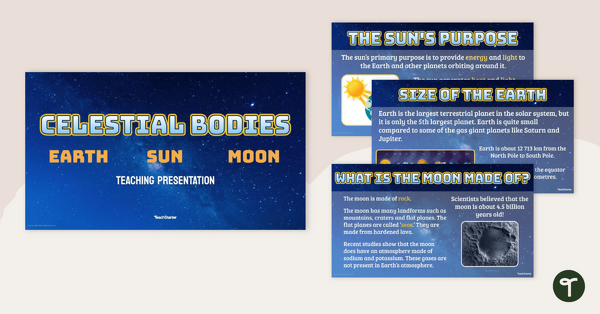
Celestial Bodies – Earth, Sun and Moon – Teaching Presentation
Learn information about the Earth, sun and moon while comparing the physical characteristics of each with this 22-slide teaching presentation.
- Plus Plan
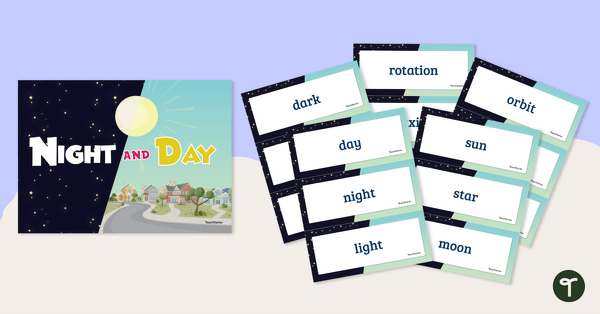
Night and Day Word Wall
A set of vocabulary words related to night and day.
- Plus Plan
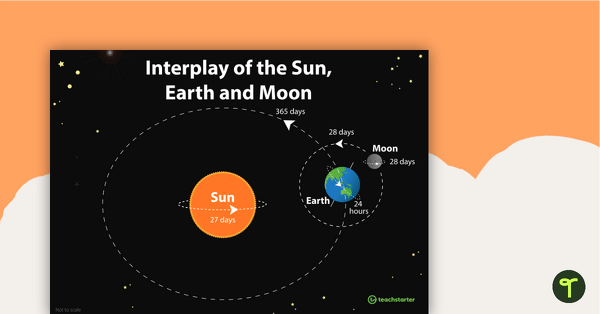
Interplay of the Sun, Earth and Moon Poster
A poster showing the interplay of the Sun, Earth and Moon.
- Free Plan
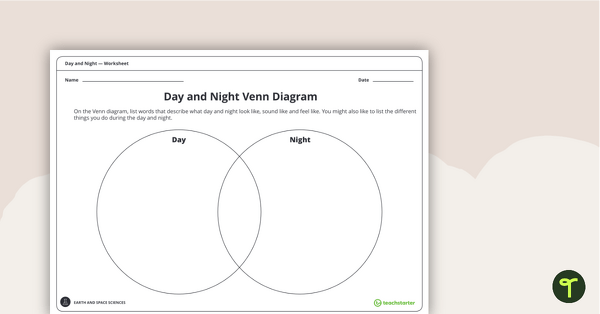
Day and Night Venn Diagram
Brainstorm the similarities and differences between day and night using this Venn Diagram worksheet with your students.