VC2S6I01
investigable questions and reasoned predictions can be used in guiding investigations to identify patterns and test relationships
- posing questions that can be investigated scientifically, such as ‘Do all animals in desert habitats have ways to survive without water?’
- posing investigable questions to identify patterns, such as ‘What type of material is the best conductor and what is the best insulator of electricity?’
- making predictions to test relationships, such as whether a particular arrangement of mirrors will enable viewing around corners
- making reasoned predictions about the properties of an unknown solid, liquid or gas
- predicting the relationship between the loudness of a sound and the distance of the sound from its source
- Plus Plan
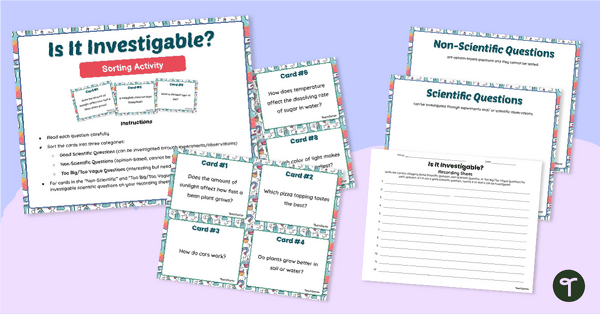
'Is It An Investigable Question?’ Sorting Activity
Help students determine examples of investigable science questions with our ‘Is It An Investigable Question’ sorting activity.
- Plus Plan
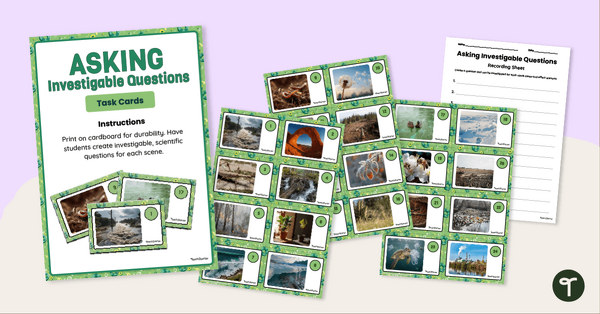
Asking Testable Questions Activity Cards
Boost science inquiry skills and teach students how to ask scientific questions with an engaging Asking Investigable Questions Activity Pack.
- Plus Plan
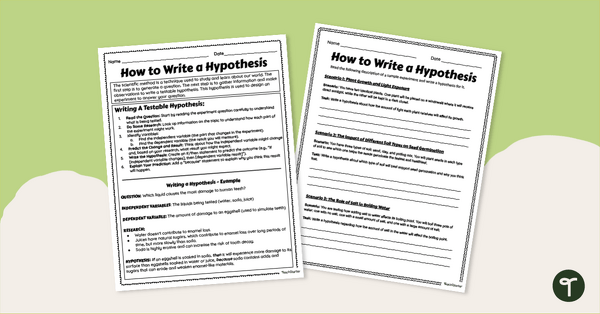
How to Write a Hypothesis Worksheet
Teach your students to write a hypothesis with a printable writing guide and a hypothesis-writing practice worksheet.
- Plus Plan
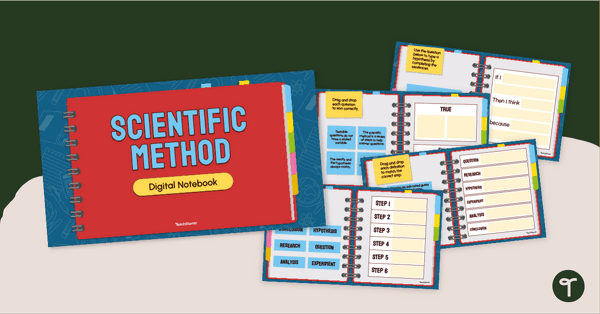
Scientific Method Digital Learning Activity
Help your students understand the steps in the scientific process with an engaging Scientific Method Digital Learning Notebook activity.
- Plus Plan
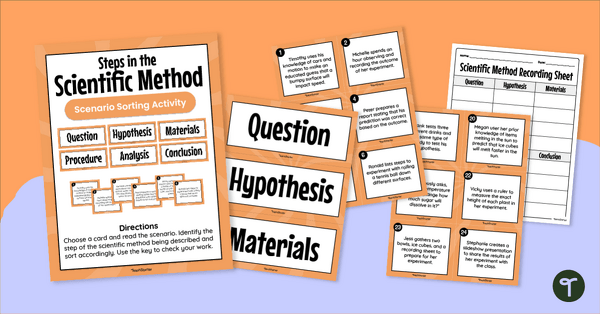
Scientific Investigation Scenarios - Sorting Activity
Analyse scientific investigation scenarios to determine which stage in the scientific method is being described with a printable Scientific Method Sorting Activity.
- Plus Plan
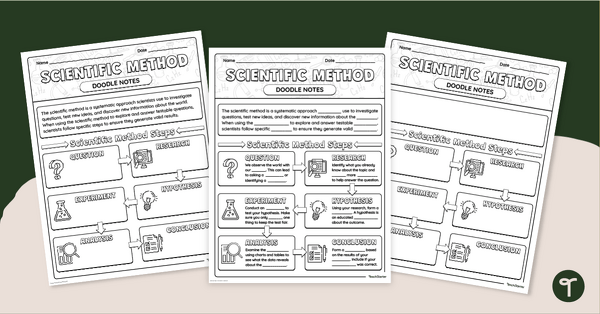
Differentiated Scientific Method Doodle Notes Templates
Use scientific method doodle notes to turn learning the scientific method into a meaningful note-taking session for students!
- Plus Plan
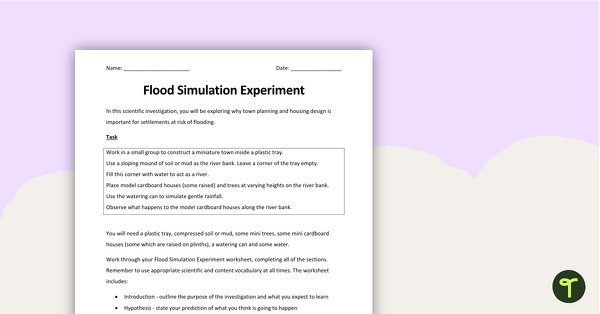
Natural Disasters - Flood Simulation Experiment
A hands-on experiment to use when exploring natural disasters.
- Plus Plan
Facts of the Matter
This Chemical Sciences unit explores the concept that solids, liquids and gases have different observable properties and behave in different ways.