ACELY1698
Show how ideas and points of view in texts are conveyed through the use of vocabulary, including idiomatic expressions, objective and subjective language, and that these can change according to context
Elaborations
- identifying the narrative voice (the person or entity through whom the audience experiences the story) in a literary work, discussing the impact of first person narration on empathy and engagement (Skills: Literacy, Critical and Creative Thinking, Personal and Social Capability)
- Plus Plan
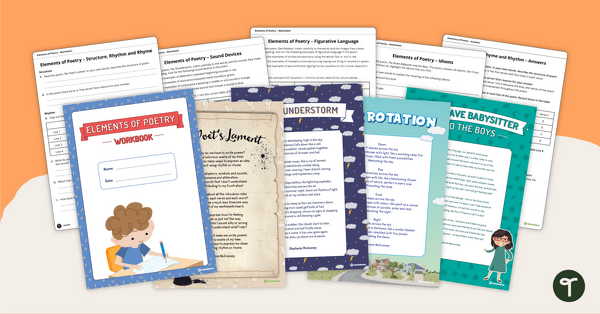
Elements of Poetry Workbook
Explore the wonders of poetry with this set of poems and accompanying worksheets designed specifically for children.
- Plus Plan
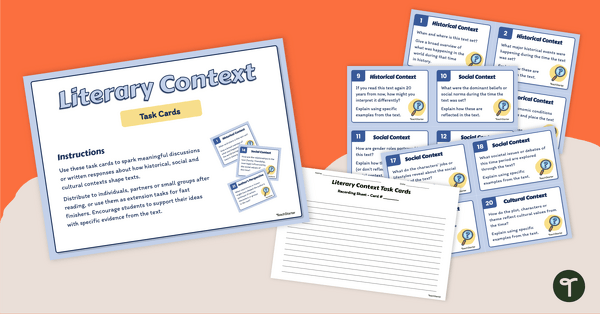
Literary Context Task Cards
Explore literary context using this set of 36 engaging task cards designed to help students analyse the historical, social and cultural influences behind the texts they read.
- Plus Plan
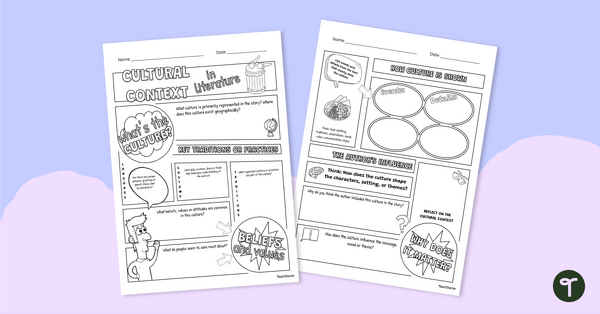
Cultural Context in Literature Graphic Organiser
Explore cultural context in literature with this two-page graphic organiser that helps students examine how cultural traditions, values and norms influence texts.
- Plus Plan
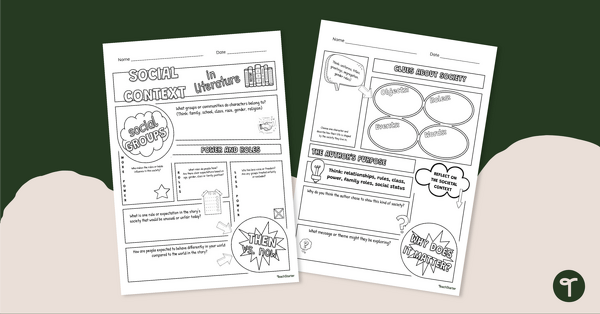
Social Context in Literature Graphic Organiser
Support students to explore social context in literature with this two-page graphic organiser that helps them explore societal norms in a piece of literature.
- Plus Plan
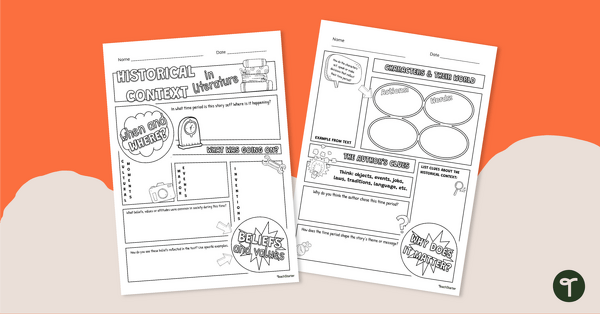
Historical Context in Literature Graphic Organiser
Support students to explore historical context in literature with this two-page graphic organiser that helps them record key historical details from a piece of literature.