Classifying Matter Teaching Resources
Teach students how to classify matter as pure substances or mixtures with engaging activities aligned with the Australian science curriculum.
This collection of printable and digital worksheets, experiments and activities was created by the teachers of the Teach Starter team to save you time on your lesson plans. That means you'll find resources already carefully reviewed by an expert teacher, plus editable options so you can make the adjustments you need to meet your students' needs.
Need some help with your lesson plans? Read on for a guide from our teacher team, including handy definitions of pure substances and mixtures to share with your students.
How Is Matter Classified?
Before you can dive into actually classifying matter, it helps to explain to students what it actually means to classify matter. Here's a helpful explanation from our teacher team that you can use with your class:
Classifying matter is how we organise different types of matter using its properties or characteristics to help us separate the types into different groupings.
We can classify all the matter around us into just two separate types:
- Pure substances
- Mixtures
What Is a Pure Substance? A Kid-Friendly Definition
Let's break down pure substances in a way your science classes can understand, shall we?
A pure substance has the following characteristics that help us with classification:
- It is made up of only one type of matter.
- It cannot be separated into other substances by physical means.
Pure substance can be broken down into two categories:
- Elements — These are substances made up of just one kind of atom and cannot be broken down or transformed by a chemical reaction. For example, helium is an element that we classify as a pure substance.
- Compounds — A compound is made up of two or more elements that have bonded together to form one. These elements are chemically bonded together and cannot be separated. Water is a compound that we classify as a pure substance as its elements — hydrogen and oxygen — are bonded together.
What Is a Mixture? A Kid-Friendly Definition
If a pure substance is comprised of just one type of matter and cannot be broken down, it might not surprise your students to hear that mixtures have the opposite characteristics.
A mixture:
- Is made up of two or more different types of matter
- Can be separated by physical means
A kid-friendly example of a mixture is a bowl of milk and cereal. There are two different types of matter in the bowl, and you can separate the two types (although it might get messy!).
- Plus Plan
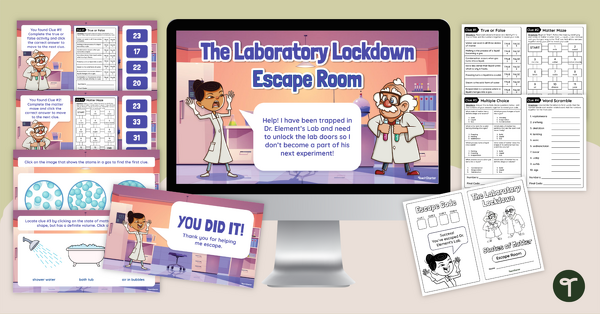
Laboratory Escape Room - States of Matter Game
Use an Escape Room-styled States of Matter Game to engage and excite your students about the forms and changes seen in matter.
- Plus Plan
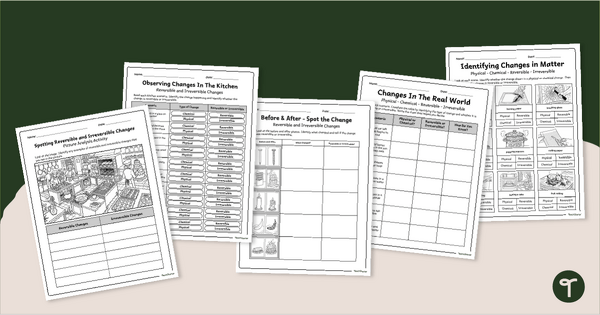
Irreversible & Reversible Changes Worksheet Pack (5-6)
Explore chemical and physical changes in matter with our Irreversible and Reversible Changes Worksheet Pack.
- Plus Plan

Solids, Liquids and Gases PowerPoint
Teach your students about matter with a Solids, Liquids and Gases PowerPoint.
- Plus Plan
Year 3 States of Matter - Nonfiction Reading Comprehension
Teach science and reading skills with a set of printable Year 3 Reading Worksheets about the three states of matter.
- Plus Plan
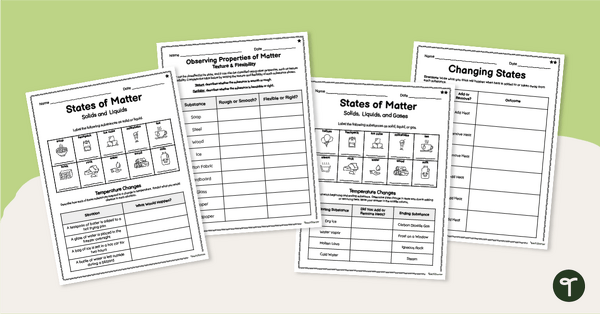
Year 3 Matter Worksheets - Properties & Changes
Reinforce your students' understanding of the properties of matter and changes in state with a set of printable differentiated Matter Worksheets.
- Plus Plan
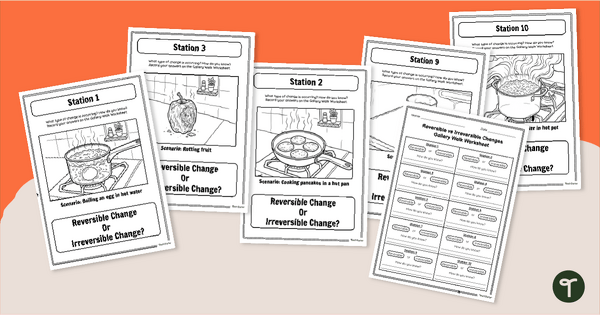
Reversible vs Irreversible Changes Gallery Walk Activity
Explore and explain chemical and physical changes with an engaging Reversible vs Irreversible Changes Gallery Walk Activity.
- Plus Plan

3 States of Matter - I Spy Worksheets
Recognise examples of solids, liquids, and gases with a pack of printable States of Matter I Spy Worksheets!
- Plus Plan
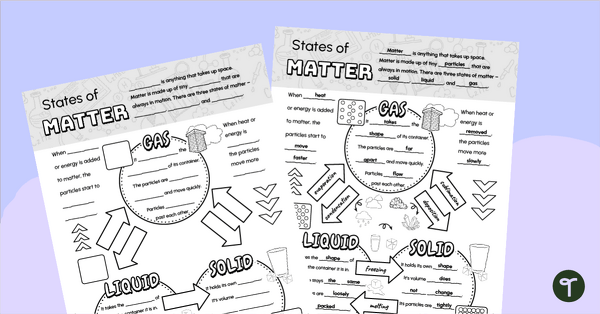
States of Matter Doodle Notes Template
Improve note-taking skills with a printable States of Matter Doodle Notes Template.
- Plus Plan
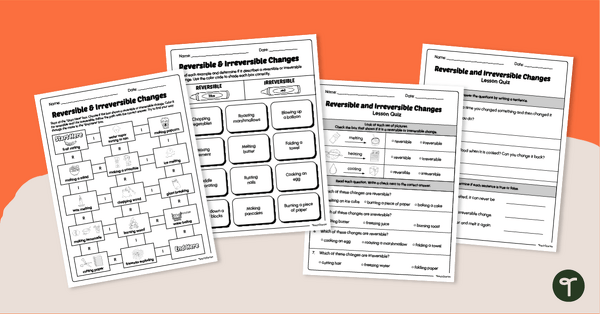
Reversible and Irreversible Changes Worksheet Pack
Download our Reversible and Irreversible Changes Worksheet Pack to help your students learn about temporary and permanent changes in matter.
- Plus Plan
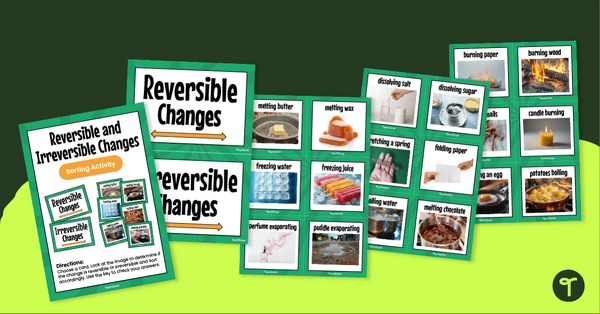
Reversible and Irreversible Changes Sort
Identify examples of reversible and irreversible changes with an engaging Matter Card Game for kids!
- Plus Plan
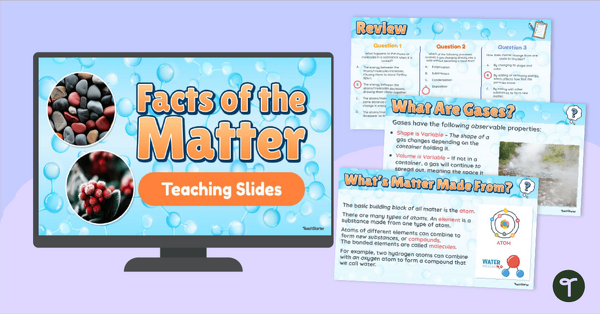
Facts of the Matter PowerPoint Presentation
Intoduce your students to matter and change with an engaging interactive teaching presentation for Year 5.
- Plus Plan
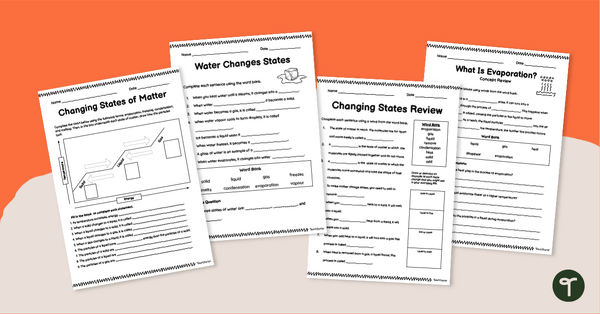
Changing States of Matter Worksheets
Introduce your students to the changing phases of matter with a set of printable science worksheets.
- Plus Plan
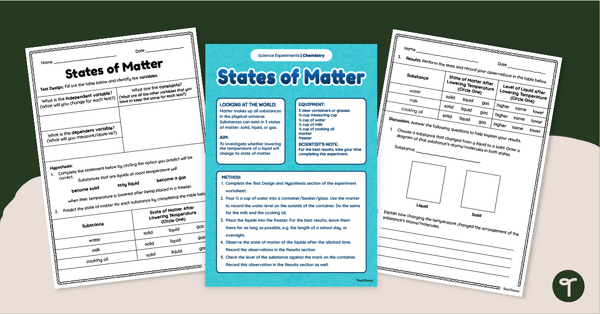
Matter Experiment – Will All Liquids Freeze?
Investigates whether all liquids will change states when heat is removed with an engaging Matter Experiment.
- Plus Plan
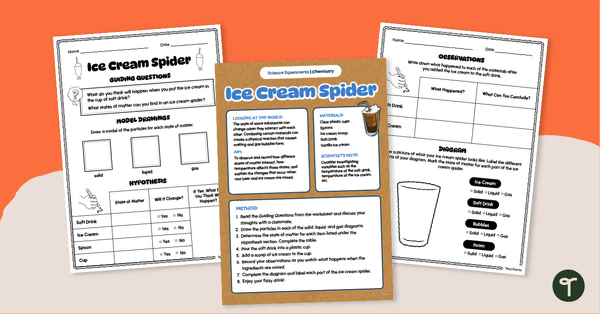
Making an Ice Cream Spider – Matter Experiment
Have fun making ice cream spiders in this exciting Changing States of Matter Science Experiment for Kids.
- Plus Plan
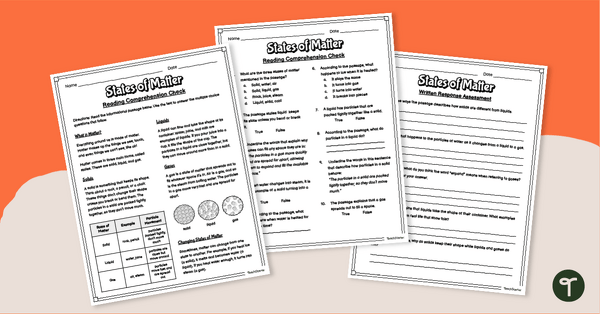
Comprehending Science - States of Matter Worksheet Pack
Use our Comprehending Science - States of Matter Worksheet Pack to review concepts related to solids, liquids, and gases.
- Plus Plan
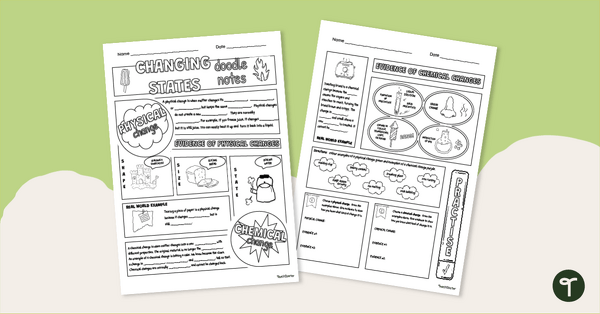
Chemical and Physical Changes in Matter Doodle Notes Template
Use our Chemical and Physical Change Doodle Notes Template to encourage your students to understand more about changes in matter.
- Plus Plan
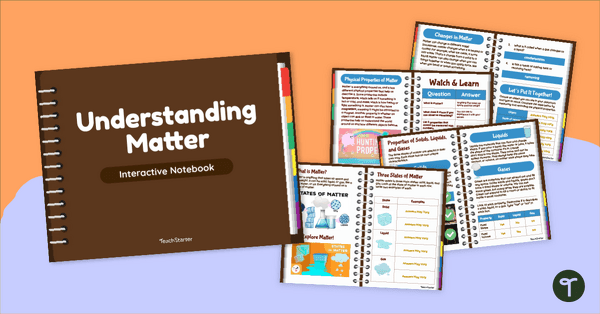
Understanding Matter – Digital Interactive Notebook
Use a digital interactive notebook to teach your students about the states, properties, and changes in matter.
- Plus Plan
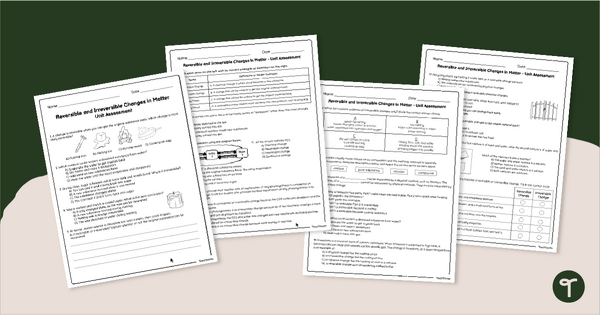
Reversible and Irreversible Changes Test (5-6)
Assess your students on their knowledge of changes in matter with a printable Reversible and Irreversible Changes Test.
- Plus Plan
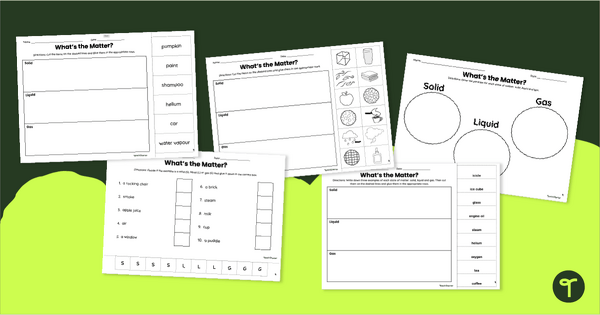
What's the Matter? Worksheets
Help your students differentiate between states of matter (solid, liquid, and gas) with a set of printable ‘What’s the Matter?’ Cut and Paste worksheets.
- Plus Plan
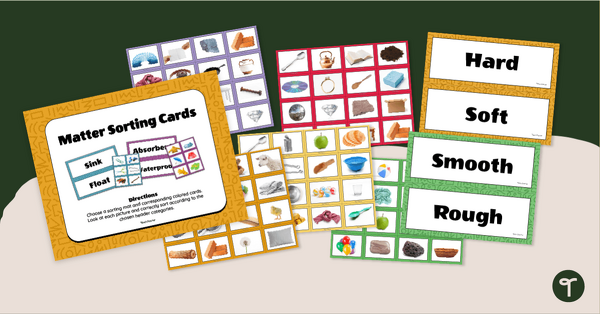
Sort It Out! Properties of Matter Activity
Use our Properties of Matter Sorting Activity cards to create an engaging Matter Sorting Station in your classroom.
- Plus Plan
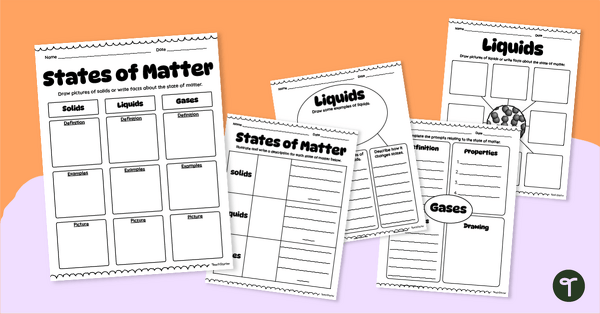
States of Matter Graphic Organiser Pack
Use our States of Matter graphic organisers to help your students record what they have learned about the three forms of matter.
- Plus Plan
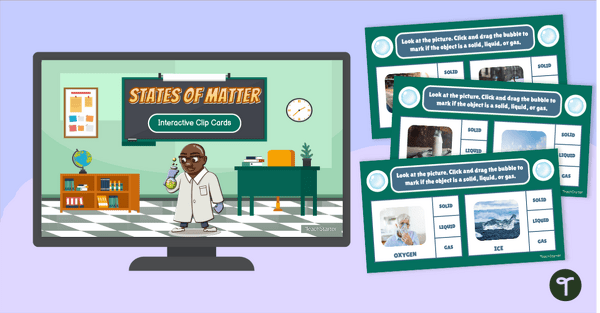
States of Matter Interactive Clip Cards
Drag and drop to identify the three states of matter with a set of interactive clip cards.
- Plus Plan
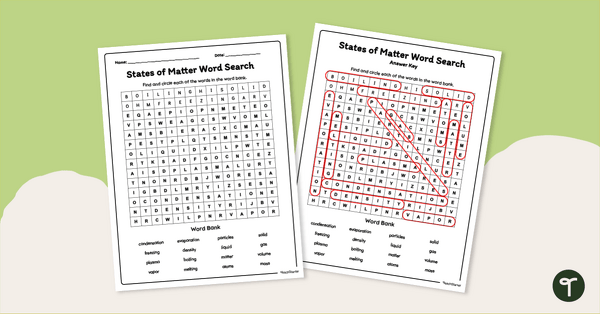
States of Matter Word Find - Upper Years
Use a States of Matter word search to introduce your upper-years students to new academic vocabulary.
- Plus Plan
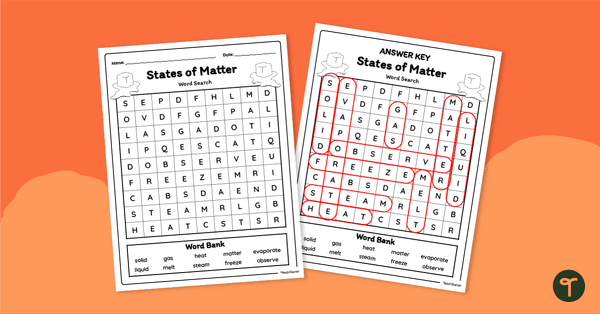
States of Matter Word Search - Year 3
Use a States of Matter word search to introduce your early learners to new academic vocabulary.
- Plus Plan
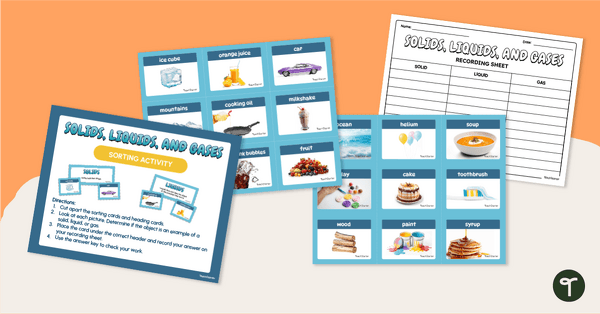
Solids, Liquids and Gases – Sorting Activity
Use a hands-on States of Matter sorting activity to help students identify solids, liquids and gases.
- Plus Plan
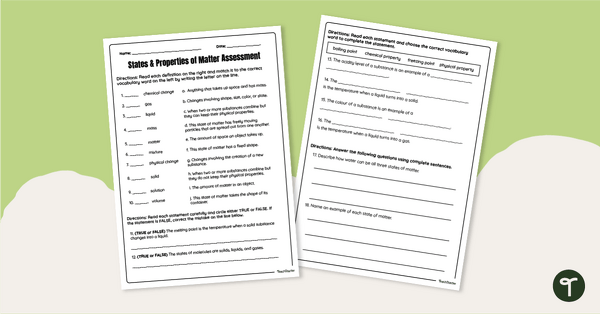
States & Properties of Matter Assessment
Assess your students knowledge of the states and properties of matter with a comprehension Matter Assessment.
- Plus Plan
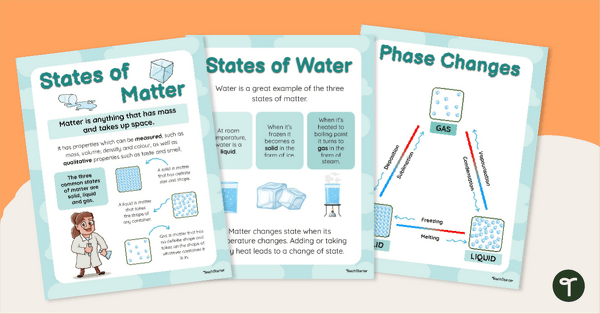
States of Matter Poster Pack
Cover the basics of the states of matter with this set of posters.
- Free Plan
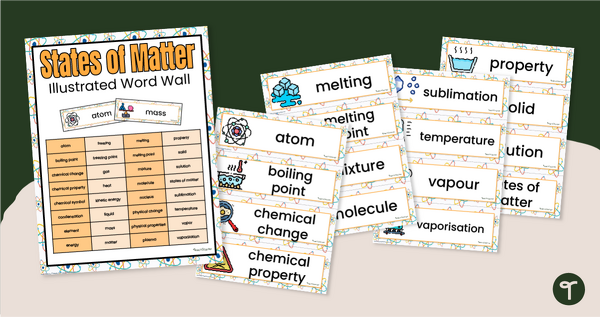
States of Matter Word Wall Vocabulary
Review vocabulary related to matter with a printable illustrated States of Matter Word Wall.
- Plus Plan
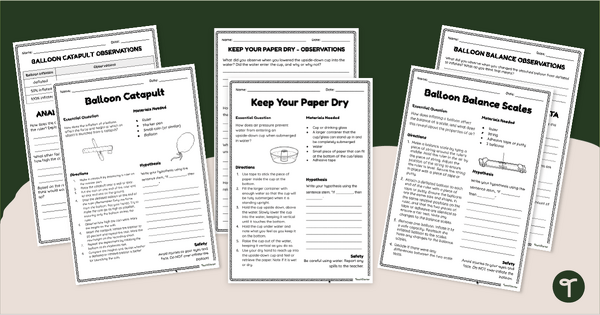
Does Air Have Mass? Matter Science Experiments
Explore the physical properties of gases and discover that air has mass with a set of 4 matter experiments for kids.
- Plus Plan
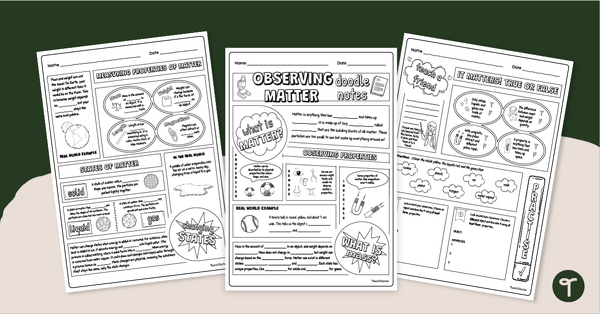
Observing Matter Doodle Notes - Graphic Organiser
Use our Observing Matter Doodle Notes to help your students discover the states, properties, and changes in matter.
- Plus Plan
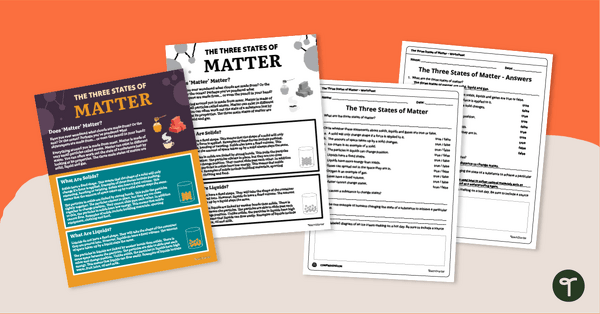
The Three States of Matter – Year 5 Reading Worksheets
Use a Year 5 Reading Comprehension passage and worksheet to teach your students about the three states of matter.
- Plus Plan
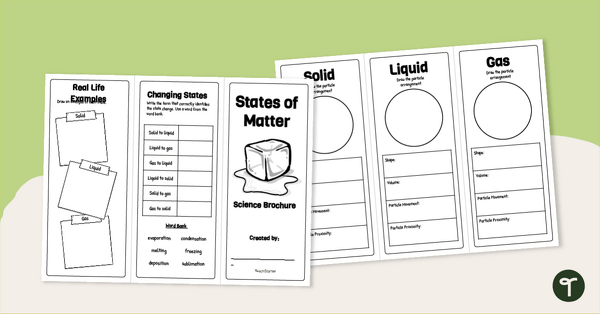
Forms of Matter Brochure Template
Introduce your students to the three states of matter with a printable Forms of Matter Foldable Brochure Template.