Scientific Method Teaching Resources
Teach the scientific method in your science classes this school year with printable worksheets, classroom science posters and more teacher-created resources made for Australian teachers.
Get students thinking like a scientist as they learn to form a hypothesis, manipulate variables and draw conclusions with curriculum-aligned resources that walk students through each step of the method.
New to teaching this section of the science curriculum, or just looking for some tips on engaging your students? Read on for a primer from our teacher team, including a look at the different steps of the scientific method and ways to explain the concept to your students.
What Is the Scientific Method? A Kid-Friendly Definition
Let's start with a student-friendly way to explain the method and why we discuss it in science class.
The scientific method is a process that scientists all around the world use when they're conducting experiments and investigations. The method helps them to answer questions and solve problems.
But you don't have to be a scientist working on a major project to get the benefits of applying the method!
In science class, students might use the scientific method to explore the properties of different materials or to investigate the behaviour of living organisms. Kids can also apply the method in maths class, gathering data and analysing patterns or designing experiments to test hypotheses.
What Are the Steps of the Scientific Method?
So how does the scientific method work? It's broken down into a series of steps that make it easy to follow.
- Ask a Question — At the start, scientists or student scientists ask a question about a topic they are interested in. For example, they may ask if plants grow better with more or less water.
- Research — Next, you conduct research to learn more about your question. This could involve reading books, watching videos or even talking to experts in the field.
- Form a Hypothesis — This is a new vocabulary term for most students. A hypothesis is another word for an 'educated guess' that students make about what they think the answer to their question might be. They should use their research to inform this guess. In the example of the question of whether or not plants grow better with more or less after, a student may hypothesise that plants will grow better with more water.
- Test the Hypothesis — In the next step, students design and conduct an experiment to test their hypothesis. They will manipulate one or more variables and observe what happens. In this step, students should collect data and learn about 'control groups,' 'independent variables,' and 'dependent variables.'
- Analyse the Data — It's time to look at data that has been collected and organise it in a way that makes it possible to draw conclusions. At this point in the method, it might help to have your students make graphs or charts to help them analyse the data.
- Draw Conclusions — Based on their analysis, it's time for students to draw conclusions about whether their hypothesis was correct or not. In this step, students should be making 'inferences' and 'predictions.'
- Communicate Results — In the final step of the method, students share their findings with others, such as their classmates or you! This is also the step where students write 'conclusions.'
Who Created the Scientific Method?
Are you looking for some background information to engage your students on this core concept of science?
Introduce them to the mystery behind just who created the scientific method! There are a variety of famous men who have been credited with making this world-renowned process of investigation, from Italian astronomer and physicist Galileo Galilei to British philosopher Sir Francis Bacon. Others say an Arabic physicist named Ibn al-Haytham should get more credit for his role in giving us a way to systematically go about forming a hypothesis and testing it.
So what's the answer?
Why not challenge your students to do a little ... investigation?
- Plus Plan
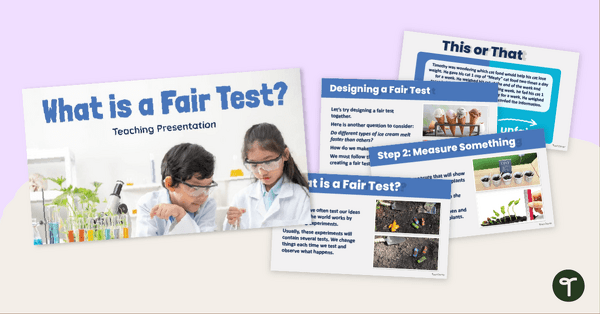
What is a Fair Test? PowerPoint - Year 3 and Year 4
Teach your Year 3 and 4 students about fair tests with an engaging 'What is a Fair Test? Teaching Slide Presentation.
- Plus Plan
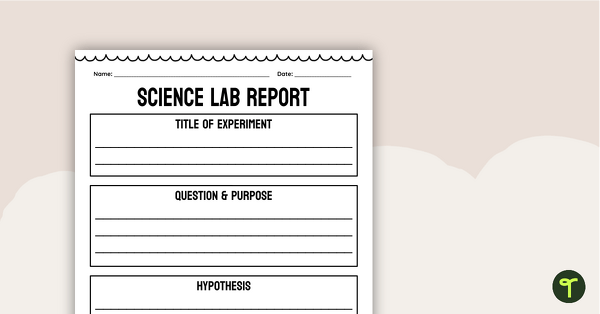
Science Lab Report Template
Use a Science Lab Report Template to help your students organise their findings in any scientific method lab experiment.
- Plus Plan
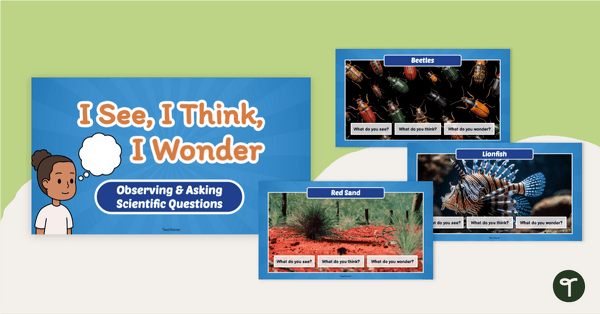
I See, I Think, I Wonder - Science Inquiry PowerPoint
Teach students to ask scientific questions, make observations, and inspire discussions with an engaging ‘I See, I Think, I Wonder’ Science Inquiry Slide Deck.
- Plus Plan
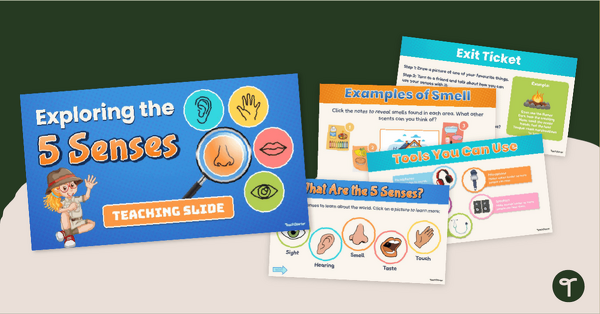
Exploring the 5 Senses PowerPoint
Explore the five senses, how we use them, and more with an engaging 5 Senses PowerPoint Presentation.
- Plus Plan
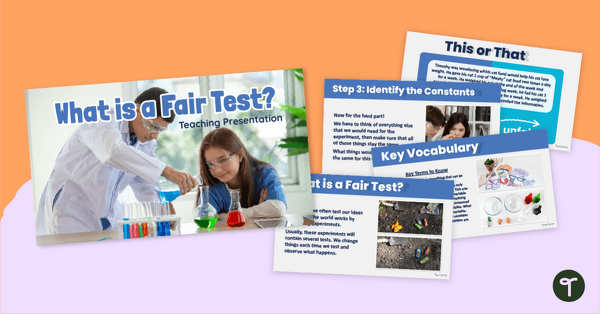
What is a Fair Test? PowerPoint - Year 5 & Year 6
Teach your students about fair testing in science with an engaging 'What is a Fair Test? Teaching Slide Presentation.
- Plus Plan
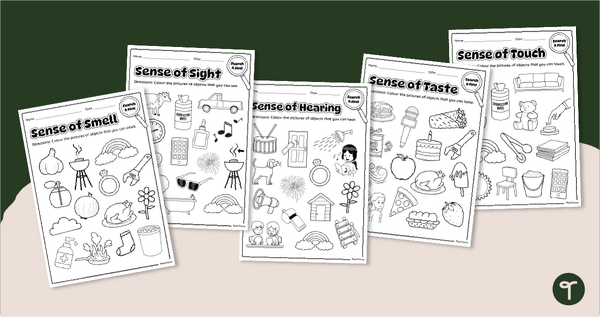
Five Senses Colouring Worksheets
Help your students understand more about their senses with a pack of printable 5 Senses colouring worksheets.
- Plus Plan
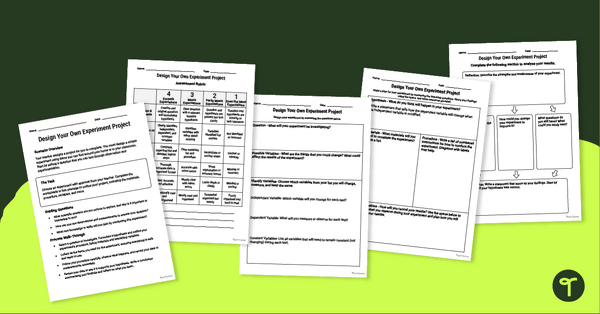
Design Your Own Science Experiment Project
Design your own science experiments and science fair projects with an experimental design project guide and planning templates.
- Plus Plan
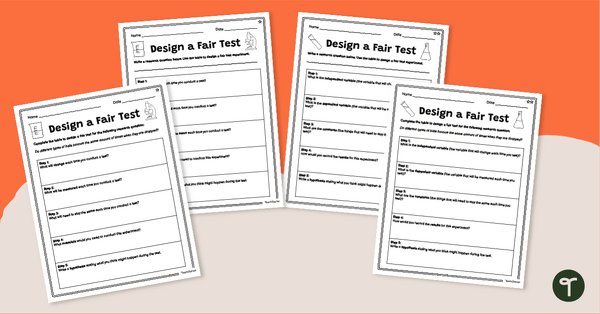
Fair Testing in Science - Differentiated Experimental Design Worksheets
Use a differentiated experimental design worksheet to introduce your students to the concept of fair testing in science.
- Plus Plan
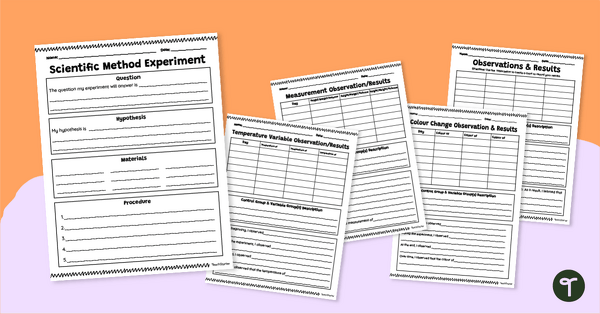
Science Investigation Worksheets - Experiment Data Collection Templates
Record scientific observations and results with a variety of ready-made science investigation worksheets.
- Plus Plan
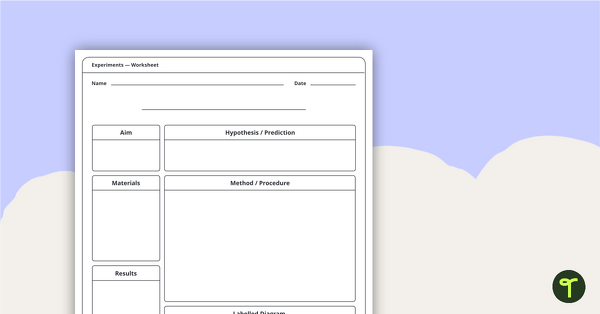
Science Experiment Recording Sheet
A recording sheet to use when completing a Science experiment.
- Plus Plan
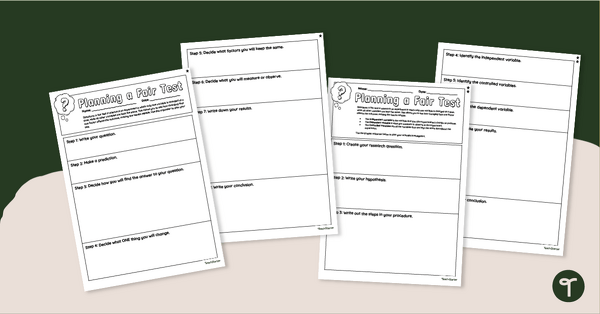
Planning a Fair Test Graphic Organisers
Plan and implement fair scientific tests in the classroom with printable Planning a Fair Test Graphic Organisers.
- Plus Plan
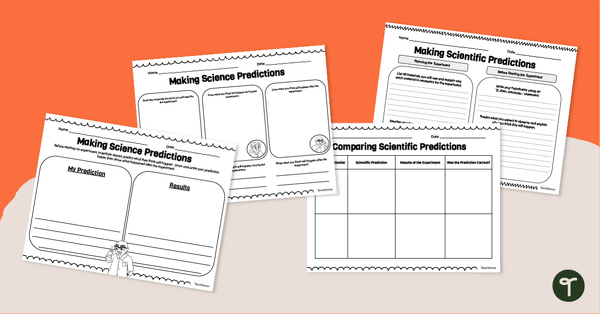
Making Predictions in Science - Worksheets (Differentiated)
Introduce your students to making predictions in science with a set of differentiated Scientific Prediction Worksheets.
- Plus Plan
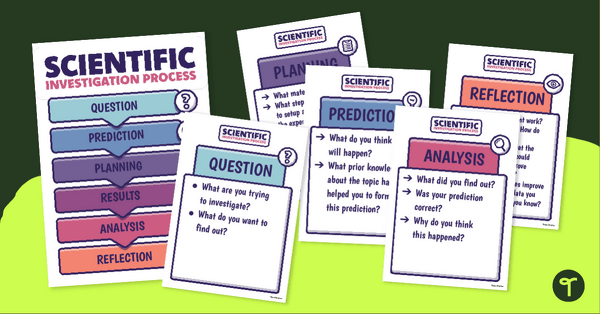
Scientific Investigation Process – Posters
Remind your students of the steps to the scientific investigation process with this set of 7 scientific method posters.
- Plus Plan
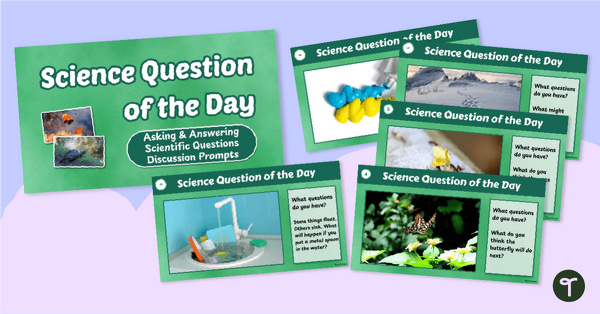
Science Question of the Day Discussion Prompts
Teach your students to ask questions, observe the world, and make scientific predictions with our Science Question of the Day Discussion Prompt Slide Deck.
- Free Plan
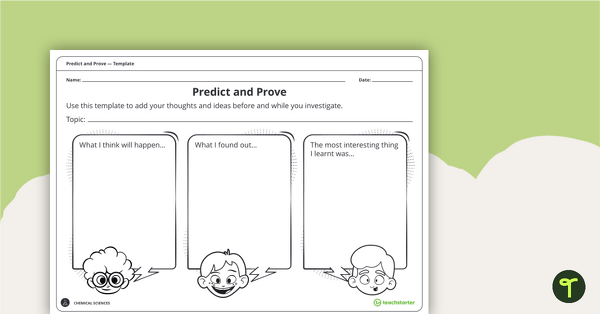
Predict and Prove – Template
A template to help introduce making a hypothesis before starting an investigation.
- Plus Plan
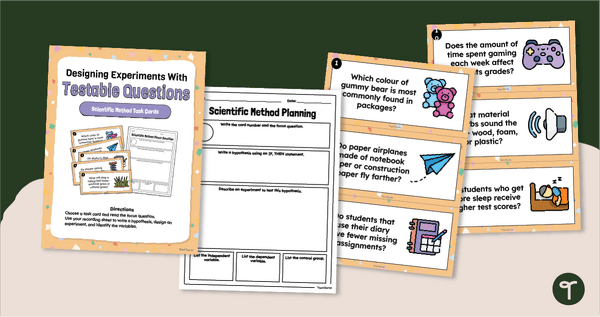
Designing a Science Experiment Task Cards
Help your students plan their own scientific method experiments with a set of printable Scientific Method Experiment Design Task Cards.
- Plus Plan
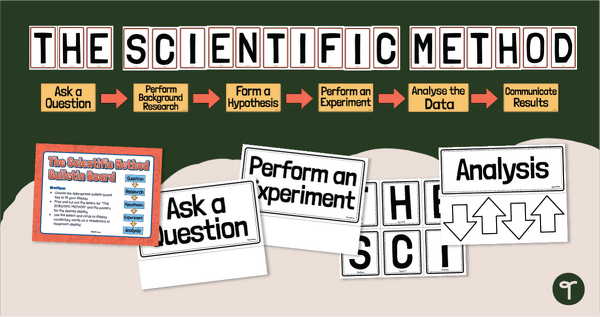
Scientific Method Classroom Display Pack
Use a Scientific Method Classroom Display pack to introduce your students to the steps in the scientific process.
- Plus Plan
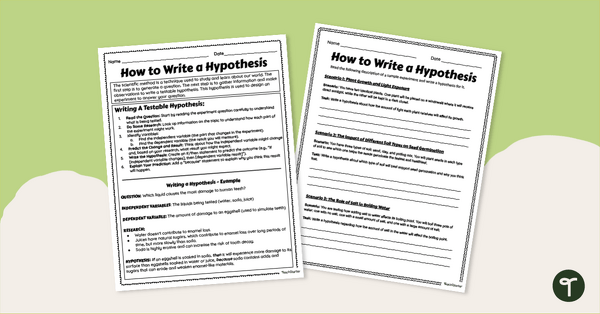
How to Write a Hypothesis Worksheet
Teach your students to write a hypothesis with a printable writing guide and a hypothesis-writing practice worksheet.
- Plus Plan
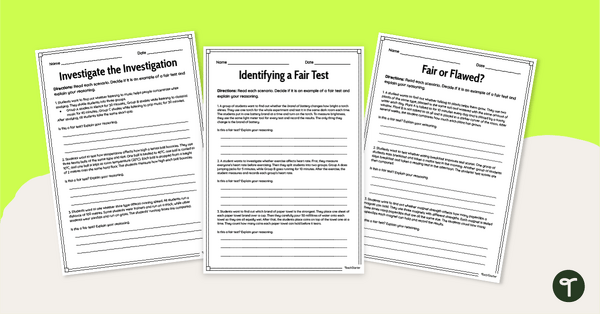
Identify the Fair Test Worksheet Pack
Identify examples and non-examples of fair scientific tests with our Identify The Fair Test Worksheet Pack.
- Plus Plan
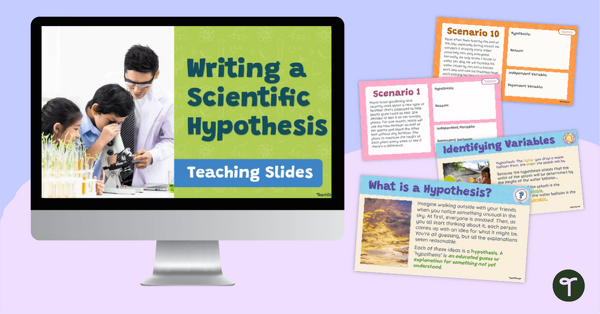
Writing a Scientific Hypothesis PowerPoint
Teach your students how to write a scientific hypothesis with an interactive slide deck and hypothesis writing practice activity.
- Plus Plan
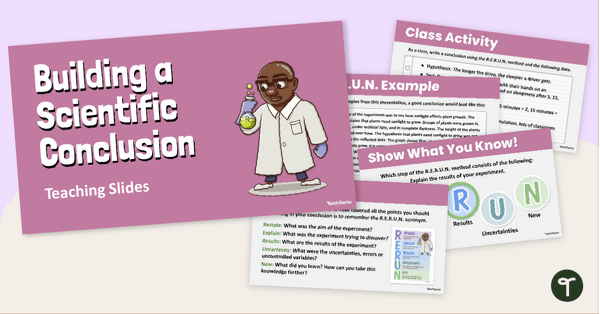
Building a Scientific Conclusion - Teaching Slides
Teach your students the R.E.R.U.N. method for writing a scientific conclusion with an interactive teaching slide deck.
- Plus Plan
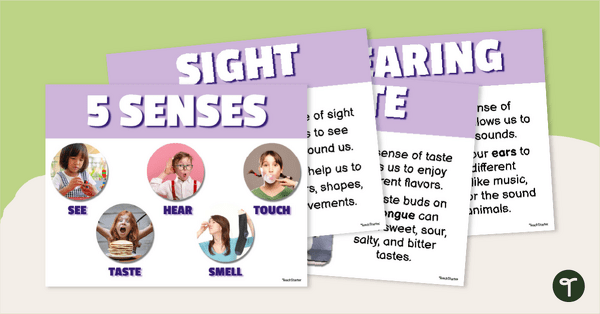
The 5 Senses Posters
Learn about the five different senses with this poster pack for the classroom.
- Free Plan
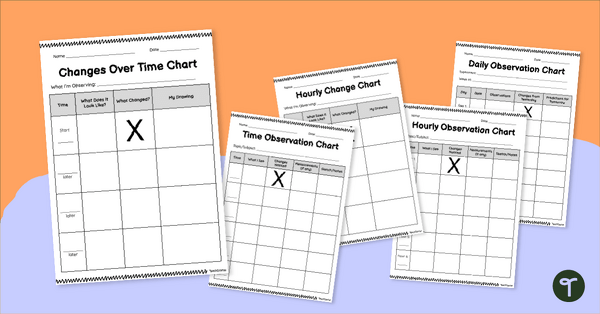
Time-Lapse Observation Charts for Science Inquiry
Track scientific changes over time with a set of printable Time Lapse Observation Charts.
- Plus Plan
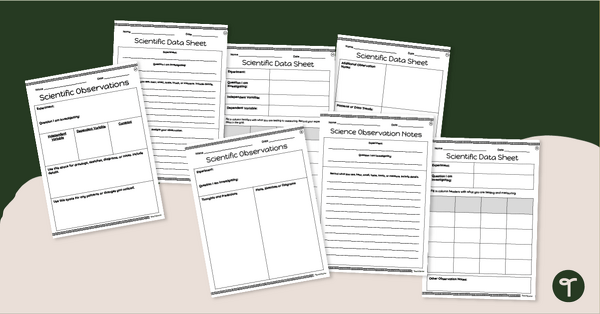
Science Observation Table Templates
Plan, observe, and record scientific observations and data with printable Science Observation Templates for upper primary school students.
- Plus Plan
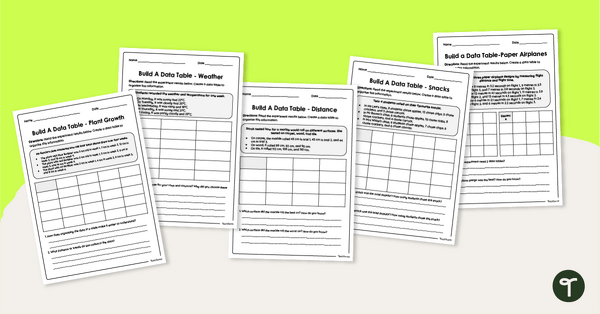
Build a Scientific Data Table Worksheets
Improve scientific data collection skills with printable Construct A Data Table Worksheets.
- Plus Plan
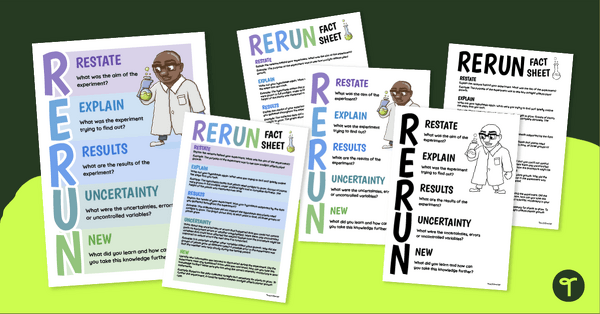
R.E.R.U.N. - Writing a Scientific Conclusion Anchor Charts
Introduce your students to the R.E.R.U.N. method for writing a scientific conclusion with a printable poster and fact sheet.
- Free Plan
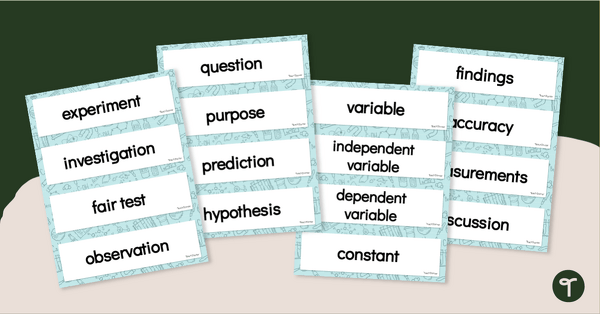
Scientific Method Word Wall Vocabulary
Introduce your students to vocabulary surrounding the Scientific Method with a printable science word wall.
- Plus Plan
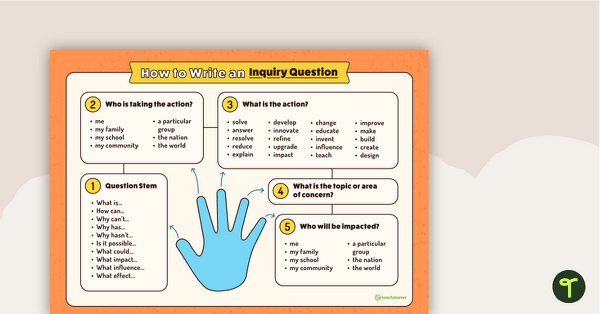
How to Write an Inquiry Question Poster
A poster demonstrating the steps involved in formulating a question for inquiry-based learning.
- Plus Plan
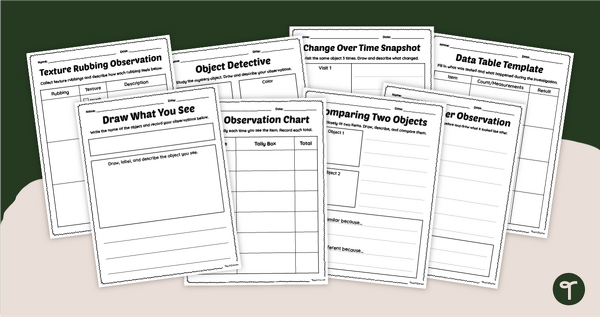
Scientific Observation Graphic Organisers
Record and organise scientific data with printable Scientific Observation Graphic Organisers for kids
- Plus Plan
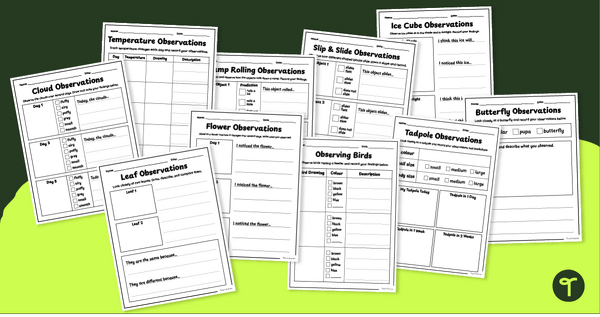
Scientific Prediction & Observation Templates
Introduce your early learners to scientific inquiry skills with a set of printable Scientific Observation templates.
- Plus Plan
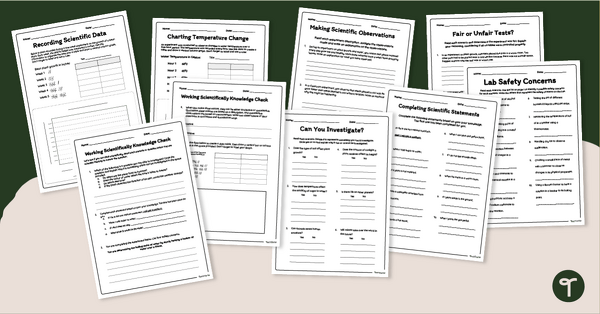
Working Scientifically - Skills for Science Inquiry Worksheet Pack
Improve your students' skills for science class with printable Scientific Inquiry Skills Worksheets.
- Plus Plan
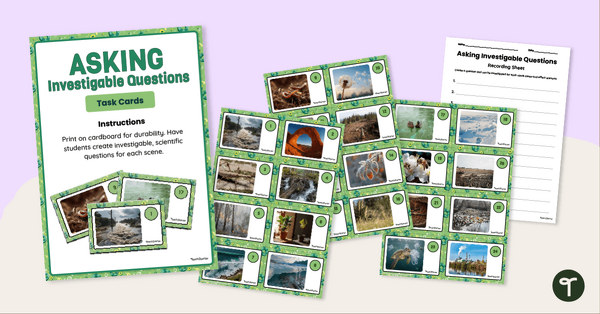
Asking Testable Questions Activity Cards
Boost science inquiry skills and teach students how to ask scientific questions with an engaging Asking Investigable Questions Activity Pack.