Space Science Teaching Resources
Browse printable space science worksheets, digital activities and a whole lot more to open the galaxy up for your primary students.
This collection of Australian science curriculum-aligned teaching resources has been created by our expert teacher team to save your valuable lesson planning time with differentiated and editable science printables and Google Slides.
Take off for the Milky Way with a look at the sun and moon and the eight planets of our solar system, introduce your students to astronomy and the history of space exploration and more with classroom-ready resources that have been carefully curated by our expert teacher team!
Looking to learn more about the space science curriculum for primary students, or just need some fresh ideas to engage your students? Read on for a primer from our teacher team!
What Is Space Science? A Kid-Friendly Definition
Space science is the study of the entire universe beyond Earth's atmosphere! It includes studying stars, the moon, the planets, galaxies, constellations and other phenomena that occur outside our planet.
This field of science covers a broad range of topics such as astrophysics, cosmology, planetary science, astrobiology and more.
How Do You Teach Space to Primary Students?
It's a complicated question, we realise, and every teacher will have their own answer based on both personal teaching philosophy and the state standards their students need to meet.
But space has fascinated kids (and grown-ups) for centuries, at least as far back as the days of Galileo inventing the telescope in the 1600s. And while more and more kids want to grow up to be a social media influencer, there are still plenty of students who are listing 'astronaut' as a future career aspiration — a fact that we can't help but attribute at least in part to teachers and their inspiring lessons on space!

So how do you write your space lesson plans? It might help to start with the themes and topics that kids typically learn throughout primary school, no matter where you teach:
- The Solar System — Your students will get to know the eight planets of our solar system and the names of each, plus their order from the sun and their characteristics.
- The Sun — Students should be learning that the sun is a star as well as learning how it creates light and heat and how it affects the Earth.
- The Moon — Kids will learn about the moon's phases plus its role in the ocean's tides and its relationship to the Earth.
- Stars and Galaxies — The classification of stars and the constellations they form are on tap at this level. Kids may also learn about galaxies and the universe.
- Space Exploration — Taking off with the astronauts, primary learners should be exposed to lessons about the history of space exploration, the first moon landing and the various space missions.
- Space Travel — Related to the concept of exploration, this is a good time to talk about the challenges of space travel, such as zero gravity, and the importance of spacesuits and other equipment.
- Space Technology — What's going on in that wide space outside of the Earth's atmosphere? It's time to teach about space technology, including satellites, telescopes, and the International Space Station.
- Plus Plan
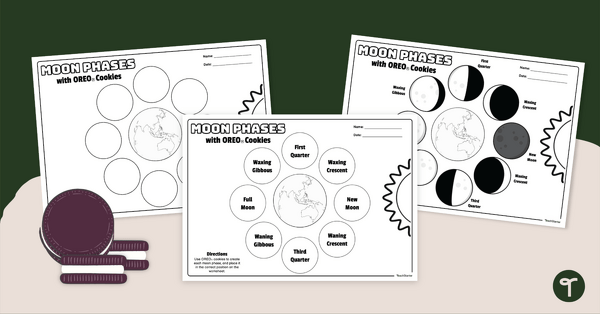
Oreo® Moon Phases Worksheet
Explore moon phases with Oreos® in this tasty worksheet.
- Plus Plan

Planets of Our Solar System PowerPoint
Explore information about the planets in our solar system and their position in relation to the Sun.
- Plus Plan
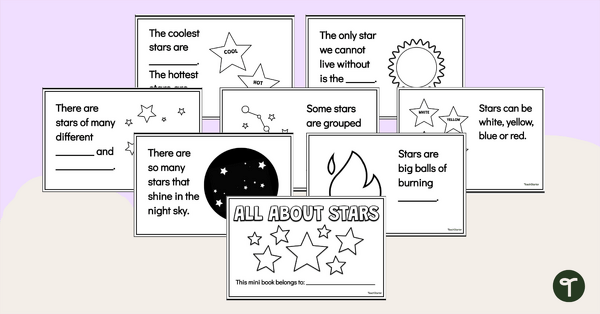
All About Stars – Mini-Book
Learn about the stars in the night sky with this printable mini-book designed for year 1 and 2 students.
- Plus Plan
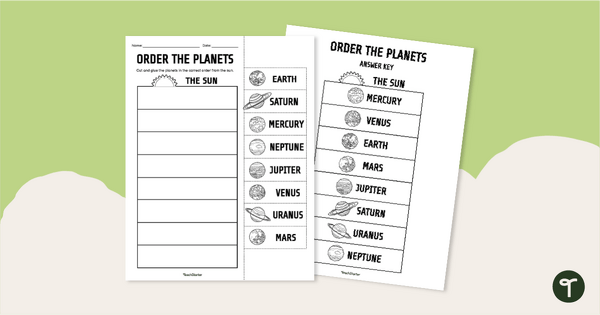
Order the Planets Worksheet
Help students remember the order of the planets with this cut-and-paste style worksheet.
- Plus Plan
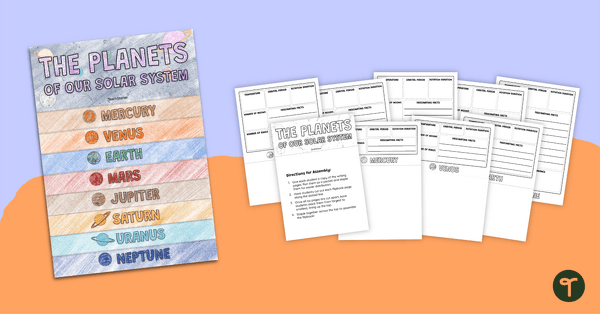
Planets of the Solar System Flipbook
Discover each of the planets of the solar system with this engaging flip book template.
- Plus Plan
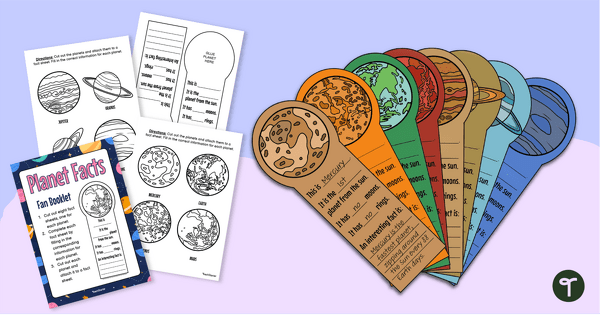
Planet Facts Fan Booklet
Practise knowledge of the planets by creating this fun fan-style activity booklet.
- Plus Plan
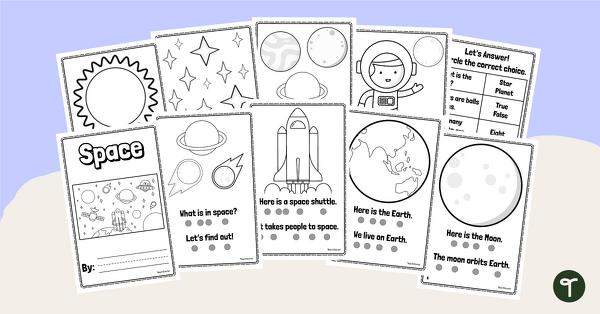
Printable Space Book - Leveled Reader
Read and learn about outer space with a printable space book for kids.
- Free Plan
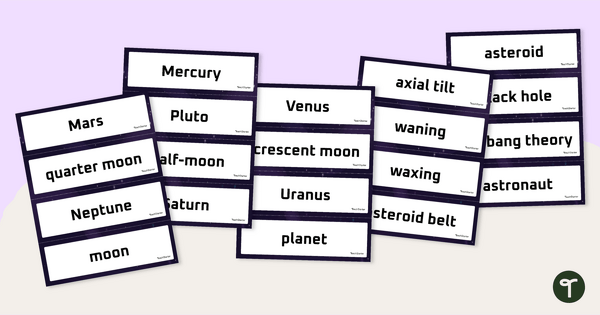
Space - Word Wall Vocabulary
Use these space vocabulary words and space terms to unlock the solar system for your elementary students as they learn about space, the solar system, and the world far beyond your school.
- Free Plan
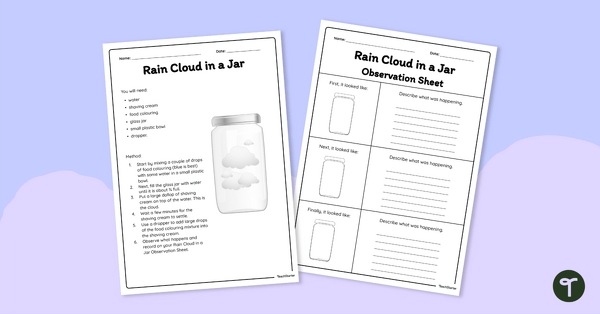
Rain Cloud in a Jar Experiment
Use this science experiment when learning about the different types and features of clouds and how they contribute to the water cycle.
- Plus Plan
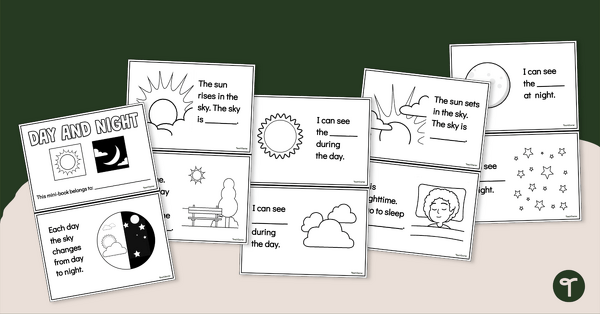
Day and Night Booklet
Learn about the differences between night and day with this printable Day and Night Booklet.
- Plus Plan
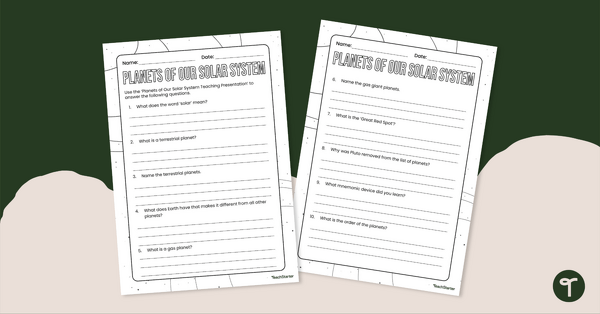
Planets of Our Solar System – Worksheet
Use this worksheet to review planet order, features and classifications.
- Plus Plan
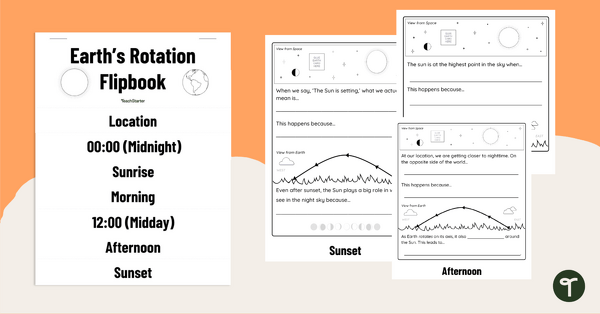
Earth's Rotation – Flipbook
Model and explain how Earth’s rotation causes the sun to move across the sky with this interactive flipbook.
- Plus Plan
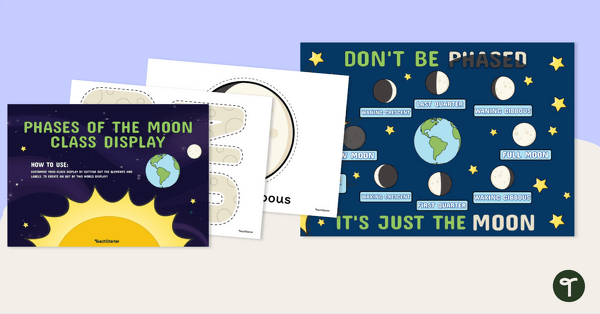
Phases of the Moon Class Display
Learn about the phases of this moon with an out-of-this-world classroom display.
- Plus Plan
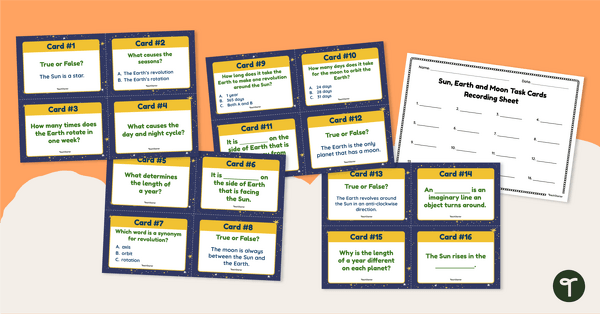
Sun, Earth and Moon Task Cards
Review information about the Earth, Sun and moon with this set of task cards.
- Plus Plan
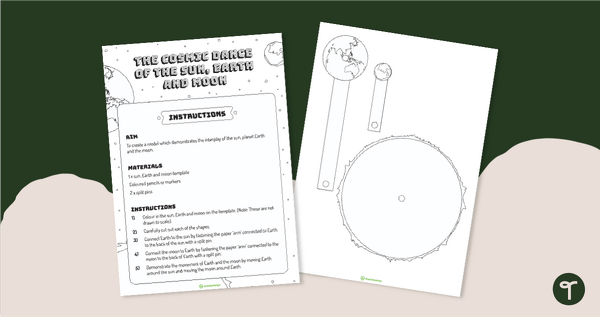
Movement of the Sun, Earth and Moon Model
Demonstrate the interplay and movements of the sun, Earth and moon with this hands-on model.
- Free Plan
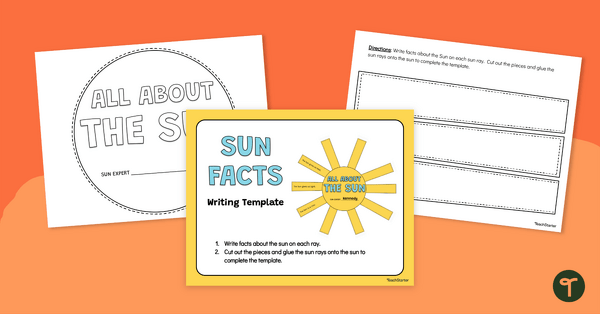
Sun Facts Writing Template
Research, write and display information about the sun with this printable sun template.
- Plus Plan
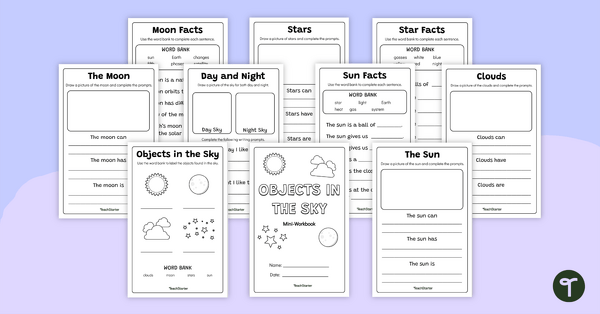
Objects in the Sky – Mini Workbook
Observe, describe and illustrate different objects in the sky with this printable mini-workbook.
- Plus Plan
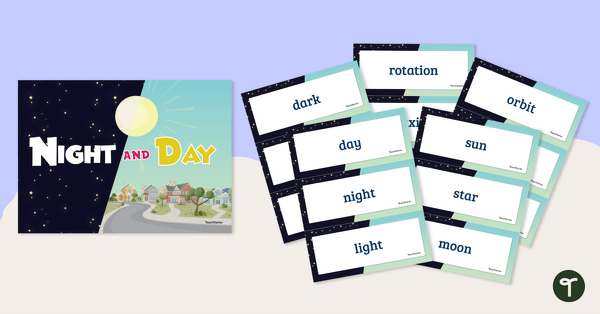
Night and Day Word Wall
A set of vocabulary words related to night and day.
- Plus Plan
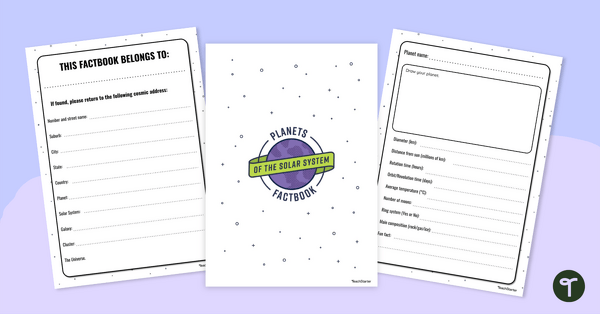
Planets of the Solar System Factbook & Worksheet
Bring the planets in the solar system into focus with a fun worksheet that can be turned into a factbook!
- Plus Plan
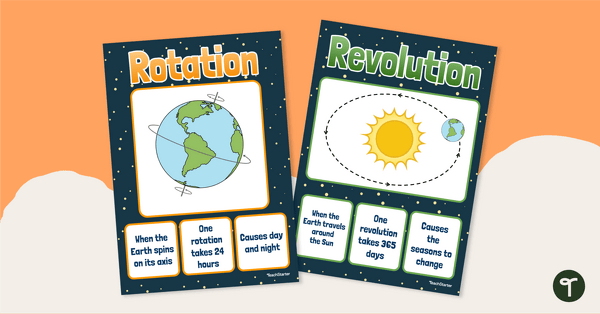
Rotation vs. Revolution Poster Set
Display information in your classroom about the differences between rotation and revolution with this poster set.
- Plus Plan
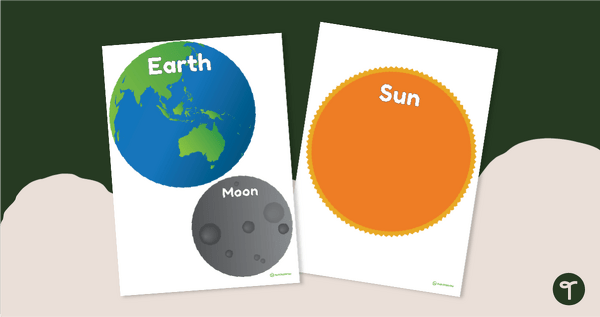
Earth, Sun and Moon Pictures
Colourful pictures of the sun, Earth and moon.
- Plus Plan
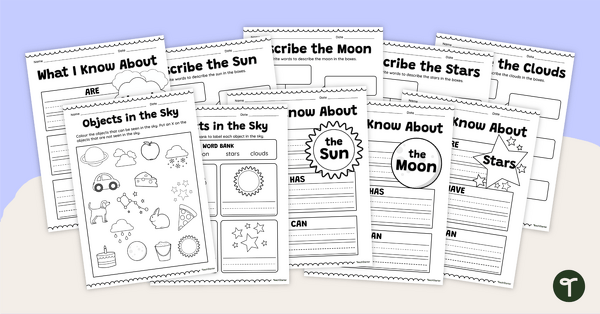
Objects in the Sky – Worksheet Pack
Use this set of worksheets to practise identifying and labelling objects in the sky as well as describing the moon, stars, sun and clouds.
- Free Plan
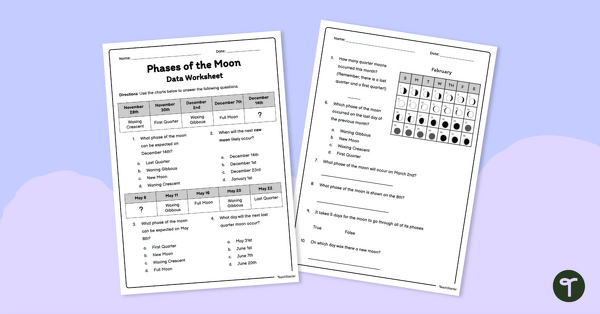
Phases of the Moon – Data Worksheet
Analyse tables and calendars to identify when specific moon phases occur with this Phases of the Moon Data Worksheet.
- Plus Plan
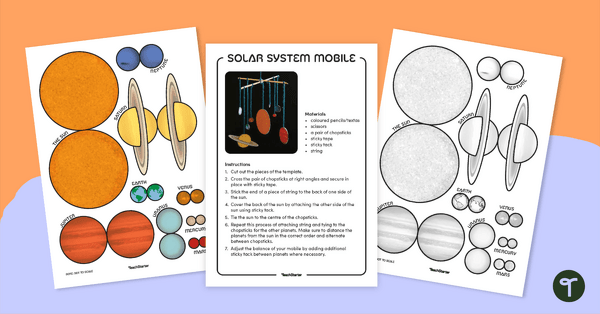
Solar System Craft - Mobile of the Solar System
Use this printable solar system craft when learning about the planets and their position in relation to the Sun.
- Plus Plan
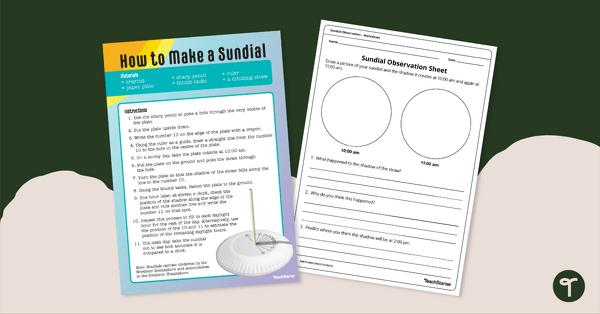
How to Make a Sundial - Template
Print this sundial template, and follow the instructions to make a sundial with your students when exploring concepts of time.
- Plus Plan
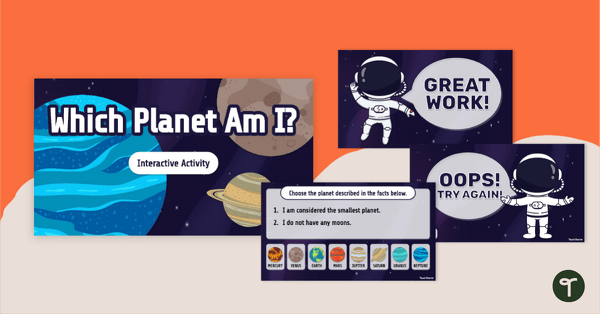
Which Planet Am I? Interactive Activity
Explore the planets of the solar system with this fun and engaging interactive activity.
- Plus Plan
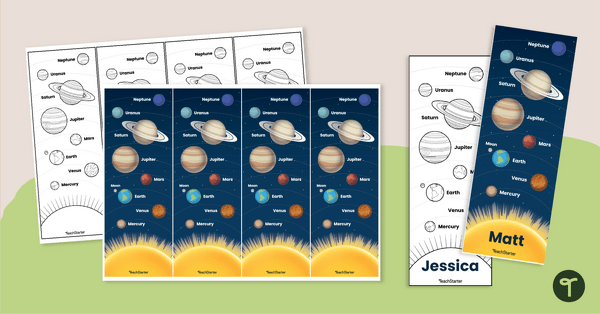
Planet Bookmark
Help students remember the order of the planets with these personalised planet bookmarks.
- Plus Plan
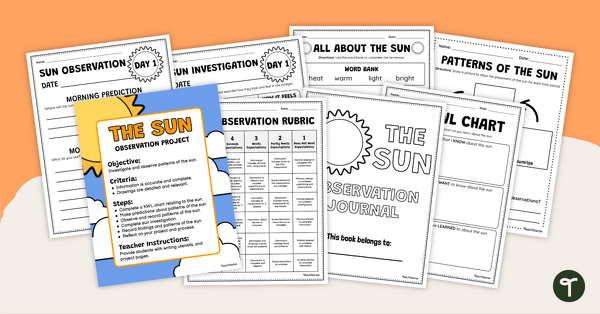
Sun Observation Project
Use observations of the sun to describe patterns that can be predicted with this journal project.
- Plus Plan
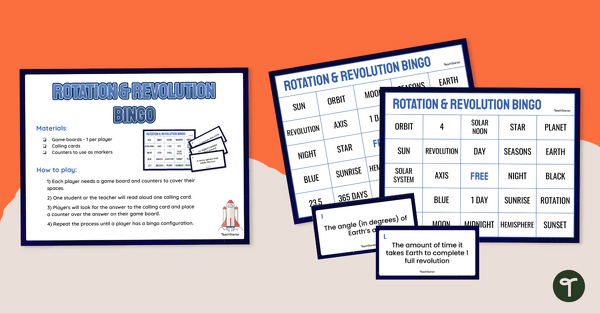
Rotation and Revolution Bingo
Engage your students with a lively game of bingo while learning about Earth’s rotation and revolution.
- Plus Plan
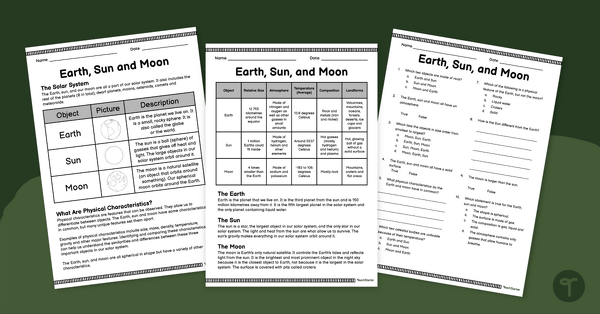
Earth, Sun and Moon – Comprehension Worksheet
Read about and compare physical characteristics of the Eath, sun and moon with this reading comprehension sheet.
- Plus Plan
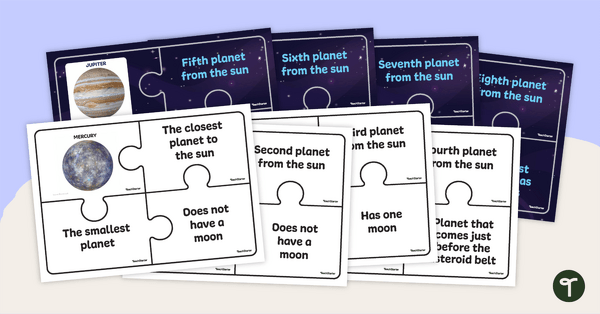
Planet Puzzle Match-Up Activity
Use your knowledge of the solar system to complete 8 different planet puzzles.
- Plus Plan
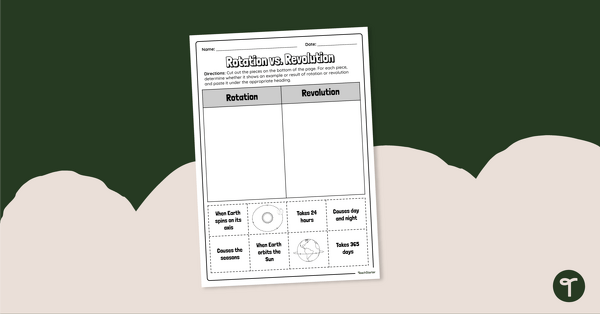
Rotation vs. Revolution – Cut and Paste Worksheet (Stage 2)
Demonstrate an understanding of rotation vs. revolution with this cut and paste worksheet.