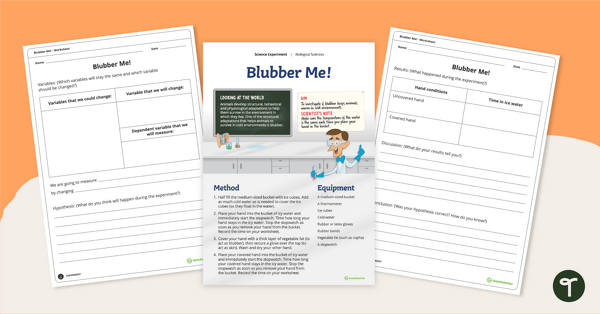
Explore the structural adaptation of blubber with an Arctic Animal Adaptation experiment.
How Do Polar Animals Survive the Cold Weather?
Have you ever wondered how marine animals like whales, polar bears or penguins keep themselves warm in the cold ocean waters? Well, the secret lies in the layer of fat under their skin called blubber. This insulation helps them to maintain their body temperature and survive in icy environments.
Try Out a Blubber Experiment to Learn About Polar Adaptations
While we humans do not require much insulation to survive, it is a very important factor for creatures like polar bears, whales, seals, and penguins. They create blubber, which acts as an insulator, keeping them warm in cold environments. You can easily test out the effectiveness of blubber as an insulator right in your own classroom with this simple blubber experiment that teaches your students about the effectiveness of the substance in withstanding cold temperatures.
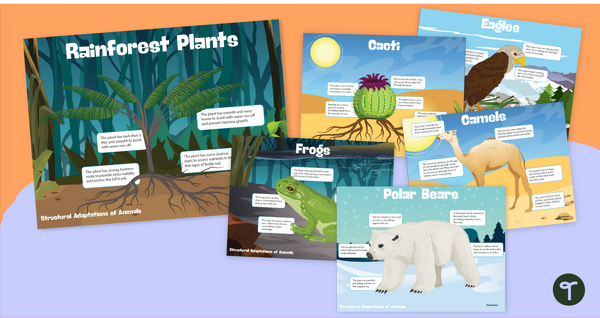
Animals develop structural, behavioural, and physiological adaptations to help them survive in the environment in which they live. This Organisms and Environments experiment allows students to investigate if blubber keeps animals warm in cold environments. In this experiment, students will do the following.
- Half-fill the medium-sized bucket with ice cubes. Add as much cold water as is needed to cover the ice cubes (so they float in the water).
- Place your hand into the bucket of icy water and immediately start the stopwatch. Time how long your hand stays in the icy water. Stop the stopwatch as soon as you remove your hand from the bucket. Record the time on your worksheet.
- Cover your hand with a thick layer of vegetable fat (to act as blubber), then secure a glove over the top (to act as skin). Wash and dry your other hand.
- Place your covered hand into the bucket of icy water and immediately start the stopwatch. Time how long your covered hand stays in the icy water. Stop the stopwatch as soon as you remove your hand from the bucket. Record the time on your worksheet
Download Your Polar Adaptation Experiment Guide
This resource downloads as a quick-print PDF resource file. Simply click the download button to download your resource today!
Even More Ways to Teach Animals and Their Adaptations
Before you go, make sure you grab these fantastic animal adaptation resources.
teaching resource
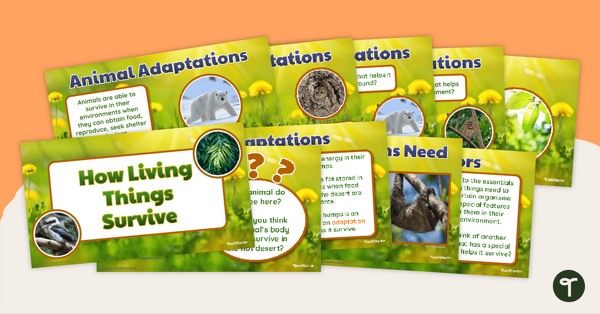
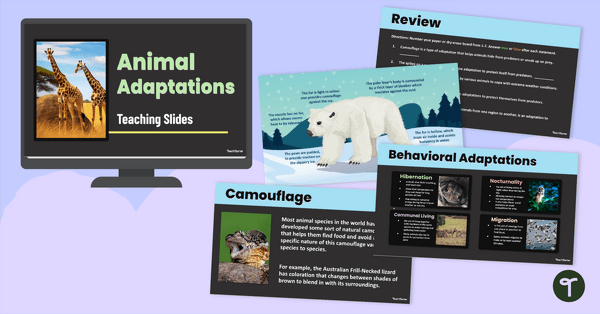
How Living Things Survive – Teaching Presentation
Use this 13-slide teaching presentation to teach your students about the basic needs and physical characteristics of animals and plants.
teaching resource
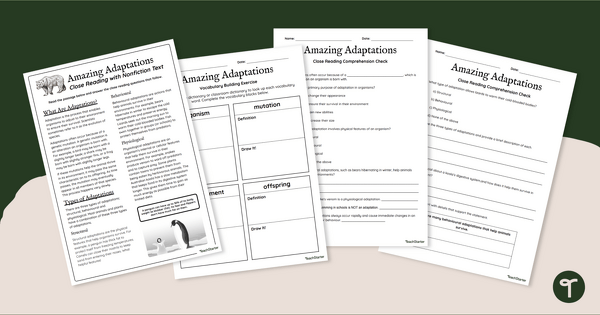
Plant and Animal Adaptations - Reading Comprehension Passage
Boost reading comprehension skills with a comprehension passage, with questions, about structural, behavioural and physiological adaptations.
teaching resource
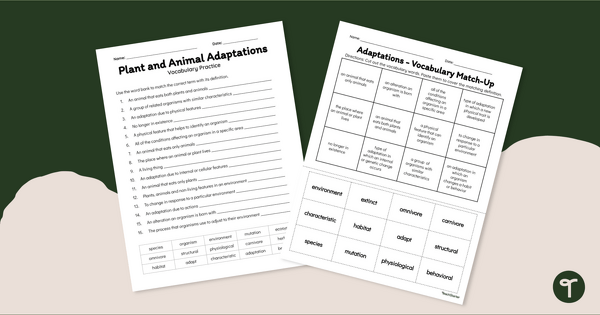
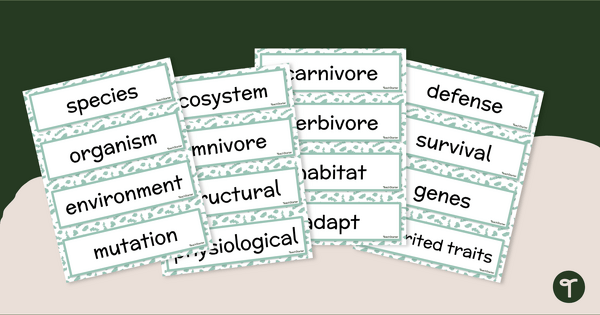
Plant and Animal Adaptations - Vocabulary Worksheets
Review key vocabulary associated with plant and animal adaptations with a pair of vocabulary worksheets.

It would be amazing to have an answer key for this to give feedback to students