A worksheet to use when learning the multiplication facts of two.
Use this teaching resource when teaching and learning the multiplication facts of two.
Updated: 14 Sep 2018
A worksheet to use when learning the multiplication facts of two.
Non-Editable: PDF
Pages: 1 Page
Year: 2
Recall and demonstrate proficiency with multiplication facts for twos
Recall and demonstrate proficiency with multiplication facts for twos; extend and apply facts to develop the related division facts using doubling and halving <ul> <li>recognising and relating terms such as ‘double’, ‘twice’ and ‘multiply by 2’, and ‘halve’ and ‘divide by 2’ using physical and virtual materials; for example, colouring numbers on a hundreds chart to represent doubles and using it to recognise halves or recognising the doubling pattern and applying the pattern to find related facts such as ‘For 8 twos, think 2 eights’</li> <li>doubling and halving collections to practise and develop fluency with multiplication and division facts for twos, leading to recall of these facts</li> <li>establishing an understanding of doubles and near doubles using physical or virtual manipulatives; for example, using manipulatives to establish that doubling 5 gives you 10, then extending this doubling fact to respond to the question ‘How can you use this fact to double 6 or double 4?’</li> <li>developing fluency with doubling and halving numbers within 20 using physical or virtual materials and playing doubling and halving games; for example, using a physical or virtual dice and choosing whether to double or halve to reach a target number</li> </ul>
Applies an understanding of place value and the role of zero to read, write and order two- and three-digit numbers
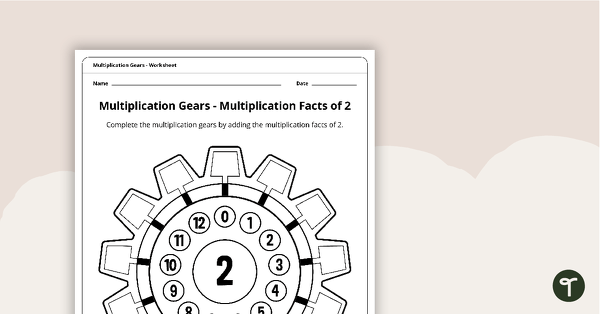
A worksheet to use when learning the multiplication facts of two.
Use this teaching resource when teaching and learning the multiplication facts of two.
Recall and demonstrate proficiency with multiplication facts for twos
Recall and demonstrate proficiency with multiplication facts for twos; extend and apply facts to develop the related division facts using doubling and halving <ul> <li>recognising and relating terms such as ‘double’, ‘twice’ and ‘multiply by 2’, and ‘halve’ and ‘divide by 2’ using physical and virtual materials; for example, colouring numbers on a hundreds chart to represent doubles and using it to recognise halves or recognising the doubling pattern and applying the pattern to find related facts such as ‘For 8 twos, think 2 eights’</li> <li>doubling and halving collections to practise and develop fluency with multiplication and division facts for twos, leading to recall of these facts</li> <li>establishing an understanding of doubles and near doubles using physical or virtual manipulatives; for example, using manipulatives to establish that doubling 5 gives you 10, then extending this doubling fact to respond to the question ‘How can you use this fact to double 6 or double 4?’</li> <li>developing fluency with doubling and halving numbers within 20 using physical or virtual materials and playing doubling and halving games; for example, using a physical or virtual dice and choosing whether to double or halve to reach a target number</li> </ul>
Applies an understanding of place value and the role of zero to read, write and order two- and three-digit numbers

We create premium quality, downloadable teaching resources for primary/elementary school teachers that make classrooms buzz!
Would you like something changed or customised on this resource? While our team makes every effort to complete change suggestions, we can't guarantee that every change will be completed.
Did you spot an error on this resource? Please let us know and we will fix it shortly.
Are you having trouble downloading or viewing this resource? Please try the following steps:
If you are still having difficulty, please visit the Teach Starter Help Desk or contact us .
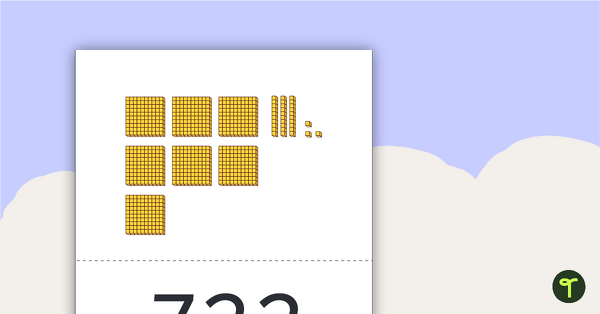
Use these base ten block matching cards to help your students practise number recognition and place value skills for numbers up to 1000.
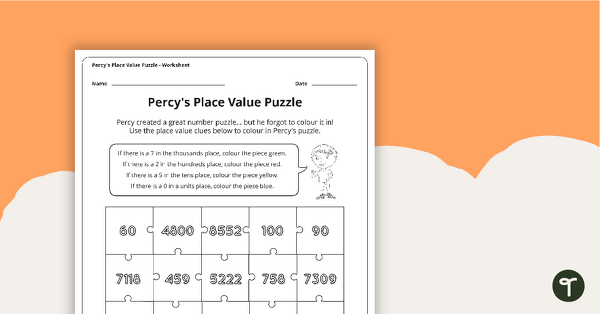
A worksheet to use to consolidate student understanding of place value to the thousands.
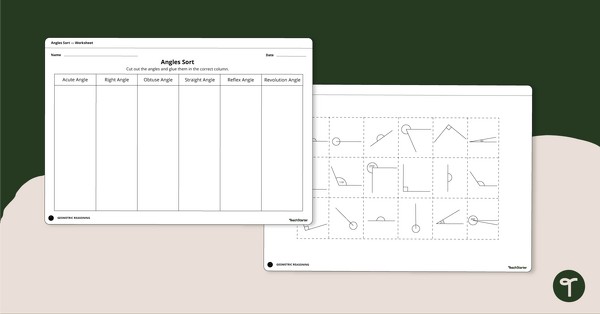
Identify acute, right, obtuse, straight, reflex and revolution angles with this cut-and-paste sorting worksheet.
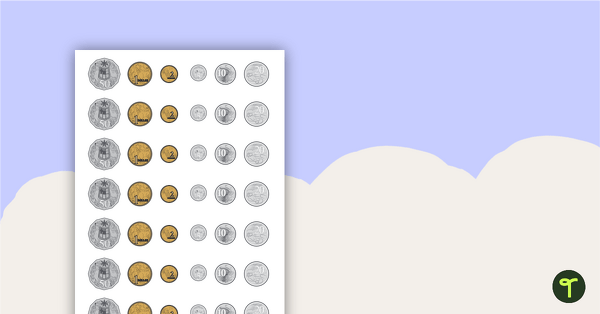
Piggy Bank Pigs are a fun, hands on way for students to learn each of the coins and how their values add up to a certain amount.
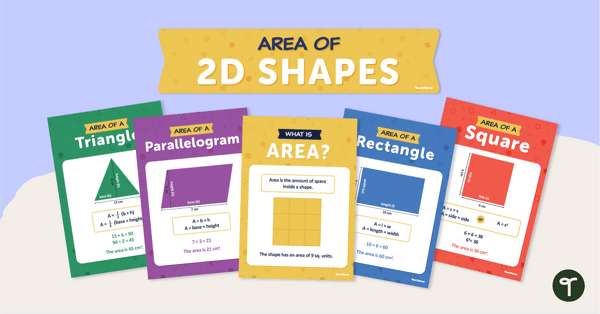
Area of 2D Shapes - so many rules and formulas to remember!
Discover a pirate-themed maths investigation that helps students master location skills by creating maps, writing directions and finding treasure.
A 12 page editable presentation to use when teaching number recognition to younger students.
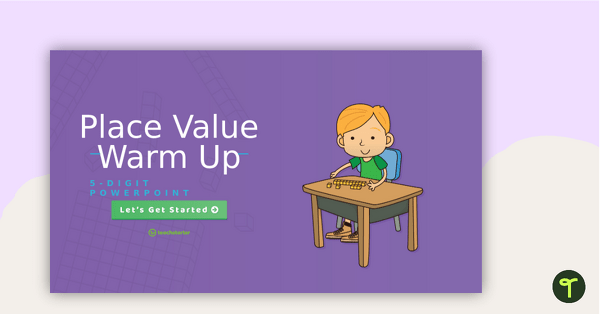
An engaging 44 slide interactive PowerPoint to use when learning about place value to 5-digits.
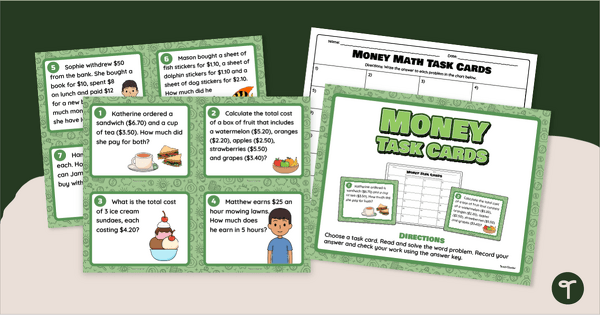
Practise solving money word problems with a printable set of multi-step word problem task cards.
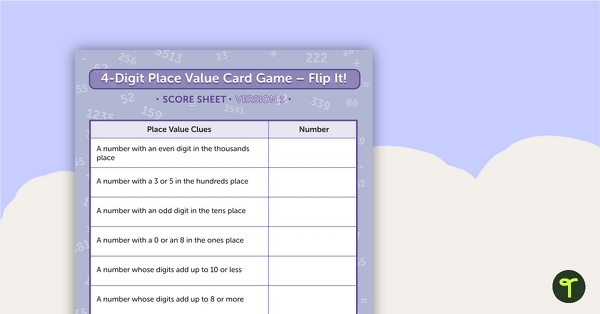
A fun game for students to play in small groups to consolidate their understanding of place value to thousands.
0 Comments
Write a review to help other teachers and parents like yourself. If you'd like to request a change to this resource, or report an error, select the corresponding tab above.