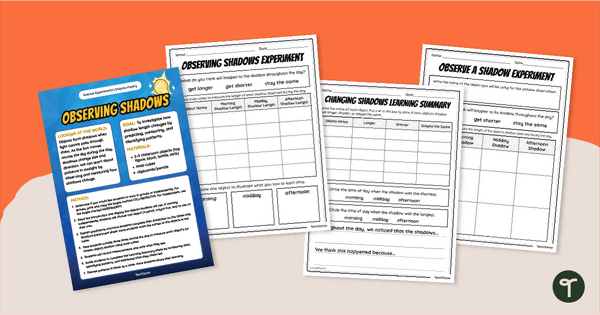
Explore the world of light, shadow, and scientific inquiry with an engaging, outdoor Shadow Observation experiment.
Predict & Observe With a Shadow Observation Experiment
Kick off the school year by building your students’ confidence with science inquiry skills! This printable Year 1 and 2 shadow observation experiment pack helps young learners practise making predictions, recording observations, measuring with informal units, collecting data, and identifying patterns.
Through a simple, engaging experiment, students will measure how an object’s shadow changes over the course of a day, and use their findings to describe what they learned.
Shadows Science Experiment for Year 1 and 2 Learners
This shadows science experiment includes everything teachers need to guide students through a meaningful science inquiry lesson. To complete the investigation:
- Choose whether your students will work independently or collaboratively, and use the pages marked accordingly for each option.
- Read the introduction and display the set of objects students may use.
- Model how to make a prediction, then have students record their prediction on the Observing Shadows Experiment sheet.
- Take students outdoors three times to measure shadow lengths using snap cubes.
- Students draw and record each measurement on their data table.
- Close the activity by completing the Learning Summary sheet. Students compare their data, describe patterns, and explain their observations.
By the end of the investigation, your students will have practised predicting, observing, measuring using informal units, and communicating findings, all key science inquiry skills for the early years.
Download Your Shadow Observation Activity
This printable Shadow Observation Activity Pack includes:
- Collaborative and independent investigation pages
- Teacher Instructions and Materials List
- A final Learning Summary page for analysing and explaining results
This resource is available in both PDF and editable Google Slides format. To get your copy, click the dropdown arrow on the download button and choose your preferred file type.
This resource was created by Lindsey Phillips, a teacher and Teach Starter Collaborator.
More Science Experiments for Year 1 & 2
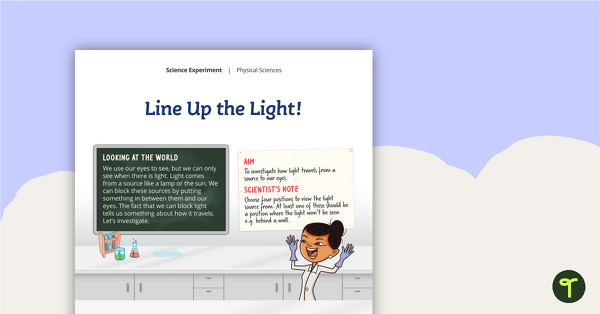
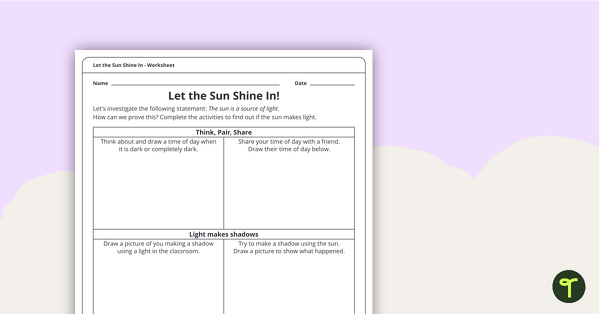
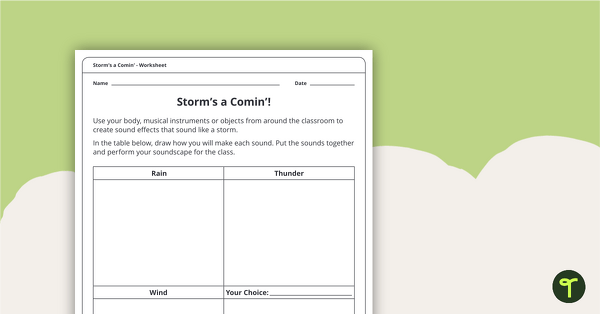
Keep your young scientists exploring with more hands-on Science experiments for Year 1 and 2. Make sure you check these out before you go!
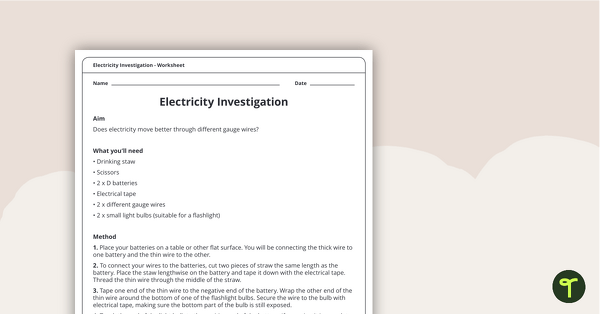
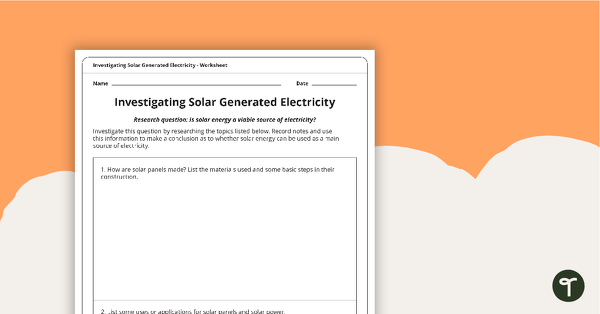
[resource:5178362] [resource:4963989] [resource:1930694]

0 Comments
Write a review to help other teachers and parents like yourself. If you'd like to request a change to this resource, or report an error, select the corresponding tab above.