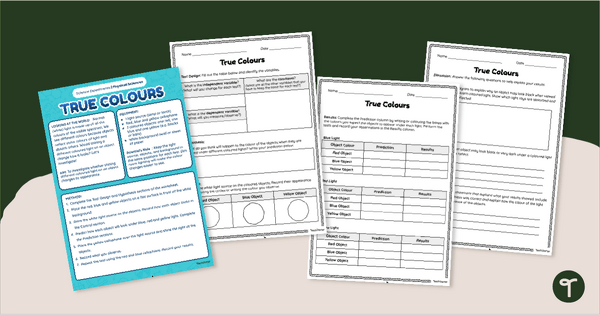
Explore the perception of colour with an engaging Light Energy Experiment.
Seeing True Colours – Light Energy Experiment
Normal (white) light is made up of all the colours of the visible spectrum. We see different colours because objects reflect some colours of light and absorb others.
In this engaging light-energy experiment, students will investigate whether shining different-coloured light on an object changes its appearance.
Completing This Experiment
To complete this experiment, students will:
- Complete the Test Design and Hypothesis sections of the worksheet.
- Place the red, blue and yellow objects on a flat surface in front of the white background.
- Shine the white light source on the objects. Record how each object looks in the Control section.
- Predict how each object will look under blue, red and yellow light. Complete the Prediction sections.
- Place the yellow cellophane over the light source and shine the light at the objects.
- Record what you observe.
- Repeat the test using the red and blue cellophane. Record your results.
Download This Light Energy Activity Today
Ready to begin? This light energy activity is available in both PDF and Google Slides format. To get your copy, click the dropdown arrow on the download button and select your preferred file type.
This resource was created by Emma Eager, a teacher and Teach Starter collaborator.
More Engaging Light Energy Activities
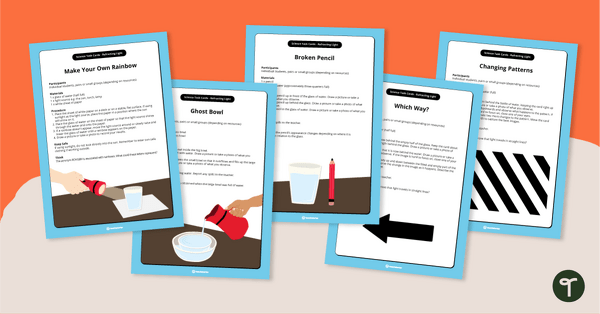
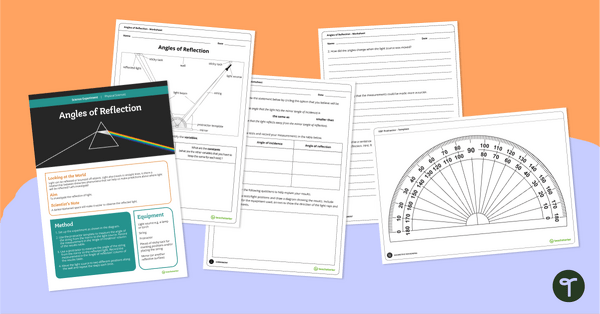
Don’t stop there! We’ve got even more light energy activities to add to your lesson plans. Make sure you check these out before you go!
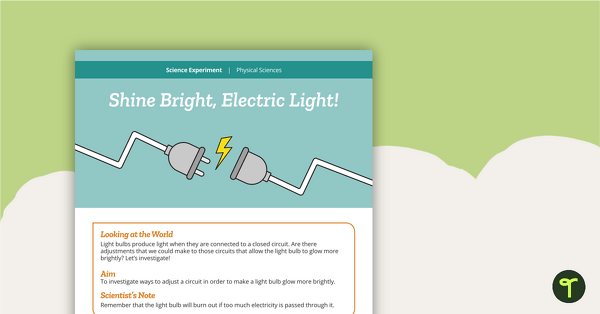
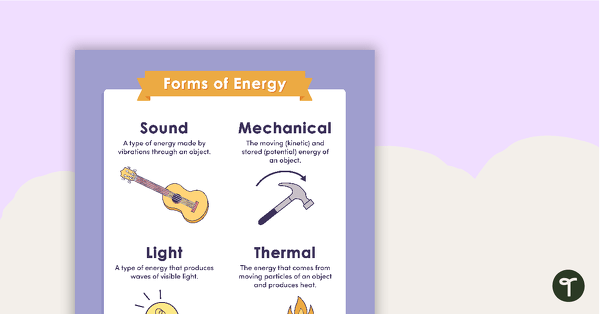
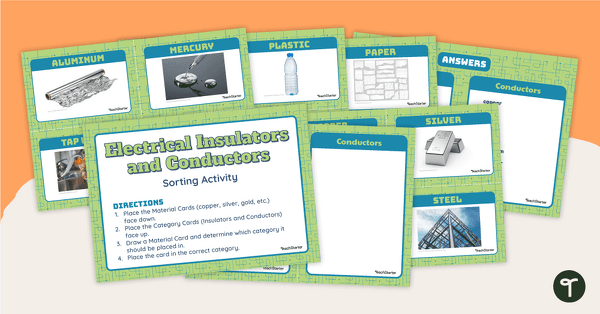
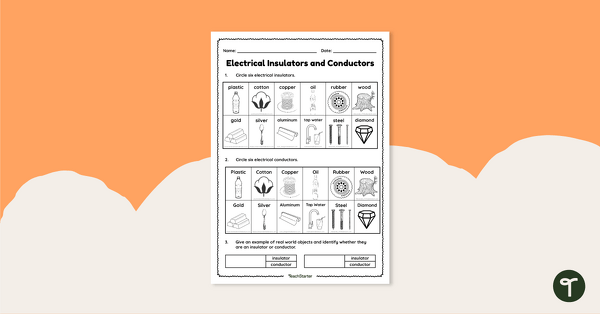
[resource:5159740] [resource:5221650] [resource:1999702]

0 Comments
Write a review to help other teachers and parents like yourself. If you'd like to request a change to this resource, or report an error, select the corresponding tab above.