VC2E2LY04
use phoneme–grapheme correspondence knowledge to read and write words of one or more syllables with vowel digraphs, less common long vowel patterns, consonant blends and silent letters (phonic knowledge)
- reading words with digraphs where one letter is not pronounced (for example, ‘knife’ and ‘thumb’) and using them in writing
- providing the sounds for less common sound–letter matches (for example, ‘ight’) and using them in writing
- reading words with vowel digraphs (‘ee’, ‘oo’, ‘ai’, ‘ay’ and ‘ea’)
- Plus Plan
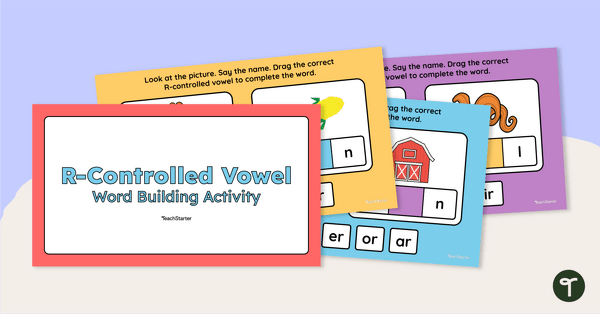
R-Controlled Vowel Word Building - Google Slides Interactive Activity
Explore spelling and reading words that contain r-controlled vowels with this interactive Google Slides activity.
- Plus Plan
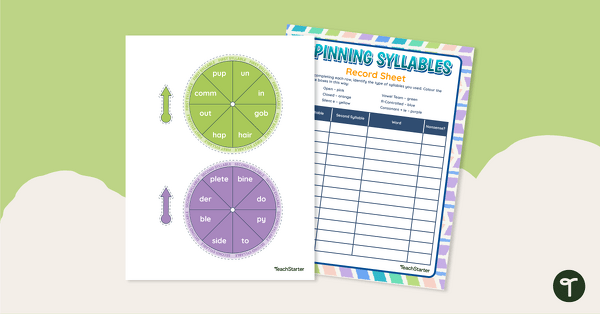
Spinning Syllables Game
Create words using a variety of syllable types with these spinners.
- Plus Plan
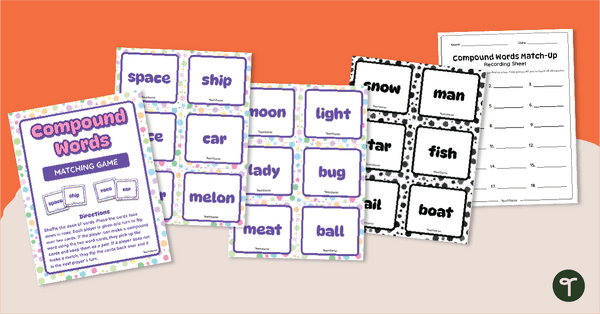
Compound Words Matching Game
Combine words to make compound words with a fun, printable Compound word game.
- Plus Plan
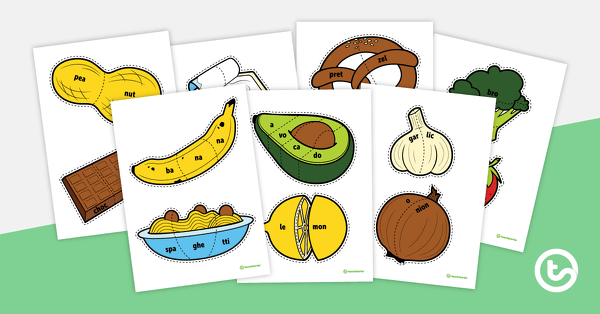
Food-Themed Syllable Puzzle
A fun food-themed phonics activity for lower years that helps to develop syllable recognition.
- Plus Plan
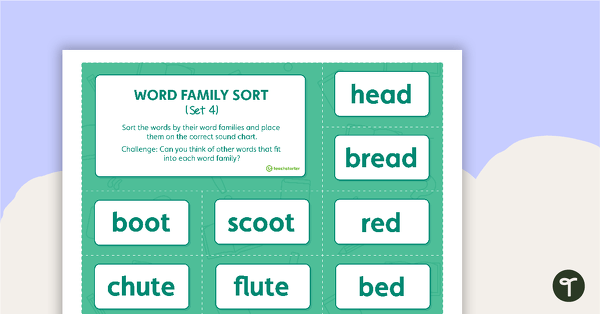
Word Family Sorting Activity – Set 4
A sorting activity to practice word families.
- Plus Plan
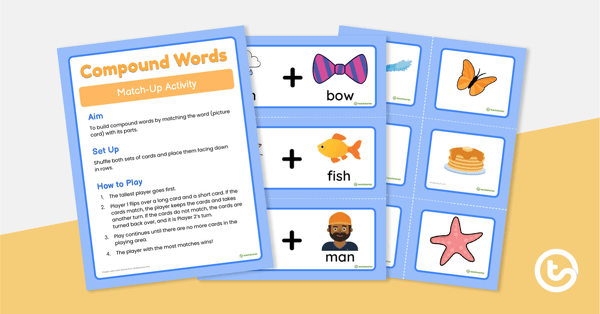
Compound Words – Match-Up Activity
Build your students knowledge of compound words with this hands-on matching activity.
- Plus Plan
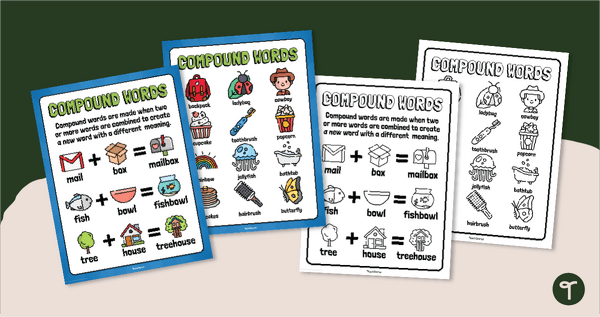
Compound Words Poster Pack
Show your students examples of compound words with a pair of printable Compound Word Anchor Charts.
- Plus Plan
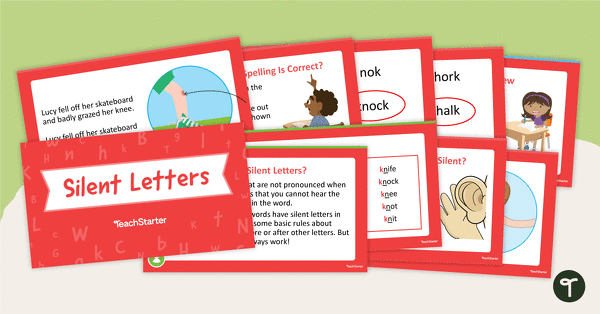
Silent Letters PowerPoint
A 24-slide editable PowerPoint template explaining the concept of silent letters.