Victorian Curriculum
VC2E3LA10
identify how images and sound extend the meaning of a text
- recognising how the relationship between characters can be depicted in images through the positioning of the characters; for example, facing each other or facing away from each other, the distance between them, the relative size, one character looking up (or down) at the other (power relationships), facial expressions and body gestures
- recognising how images construct a relationship with the viewer through a direct gaze into the viewer’s eyes, inviting involvement, and how close-ups are more engaging than distanced images, which can suggest alienation or loneliness
Show more
4
teaching resources for those 'aha' moments
- Plus Plan
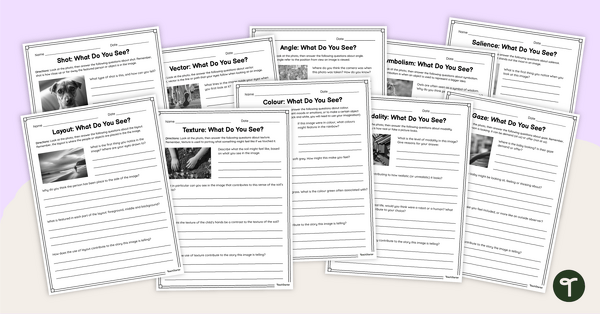
Elements of Visual Literacy Worksheets
Teach the elements of visual literacy with this engaging worksheet pack designed to help primary students analyse images and deepen their critical thinking skills.
- Plus Plan
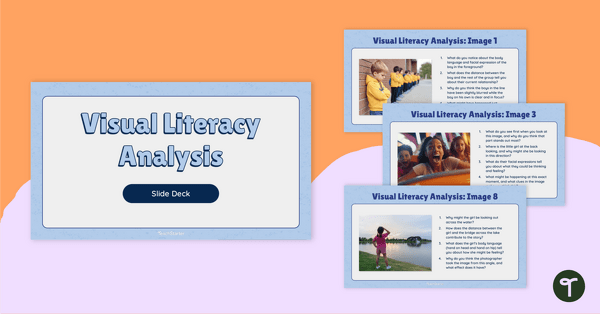
Visual Literacy Analysis Slide Deck
Teach visual literacy analysis using this comprehensive slide deck featuring 20 stimulus images, each accompanied by thought-provoking question prompts.
- Plus Plan
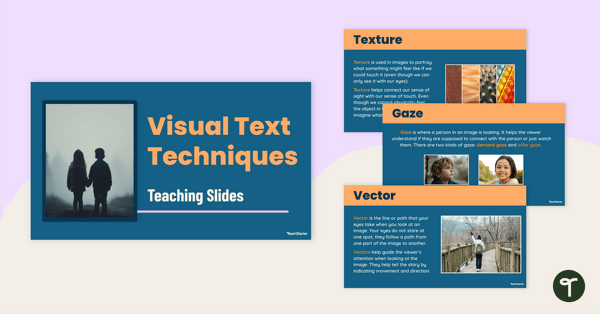
Visual Text Techniques Teaching Slides
Teach your students about visual text techniques with this engaging presentation, which features elements like layout, gaze, salience, angle and shot.
- Plus Plan
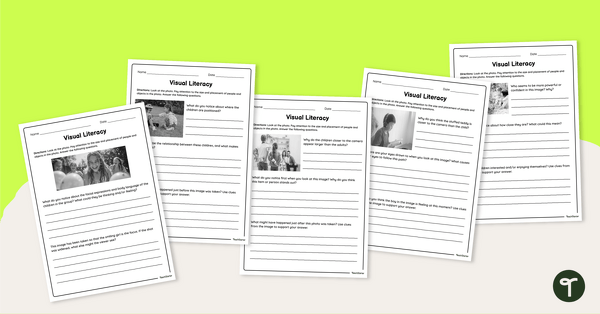
Visual Literacy Worksheets
Enhance critical thinking with visual literacy worksheets that guide students to analyse images, infer meaning and explore how pictures tell powerful stories.