VC2E3LA07
understand how verbs represent different processes for doing, feeling, thinking, saying and relating
- exploring ‘doing’ and ‘saying’ verbs in narrative texts to understand how they give information about what characters do and say
- exploring the use of ‘sensing’ verbs and how they allow readers to understand what characters think and feel, for example ‘He remembered his first day at school.’
- exploring the use of ‘relating’ verbs in constructing definitions and descriptions; for example, identifying the relating verb ‘is’ or ‘are’, ‘has’ or ‘have’ in descriptions of animals
- identifying different types of verbs and the way that they control meaning in a clause
- Plus Plan
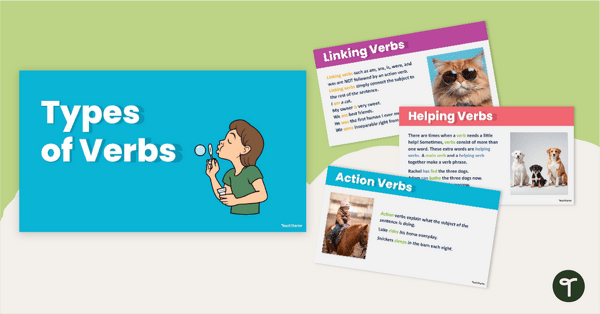
Types of Verbs PowerPoint
Teach students about the different types of verbs with this set of 38 teaching slides with activities.
- Plus Plan

Verb Tense Digital Quiz
Boost verb tense understanding with an engaging self-checking quiz that helps students confidently identify past, present and future sentences.
- Plus Plan
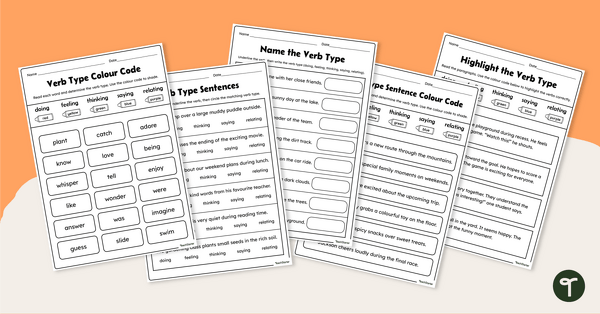
Types of Verbs Worksheet Pack
Explore types of verbs (doing, saying, thinking, feeling and relating) with your students with this set of 6 engaging, ready-to-use worksheets.
- Plus Plan
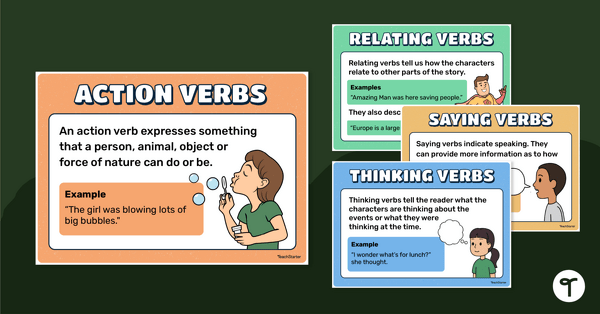
Types of Verbs Poster Set
Explore the different types of verbs with this set of verb posters displaying the definition and examples of action, saying, thinking and relating verbs.
- Plus Plan
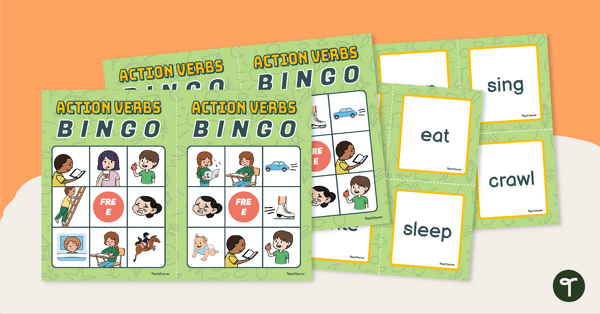
Action Verbs Bingo
Identify action verbs with this set of 20 BINGO cards.
- Plus Plan
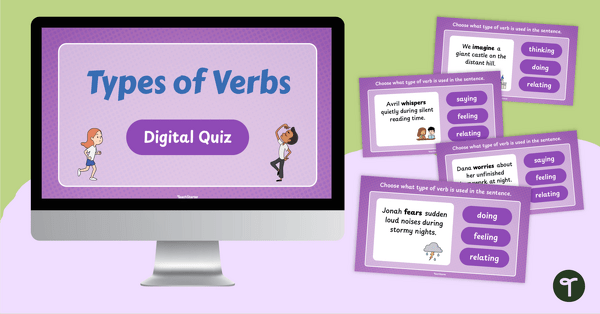
Verb Types Digital Quiz
Review verb types with your Year 3 students using this engaging 20-question digital quiz, ideal for lesson warm-ups or informal assessment.
- Plus Plan
Developing Procedural Writing Skills Unit Plan - Year 3 and Year 4
This English unit addresses the purpose, structure and language features of the procedure text type.
- Plus Plan
Procedure Texts - Language Features
A 60 minute lesson in which students will identify and explore the language features of procedure texts.
- Plus Plan
Modelled Writing - Improving Procedure Texts
A 60 minute lesson in which students will improve a procedure text by applying knowledge of procedure text structure and language features.