Victorian Curriculum
VC2M3M03
recognise and use the relationship between formal units of time, including days, hours, minutes and seconds, to estimate and compare the duration of events
- estimating how long it would take to read a set passage of text, and sharing this information to demonstrate understanding of formal units of duration of time
- planning a sequence of events based on estimates of the duration of each event; for example, planning a set of activities for a class party by estimating how long each game or activity will take
- reading or setting the time on digital devices to the minute or second; for example, setting an online timing device to count down from a set time, or setting the time on a digital clock
- using sand timers and digital timers to measure and check estimates of short durations of time, such as one minute, 3 minutes and 5 minutes
- exploring how cultural accounts of Aboriginal and Torres Strait Islander Peoples explain cycles of time that involve the sun, moon and stars
Show more
3 of 67
teaching resources for those 'aha' moments
- Plus Plan
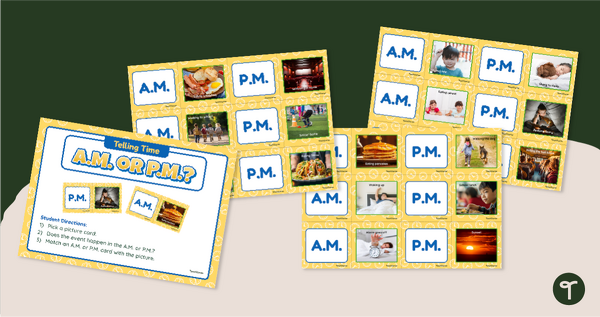
A.M. and P.M. Matching Game
Identify what happens in the A.M. and P.M. times with a fun matching game.
- Plus Plan
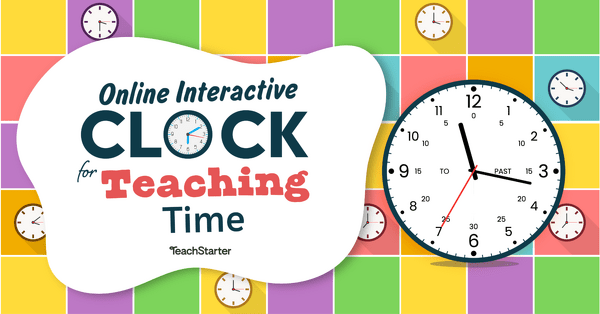
Interactive Clock for Teaching Time (Analogue and Digital)
Teach time with an interactive digital clock designed to add a hands-on element to this important primary school lesson!
- Plus Plan
Time Teaching Resource Pack
A collection of resources exploring time concepts.