TEKS Math 6
(1) The desire to achieve educational excellence is the driving force behind the Texas essential knowledge and skills for mathematics, guided by the college and career readiness standards. By embedding statistics, probability, and finance, while focusing on computational thinking, mathematical fluency, and solid understanding, Texas will lead the way in mathematics education and prepare all Texas students for the challenges they will face in the 21st century.
(2) The process standards describe ways in which students are expected to engage in the content. The placement of the process standards at the beginning of the knowledge and skills listed for each grade and course is intentional. The process standards weave the other knowledge and skills together so that students may be successful problem solvers and use mathematics efficiently and effectively in daily life. The process standards are integrated at every grade level and course. When possible, students will apply mathematics to problems arising in everyday life, society, and the workplace. Students will use a problem-solving model that incorporates analyzing given information, formulating a plan or strategy, determining a solution, justifying the solution, and evaluating the problem-solving process and the reasonableness of the solution. Students will select appropriate tools such as real objects, manipulatives, algorithms, paper and pencil, and technology and techniques such as mental math, estimation, number sense, and generalization and abstraction to solve problems. Students will effectively communicate mathematical ideas, reasoning, and their implications using multiple representations such as symbols, diagrams, graphs, computer programs, and language. Students will use mathematical relationships to generate solutions and make connections and predictions. Students will analyze mathematical relationships to connect and communicate mathematical ideas. Students will display, explain, or justify mathematical ideas and arguments using precise mathematical language in written or oral communication.
(3) The primary focal areas in Grade 6 are number and operations; proportionality; expressions, equations, and relationships; and measurement and data. Students use concepts, algorithms, and properties of rational numbers to explore mathematical relationships and to describe increasingly complex situations. Students use concepts of proportionality to explore, develop, and communicate mathematical relationships. Students use algebraic thinking to describe how a change in one quantity in a relationship results in a change in the other. Students connect verbal, numeric, graphic, and symbolic representations of relationships, including equations and inequalities. Students use geometric properties and relationships, as well as spatial reasoning, to model and analyze situations and solve problems. Students communicate information about geometric figures or situations by quantifying attributes, generalize procedures from measurement experiences, and use the procedures to solve problems. Students use appropriate statistics, representations of data, and reasoning to draw conclusions, evaluate arguments, and make recommendations. While the use of all types of technology is important, the emphasis on algebra readiness skills necessitates the implementation of graphing technology.
(4) Statements that contain the word "including" reference content that must be mastered, while those containing the phrase "such as" are intended as possible illustrative examples.
- Plus Plan
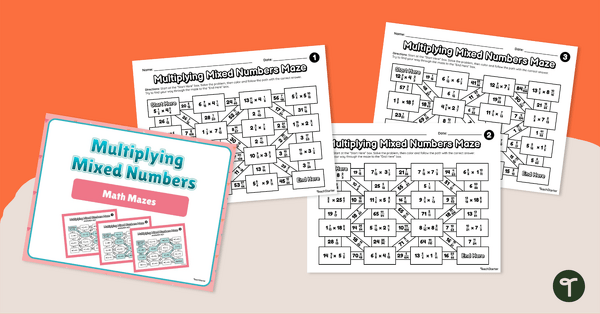
Multiplying Mixed Numbers – Math Mazes
Practice multiplying mixed numbers while finding your way through this set of 3 math mazes.
- Free Plan
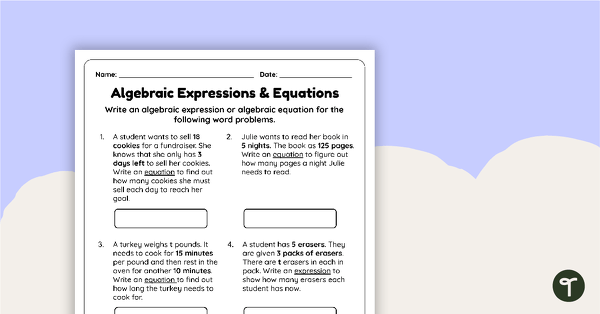
Algebraic Expressions & Equations – Worksheet
Write algebraic expressions and equations for 6 different word problems with this worksheet.
- Plus Plan
Operation Domination Game
A fun game using addition, subtraction, multiplication, and division.
- Free Plan
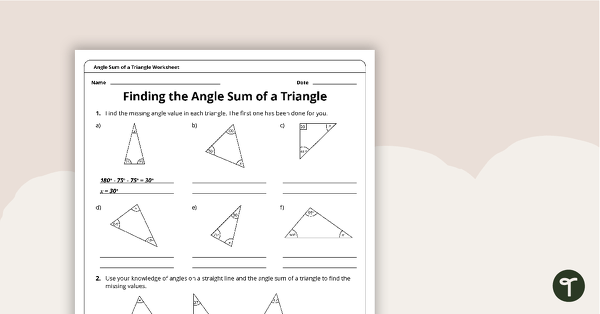
Angle Sum of a Triangle – 6th Grade Math Worksheet
Calculate the missing angle in a variety of triangles with this one-page worksheet.
- Plus Plan
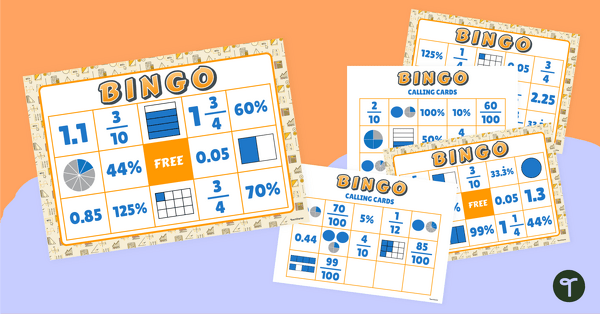
Fraction, Decimal, and Percentage Bingo
Convert between fractions, decimals and percentages with this engaging Bingo game the whole class can enjoy!
- Plus Plan
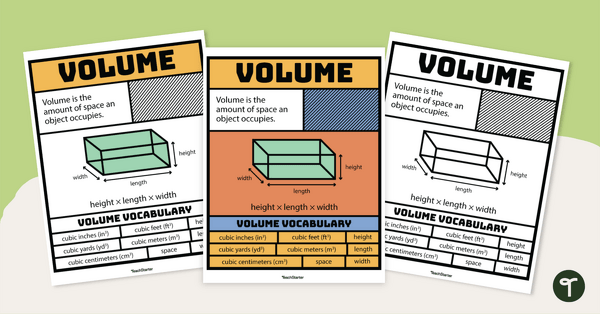
Volume Poster
Display our volume poster in your classroom to give students an easy reference for the volume formula and related vocabulary.
- Plus Plan
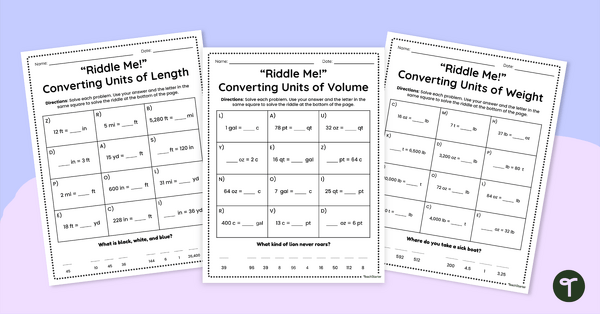
Customary Measurement Conversion Worksheet Set — “Riddle Me!”
Share this customary measurement conversion worksheet set with your students and watch them laugh while learning to convert customary units of length, weight, and volume!
- Plus Plan
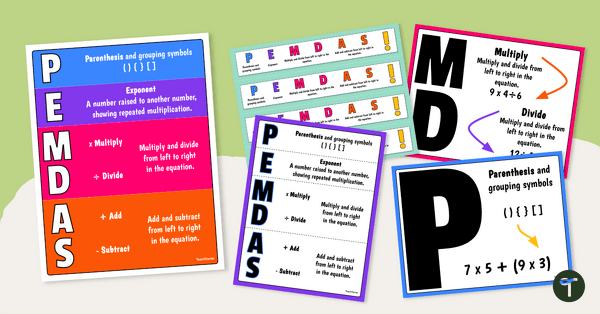
PEMDAS Anchor Chart and Bookmark Set
Use this PEMDAS anchor chart and bookmark set to remind your students about the correct order of operations.
- Free Plan
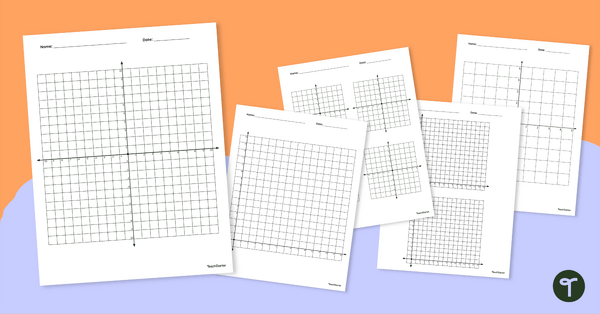
Coordinate Plane Printable Templates
Download these coordinate plane printable templates for use in your coordinate planes or graphing unit.
- Free Plan
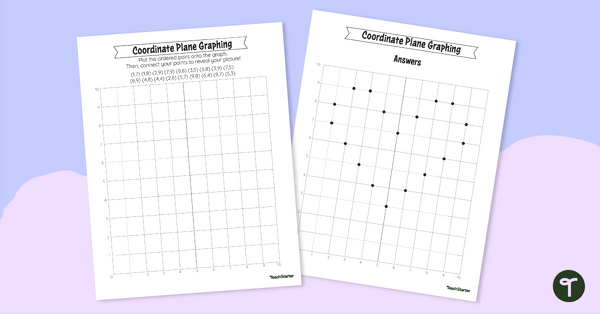
Plotting Points Mystery Picture — Valentine’s Day
Share this potting points mystery picture with your students on Valentine’s Day.
- Free Plan
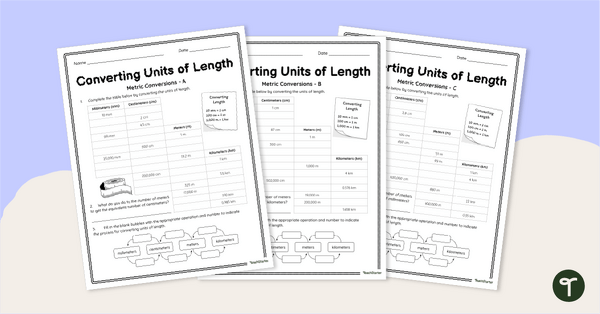
Converting Units of Length Worksheet Set
Download our converting units of length worksheet set to allow your students to demonstrate an understanding of decimal representations while converting units of metric length.
- Plus Plan
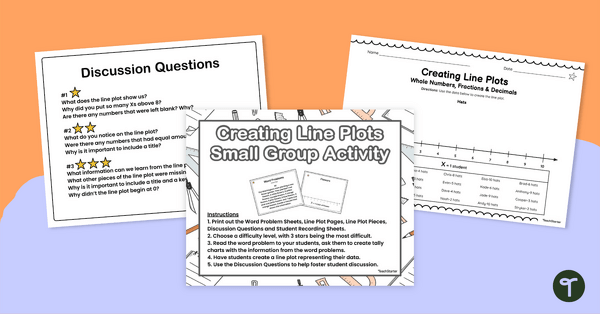
Creating Line Plots (with Fractions and Decimals) Small Group Activity
Incorporate this small group activity into your math centers to reinforce students skills in interpreting data and displaying it as line plots.
- Plus Plan
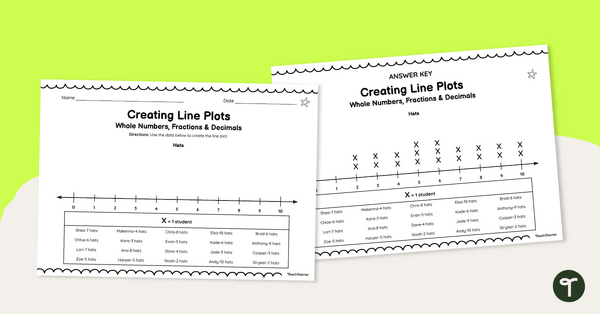
Creating Line Plots (With Whole Numbers, Fractions and Decimals) Worksheets
Help your students master data representation with this series of leveled worksheets for creating line plots.
- Plus Plan
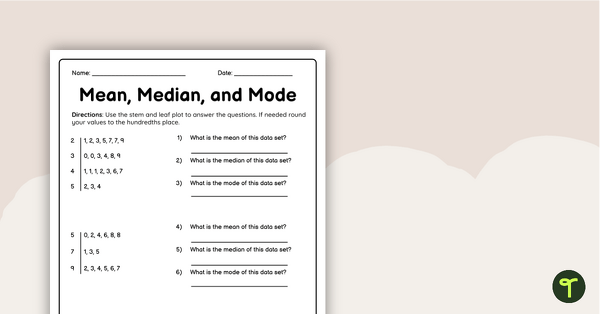
Mean Median Mode Worksheet
Use this double-sided worksheet to check students’ ability to find the mean, median and mode of given data sets.
- Plus Plan
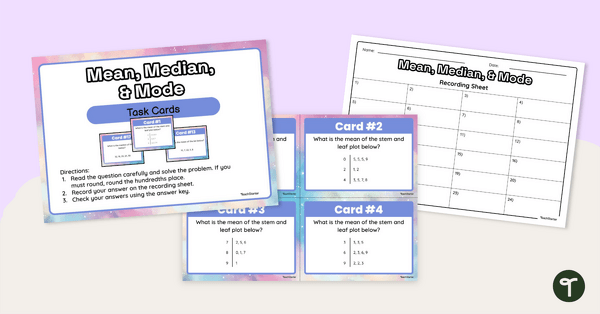
Mean Median and Mode Task Cards
Use this set of 24 data interpretation task cards to teach students to find the mean, median and mode of a limited data set.
- Plus Plan
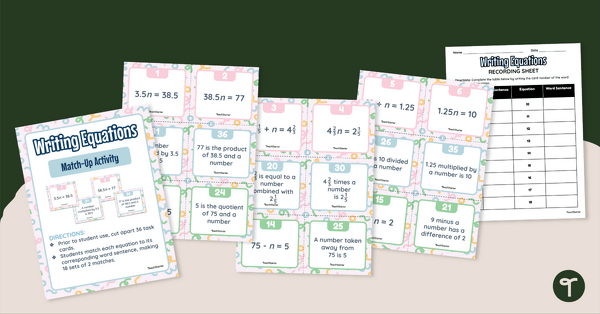
Writing Equations – Match Up Activity
Practice matching word sentences to equations with variables with this 36-card match-up activity.
- Plus Plan
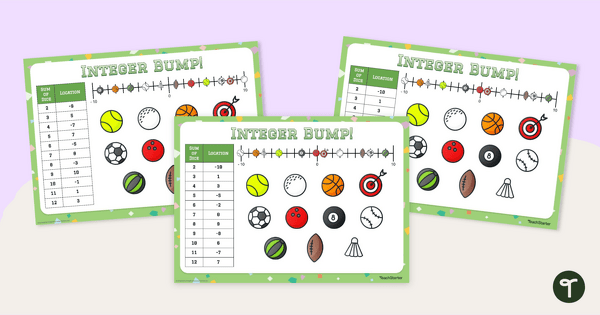
Integers on Number Lines - Bump Game
Review how to identify and place integers on a number line with a set of printable math games.
- Plus Plan
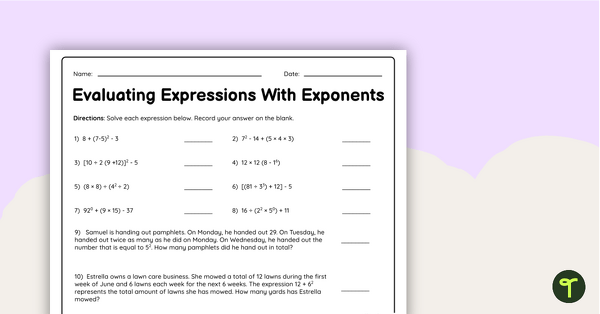
Evaluating Expressions With Exponents – Worksheet
Practice evaluating expressions with exponents with this order of operations worksheet designed for 6th grade.
- Free Plan
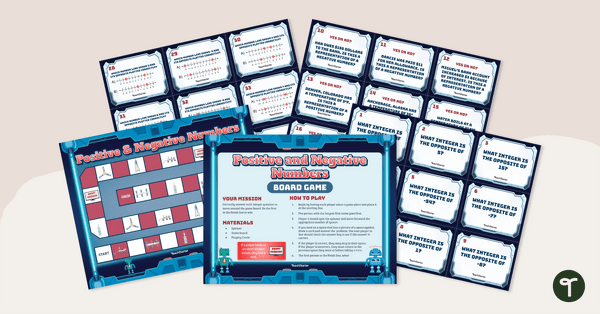
Positive and Negative Numbers – Board Game
Practice identifying opposite integers, plotting positive and negative numbers, and solving word problems with this free board game.
- Plus Plan
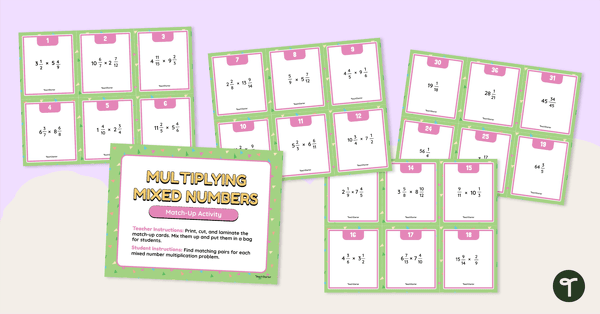
Multiplying Mixed Numbers – Match-Up Activity
Strengthen student understanding of how to multiply mixed numbers with this match-up activity.
- Plus Plan
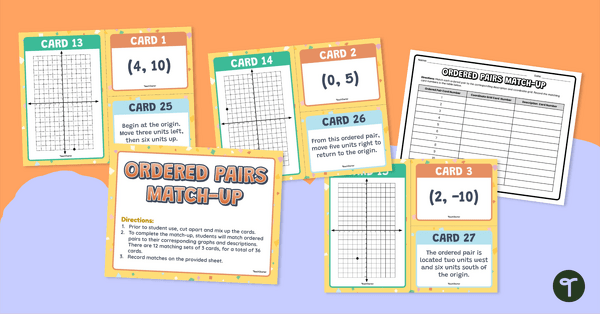
Ordered Pairs Match-Up
Practice plotting ordered pairs and describing the process for graphing with this match-up activity.
- Plus Plan
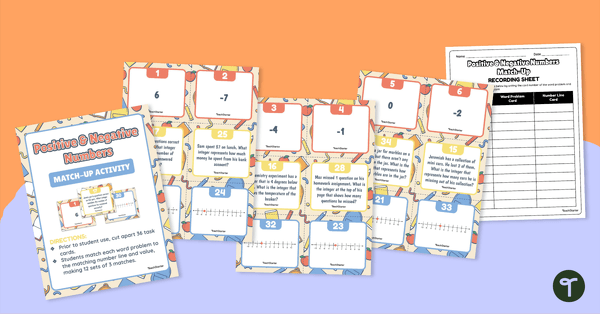
Positive and Negative Numbers – Match-Up Activity
Use positive and negative numbers to represent quantities in real-world contexts with this match-up activity.
- Plus Plan
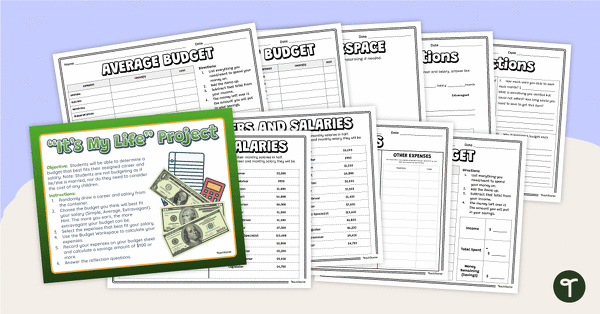
Math in the Real World - Budgeting Planning Project
Introduce your students to the world of making a budget with an immersive “It’s My Life” budgeting for kids project.
- Plus Plan
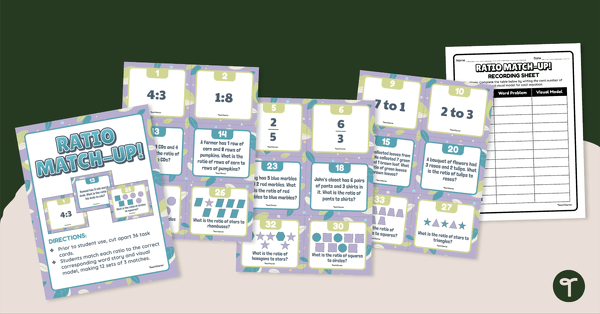
Ratio Match-Up!
Match ratio models with numerical representations and written scenarios with this match-up activity.
- Free Plan
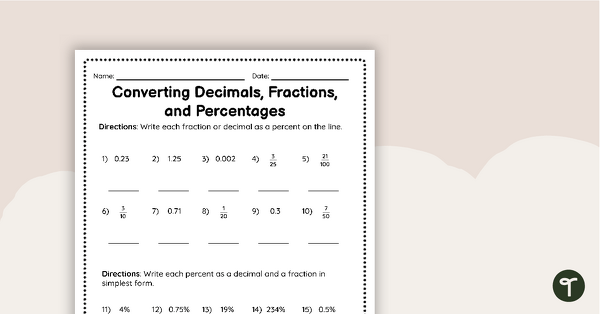
Converting Decimals, Fractions, and Percentages – Worksheet
Strengthen your students’ understanding of how to convert a percent to a decimal and a fraction with this worksheet.
- Plus Plan
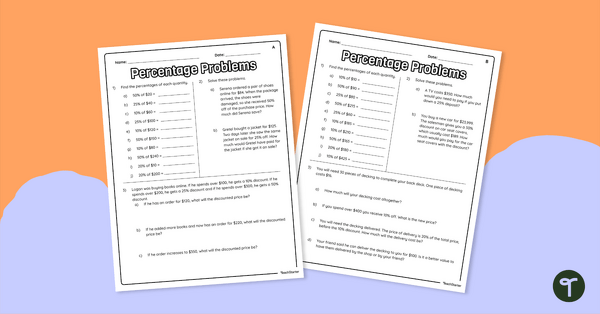
Percentage Problems
A set of two worksheets covering percentages.
- Free Plan
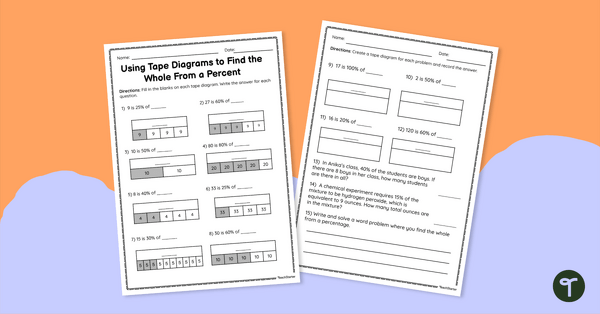
Using Tape Diagrams to Find the Whole From a Percent – Worksheet
Calculate the whole from a percent by using tape diagrams with this worksheet.
- Free Plan
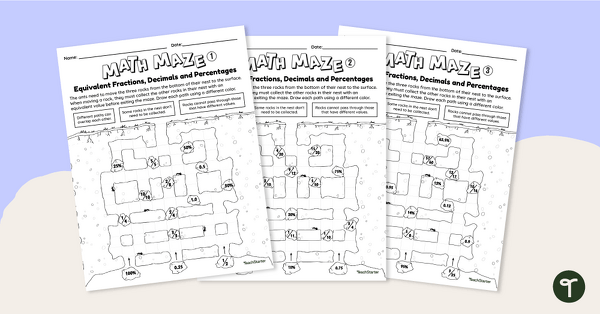
Math Mazes (Equivalent Fractions, Decimals, and Percentages)
Determine equivalent fractions, decimals, and percentages with this puzzling math maze.
- Free Plan
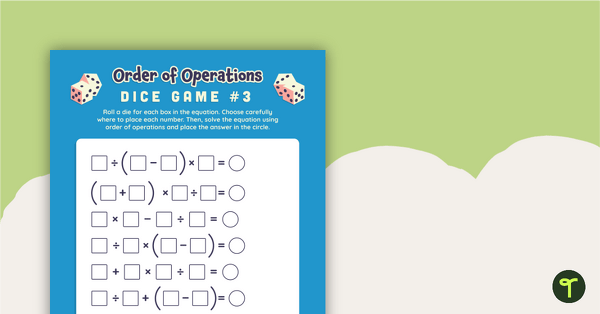
Order of Operations Dice Game
Practice order of operations with this set of 6 dice activity mats.
- Free Plan
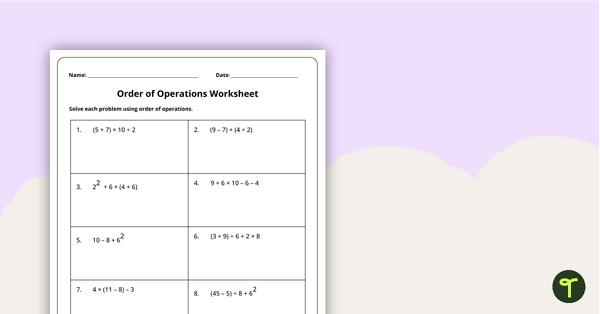
Order of Operations Worksheet
Tackle PEMDAS with an order of operations worksheet for 6th grade.
- Plus Plan
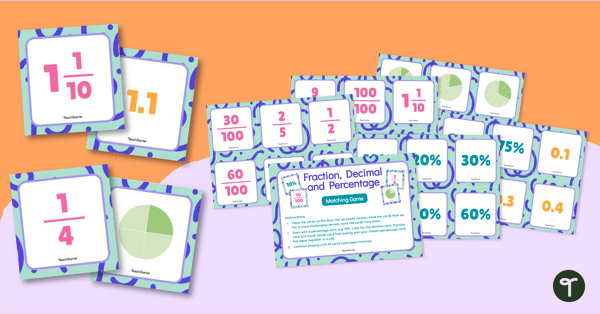
Fraction, Decimal and Percentage Match-Up Game
Get students converting fractions, decimals and percentages with this hands-on maths game perfect for math centers.
- Plus Plan
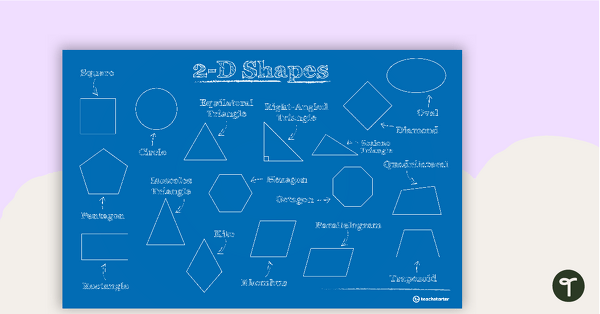
2-D Shapes – Poster
2-D shapes and their names on one poster.