2D Shapes Teaching Resources
Bring dimension to 2D shapes for elementary students with printable worksheets, digital activities, math games and more — created by teachers for teachers!
This comprehensive collection of teaching resources includes editable curriculum-aligned lessons on two-dimensional shapes, all ready to be printed and used in the classroom. Explore the entire collection to find educational games, geometric activities, posters and vocabulary word wall cards to assist your students when they are learning to identify 2D figures by their names and their attributes.
Teaching this part of the math curriculum for the first time in a while? Read on for a primer from the teachers on the Teach Starter team.
What Are 2D Shapes?
Two-dimensional shapes, or 2D shapes, are shapes that have only length and width, but no depth. Each of these geometric shapes has its own unique characteristics and properties, such as the number of sides, the types of angles and the relationship between the sides and angles.
For example, a square has four equal sides and four right angles, while a circle has no sides and no angles.
Teaching about 2D geometric shapes is crucial in those early primary grades as these are the building blocks of more complex geometric concepts. Understanding them is an important foundation for developing spatial reasoning skills. It will also lay the groundwork for learning about symmetry, angles, perimeter and area, among other geometry and measurement concepts.
2D Shapes — A Kid-Friendly Definition
Looking to provide a simple definition for your primary-grade students? Here's a kid-friendly definition you can use:
A 2D shape is a flat shape that has only two dimensions — length and width. When something is two-dimensional, it's flat, like a drawing or a picture on a piece of paper.
Understanding 2D shapes is important because it helps us recognize and describe the shapes we see around us, and it can also help us with math and other subjects.
2D Shape Examples
A definition is a good start, but providing concrete examples will help students begin to wrap their heads around these two dimensional-objects!
Let's look at some common examples of 2D shapes that we teach in elementary school:
Square
A square is a 2D shape with four straight sides that are all equal in length and four right angles. It is a type of rectangle and a type of parallelogram.
Rectangle
A rectangle is a 2-dimensional shape that has four straight sides. Unlike a square, a rectangle has two sides that are longer than the other two. It has four right angles and opposite sides that are parallel and equal in length.
Parallelogram
Like a rectangle and square, the parallelogram has four sides and is considered a 2D shape. The four straight sides of a parallelogram are parallel to each other. Opposite sides of a parallelogram are equal in length, and opposite angles are equal in measure. Squares, rectangles, and rhombuses are all examples of parallelograms.
Trapezoid
A trapezoid is a quadrilateral shape with two parallel sides and two non-parallel sides. The parallel sides are called the bases of the trapezoid, and the non-parallel sides are called the legs. Even though a trapezoid has four sides, it is not a parallelogram!
Triangle
A triangle is a two-dimensional shape that has three straight sides and three angles. The angles of a triangle always add up to 180 degrees.
Circle
A circle is a 2D geometric shape that is round and has no straight sides. It is defined as the set of all points in a plane that are at a fixed distance (called the radius) from a single point (called the center).
Ellipse
An ellipse is a 2D shape that is similar to a circle, but its shape is stretched out or elongated. It is defined as the set of all points in a plane whose distances from two fixed points (called the foci) add up to a constant value.
Pentagon
A pentagon is a 2D shape that has five straight sides and five angles. The word "pentagon" comes from the Greek words "penta" (meaning "five") and "gonia" (meaning "angle"). Each angle of a regular pentagon measures 108 degrees, and the sum of the angles in a pentagon is 540 degrees.
Hexagon
A hexagon is a 2D shape that has six straight sides and six angles. Each angle of a hexagon measures 120 degrees, and the sum of the angles in a hexagon is 720 degrees. Snowflakes are a common example of hexagons found in nature, and so is the honeycomb!
Rhombus
A rhombus is a 2D shape with four straight sides that are all equal in length. It is a type of parallelogram, and it has opposite angles that are equal in measure.
Octagon
An octagon is an eight-sided 2D shape. A stop sign is an octagon that students might recognize from seeing it along the road on the way to school.
Quadrilateral
A quadrilateral is a 2D shape with four sides and four angles. The sum of the interior angles of a quadrilateral is always 360 degrees. The following are all examples of quadrilaterals:
- Square
- Rectangle
- Parallelogram
- Trapezoid
- Rhombus
What Are Polygons?
Many of the 2D shapes that students learn about are polygons.
A polygon is a 2D shape that has three or more straight sides and angles. Polygons can have any number of sides, but they must be straight, and they must not cross each other.
The word "polygon" comes from the Greek words "poly" (which means "many") and "gonia" (which means "angle").
Here are some common examples of polygons:
- Triangles
- Squares
- Rectangles
- Pentagons
- Hexagons
- Octagons
A circle and an ellipse are both 2D shapes, but they are not polygons. They have a curved shape, while polygons consist of a closed structure with sides.
2D Shapes in Kindergarten
Teaching kindergarten this year? You'll find circles, squares, and more are part of your curriculum.
Introduce your class to these basic 2D shapes and help them learn to identify them by their characteristics and properties, such as the number of sides, corners or curves.
At this stage, students should learn the names of these shapes and be able to draw or trace them. They also might be taught to sort and classify shapes based on their attributes.
2D Shapes Throughout Elementary School
As students leave the primary grades and develop their math skills, they will learn about the relationships between different 2D shapes, such as:
- How a rectangle is made up of two congruent squares
- How a square can be divided into two congruent rectangles
- How to measure different features of shapes
- Learning that shapes in different categories (e.g., rhombuses, rectangles, and others) may share attributes (e.g., having four sides), and the shared attributes can define a larger category (e.g., quadrilaterals).
- Classify two-dimensional figures in a hierarchy of sets and subsets using graphic organizers based on their attributes and properties.
- Plus Plan
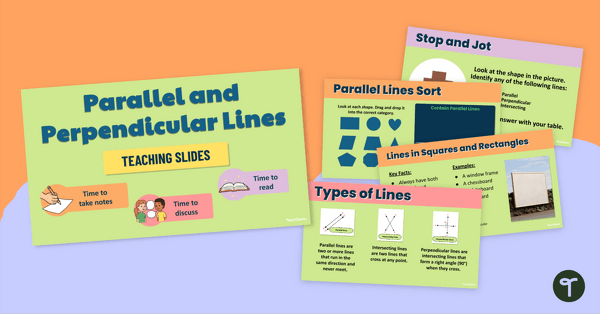
Parallel and Perpendicular Lines PPT — Teaching Slides
Download this parallel and perpendicular lines PPT to engage your students as you teach them about different line types!
- Plus Plan

Parallel and Perpendicular Lines in 2D Shapes Sorting Activity
Identify parallel and perpendicular lines in 2D shapes in this engaging sorting activity!
- Plus Plan
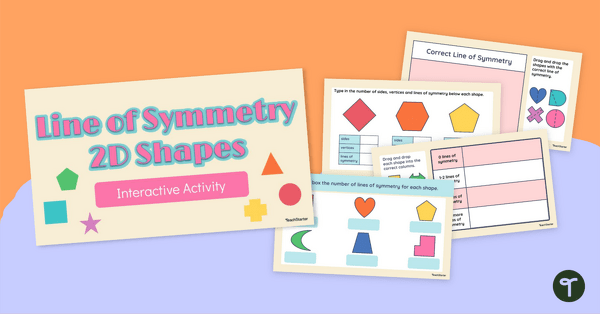
Line of Symmetry 2D Shapes Interactive Activity
Engage your students in a variety of interactive activities all focused on the line of symmetry for 2D shapes.
- Plus Plan
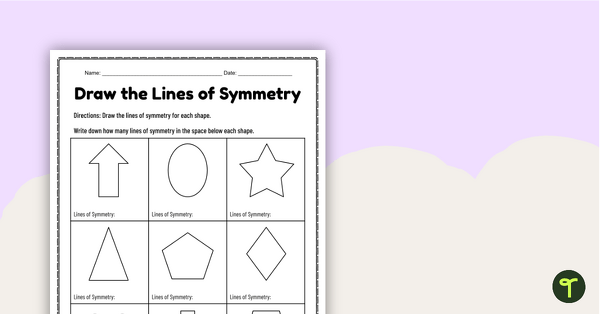
Draw The Line of Symmetry Worksheets
Use this lines of symmetry worksheet to help students practice drawing lines of symmetry on 2D shapes.
- Plus Plan
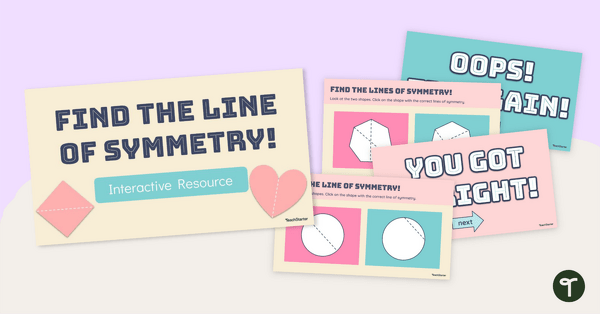
Find the Line of Symmetry Interactive Resource
Have fun with your class using this interactive learning tool to find the line of symmetry on various shapes and objects!
- Plus Plan
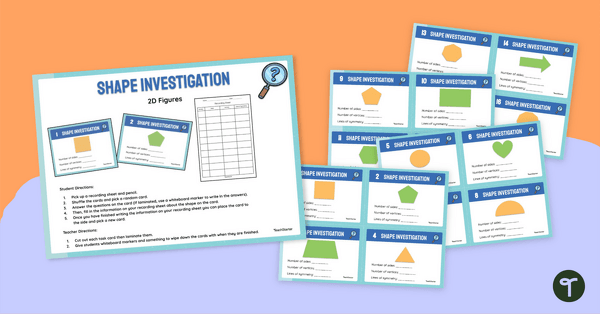
Shape Investigation 2D Figures Task Cards
Combine fun and learning with these 2D shapes and symmetry task cards for your Fourth Grade students!
- Plus Plan
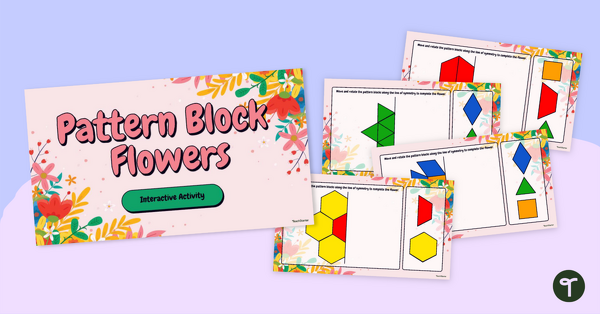
Pattern Block Flowers Interactive
Use this flower-themed interactive activity for your students to practice using manipulatives to create or expand on shapes using a pattern or symmetry model.
- Plus Plan
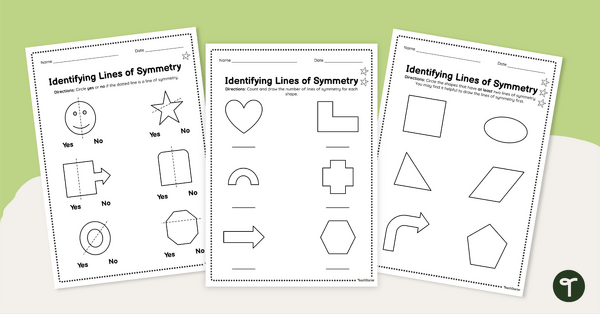
Identifying Lines of Symmetry Worksheets
Use this set of differentiated worksheets to help students practise the process involved with identifying lines of symmetry on two-dimensional shapes.
- Plus Plan
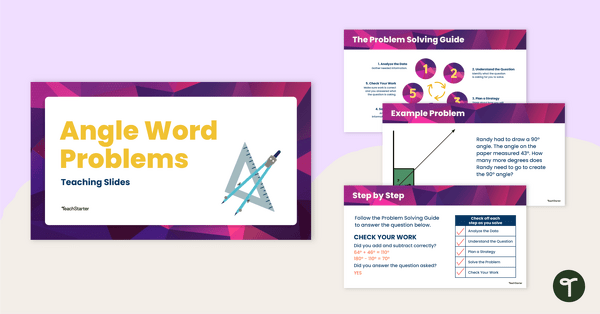
Angle Word Problems Teaching Slides
Help your students tackle angle word problems with ease using this step-by-step problem-solving guide.
- Plus Plan
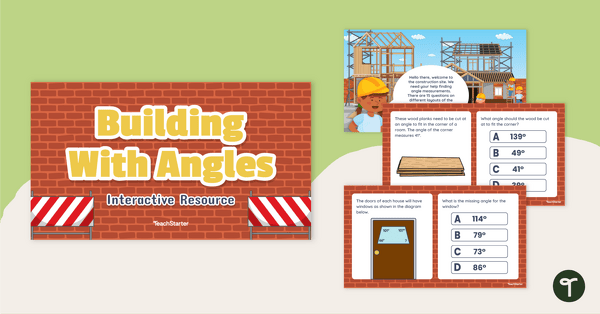
Building With Angles – 4th Grade Interactive Math Game
Transport your students to a local construction site to solve building-related angle problems with this interactive math game.
- Plus Plan
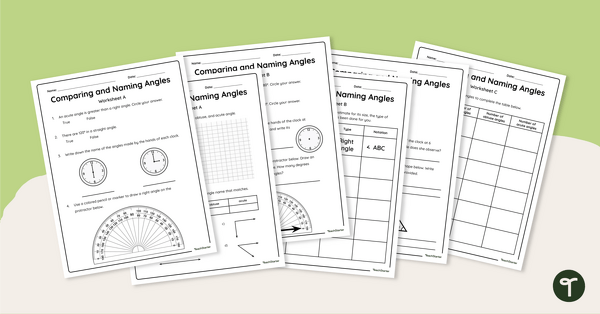
Comparing and Naming Angles – 4th Grade Math Worksheets
Assess your students’ understanding of angle types with the set of differentiated student worksheets.
- Plus Plan
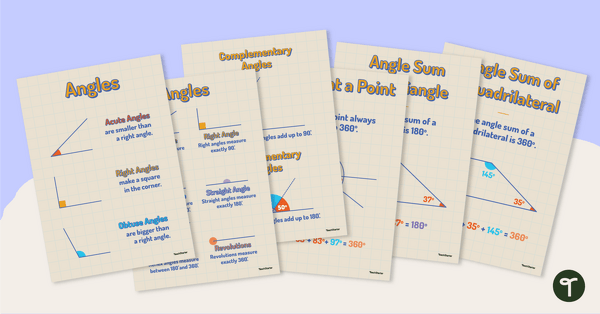
Types of Angles Anchor Charts
Remind your students about the most common types of angles with this set of six classroom anchor charts.
- Plus Plan
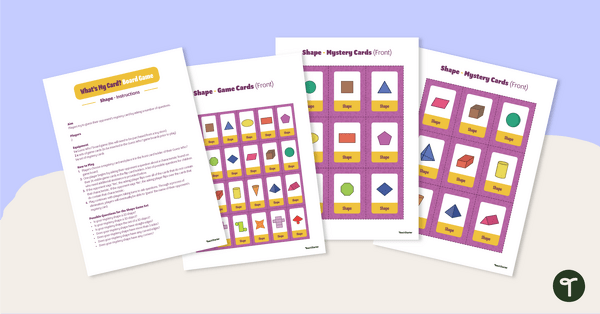
What's My Card? Shape Board Game
Consolidate knowledge of 2d shapes and 3D objects with a game of shape Guess Who!
- Plus Plan
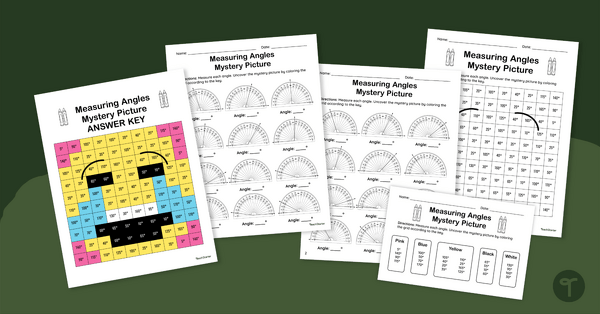
Measuring Angles – Mystery Picture Worksheet
Find the measure of each angle and use the color guide to reveal a mystery picture with this worksheet designed for 4th-grade students.
- Plus Plan
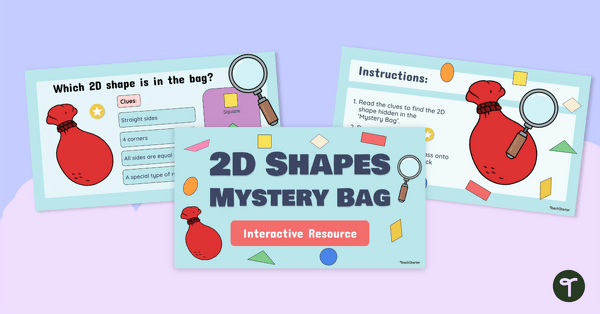
Interactive Activity - 2D Shapes Mystery Bag
Help students identify the properties of 2D shapes with this 10-slide interactive activity.
- Plus Plan
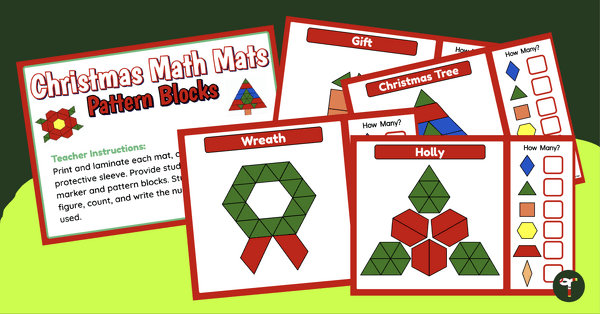
Christmas Math Mats - Pattern Block Picture Cards
Print a set of Christmas pattern block picture cards to help children develop shape recognition and fine motor skills.
- Plus Plan
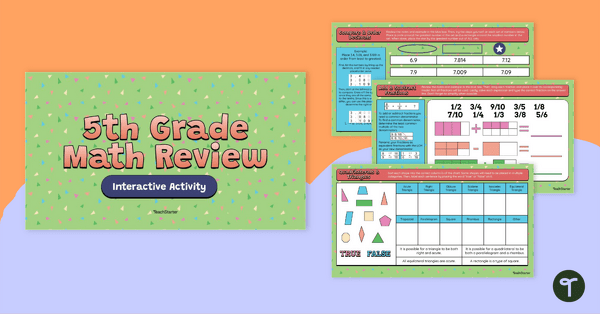
5th Grade Math Review – Google Slides Interactive Activity
Review important 5th-grade math standards with a student-led interactive activity that covers 12 different mathematical concepts.
- Plus Plan
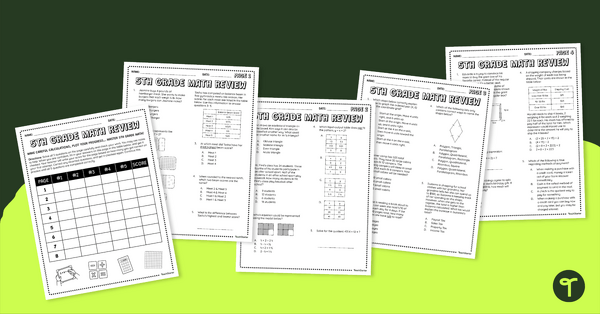
5th Grade Math Review – Test Prep Packet
Encourage your students to work through 8 pages of 5th-grade math problems while charting their progress to measure their success.
- Plus Plan
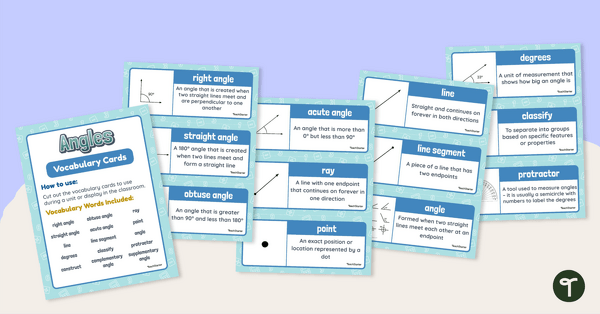
Understanding Angles – Vocabulary Cards
Promote math vocabulary development with this set of 15 vocabulary cards focusing on angles.
- Plus Plan
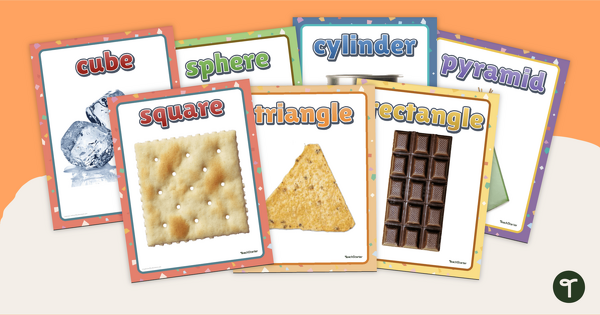
2D and 3D Shape Posters
Use this set of 14 brightly colored 2D and 3D shape posters to decorate your classroom and build academic vocabulary.
- Free Plan
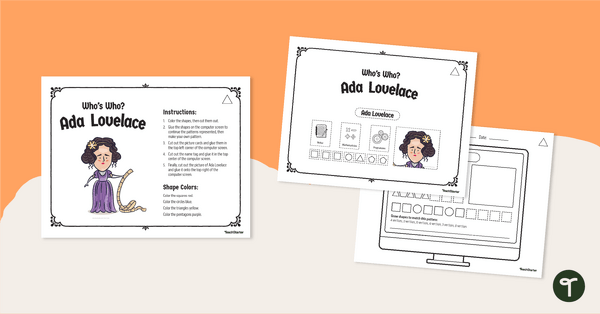
Ada Lovelace - Cut and Paste Shapes and Patterns Activity
Explore shapes and patterns with the female programmer, Ada Lovelace, with this cut-and-paste activity for young students.
- Plus Plan
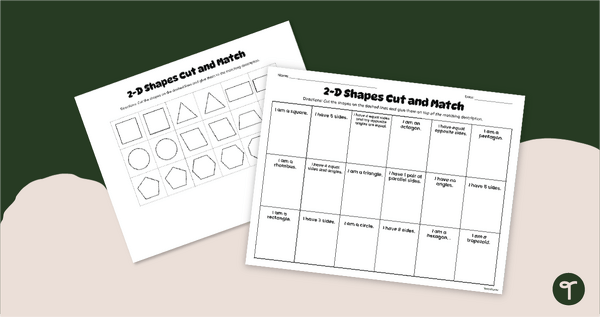
2-D Shape Match
A fun match-up activity to consolidate your students’ knowledge of 2-D shapes and their attributes.
- Free Plan
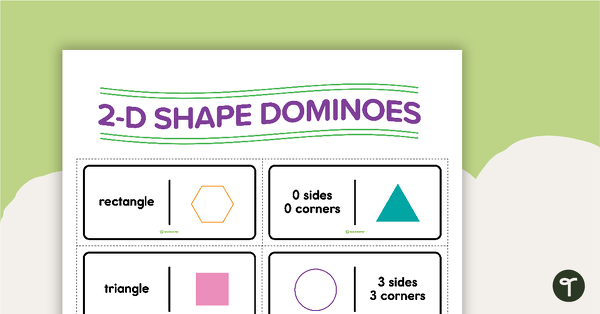
2-D Shape Dominoes
A set of dominoes to help students with their understanding of 2-D shapes.
- Plus Plan
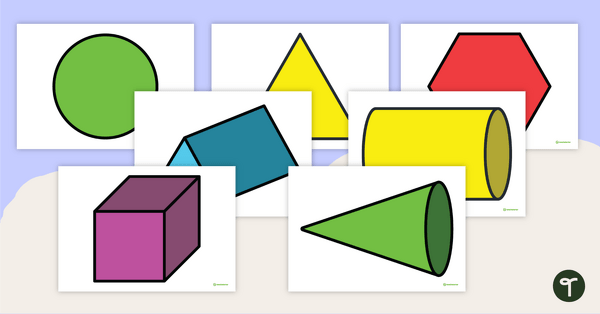
2D and 3D Shape Flashcards
Explore 2D shapes and 3D objects with this set of 20 full-page flashcards.
- Plus Plan
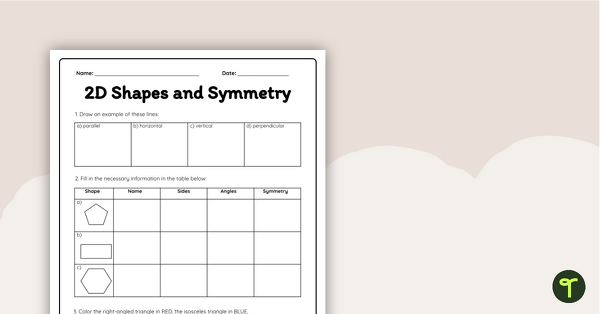
Shapes and Symmetry - Worksheet
Monitor and assess your students' understanding of 2D shapes and their properties with this 2-page worksheet.
- Plus Plan
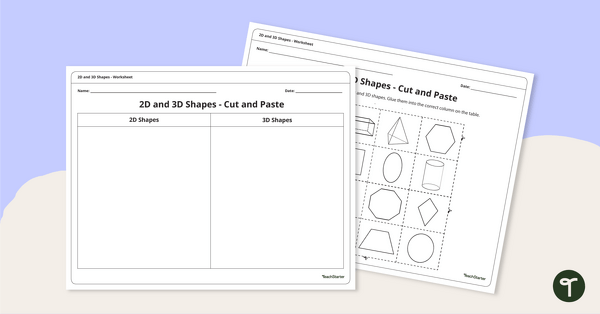
2D and 3D Shapes - Cut and Paste Worksheet
Learn the difference between 2D shapes and 3D objects with this cut-and-paste worksheet.
- Free Plan
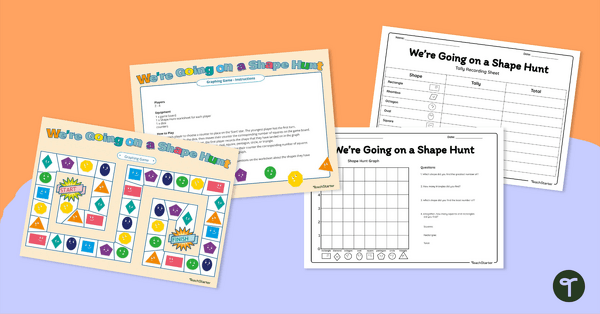
We're Going On a Shape Hunt! Graphing Game
Consolidate students' knowledge of 2D shapes while teaching about data collection, recording and graphing!
- Plus Plan
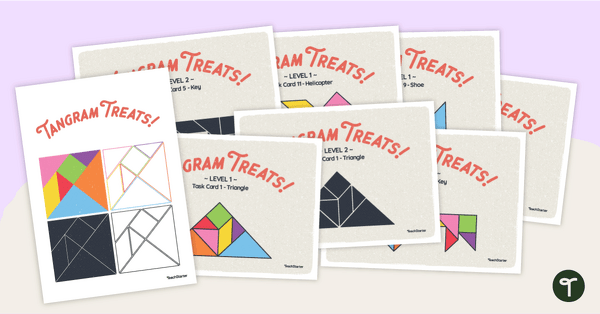
Tangram Treats - Tangram Puzzles
Have fun learning about shapes with a set of 36 tangram task cards separated into three levels, along with two tangram cut-out templates.
- Plus Plan
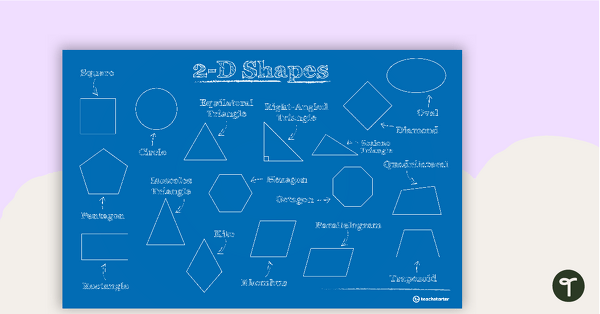
2-D Shapes – Poster
2-D shapes and their names on one poster.
- Plus Plan
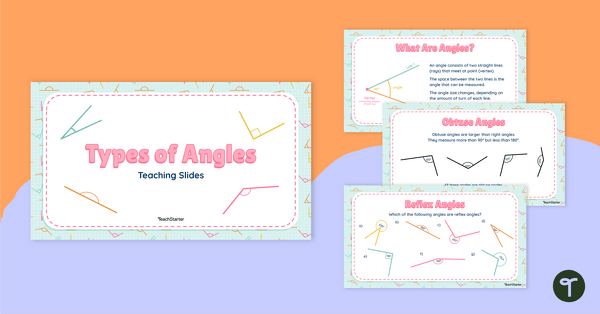
Types of Angles Teaching Slides
Teach your students about the six main angle types with this teaching presentation perfect for elementary school math lessons.
- Plus Plan
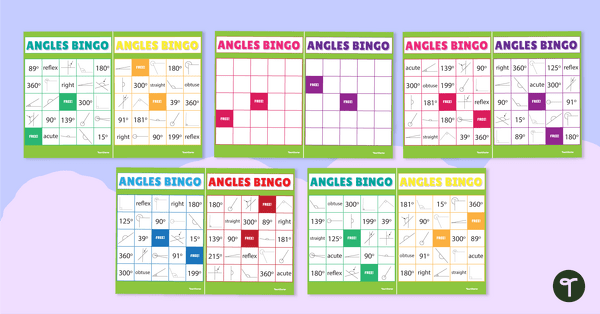
Angles Bingo
Generate excitement about angles in your classroom by playing this whole-class types of angles bingo game.
- Plus Plan
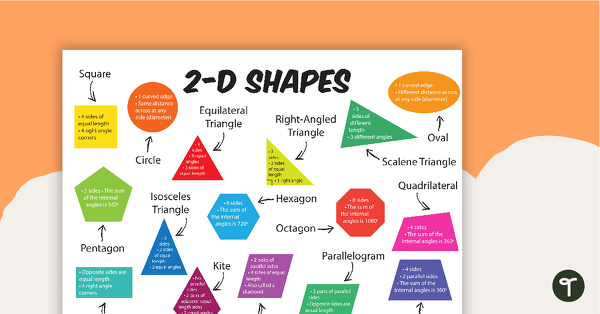
2-D Shapes with Information - Poster
A 2-D shapes poster with 16 common shapes, as well as information characterizing each shape.