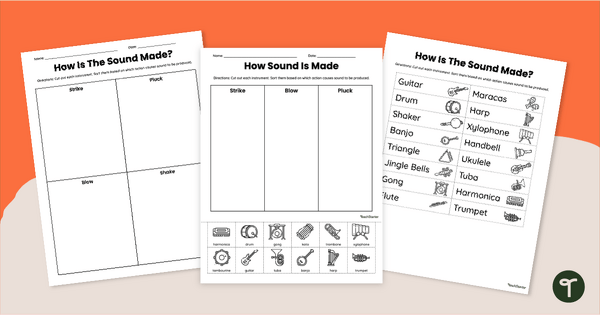
Explore how musical instruments produce sound with this engaging cut-and-sort How Instruments Make Sound Worksheet Pack
Cut and Sort Out How Instruments Make Sound Worksheet Pack
Help students discover how musical instruments produce sound with this engaging cut-and-sort How Instruments Make Sound Worksheet Pack. In this hands-on activity, students examine different instruments and sort them into groups based on how they create sound.
By cutting and sorting the instrument pictures, students learn that sound can be produced in different ways—such as striking, blowing, plucking, or shaking. This How Instruments Make Sound Worksheet Pack helps students connect science concepts about vibrations and sound energy to real-world instruments they may already recognize.
Sort Instruments by How They Produce Sound
Students will explore the science of sound as they analyze each instrument and decide how it creates sound. To complete the activity, students will:
- Cut out pictures of musical instruments
- Sort the instruments into categories based on how sound is produced
- Place each instrument under the correct heading: strike, blow, pluck, or shake
This sorting task encourages students to think critically about how vibrations are created when instruments are played. We have included two versions of the activity so you can easily support different levels of learners:
- Simpler Version – Includes fewer instruments and clear categories, perfect for introducing the concept.
- Extended Version – Includes a larger variety of instruments, providing an additional challenge for more advanced students.
Download This Sound and Instruments Sorting Activity
These printable worksheets are perfect for science centers, independent practice, small-group work, or review activities when teaching about sound and how it is produced. It is available as a printable PDF and editable Google Slides resource file. To get your copy, click your dropdown arrow on the download button and select your preferred file type.
More Resources for Teaching Sound and Vibrations
Looking for more ways to help students explore how sound is created and how instruments work? Check out more of our engaging sound energy worksheets, games, and activities. We recommend pairing this resource with one of the following:
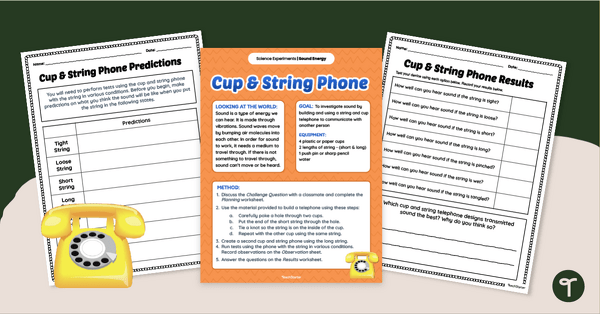
teaching resource
Cup and String Phone - Science Sound Investigation
Build and test a cup and string phone to investigate the transmission of sound waves through different media.
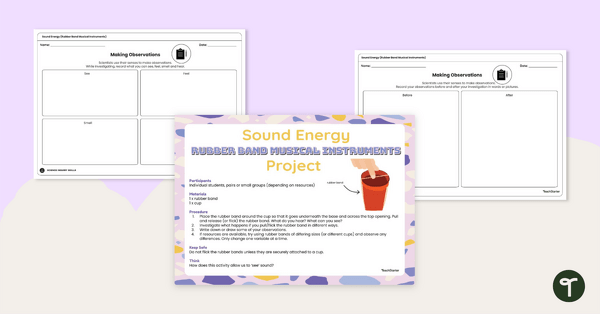
teaching resource
Sound Energy Project (Rubber Band Musical Instruments)
Use this sound energy experiment to help your students visualize sound using everyday items.
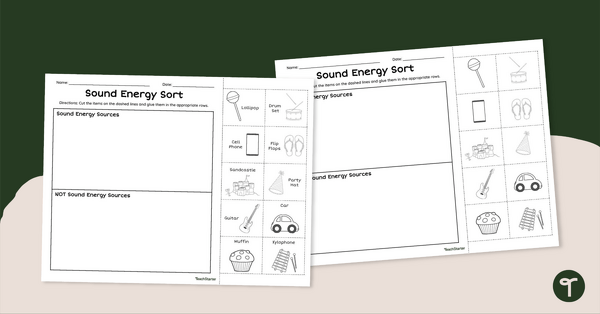
teaching resource
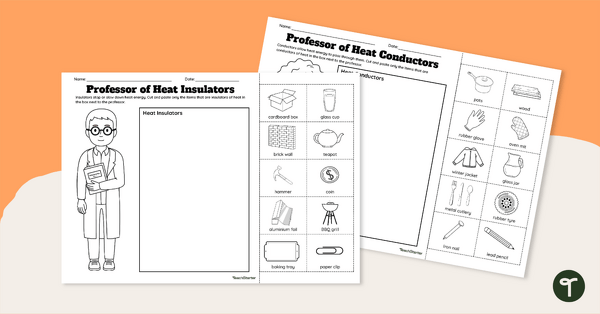
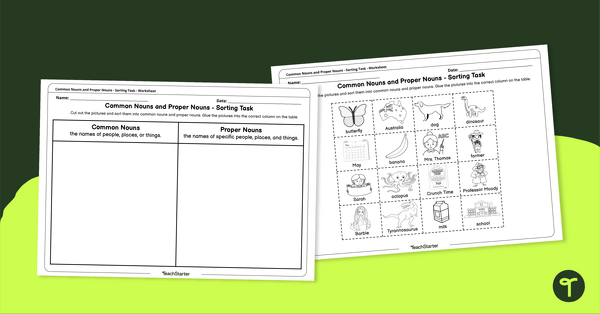
Sound Energy Sources Cut and Paste Worksheet
Teach your students all about sound energy sources using this cut-and-paste sorting worksheet.

0 Comments
Write a review to help other teachers and parents like yourself. If you'd like to request a change to this resource, or report an error, select the corresponding tab above.