S.1.1.D
use tools, including hand lenses, goggles, heatresistant gloves, trays, cups, bowls, beakers, sieves/sifters, tweezers, primary balance, notebooks, terrariums, aquariums, stream tables, soil samples (loam, sand, gravel, rocks, and clay), seeds, plants, windsock, pinwheel, student thermometer, demonstration thermometer, rain gauge, straws, ribbons, non-standard measuring items, flashlights, sandpaper, wax paper, items that are magnetic, nonmagnetic items, a variety of magnets, hot plate, aluminum foil, Sun-Moon-Earth model, and plant and animal life cycle models to observe, measure, test, and compare;
- Plus Plan
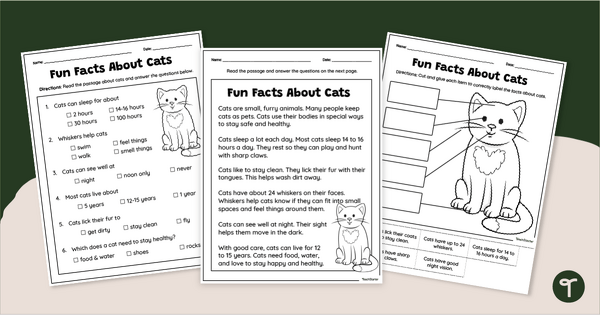
All About Cats - 1st Grade Reading Comprehension Passage
Explore informational text and learn all about cats and their external features with a printable 1st grade reading comprehension passage.
- Free Plan
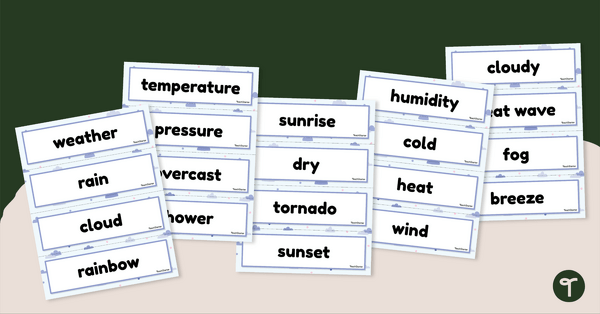
Weather Word Wall Vocabulary
Use this teacher-created weather resource to teach weather vocabulary. Build a word wall with your students during your weather lessons.
- Plus Plan
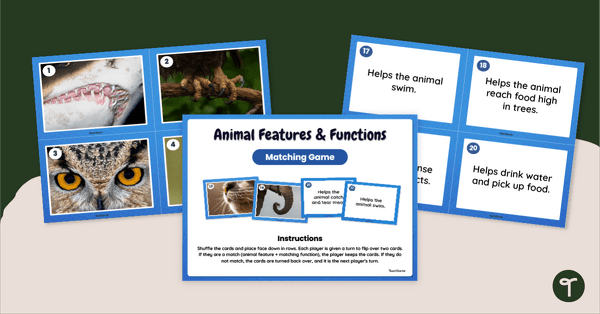
Animal Features and Functions Matching Activity
Explore animal features and their functions with an engaging Animal Features Matching Game.
- Plus Plan
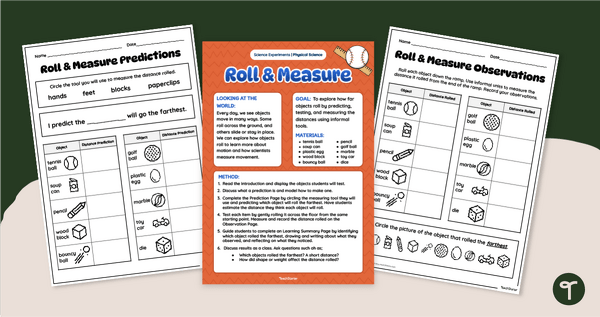
Roll & Measure Science Investigation (K-2)
Explore movement and measurement with informal units with an engaging Roll and Measure Science Experiment for K-2 students.
- Plus Plan
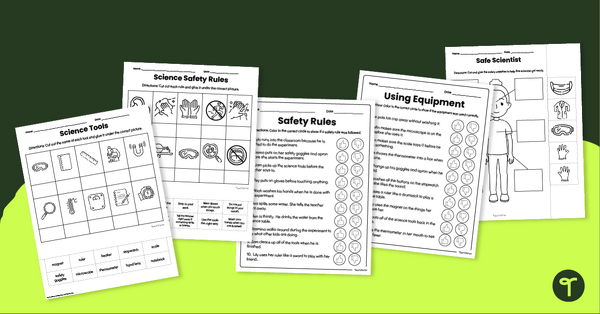
Lab Equipment & Science Safety Worksheets (K-2)
Explore science lab equipment and safety rules with a printable pack of Science Safety Worksheets.
- Plus Plan
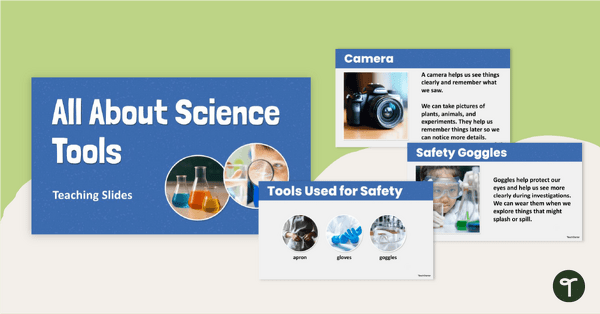
Science Tools and Safety PowerPoint (K-2)
Explore science safety gear and science equipment with an interactive Science Tools PowerPoint Presentation.
- Plus Plan
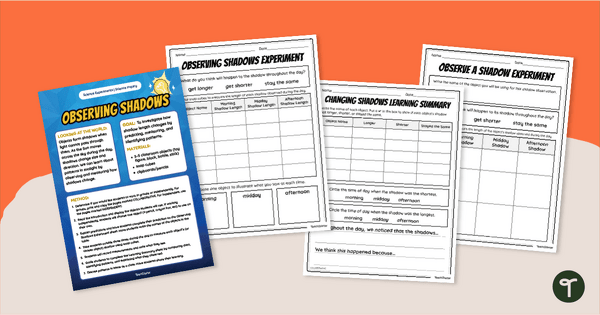
Observing Shadows Science Investigation (1-2)
Explore the world of light, shadow, and scientific inquiry with an engaging, outdoor Shadow Observation experiment.