VC2E3LY03
understand how to apply knowledge of phoneme–grapheme correspondences, syllables, and blending and segmenting to fluently read and write multisyllabic words with more complex letter patterns
- reading and writing more complex words with consonant digraphs and consonant blends, for example ‘shrinking’, ‘against’ and ‘rocket’
- reading and writing consonant digraphs representing different sounds, for example ‘machine’, ‘change’ and ‘school’
- Plus Plan
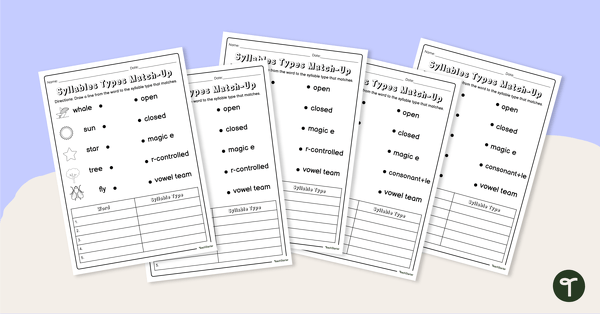
Syllable Types Match-Up Worksheets
Identify and match words to the correct syllable types with this set of five worksheets.
- Plus Plan
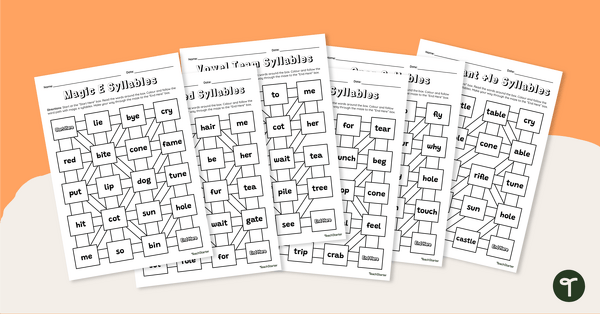
Syllable Type Mazes - Worksheets
Strengthen students’ understanding of the six types of syllables with this set of 6 syllable mazes.
- Plus Plan
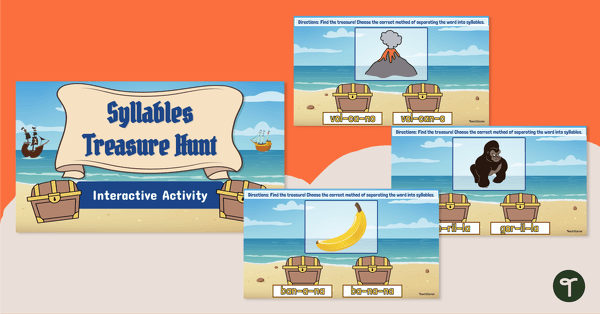
Syllables Treasure Hunt - Interactive Activity
Practise the correct method of breaking words into their syllables with this engaging interactive activity.
- Plus Plan
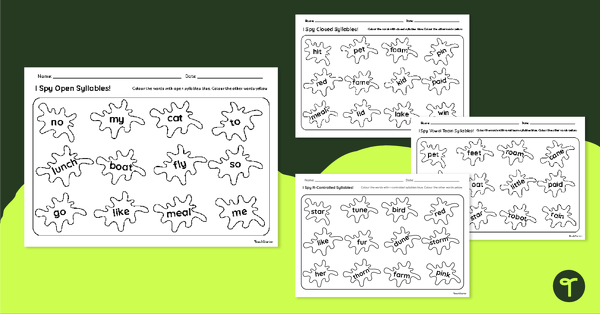
I Spy Syllable Types - Worksheets
Identify and colour words according to their syllable types with this set of six worksheets.
- Plus Plan
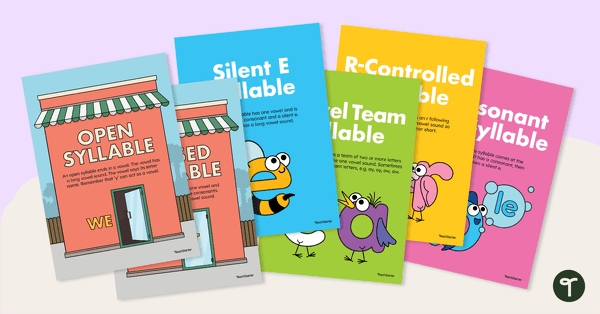
Types of Syllables Posters
Remind your students about the most common syllable types with this set of classroom display posters.
- Plus Plan
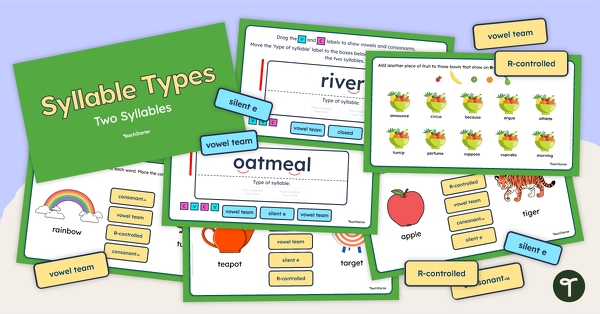
Syllable Types – Two Syllables Interactive Activity
Identify types of syllables in two-syllable words with this Google Slides Interactive activity.
- Plus Plan
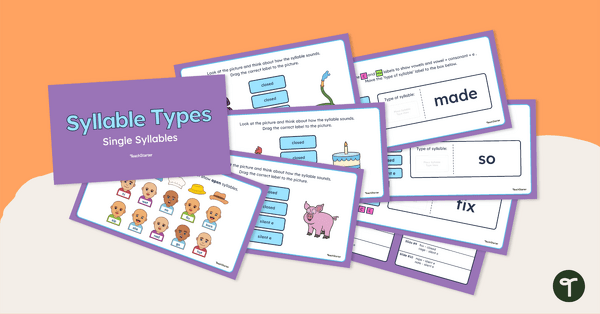
Syllable Types – Single Syllable Interactive Activity
Identify types of syllables in single syllable words with this Google Slides Interactive activity.
- Plus Plan
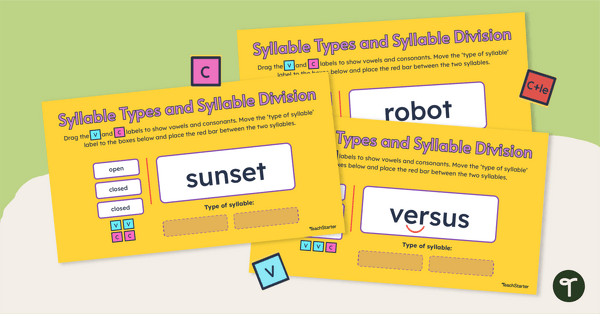
Syllable Types and Syllable Division
Divide multisyllabic words into syllables and identify their syllable types with this Google Slides interactive activity.
- Free Plan
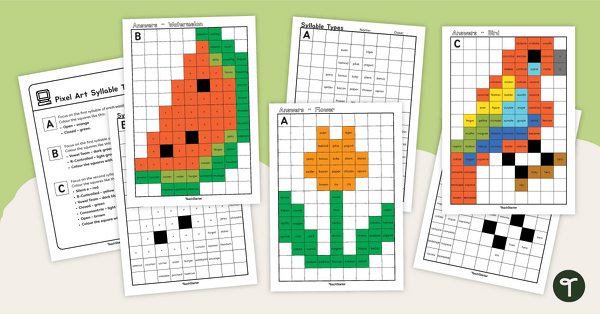
Pixel Art Syllable Types
Consolidate understanding of syllable types with these appealing worksheets.
- Plus Plan
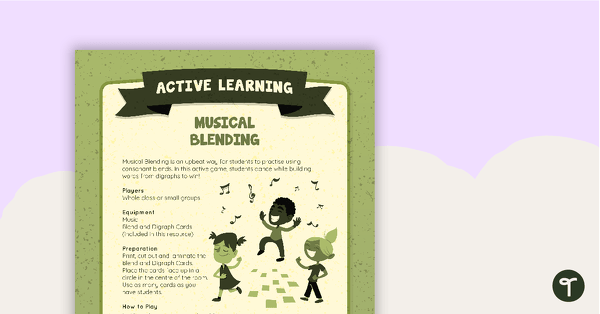
Musical Blending Active Game
An active game that allows students to practise using blends and digraphs.