VC2M2A01
recognise, describe and create additive patterns that increase or decrease by a constant amount, using numbers, shapes and objects, and identify missing elements in the pattern
- creating a pattern sequence with materials, writing the associated number sequence, and then describing the sequence so someone else can replicate it with different materials; for example, using matchsticks or toothpicks to create a growing pattern of triangles – using 3 for one triangle, 5 for 2 triangles, 7 for 3 triangles – and describing the pattern as ‘Start with 3 and add 2 each time’
- recognising patterns in the built environment to locate additive pattern sequences (for example, responding to ‘How many windows in one train carriage, 2 train carriages, 3 train carriages …?’ or ‘How many wheels on one car, 2 cars, 3 cars …?’) and recording the results in a diagram or table
- recognising the constant term being added or subtracted in an additive pattern and using it to identify missing elements in the sequence
- recognising additive patterns in the environment on Country/Place and in Aboriginal and/or Torres Strait Islander material culture; and representing these patterns using drawings, coloured counters and numbers
- Plus Plan
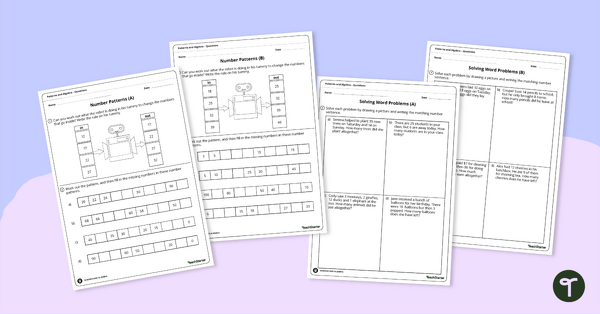
Number Patterns Year 2 Worksheet Set
Download this number patterns year 2 worksheet set to give your students practice skip counting, recognising patterns and solving word problems.
- Plus Plan
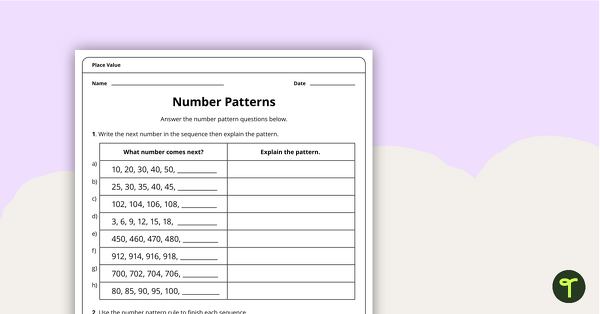
Additive Patterns Practice Worksheets
Create additive patterns with this worksheet pack designed to help students confidently recognise, describe and build increasing and decreasing sequences using numbers, shapes and objects.
- Plus Plan
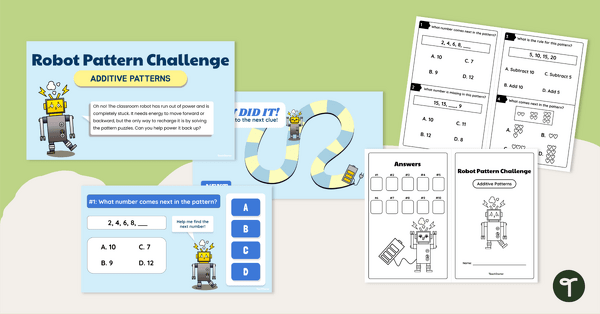
Robot Pattern Challenge - Additive Patterns Interactive Slides
Engage students with additive patterns interactive slides that offer teachers a ready‑to‑use digital resource for recognising, extending and explaining additive number patterns.
- Plus Plan
Identifying Number Patterns and their Rules PowerPoint
A 15 page editable PowerPoint to use in the classroom when introducing number pattern rules.
- Plus Plan
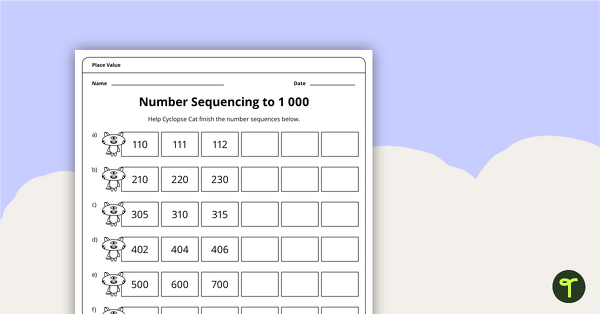
Additive Pattern Worksheet Pack
Support maths instruction with additive pattern worksheets designed for teachers who want a low-prep way to help students recognise, describe and create additive patterns.
- Plus Plan
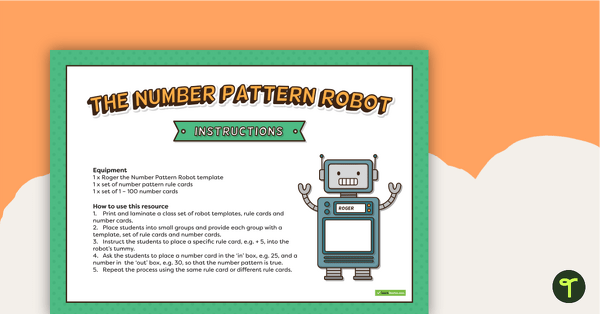
The Number Pattern Robot
A fun place value activity to help students identify number patterns and their rules.
- Plus Plan
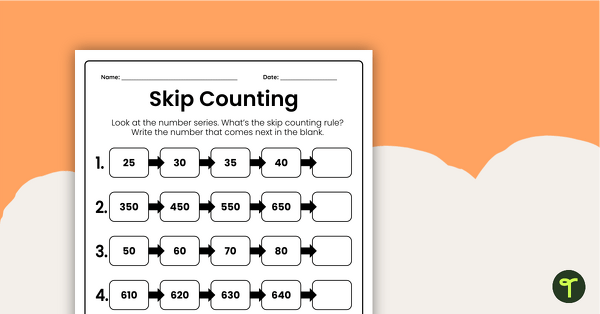
Skip Counting Worksheets (Complete the Series)
Use this set of skip counting worksheets to check student understanding of skip counting in increasing intervals of 5, 10 and 100, by finishing a series.