VC2M2N04
add and subtract one- and two-digit numbers, represent problems using number sentences and solve using part-part-whole reasoning and a variety of calculation strategies
- using the associative property of addition to assist with mental calculation by partitioning, rearranging and regrouping numbers using number knowledge, near doubles and bridging-to-10 strategies; for example, calculating 7 + 8 using 7 + (7 + 1) = (7 + 7) + 1, the associative property and near doubles; or calculating 7 + 8 using the associative property and bridging to 10: 7 + (3 + 5) = (7 + 3) + 5
- using strategies such as doubles, near doubles, part-part-whole knowledge to 10, bridging tens and partitioning to mentally solve problems involving two-digit numbers; for example, calculating 56 + 37 by thinking 5 tens and 3 tens is 8 tens, 6 + 7 = 6 + 4 + 3 is one 10 and 3, and so the result is 9 tens and 3, or 93
- representing addition and subtraction problems using a bar model and writing a number sentence, explaining how each number in the sentence is connected to the situation
- using mental strategies and informal written jottings to help keep track of the numbers when solving addition and subtraction problems involving two-digit numbers and recognising that zero added to a number leaves the number unchanged; for example, in calculating 34 + 20 = 54, 3 tens add 2 tens is 5 tens, which is 50, and 4 ones add zero ones is 4 ones, which is 4, so the result is 50 + 4 = 54
- using a physical or mental number line or hundreds chart to solve addition or subtraction problems by moving along or up and down in tens and ones; for example, solving the problem ‘I was given a $100 gift card for my birthday and spent $38 on a pair of shoes and $15 on a T-shirt. How much money do I have left on the card?’
- using Aboriginal and Torres Strait Islander Peoples’ stories and dances to understand the balance and connection between addition and subtraction, representing relationships as number sentences
- Plus Plan
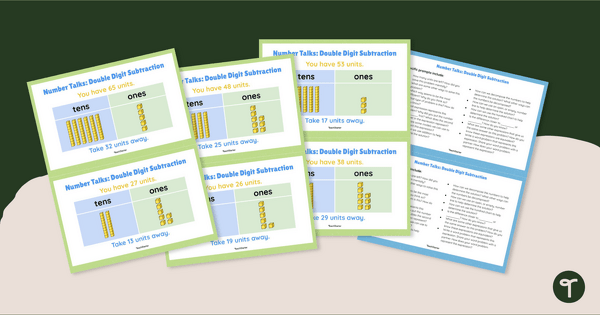
Number Talks - Double Digit Subtraction Task Cards
Encourage the use of mental math strategies with 2-digit subtraction number talks task cards.
- Plus Plan
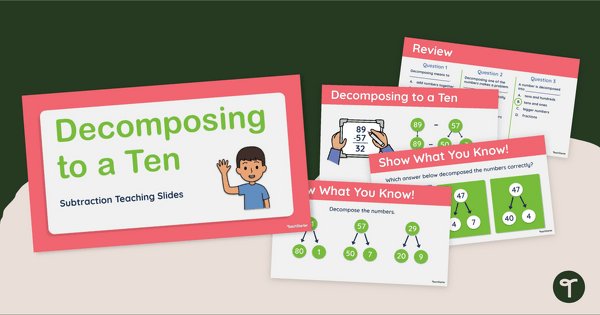
Decomposing Numbers to a Ten – Interactive PowerPoint
Challenge students to decompose numbers to mentally solve two-digit subtraction problems with a teaching presentation.
- Plus Plan
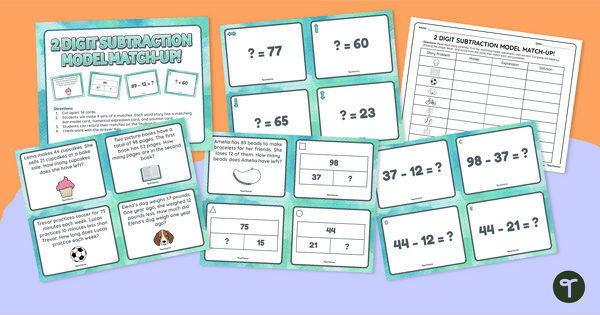
2 Digit Subtraction Model Match-Up
Use a rigorous subtraction matching game to match subtraction word problems with number sentences, bar models, and solutions.
- Plus Plan
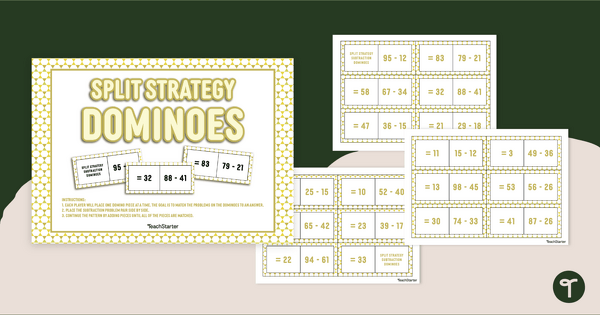
2-Digit Subtraction Game - Dominoes
Use this printable set of double-digit subtraction dominoes to practice a variety of subtraction strategies.
- Plus Plan
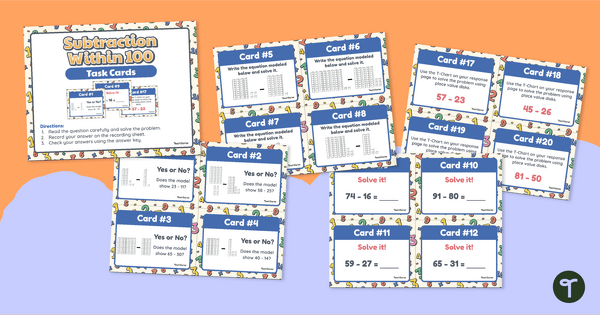
2-Digit Subtraction with Regrouping - Year 3 Task Cards
Practise using various strategies to solve 2-digit subtraction problems with a set of task cards.
- Plus Plan
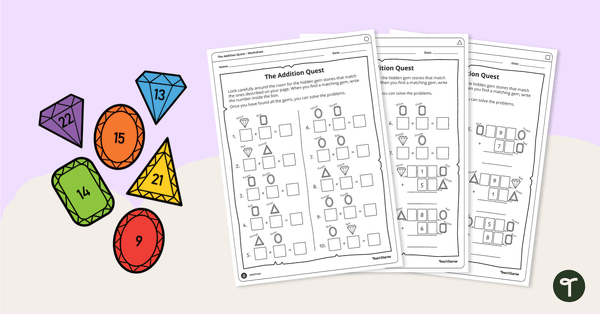
The Addition Quest – Whole Class Game
Find the hidden gems and place their numbers into the correct positions on the worksheet to solve the sums.
- Plus Plan
Number Sentence Strips
A versatile set of templates that can be used for number sentences and much more.
- Plus Plan
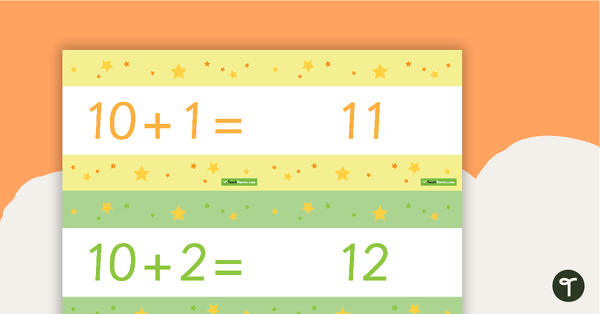
10 to 100 Two-Digit Plus One-Digit Addition Flashcards – Stars (Horizontal)
Ninety addition 10 to 100 two-digit plus one-digit addition flashcards.
- Plus Plan
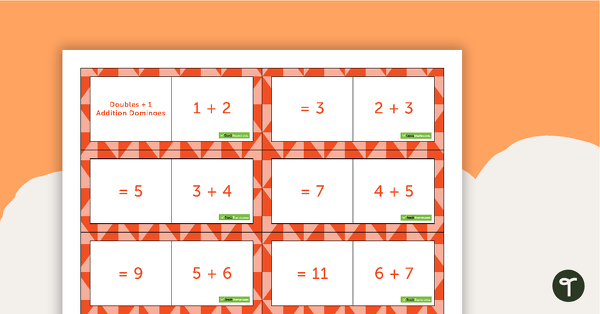
Double +1 Addition Dominoes
A set of addition dominoes to use in the classroom when applying the double +1 strategy.
- Plus Plan
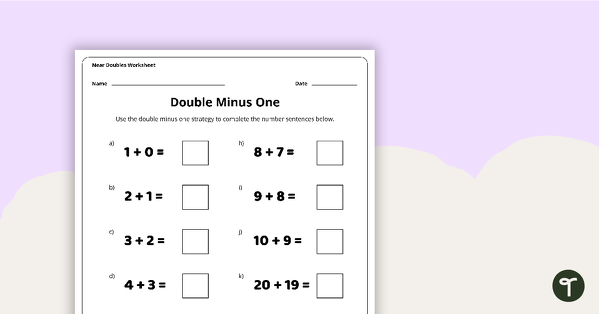
Double Minus One - Worksheet
A worksheet to help students demonstrate their understanding of near doubles.
- Plus Plan
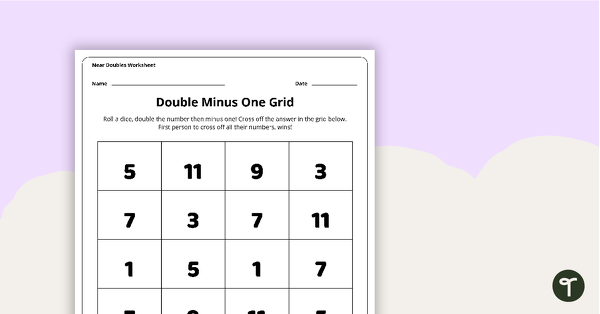
Double Minus One - Grid Worksheet
A fun worksheet to help students demonstrate their understanding of near doubles.
- Plus Plan
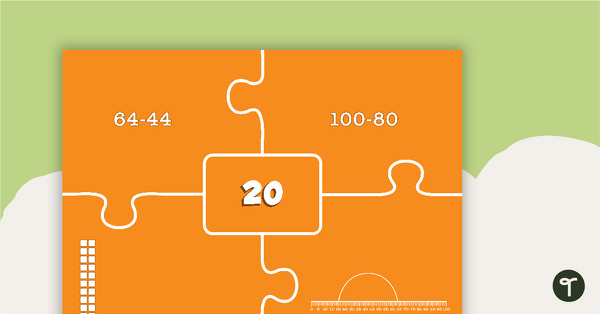
Number Matching Puzzle - Subtraction
A hands-on game to play when learning about subtracting numbers.
- Plus Plan
Addition and Subtraction Strategies PowerPoints – Teaching Resource Pack
A collection of Teaching Presentations that explore strategies for the computation of addition and subtraction.
- Plus Plan
Number Talks Teaching Resource Pack - Grade 2
A collection of number talks teaching resources that support meaningful and highly engaging conversations in the mathematics classroom.