Year 6
Australia in the past and present and its connections with a diverse world
The Year 6 curriculum focuses on the social, economic and political development of Australia as a nation, particularly after 1900, and Australia's role within a diverse and interconnected world today. Students explore the events and developments that shaped Australia as a democratic nation and stable economy, and the experiences of the diverse groups who have contributed to and are/were affected by these events and developments, past and present. Students investigate the importance of rights and responsibilities and informed decision-making, at the personal level of consumption and civic participation, and at the national level through studies of economic, ecological and government processes and systems. In particular, students examine Asia's natural, demographic and cultural diversity, with opportunities to understand their connections to Asian environments. These studies enable students to understand how they are interconnected with diverse people and places across the globe.
The content provides opportunities for students to develop humanities and social sciences understanding through key concepts including significance; continuity and change; cause and effect; place and space; interconnections; roles, rights and responsibilities; and perspectives and action. These concepts may provide a focus for inquiries and be investigated across sub-strands or within a particular sub-strand context.
The content at this year level is organised into two strands: knowledge and understanding, and inquiry and skills. The knowledge and understanding strand draws from four sub-strands: history, geography, civics and citizenship and economics and business. These strands (knowledge and understanding, and inquiry and skills) are interrelated and have been developed to be taught in an integrated way, which may include integrating with content from the sub-strands and from other learning areas, and in ways that are appropriate to specific local contexts. The order and detail in which they are taught are programming decisions.
Inquiry Questions
A framework for developing students' knowledge, understanding and skills is provided by inquiry questions. The following inquiry questions allow for connections to be made across the sub-strands and may be used or adapted to suit local contexts: inquiry questions are also provided for each sub-strand that may enable connections within the humanities and social sciences learning area or across other learning areas.
- How have key figures, events and values shaped Australian society, its system of government and citizenship?
- How have experiences of democracy and citizenship differed between groups over time and place, including those from and in Asia?
- How has Australia developed as a society with global connections, and what is my role as a global citizen?
(source: www.australiancurriculum.edu.au)
Achievement Standard
By the end of Year 6, students explain the significance of an event/development, an individual and/or group. They identify and describe continuities and changes for different groups in the past and present. They describe the causes and effects of change on society. They compare the experiences of different people in the past. Students describe, compare and explain the diverse characteristics of different places in different locations from local to global scales. They describe how people, places, communities and environments are diverse and globally interconnected and identify the effects of these interconnections over time. Students explain the importance of people, institutions and processes to Australia's democracy and legal system. They describe the rights and responsibilities of Australian citizens and the obligations they may have as global citizens. Students recognise why choices about the allocation of resources involve trade-offs. They explain why it is important to be informed when making consumer and financial decisions. They identify the purpose of business and recognise the different ways that businesses choose to provide goods and services. They explain different views on how to respond to an issue or challenge.
Students develop appropriate questions to frame an investigation. They locate and collect useful data and information from primary and secondary sources. They examine sources to determine their origin and purpose and to identify different perspectives in the past and present. They interpret data to identify, describe and compare distributions, patterns and trends, and to infer relationships, and evaluate evidence to draw conclusions. Students sequence information about events, the lives of individuals and selected phenomena in chronological order and represent time by creating timelines. They organise and represent data in a range of formats, including large- and small-scale maps, using appropriate conventions. They collaboratively generate alternative responses to an issue, use criteria to make decisions and identify the advantages and disadvantages of preferring one decision over others. They reflect on their learning to propose action in response to an issue or challenge and describe the probable effects of their proposal. They present ideas, findings, viewpoints and conclusions in a range of communication forms that incorporate source materials, mapping, graphing, communication conventions and discipline-specific terms.
(source: www.australiancurriculum.edu.au)
Achievement Standard
By the end of Year 6 students explain the significance of an event/development, an individual or group. They identify and describe continuities and changes for different groups in the past. They describe the causes and effects of change on society. They compare the experiences of different people in the past.
Students sequence information about events and the lives of individuals in chronological order and represent time by creating timelines. When researching, students develop appropriate questions to frame a historical inquiry. They identify a range of primary and secondary sources and locate, collect, organise and categorise relevant information to answer inquiry questions. They analyse information or sources for evidence to determine their origin and purpose and to identify different perspectives. Students develop texts, particularly narrative recounts and descriptions. In developing these texts and organising and presenting their information, they use historical terms and concepts, and incorporate relevant sources.
(source: www.australiancurriculum.edu.au)
Achievement Standard
By the end of Year 6, students describe the location of places in selected countries in absolute and relative terms. They describe and explain the diverse characteristics of places in different locations from local to global scales. They describe the interconnections between people in different places, identify factors that influence these interconnections and describe how interconnections change places and affect people. They identify and compare different possible responses to a geographical challenge.
Students develop appropriate geographical questions to frame an inquiry. They locate, collect and organise useful data and information from primary and secondary sources. They record and represent data and the location of places and their characteristics in different graphic forms, including large-scale and small-scale maps that use cartographic conventions of border, source, scale, legend, title and north point. Students interpret maps, data and other information to identify, describe and compare spatial distributions, patterns and trends, to infer relationships and to draw conclusions. They present findings and ideas using geographical terminology and digital technologies in a range of communication forms. They propose action in response to a geographical challenge and describe the probable effects of their proposal.
(source: www.australiancurriculum.edu.au)
Achievement Standard
By the end of Year 6, students explain the role and importance of people, institutions, and processes to Australia's democracy and legal system. They describe the rights and responsibilities of Australian citizens and the obligations they may have as global citizens.
Students develop appropriate questions to frame an investigation about the society in which they live. They locate, collect and organise useful information from a range of different sources to answer these questions. They examine sources to determine their origin and purpose and describe different perspectives. They evaluate information to draw conclusions. When planning for action, they identify different points of view and solutions to an issue. They reflect on their learning to identify the ways they can participate as citizens in the school or elsewhere. They present ideas, findings, viewpoints and conclusions in a range of communication forms that incorporate source materials and civics and citizenship terms and concepts.
(source: www.australiancurriculum.edu.au)
Achievement Standard
By the end of Year 6, students recognise why choices about the allocation of resources involve trade-offs. They explain why it is important to be informed when making consumer and financial decisions. They identify the purpose of business and recognise the different ways that businesses choose to provide goods and services.
Students develop appropriate questions to frame an investigation about an economics or business issue, challenge or event. They locate and collect useful data and information from primary and secondary sources. They examine sources to determine their origin and purpose and evaluate evidence to draw conclusions. They interpret, organise and represent data in a range of formats using appropriate conventions. They generate alternative responses to an issue or challenge and identify the advantages and disadvantages of preferring one decision over others. They reflect on their learning to propose action in response to a challenge and identify the possible effects of their decision. They apply economics and business knowledge and skills to familiar problems. Students present ideas, findings, viewpoints and conclusions in a range of communication forms that incorporate source materials and economics and business terms.
(source: www.australiancurriculum.edu.au)
- Plus Plan

Australia Federates PowerPoint
A 27 slide editable PowerPoint template to use in the classroom when learning about Australian Federation.
- Plus Plan
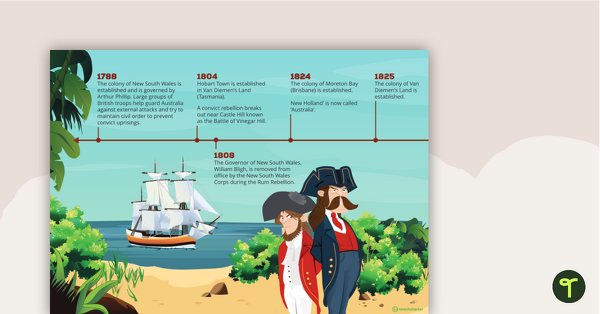
Colonisation to Federation – Australian History Timeline
A 4 page timeline to display in the classroom when learning about the history of Australia.
- Free Plan
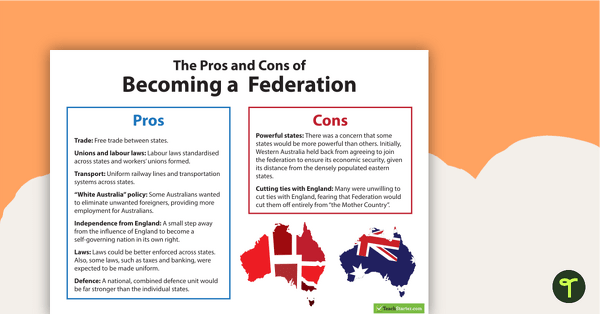
Pros and Cons of Becoming a Federation Poster
A poster displaying the pros and cons of Australia becoming a federation.
- Free Plan
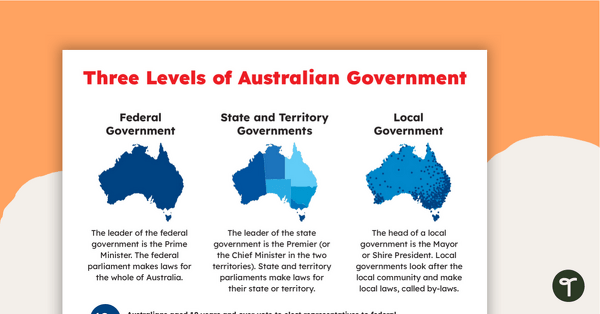
Three Levels of Australian Government - Poster
Review the three levels of government in Australia with this handy classroom poster.
- Plus Plan
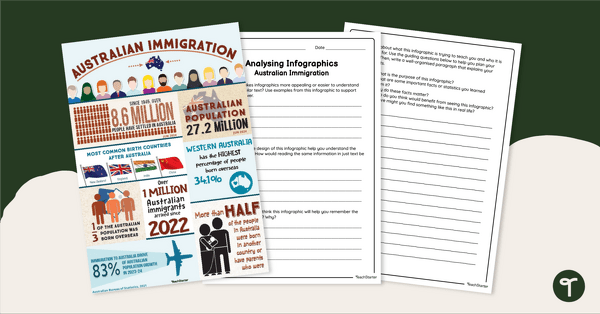
Australian Immigration – Analysing Infographics Worksheet
Explore Australian immigration trends with your students by analysing a kid-friendly infographic and answering guided questions.
- Plus Plan
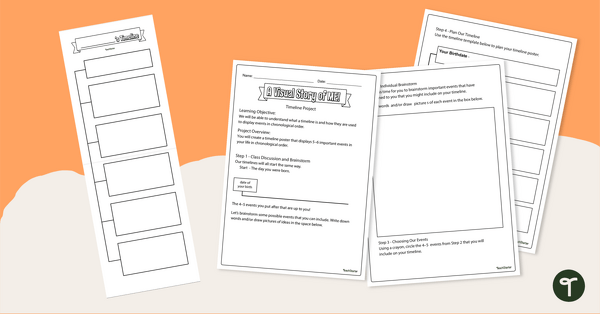
My Personal Timeline - Project Template
Apply knowledge of chronological order while students create a personal timeline highlighting important milestones.
- Plus Plan
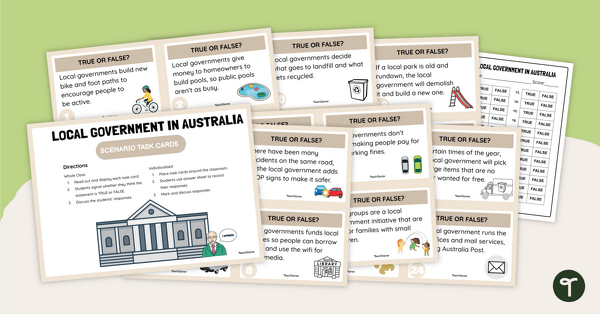
Australian Local Government - Scenario Cards
Explore the roles and responsibilities of local governments in Australia with this set of ‘True or False?’ scenario cards.
- Plus Plan
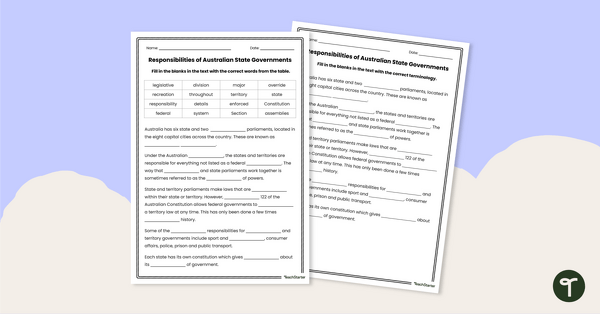
Responsibilities of Australia's State Governments - Cloze Worksheet
Explore the roles and responsibilities of state and territory governments around Australia with this differentiated cloze passage worksheet.
- Plus Plan
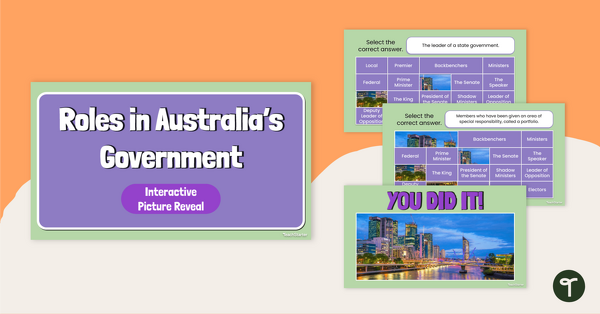
The Roles in Australia’s Government - Interactive Activity
Learn key vocabulary terms related to the roles and responsibilities of Australia’s three levels of government with this digital ‘mystery picture’ activity.
- Plus Plan
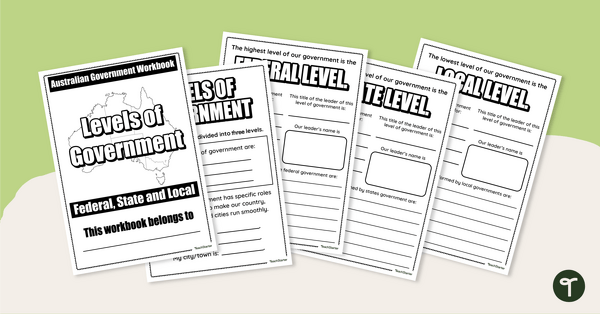
Australia's Levels of Government - Workbook
Learn the duties and leaders of the national, state, and local levels of government with a printable government workbook.
- Free Plan
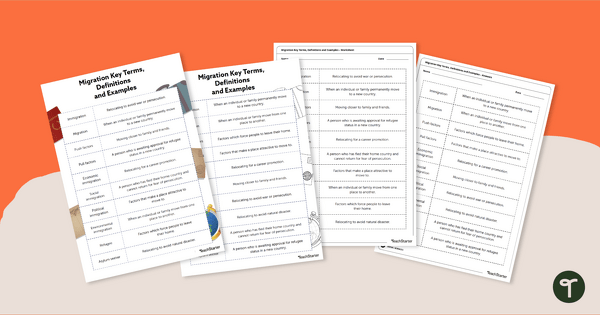
Human Migration Match-Up Activity
A match-up activity linking human migration terms, examples and definitions.
- Plus Plan
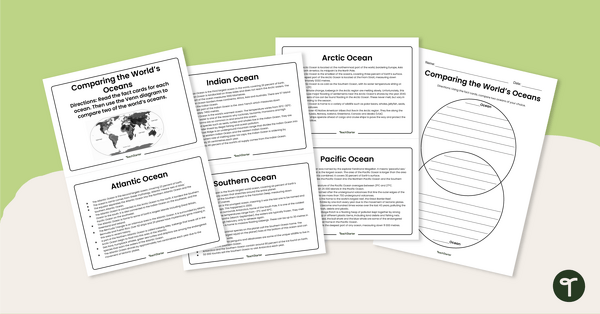
The World's Oceans - Compare and Contrast Activity
Compare and contrast the world’s five oceans with this set of information cards and Venn diagram template.
- Free Plan
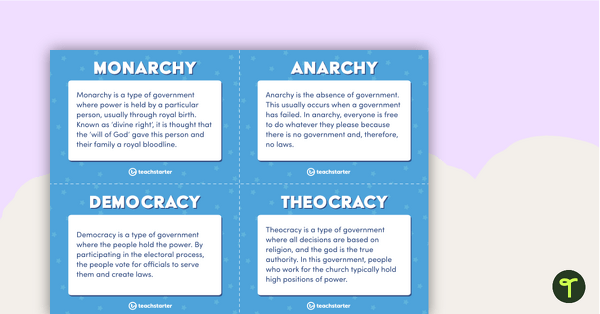
Forms of Government – Flashcards and Sorting Activity
A set of flashcards for students to review the various forms of government and sort them into categories.
- Plus Plan
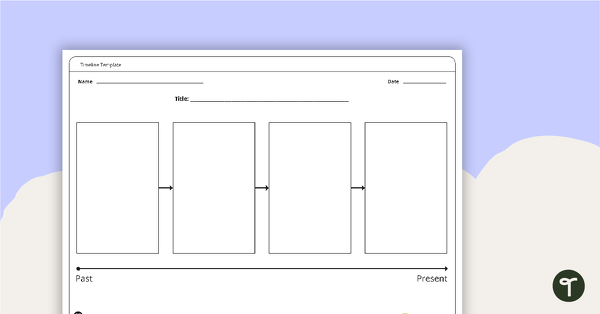
Blank Timeline Template
A blank editable timeline template to use as a recording worksheet in history lessons.
- Plus Plan
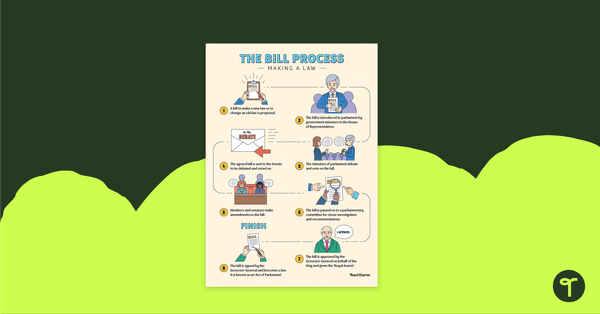
The Bill Process: Making a Law - Infographic Poster
An infographic poster to display in the classroom showing the steps of the bill process.
- Plus Plan
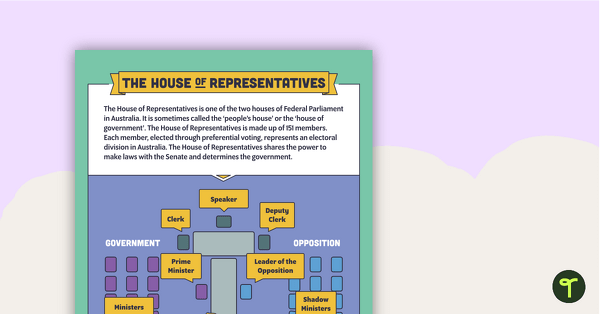
The House of Representatives Infographic Poster
A poster to display in the classroom explaining the structure of the House of Representatives.
- Plus Plan
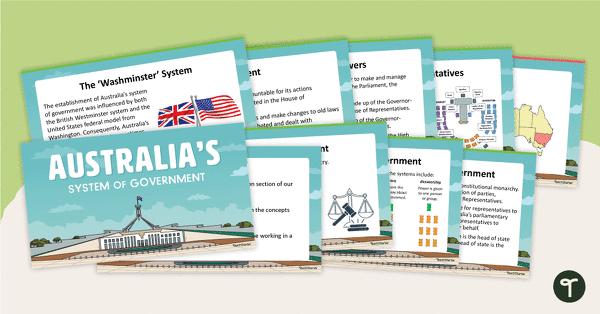
Australia's System of Government - PowerPoint
A 28 slide editable PowerPoint presnetation to use in the classroom when learning about Australia's system of government.
- Plus Plan
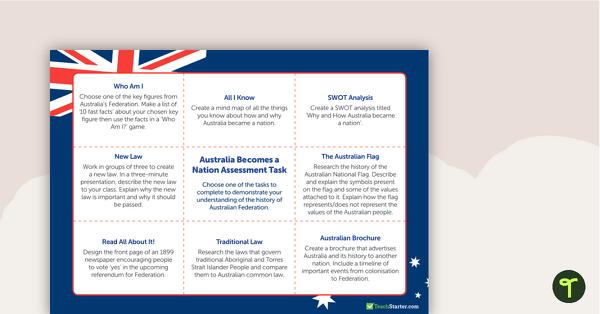
Australia Becomes a Nation - Assessment
An assessment to demonstrate an understanding of Australian Federation.
- Free Plan
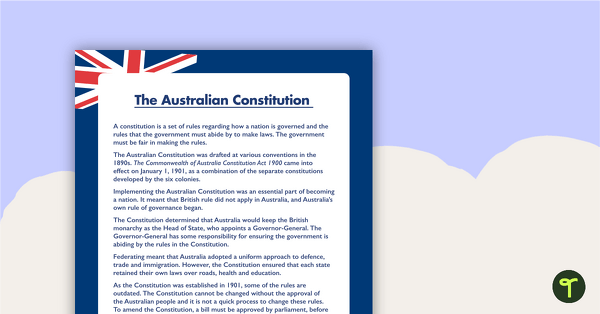
The Australian Constitution - Fact Sheet
A fact sheet to use in the classroom for exploring the Australian Constitution
- Plus Plan
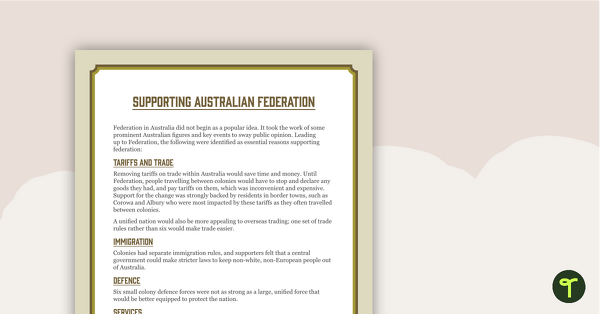
Support and Opposition For Federation - Fact Sheet
A fact sheet to use in the classroom for exploring Australian Federation.
- Plus Plan
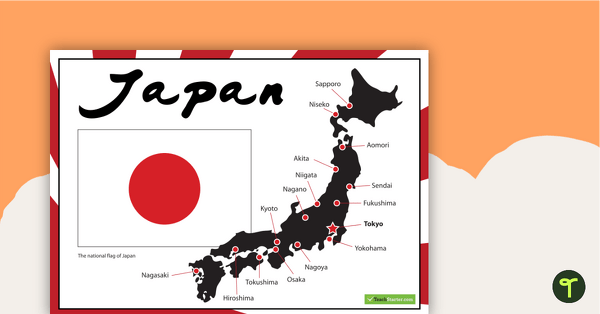
Japanese Flag and Map of Major Cities
A poster showing important information about Japan.
- Plus Plan
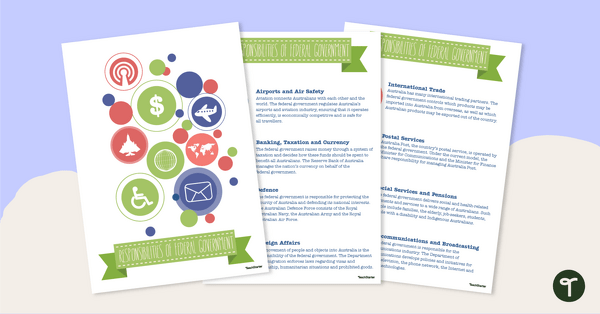
Responsibilities Of Australian Federal Government - Posters
Explore the roles and responsibilities of the Australian federal government with this set of classroom posters.
- Plus Plan
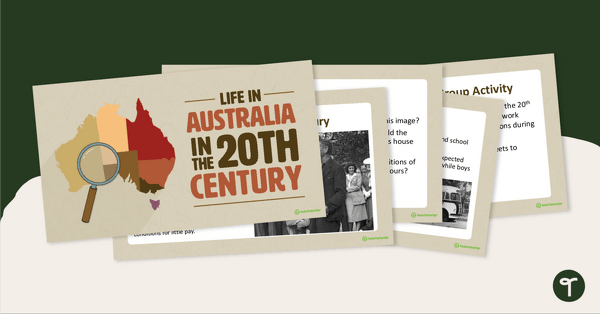
Life in Australia in the 20th Century – Teaching Slides
Support classroom learning about living, working, and social conditions in 20th century Australia with this set of editable teaching slides.
- Plus Plan
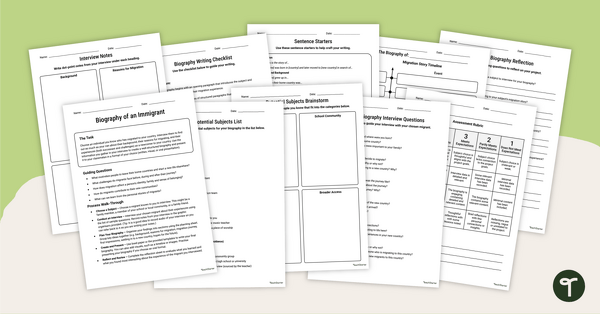
Biography of an Immigrant Writing Project
Uncover the untold stories of migrants with an enriching biography research project for upper primary students.
- Plus Plan
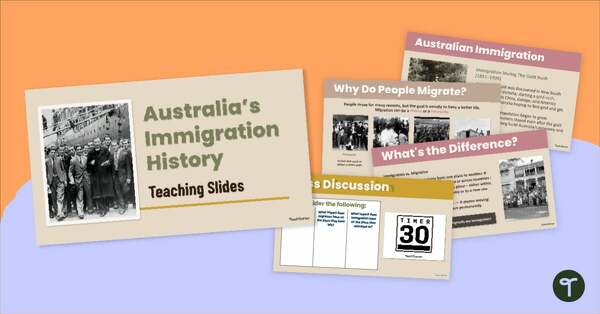
History of Australian Immigration PowerPoint
Introduce your students to the history of Australian immigration with an in-depth Australian Immigration PowerPoint slide deck.
- Plus Plan
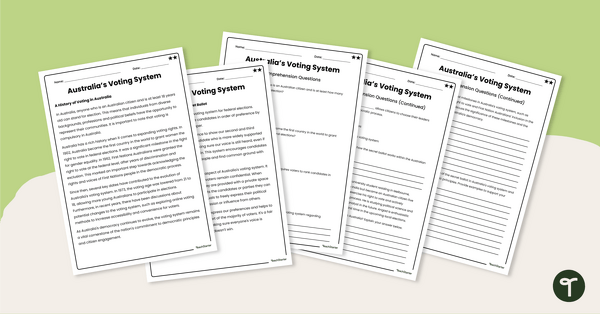
Australia's Voting System – Comprehension Worksheets
Explore the history and systems of voting in Australia with this differentiated reading comprehension activity.
- Plus Plan
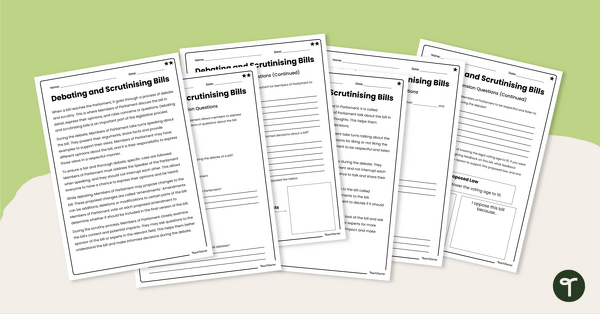
Debating and Scrutinising Bills - Comprehension Worksheets
Explore how bills are debated and scrutinised in the Australian Federal Parliament with this differentiated reading comprehension activity.
- Plus Plan
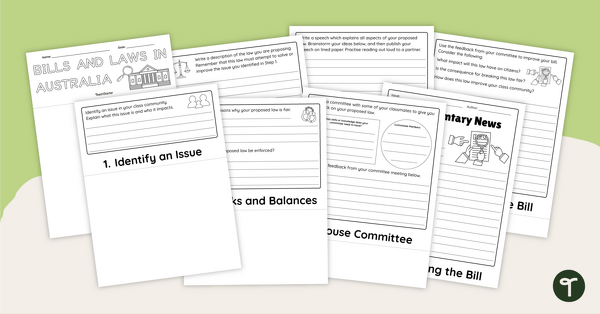
Bills and Laws in Australia Flipbook
Discover how bills become Australian law with this student-directed inquiry task.
- Free Plan
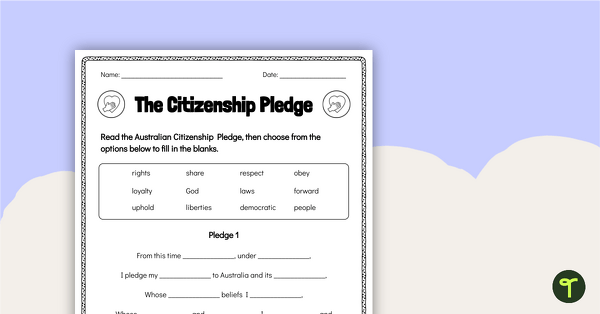
The Australian Citizenship Pledge - Cloze Worksheet
Familiarise your students with the Australian citizenship pledge with this cloze passage worksheet.
- Plus Plan
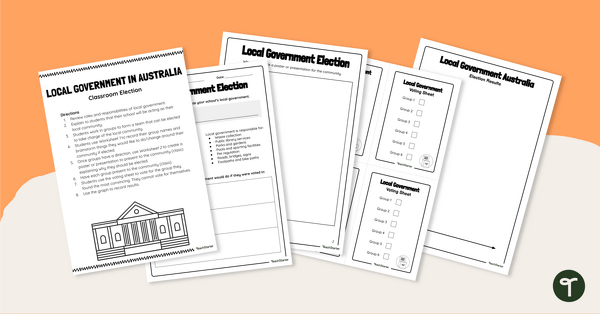
Australian Local Government - Class Election Templates
Explore the roles and responsibilities of local governments in Australia with a mock local council election.
- Plus Plan
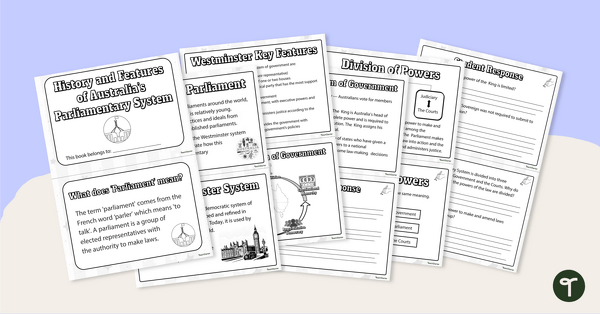
History and Features of Australia's Parliamentary System - Mini-Book
Discover the history and features of Australia’s parliamentary system with this informative printable mini-book.
- Plus Plan
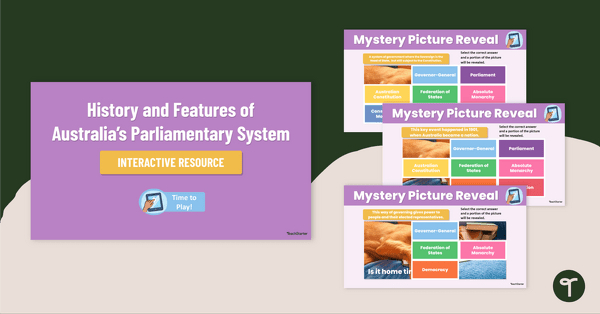
History and Features of Australia’s Parliamentary System - Interactive Activity
Learn key vocabulary terms related to the history and features of Australia’s parliamentary system with this digital ‘mystery picture’ activity.