Year 3
The science inquiry skills and science as a human endeavour strands are described across a two-year band. In their planning, schools and teachers refer to the expectations outlined in the achievement standard and also to the content of the science understanding strand for the relevant year level to ensure that these two strands are addressed over the two-year period. The three strands of the curriculum are interrelated and their content is taught in an integrated way. The order and detail in which the content descriptions are organised into teaching and learning programs are decisions to be made by the teacher.
Incorporating the key ideas of science
Over Years 3 to 6, students develop their understanding of a range of systems operating at different time and geographic scales.
In Year 3, students observe heat and its effects on solids and liquids and begin to develop an understanding of energy flows through simple systems. In observing day and night, they develop an appreciation of regular and predictable cycles. Students order their observations by grouping and classifying; in classifying things as living or non-living they begin to recognise that classifications are not always easy to define or apply. They begin to quantify their observations to enable comparison, and learn more sophisticated ways of identifying and representing relationships, including the use of tables and graphs to identify trends. They use their understanding of relationships between components of simple systems to make predictions.
(source: www.australiancurriculum.edu.au)
Achievement Standard
By the end of Year 3, students use their understanding of the movement of Earth, materials and the behaviour of heat to suggest explanations for everyday observations. They group living things based on observable features and distinguish them from non-living things. They describe how they can use science investigations to respond to questions.
Students use their experiences to identify questions and make predictions about scientific investigations. They follow procedures to collect and record observations and suggest possible reasons for their findings, based on patterns in their data. They describe how safety and fairness were considered and they use diagrams and other representations to communicate their ideas.
(source: www.australiancurriculum.edu.au)
- Plus Plan
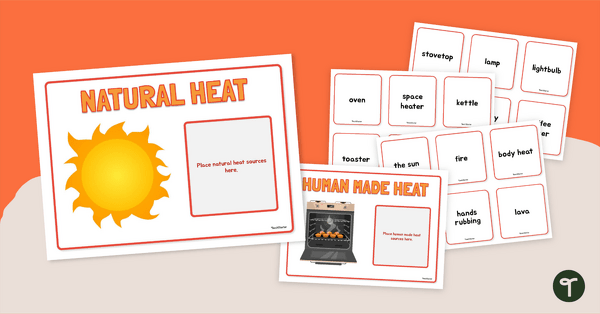
Natural and Human Made Heat Sources Sort
Explore the different man-made and natural heat sources with this sorting activity.
- Plus Plan
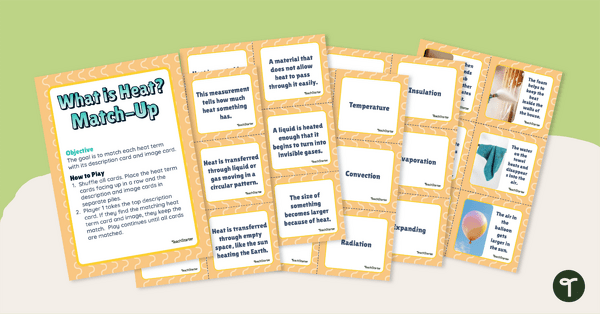
Heat Energy Vocabulary Match Up Activity
Explore different heat energy vocabulary words with this definition and word match-up activity.
- Plus Plan
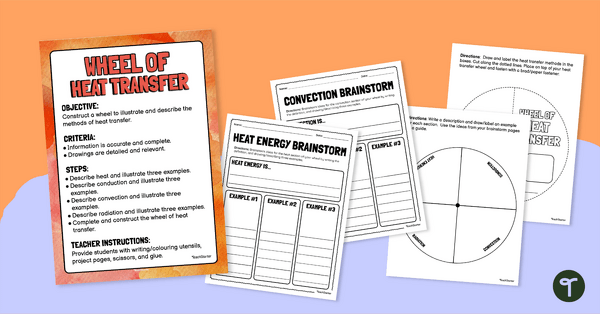
Wheel of Heat Transfer Project
Explore the process of heat transfer with this engaging wheel of heat project.
- Plus Plan
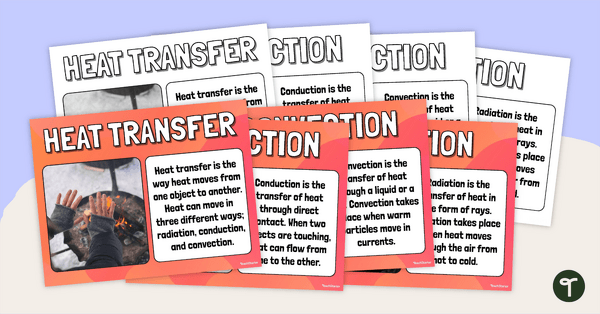
Heat Transfer Posters
Display these posters to check understanding or reinforce the teaching and learning of how heat energy transfers.
- Plus Plan
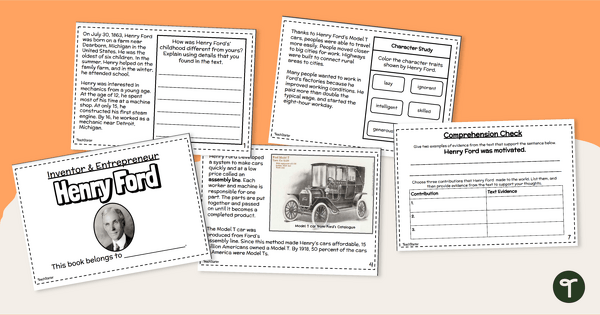
Henry Ford Mini Book - Famous Inventor Activity Book
Provide students with cross-curricular history, science and reading instruction with a printable Henry Ford mini book.
- Plus Plan
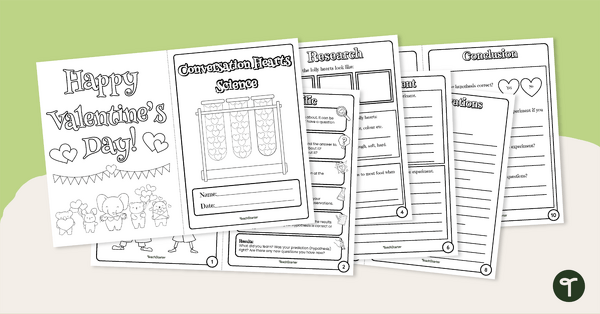
Conversation Heart Lollies Science Experiment Workbook
Investigate chemical reactions with this hands-on Valentine’s Day experiment booklet.
- Plus Plan
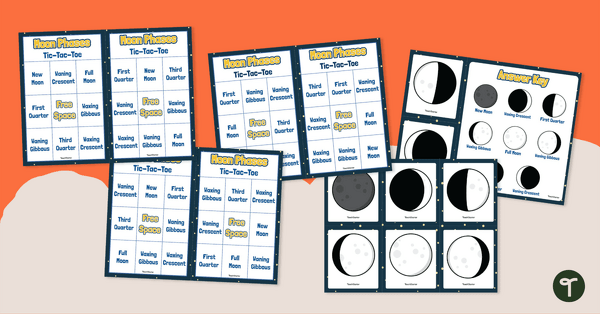
Moon Phases Tic-Tac-Toe (Small Group)
Identify and remember the different phases of the moon with this small group tic-tac-toe game.
- Plus Plan
What State?
A 60-minute lesson in which students will establish that matter can be classified as solid, liquid or gas.
- Plus Plan
Adding Heat
A 60-minute lesson in which students will investigate what happens when heat is applied to a range of solids.
- Plus Plan
Changing States
A 60-minute lesson in which students will observe how a change of state between solid and liquid can be caused by adding or removing heat.
- Plus Plan
The Three States of Matter
A 60-minute lesson in which students will explore the properties of solids, liquids and gases.
- Plus Plan
Keeping Warm
A 60 minute lesson in which students will explore prior knowledge and understanding of heat.
- Plus Plan
Recycling Case Study – Soft Plastics
A 60-minute lesson in which students will explore how changes from solid to liquid and liquid to solid can help in the process of recycling plastic.
- Plus Plan
Moving Heat
A 60 minute lesson in which students will explore the concept of heat transference.
- Plus Plan
Observing Matter Changes
A 60-minute lesson in which students will investigate what happens when heat is added or removed from a substance.
- Plus Plan
What is Heat?
A 60 minute lesson in which students will explore the concept of heat as a form of energy.
- Plus Plan
Sources of Heat
A 60 minute lesson in which students will identify kinetic, electrical and chemical sources of heat energy.
- Plus Plan
Changing States – Assessment
An assessment task in which students will demonstrate knowledge and understanding of how adding and removing heat can cause solids and liquids to change states.
- Plus Plan
The Heat is On
An assessment task in which students will demonstrate knowledge and understanding of heat energy and how it moves.
- Plus Plan
Thermal Insulators - Keeping Out the Heat
A 60 minute lesson in which students will investigate which materials are the best thermal insulators.
- Plus Plan
Thermal Conductors - Feel the Heat
A 60 minute lesson in which students will investigate which materials are the best thermal conductors.
- Plus Plan
What is a Fair Test? (Middle Years)
- Plus Plan
The Heat is On Unit Plan
This Physical Sciences unit addresses the concept of heat energy, including heat sources, heat transfer, thermal conductors and thermal insulators.
- Plus Plan
Changing States Unit Plan
This Chemical Sciences unit addresses how changes in state from solid to liquid and liquid to solid can be caused by adding or removing heat.
- Plus Plan
Changing States of Matter Video – How Long Will It Take to Melt?
Watch this fun changing states of matter science experiment video with your Year 3 class, and skip the melty classroom mess!