Matter Teaching Resources
Teaching about matter in your science classes? Explore activities, experiments, worksheets and more teacher resources created to help you with your lesson plans and help primary students understand what matter is and what it's made from!
Aligned with the Australian Science curriculum — including version 9 — the resources in this collection offer everything you need to explain the changing states of matter and how it's classified, plus activities that help students better understand the makeup of different molecules.
Whether it's your first year teaching about matter or you just need a handy guide to save time on lesson planning, we've got you covered! Read on for a primer from our teacher team, including a way to explain what matter is to your science classes.
What Is Matter? A Kid-Friendly Definition
So what, exactly, is matter? Here's a helpful explanation from our teacher team that you can use with your class:
Matter can be defined as anything that has mass and occupies space. It's literally the stuff that makes up everything in the universe, including our bodies!
What Is Matter Made Up Of? How to Explain This to Kids
This may sound like a bit of an existential question, but bear with us! Learning what matter is made of can help our students to understand the different properties and behaviour of the various types of matter.
Let's break down all that matter is made of for kids:
- Atoms — All matter is made up of atoms. This is the word we use to describe tiny particles. They're so tiny the human eye can't even see them. Atoms are like the building blocks of matter.
- Molecules — When 2 or more atoms come together and form a bond, you get a molecule. The different combinations and arrangements of atoms and molecules creates the various substances and materials we see, breathe, feel and use every day.
- Plus Plan
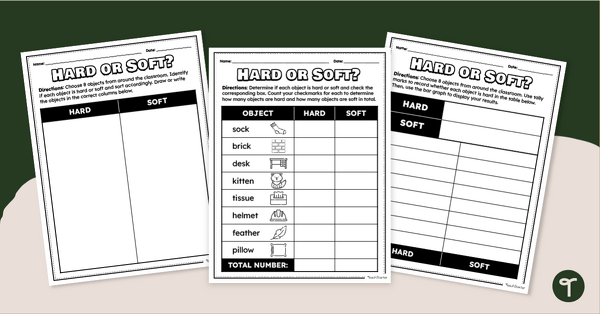
Hard or Soft? Describing Matter Activity Sheets (F-1)
Explore the world of matter with Describing Matter Activity Sheets for early years students.
- Plus Plan
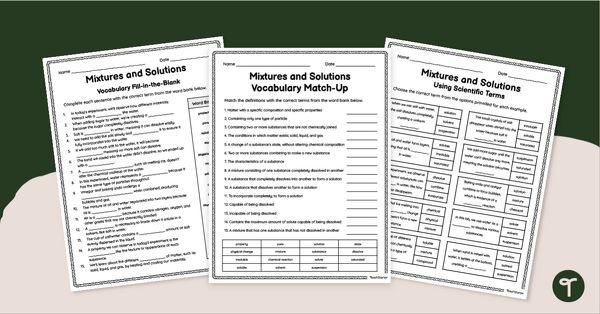
Mixtures and Solutions Worksheet Pack - Vocabulary Review
A vocabulary matching task relating to pure substances and mixtures.
- Plus Plan
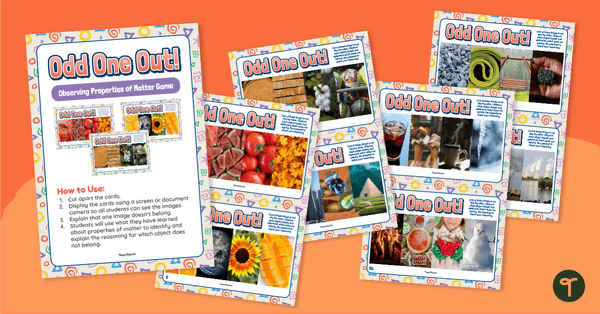
Odd One Out Game- Observable Properties of Matter
Use an exciting 'Odd One Out' Game to practise identifying the observable properties of matter.
- Free Plan
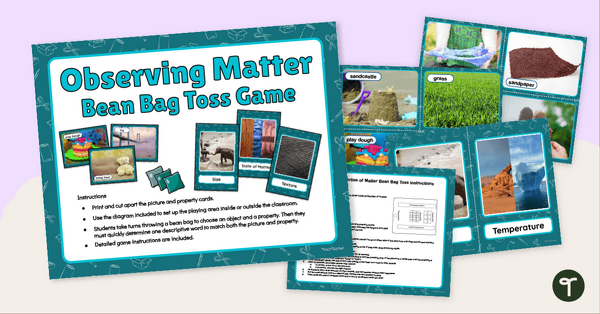
Properties of Matter Game - Bean Bag Toss
Play an exciting Properties of Matter game by downloading a printable Matter Bean Bag Toss Game!
- Free Plan
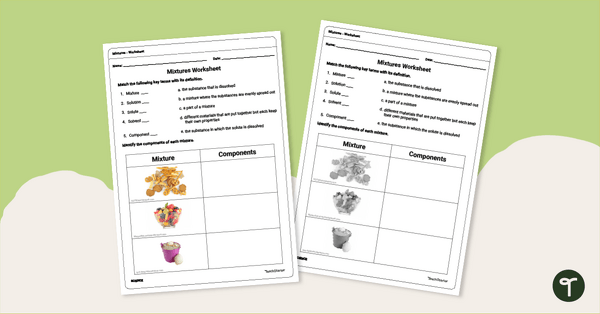
Mixtures Worksheet
Practise identifying mixtures and their components with a printable Mixtures Worksheet.
- Plus Plan
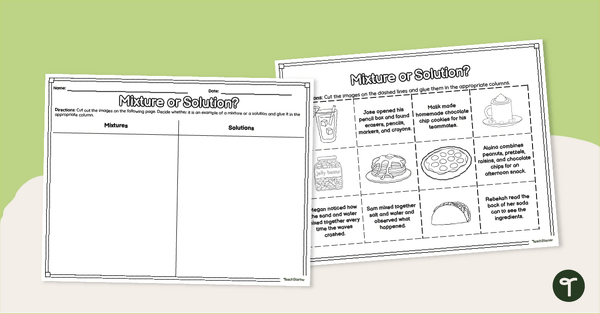
Mixture or Solution? – Cut & Paste Worksheet
Categorise substances according to if they are a mixture or a solution with this cut-and-paste worksheet.
- Plus Plan
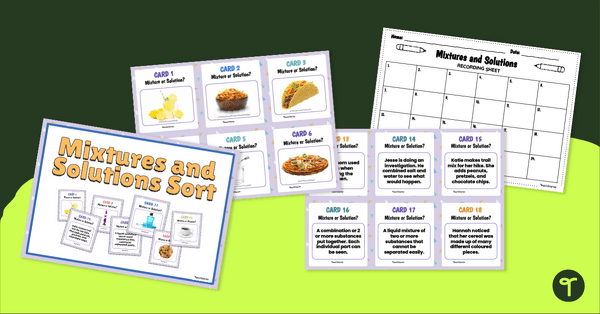
Mixtures and Solutions Sorting Activity
Distinguish between mixtures and solutions with this 24-card sorting activity.
- Plus Plan
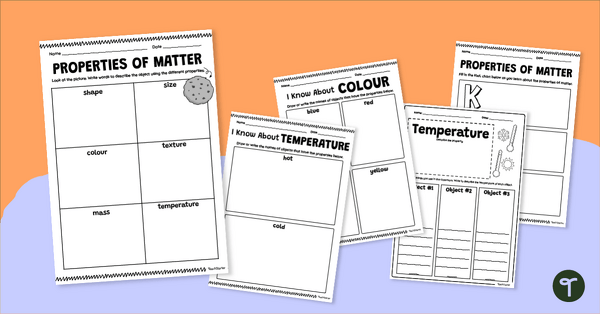
Properties of Matter Graphic Organiser Pack
Use printable graphic organisers to help your students record what they have learned about the different properties of matter.
- Plus Plan
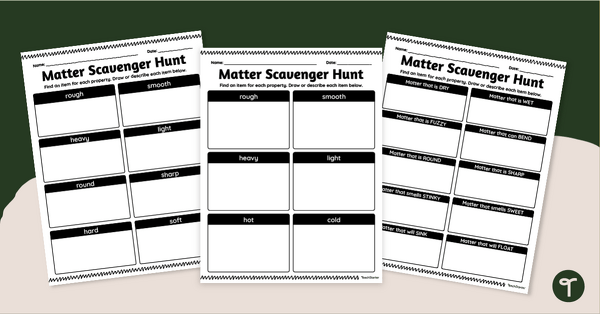
Describing Matter - Scavenger Hunt Activities
Host an engaging science scavenger hunt to introduce your early years students to the observable properties of matter.
- Plus Plan
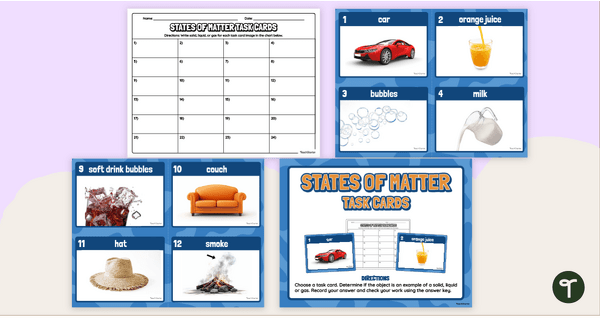
States of Matter Task Cards for Year 3
Help your students identify the three states of matter with a set of engaging Science task cards for Year 3.
- Plus Plan
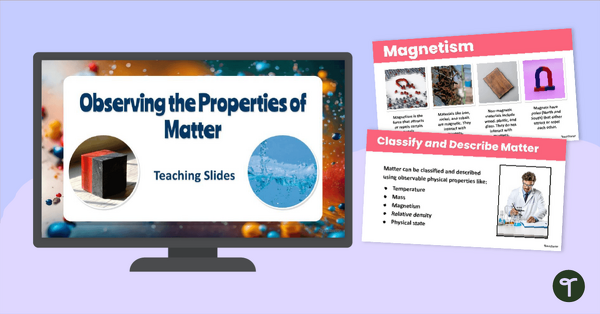
Observing Properties of Matter Teaching Slides
Introduce your students to the classification of matter based on measurable, testable, and observable physical properties with an interactive teaching slide deck.
- Plus Plan
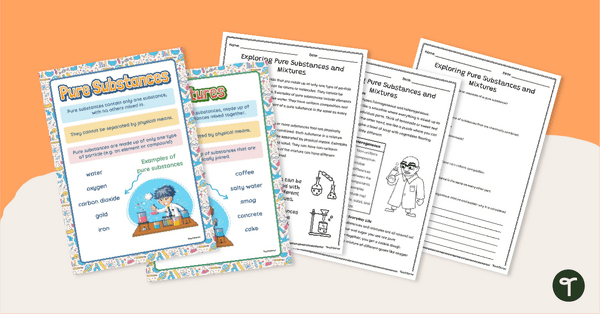
What Are Pure Substances and Mixtures? (Classroom Pack)
Explore pure substances and mixtures with a printable classroom pack that includes posters and comprehension worksheets.
- Plus Plan
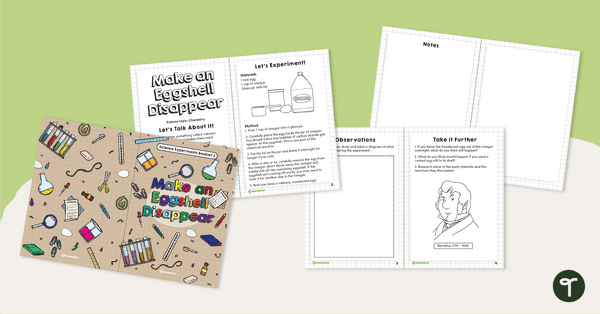
Make an Eggshell Disappear - Science Experiment Booklet
Investigate chemical reactions with this hands-on experiment booklet.
- Plus Plan
Solids
A 60 minute lesson in which students will identify the observable characteristics of solids and how they behave in different ways.
- Plus Plan
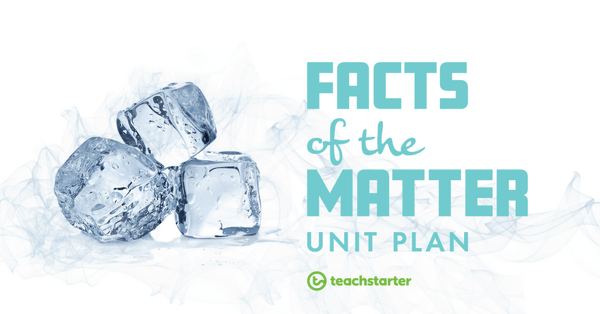
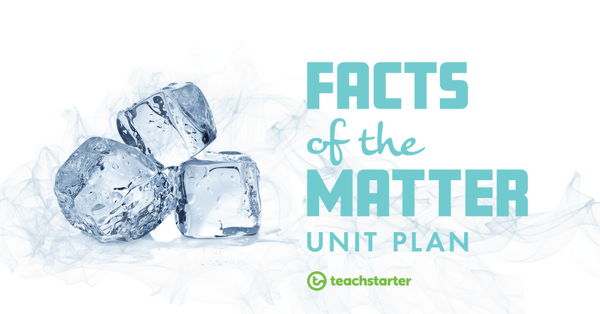
Facts of the Matter
This Chemical Sciences unit explores the concept that solids, liquids and gases have different observable properties and behave in different ways.
- Plus Plan
Changing States Unit Plan
This Chemical Sciences unit addresses how changes in state from solid to liquid and liquid to solid can be caused by adding or removing heat.
- Plus Plan
The Three States of Matter
A 60-minute lesson in which students will explore the properties of solids, liquids and gases.
- Plus Plan
Liquids
A 60 minute lesson in which students will identify the observable characteristics of liquids and how they behave in different ways.
- Plus Plan
Changing States – Assessment
An assessment task in which students will demonstrate knowledge and understanding of how adding and removing heat can cause solids and liquids to change states.
- Plus Plan
Understanding States of Matter
An assessment task designed to assess students' knowledge and understanding of solids, liquids and gases, their properties and their behaviour.
- Plus Plan

Matter Matters!
Introduce key terms and concepts related to matter and states of matter with this Year 5 lesson plan.
- Plus Plan
Recycling Case Study – Soft Plastics
A 60-minute lesson in which students will explore how changes from solid to liquid and liquid to solid can help in the process of recycling plastic.
- Plus Plan
What State?
A 60-minute lesson in which students will establish that matter can be classified as solid, liquid or gas.
- Plus Plan
Slime - Solid, Liquid or Gas?
A 60 minute lesson in which students will recognise that not all substances can be easily classified on the basis of their observable properties.
- Plus Plan
Knowing Matters!
A 60 minute lesson in which students will explore how knowledge of states of matter and their changes can help inform practices and decision making.
- Plus Plan
Going, Going, Gone!
A 60 minute lesson in which students will recognise that substances exist in different states depending on the temperature.
- Plus Plan
Changing States of Matter
A 60 minute lesson in which students will explore the way solids, liquids and gases change in different situations.
- Plus Plan
Gases
A 60 minute lesson in which students will observe that gases have mass and take up space.
- Plus Plan
Observing Matter Changes
A 60-minute lesson in which students will investigate what happens when heat is added or removed from a substance.
- Plus Plan
Adding Heat
A 60-minute lesson in which students will investigate what happens when heat is applied to a range of solids.
- Plus Plan
Changing States
A 60-minute lesson in which students will observe how a change of state between solid and liquid can be caused by adding or removing heat.
- Plus Plan
Changing States of Matter Video – How Long Will It Take to Melt?
Watch this fun changing states of matter science experiment video with your Year 3 class, and skip the melty classroom mess!