Prefixes and Suffixes Teaching Resources
Are you teaching prefixes and suffixes this school year? Printable worksheets, digital activities, and more options for English teachers have been created just for you by the Teach Starter teacher team!
Explore our curriculum-aligned collection of options for your writing or reading centers with editable options to help differentiate instruction and ensure your students have everything they need to meet standards.
Has it been a while since you were teaching this part of the curriculum? Our teacher team knows what it’s like to teach a new grade level after some time away, so we’ve put together a quick refresher on the basics of prefixes and suffixes! Take a look at our quick guide on the definitions of prefixes and suffixes, how to use them and some common examples.
What Is a Prefix?
The obvious place to start teaching this topic is with a definition, right? Your students will need to know the meaning of a prefix and how it differs from a suffix.
Simply put, a prefix is a sequence of sounds that carry meaning (otherwise known as a morpheme) that is added to the beginning of a word to change its meaning. For a set of letters to act as a prefix, there also must be a base word or a root word.
Prefix Examples
There are a wide variety of prefixes that students will come across during their years in primaryschool. Prefixes that are generally introduced first include un- and re-.
- The prefix 'un-' translates to 'not.' Examples with this prefix include unable, unusual and unkind.
- 'Re-' when used as a prefix means 'again.' Words with this prefix may be those such as redo, rewrite and reuse.
It is important to remind your students that sometimes there are words that have these same letters and appear to be a prefix, but there are times when they are just part of the word.
So, for example, you can present students with the word 'real.' While the letters 're' appear at the beginning of the word, 'al' is not a base word with meaning. In this case, the 're' is not acting like a prefix.
Common Prefixes Taught in Primary School
If you are looking for a list of prefixes to teach in your class, check out our list below!
- un- (not or opposite of)
- re- (again)
- dis- (not or opposite of)
- in- (not)
- under- (below or too little)
- over- (above or too much)
- non- (not)
- pre- (before)
- bi- (two)
- tri- (three)
- quad- (four)
- oct- (oct)
What Is a Suffix?
Much like a prefix, a suffix acts in the same what that it is a group of letters that carry meaning to change a base or root word. The only difference is that these letters appear at the end of the word.
Suffix Examples
As early as year 1, students begin to recognize that word meaning changes when you add letters to the end of a word. The most basic example of this is changing a singular noun to a plural noun by adding -s or -es to the end of a word.
Other common suffixes that are taught early on include -ed and -ing.
Common Suffixes Taught in Primary School
Looking for a list of suffixes that need to be covered in the primary years? Read on for a list of word endings that your students should learn!
- -s (plural, more than one)
- -es (plural, more than one)
- -ing (action)
- -ed (past tense)
- -er (comparative)
- -est (superlative)
- -ful (full of)
- -less (without)
- -y (characterized by)
- -ly (characteristic of)
- -ness (condition or state of)
Decoding with Prefixes and Suffixes
Prefixes and suffixes come in handy when it comes to decoding words because they provide important clues about meaning.
Let's say a student encounters an unfamiliar word. They can use their knowledge of common prefixes and suffixes to decipher the word's meaning based on its parts.
For example, if students encounter the word 'dislike,' they may not know its exact meaning. However, if they are familiar with the prefix 'dis-,' which means not or opposite, and the suffix '-like,' which means having the same characteristics or qualities as, they can use this knowledge to determine that 'dislike' means not having the same characteristics or qualities as something else.
- Plus Plan
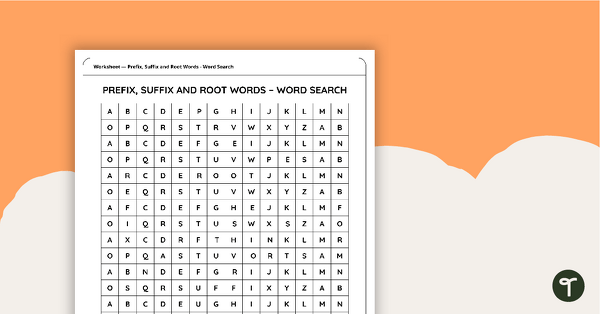
Prefix and Suffix Word Search
Locate words containing common prefixes and suffixes with this engaging word search.
- Plus Plan
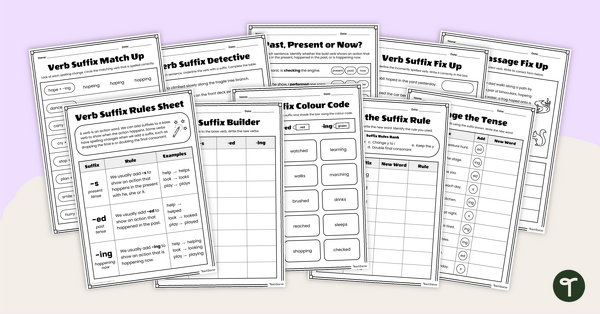
Verb Suffixes Worksheets (s, ed, ing)
Download these suffix worksheets to help students confidently identify and apply the verb tense suffixes -s, -ed and -ing.
- Plus Plan
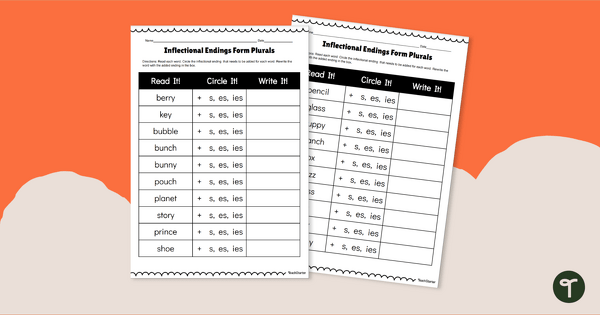
Plural Suffixes Worksheet Pack
Download this plurals worksheet pack to help students confidently identify and apply the plural suffixes -s, -es, -ies and -ves when spelling plural nouns.
- Plus Plan
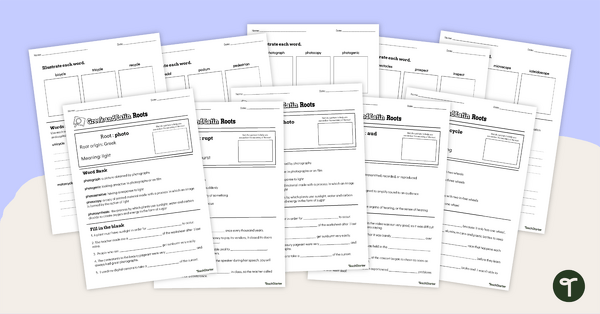
Greek and Latin Roots Worksheet Set
Practise using vocabulary containing Greek roots and Latin roots with these weekly root word worksheets.
- Plus Plan
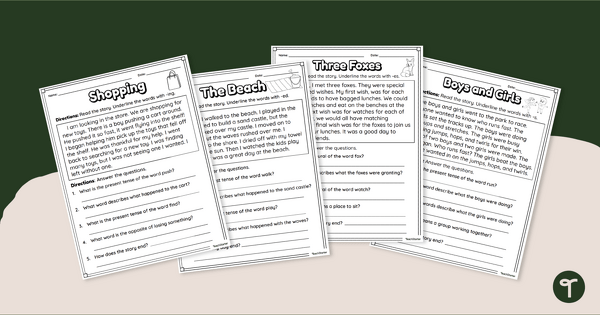
Suffix Stories - Morphology Passages
Practise reading, defining, and using words with suffixes with a pack of suffix-focused reading passage worksheets.
- Plus Plan

Suffix Cut and Paste Worksheets
Build strong word‑building skills with Suffix Sandcastles, a collection of six engaging cut‑and‑paste worksheets designed to help students master common suffix endings.
- Plus Plan
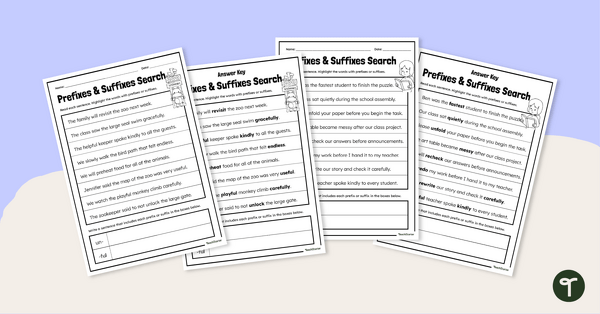
Prefix and Suffix Search Worksheets
Build confident vocabulary and word‑study skills with this engaging Prefixes & Suffixes Search Worksheet Pack.
- Plus Plan
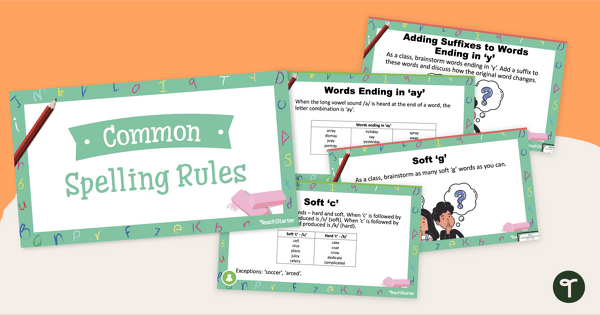
Plural Spelling Rules Teaching Slides
Teach plural rules to your class with ease using this engaging slide deck that helps students understand when to add -s, -es, -ies and -ves to make plural nouns.
- Plus Plan
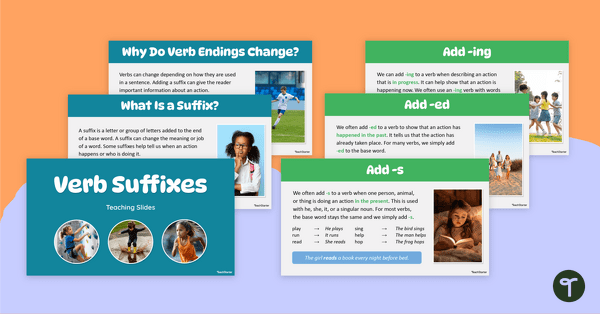
Verb Suffixes Teaching Slides (s, ed, ing)
Teach verb suffixes to your class with ease using this engaging slide deck that helps students understand when to apply the suffixes -s, -ed and -ing to change verb tense.
- Plus Plan
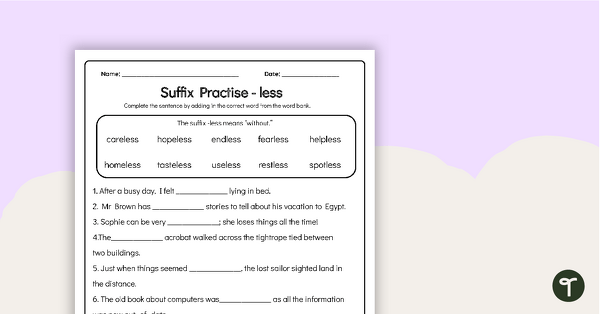
Adjective Suffix Worksheet Pack
Use this suffix worksheet pack to help students recognise, apply and spell adjective-forming suffixes such as ful, less, y, ous, able, ive and ic.
- Free Plan
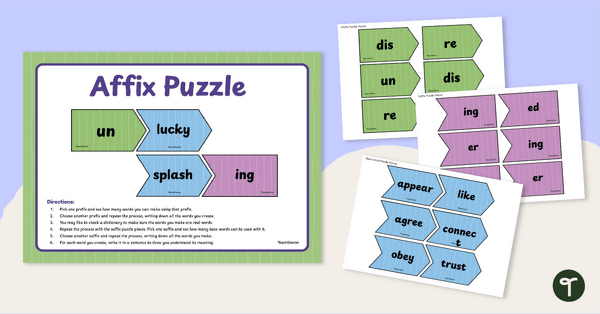
Affix Puzzle Activity - Prefixes and Suffixes
Build words with affixes with a pack of printable word-building puzzles.
- Plus Plan
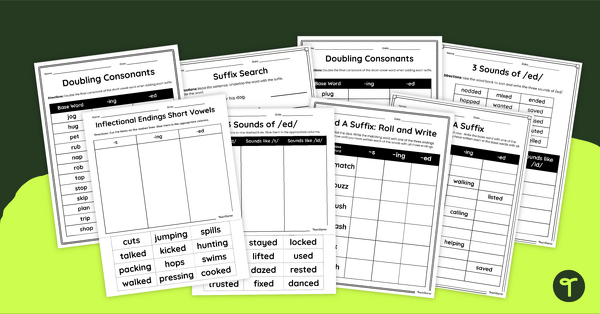
Spelling with Inflectional Suffixes Worksheets
Spell words with the inflectional endings -ed, -ing, -s, -es and -ies with a pack of printable practice worksheets covering inflected endings.
- Plus Plan
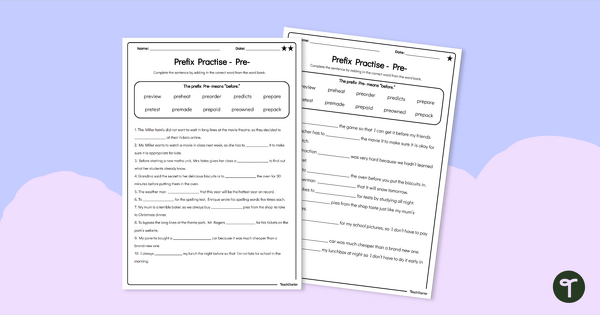
Pre- Prefixes Worksheet
Boost students' understanding of the prefix pre- with a printable prefix worksheet.
- Plus Plan
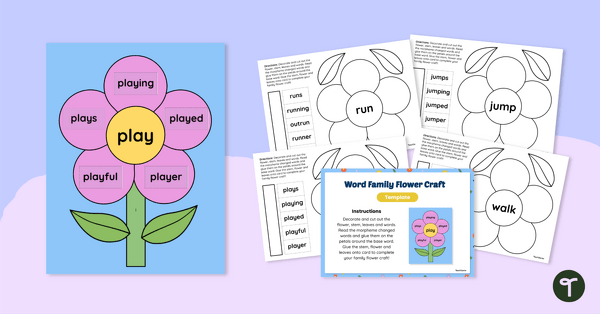
Root Words Activity - Word Family Flower Craft
Explore the power of grammatical morphemes and create a stunning flower craft that showcases their understanding of word families.
- Plus Plan
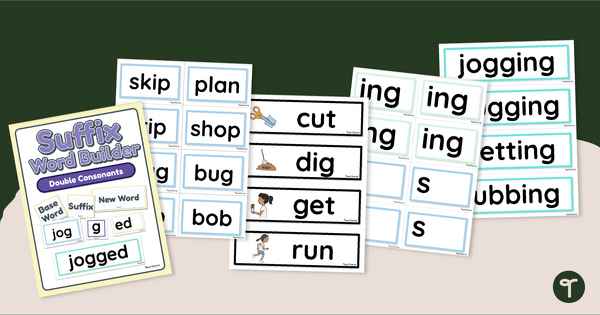
Double Consonant Word Building Cards
Practise spelling and building words that need double consonants when adding suffixes with a word-building activity.
- Free Plan
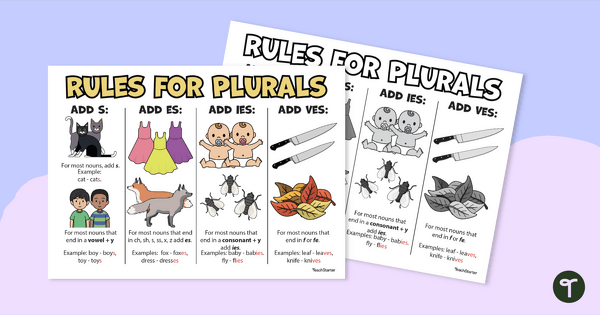
Plural Nouns Rules Chart
Help students remember the different plural rules with a handy printable guide created for teachers to hand out.
- Plus Plan
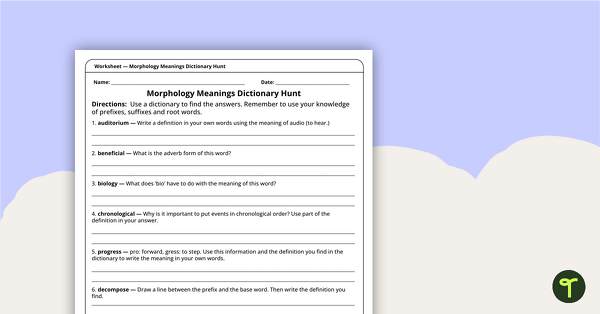
Latin and Greek Root Words Worksheet Pack
Use this Latin and Greek root words worksheet pack and help students build vocabulary, improve dictionary skills and deepen their understanding of word meanings.
- Plus Plan
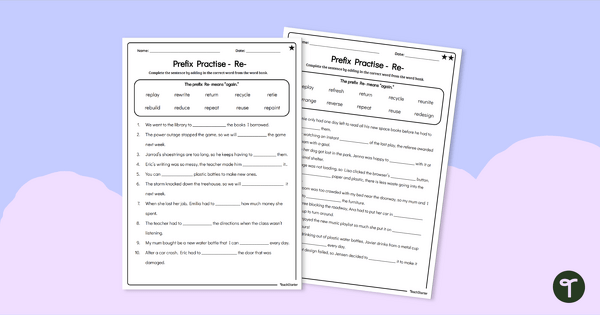
Time Prefixes Worksheet Pack – Re, Pre, Mid and Post
Download this prefix worksheet pack to help students use time prefixes such as re, pre, mid and post across a range of contexts.
- Plus Plan
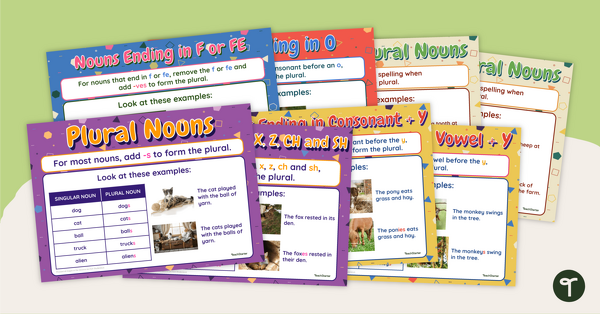
Plural Rules Poster Pack
Make plural rules a breeze to understand with plural noun posters.
- Plus Plan
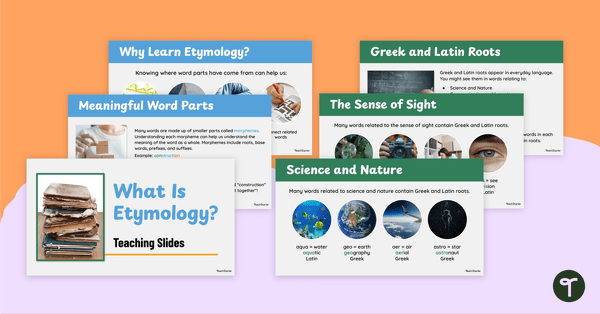
What Is Etymology? Teaching Slides
Explore word origins with this teaching presentation that helps students unlock the meaning of unfamiliar vocabulary by learning how Greek and Latin roots shape thousands of words in English.
- Plus Plan
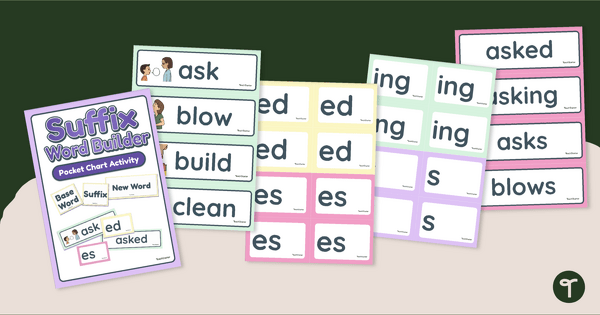
Suffix Word Building Activity
Build words using the suffixes -ed, -es, -s, and -ing with a printable word-building pocket chart card pack.
- Plus Plan
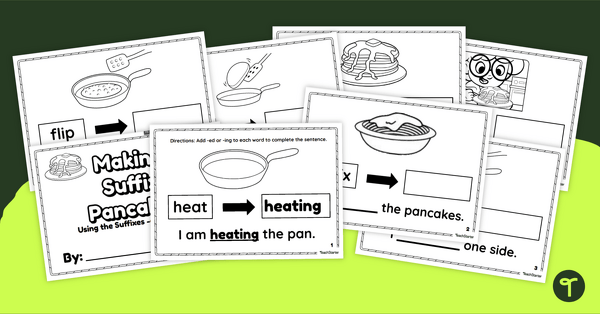
Suffixes Mini Book
Learn to make pancakes and use the suffixes -ed and -ing with a printable mini-book.
- Plus Plan
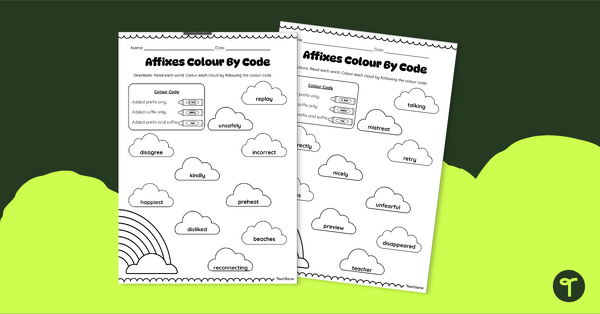
Prefixes and Suffixes - Colour By Code Worksheets
Practise identifying words with affixes with a fun colour-by-code worksheet.
- Plus Plan
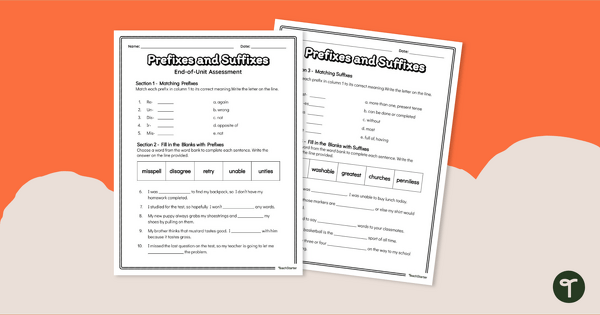
Prefixes and Suffixes Quiz
Assess your students’ knowledge of prefixes and suffixes with a vocabulary quiz.
- Plus Plan
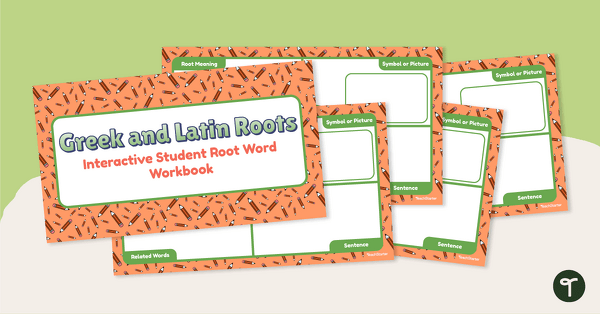
Greek and Latin Roots – Vocabulary Notebook
Enhance vocabulary containing Greek and Latin roots with a Google Slides Interactive vocabulary notebook. Also available in print format.
- Plus Plan
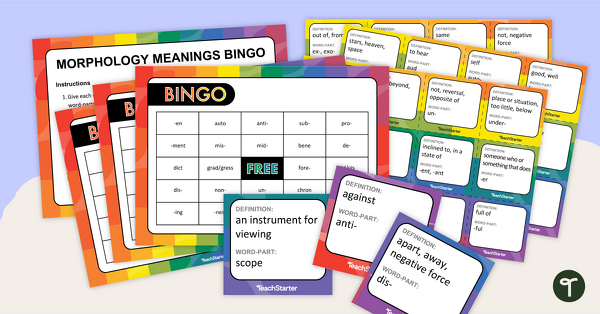
Morphology Bingo
Examine word parts and identify their morphological meanings in this engaging bingo game.
- Free Plan
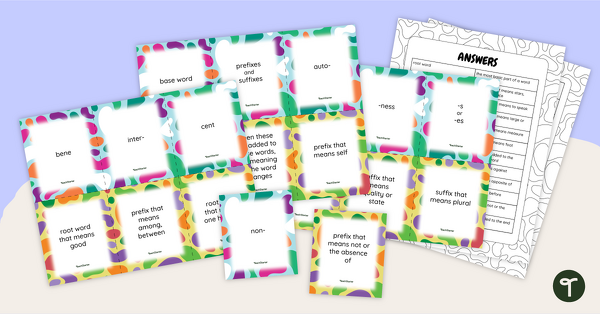
Morpheme Match-Up Game
Consolidate your morphology lessons by ensuring students understand word parts terminology and the meanings of different word parts.
- Plus Plan
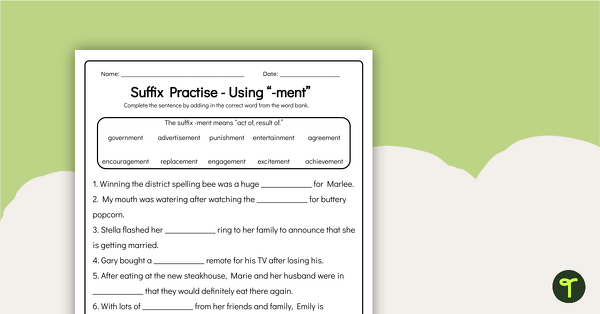
Noun Suffixes Worksheet Pack
Use this noun suffixes worksheet pack to help students recognise, apply and spell noun-forming suffixes such as ness, ment, ion, tion, ship and hood.
- Plus Plan
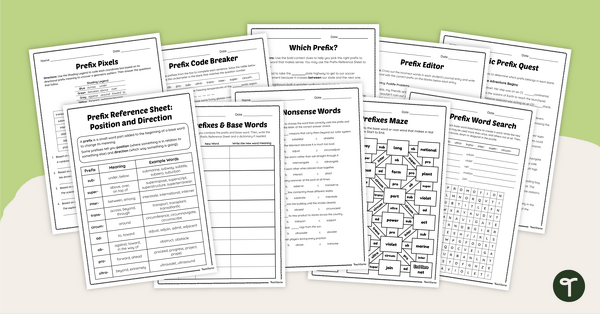
Directional and Positional Prefixes Worksheet Pack
Help your students master directional and positional prefixes with this comprehensive worksheet pack that explores how these prefixes change word meanings.
- Plus Plan
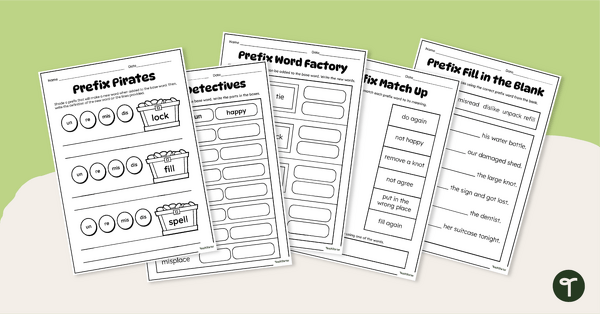
Prefix Worksheet Pack - Year 2
Use this Prefix Worksheet Pack as an engaging prefix activity for Year 2 that teach students how to use the most common prefixes—un‑, re‑, mis‑, dis‑, and pre‑.
- Plus Plan
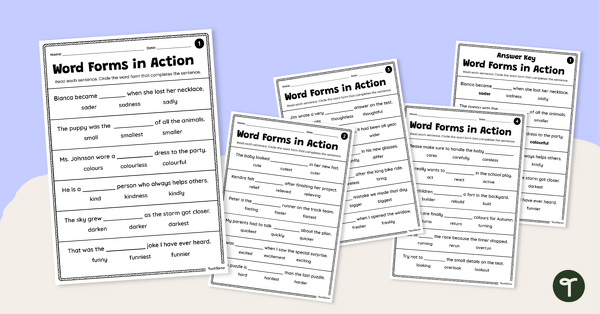
Affixes Word Family Fill in the Blanks Worksheets
Use these Affixes Fill-in-the-Blank Worksheets to help students strengthen their vocabulary and grammar skills.
- Plus Plan
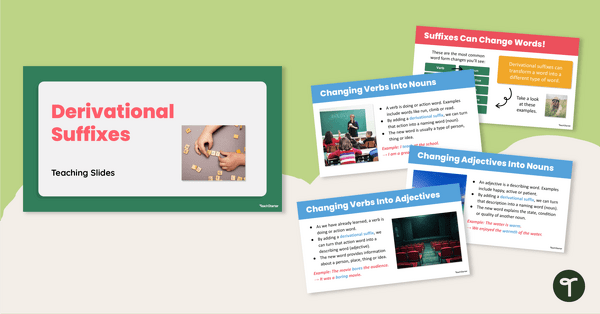
Derivational Suffixes Teaching Slides
Teach how derivational suffixes can transform words and their meanings with this comprehensive teaching presentation for upper primary students.