Reading and Writing Numbers Teaching Resources
Teach students how to read and write numbers in a variety of forms with this extensive collection of printable worksheets, digital activities and more resources for Australian primary teachers!
Bring these essential maths skills to life with the help of Australian maths curriculum-aligned resources that have been created with your lesson plans — and your students — in mind! Best of all, each resource has undergone a careful review process by an expert teacher on the Teach Starter team to ensure it's classroom-ready.
Looking for tips to help your students express quantities accurately and effectively? Read on for a primer from our teacher team on reading and writing numbers, how to teach these concepts and more!
Teaching Students How to Read Numbers
Before we can talk about writing numbers, we need to to set the foundation with reading them.
Once students can recognise numerals, it's typical for teachers to dive deep into place value. We want our students to understand that each digit's position in a number represents a different value (e.g., tens, hundreds, thousands, etc.).
With that comes the ability to read two- and three-digit numbers (and later even larger whole numbers!) as our students come to understand that they're not seeing two distinct numerals side-by-side but a brand-new number that has been formed.
This requires learning new language too — words like twenty, thirty, forty, etc.
So let's break down how to read a few numbers!
Reading Two-Digit Numbers
In a two-digit number, the leftmost digit represents the number of tens, and the rightmost digit represents the number of ones. For example, let's look at the number 35.
-
- The digit 3 is in the tens place, so it represents 3 tens or 30.
- The digit 5 is in the ones place, so it represents 5 ones.
To read the number 35, you say 'thirty-five.'
Here are a few more examples of how to read two-digit numbers:
- 45 — forty-five
- 27 — twenty-seven
- 93 — ninety-three
Reading Three-Digit Numbers
Let's go one level up. In a three-digit whole number, the leftmost digit represents the number of hundreds, the middle digit represents the number of tens and the rightmost digit represents the number of ones. For example, let's look at the number 371.
-
- The digit 3 is in the hundreds place, so it represents 3 hundreds or 300.
- The digit 7 is in the tens place, so it represents 7 tens or 70.
- The digit 1 is in the ones place, so it represents 1 one.
To read the number 371, you say 'three hundred seventy-one.'
Here are a few more examples of how to read three-digit numbers:
- 134 — one hundred thirty-four
- 469 — four hundred sixty-nine
- 873 — eight hundred seventy-three
Teaching Students How to Write Numbers
Now that students can read multi-digit numbers, we can start talking about writing them in different forms, including expanded form. Writing numbers again comes back to place value, with each digit in a number representing a different value based on its position within the number.
Here's what that looks like:
How to Write Two-Digit Numbers
Write the digit in the tens place first. This will be the leftmost digit in the two-digit number.
Next, write the digit in the ones place to the right of the first number.
For example, to write the number 'thirty-five,' you would:
- Write the digit 3 in the tens place.
- Write the digit 5 in the ones place.
- In the end, you have written 35.
How to Write Three-Digit Numbers
Write the digit in the hundreds place first. This will be the leftmost digit in the three-digit number.
Next, write the digit in the tens place to the right of the first number. This will be the middle digit in the three-digit number. Finally, write the digit in the ones place to the right of the middle digit.
For example, to write the number 'three hundred fifty-two,' you would:
- Write the digit 3 in the hundreds place.
- Write the digit 5 in the tens place.
- Write the digit 2 in the ones place.
- Plus Plan
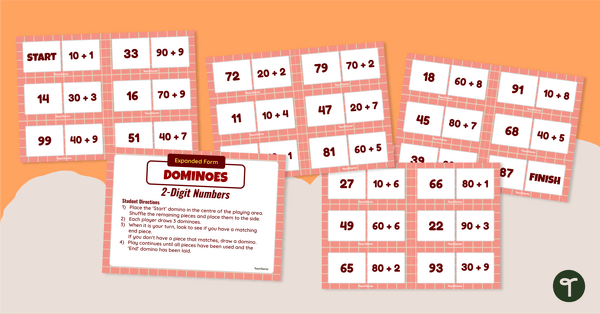
Expanded Notation Dominoes (2-Digit Numbers)
Use this set of dominoes when learning how to match 2-digit numbers written in standard form and expanded form.
- Plus Plan
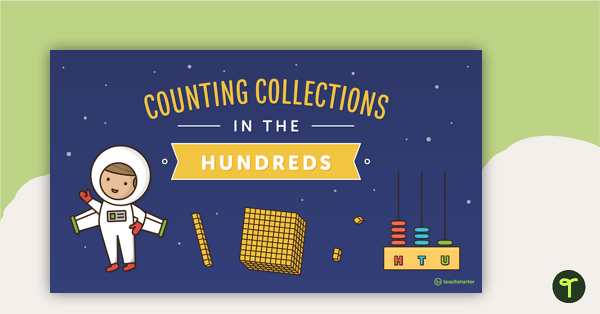
Counting Collections in the Hundreds PowerPoint
A 15 page editable PowerPoint to use in the classroom when exploring efficient ways of counting collections in the hundreds.
- Plus Plan
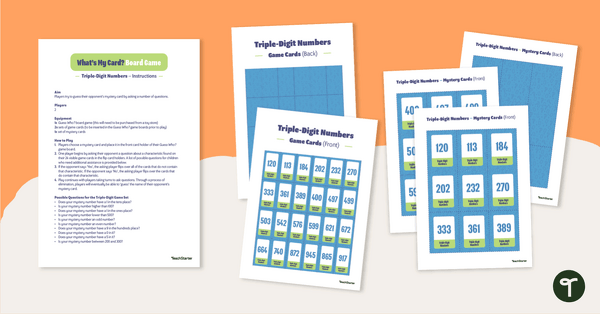
What's My Card? Triple-Digit Board Game
Guess the mystery 3 digit numbers by asking your opponent a series of elimination questions.
- Plus Plan
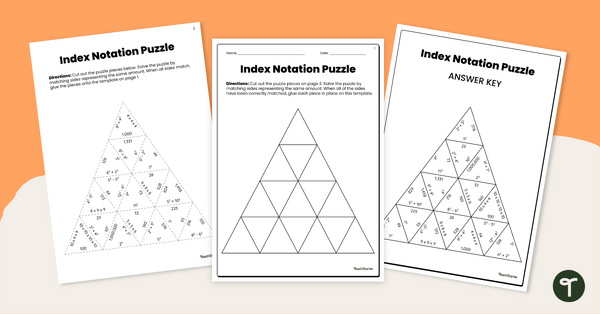
Index Notation Worksheet — Tarsia Puzzle
Share this index notation worksheet with your students to give them practice evaluating exponential expressions in a fun puzzle format.
- Plus Plan
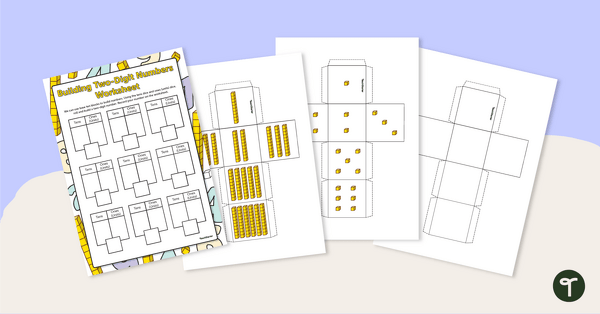
Building 2-Digit Numbers Dice Game
Teach your students about place value in two-digit numbers with this engaging dice game featuring Base 10 blocks.
- Plus Plan
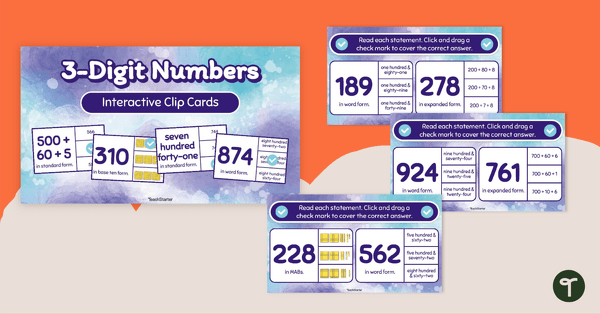
3-Digit Interactive Clip Cards
Practise knowledge of 3-Digit numbers with this interactive clip card resource.
- Plus Plan
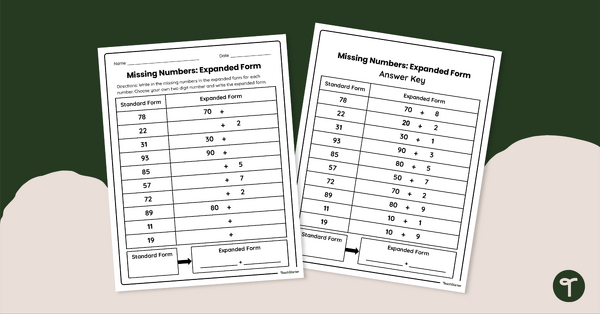
Missing Numbers in Expanded Form Worksheet
Practise converting double digit numbers into their expanded form with this easy to use student worksheet.
- Plus Plan
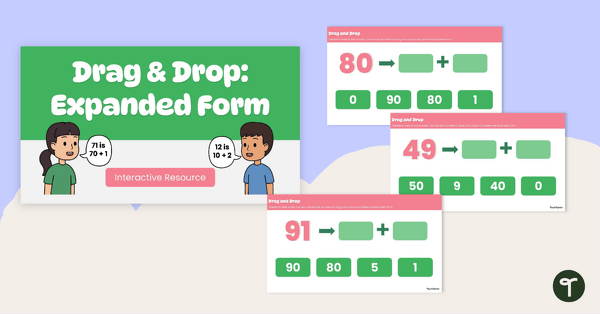
2-Digit in Expanded Form Interactive Activity
Engage students in showing their knowledge of converting double digit numbers into their expanded form with this interactive activity.
- Plus Plan
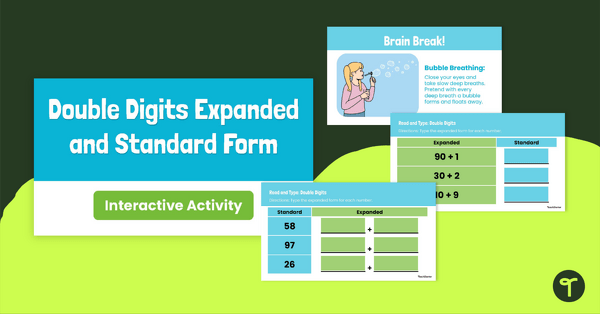
Reading and Writing Double Digit Numbers Interactive Activity
Get students practising their knowledge of converting standard form numbers to expanded form with this engaging interactive activity.
- Plus Plan
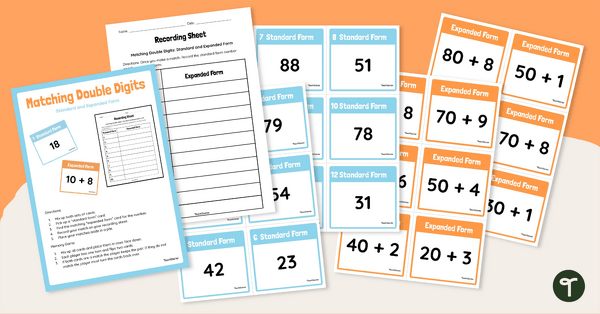
Matching Expanded and Standard 2-Digit Number Cards
Explore double digit numbers in standard and expanded form with this sorting activity for your maths groups.
- Plus Plan
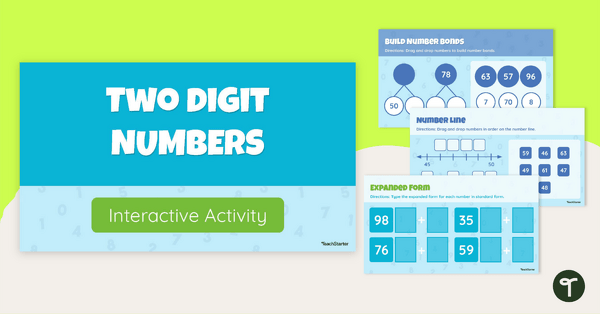
2-Digit Numbers Interactive Activity
Explore double digit numbers in a variety of different scenarios with this engaging interactive activity for your classroom.
- Plus Plan
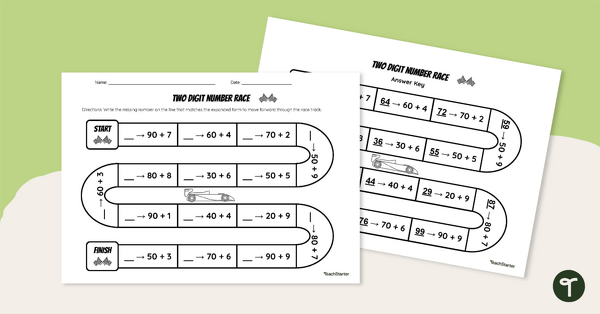
Two-Digit Expanded Form Race-Themed Worksheet
Race through identifying the standard form of 2-digit numbers in expanded form with this fun race-themed worksheet.
- Plus Plan
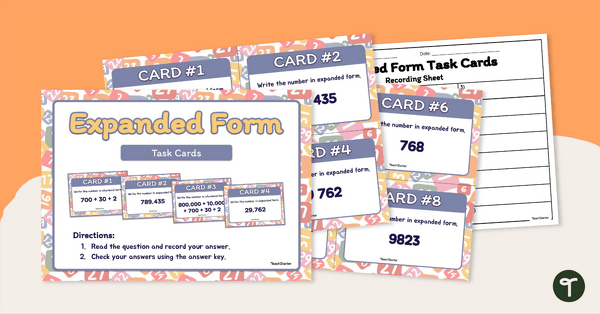
Expanded Form Task Cards
Help your students explore expanding numbers up to 6-digits with this set of task cards.
- Free Plan
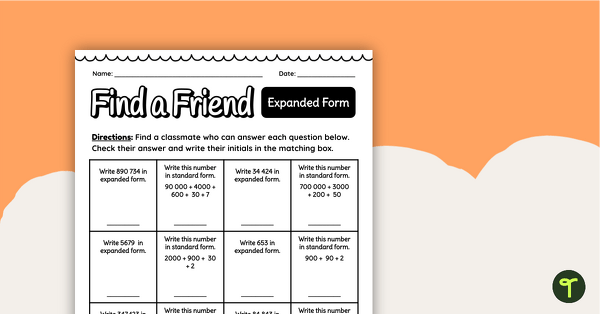
Find a Friend Expanded Form Worksheet
Explore expanding 2-digit to 6-digit numbers with your students with this expanding form active worksheet.
- Plus Plan
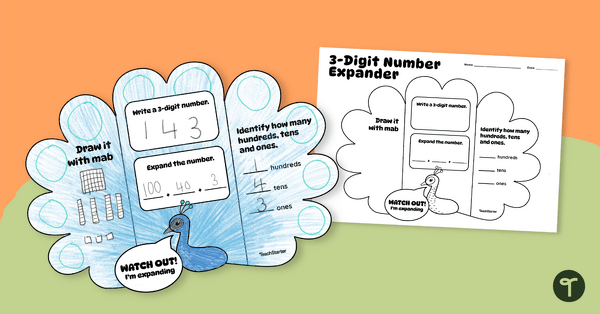
3-Digit Number Expander Template (Peacock)
A foldable peacock-themed number expander for students to record 3-digit place value.
- Free Plan
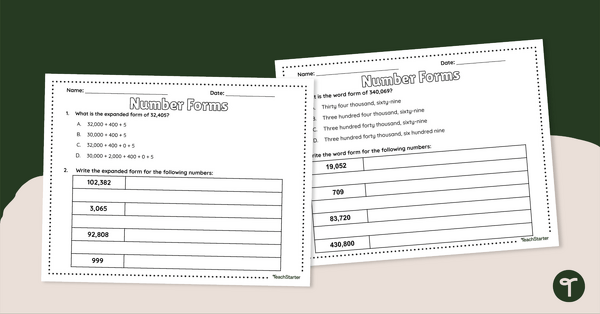
Number Forms Worksheet (Up to 5 Digits)
Help students practice recognising and writing numbers in word form and expanded form with this worksheet.
- Free Plan
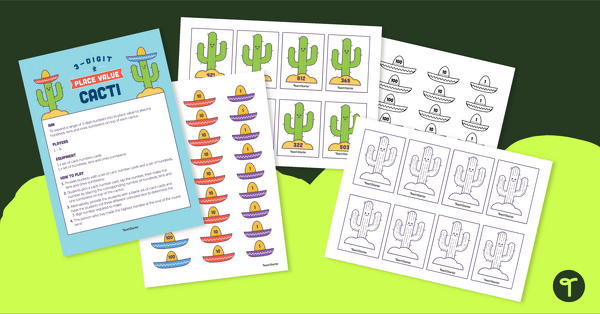
Place Value Cacti - 3-Digit Expanded Form Activity
Build 3-digit numbers in expanded form with a fun cactus-themed place value activity.
- Plus Plan
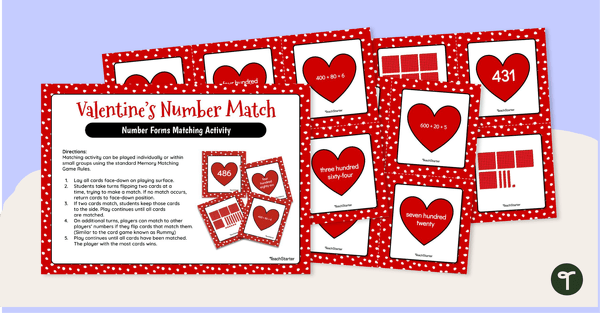
Valentine's Day - Number Form Match-Up
Identify three-digit numbers in standard form, word form, expanded form, and in MAB form with a printable Valentine’s Day Maths activity.
- Plus Plan
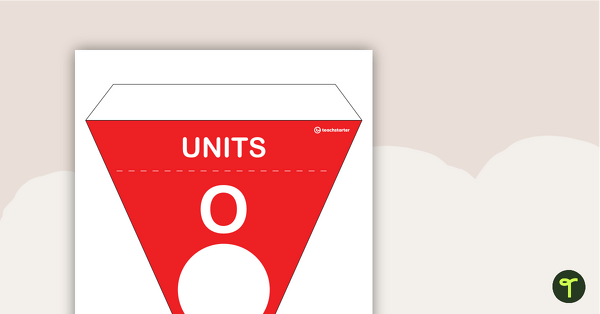
Place Value - Bunting
A display bunting which can be used to practise Place Value from units to quadrillions.
- Plus Plan
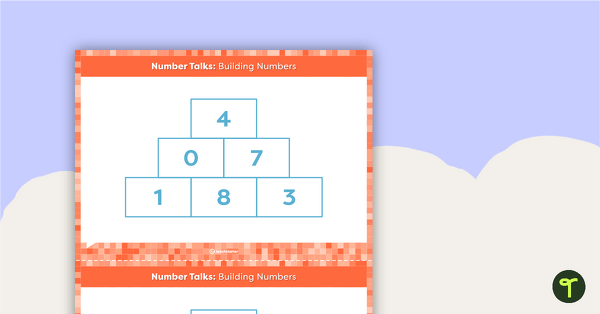
Number Talks - Building Numbers Task Cards
Build number sense skills with this set of 24 task cards.
- Plus Plan
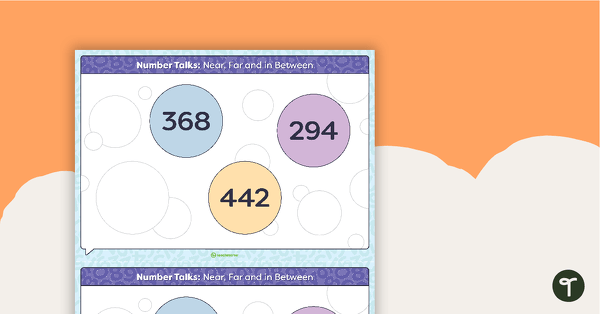
Number Talks - Near, Far, and in Between Task Cards
Build number sense skills with this set of 24 task cards.
- Plus Plan
Interactive MAB Blocks Lab
Explore an interactive MAB block manipulator tool made for your primary classroom! Teach place value, help students visualise problems and more!