Join the dots and numbers to make a picture.
Students are required to follow the numbers carefully to connect the dots and reveal a picture.
An answer sheet is provided.
Updated: 08 Mar 2026
Join the dots and numbers to make a picture.
Non-Editable: PDF
Pages: 24 Pages
Years: 1 - 4
Develop confidence with number sequences to and from 100 by ones from any starting point. Skip count by twos, fives and tens starting from zero
Recognise, represent and order numbers to at least 120 using physical and virtual materials, numerals, number lines and charts
Recognise, continue and create pattern sequences, with numbers, symbols, shapes and objects, formed by skip counting, initially by twos, fives and tens
Recognise, represent and order numbers to at least 120 using physical and virtual materials, numerals, number lines and charts
Recognise, continue and create pattern sequences, with numbers, symbols, shapes and objects including Australian coins, formed by skip counting, initially by twos, fives and tens
Applies an understanding of place value and the role of zero to read, write and order two- and three-digit numbers
Reasons about representations of whole numbers to 1000, partitioning numbers to use and record quantity values
Uses the structure of equal groups to solve multiplication problems, and shares or groups to solve division problems
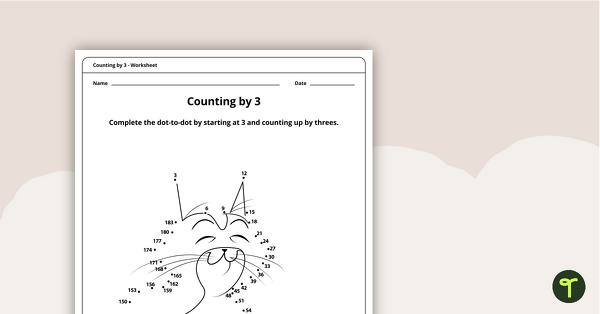
Join the dots and numbers to make a picture.
Students are required to follow the numbers carefully to connect the dots and reveal a picture.
An answer sheet is provided.
Develop confidence with number sequences to and from 100 by ones from any starting point. Skip count by twos, fives and tens starting from zero
Recognise, represent and order numbers to at least 120 using physical and virtual materials, numerals, number lines and charts
Recognise, continue and create pattern sequences, with numbers, symbols, shapes and objects, formed by skip counting, initially by twos, fives and tens
Recognise, represent and order numbers to at least 120 using physical and virtual materials, numerals, number lines and charts
Recognise, continue and create pattern sequences, with numbers, symbols, shapes and objects including Australian coins, formed by skip counting, initially by twos, fives and tens
Applies an understanding of place value and the role of zero to read, write and order two- and three-digit numbers
Reasons about representations of whole numbers to 1000, partitioning numbers to use and record quantity values
Uses the structure of equal groups to solve multiplication problems, and shares or groups to solve division problems

We create premium quality, downloadable teaching resources for primary/elementary school teachers that make classrooms buzz!
Would you like something changed or customised on this resource? While our team makes every effort to complete change suggestions, we can't guarantee that every change will be completed.
Did you spot an error on this resource? Please let us know and we will fix it shortly.
Are you having trouble downloading or viewing this resource? Please try the following steps:
If you are still having difficulty, please visit the Teach Starter Help Desk or contact us .
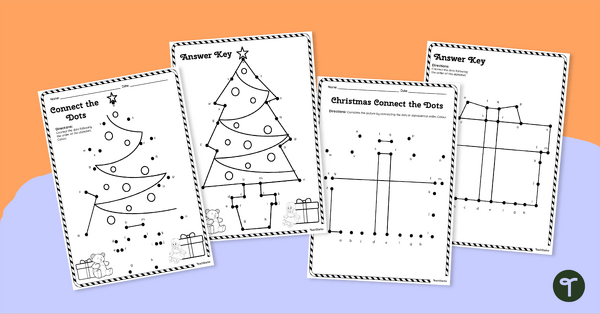
Practise ordering the alphabet by connecting the dots on these Christmas connect the dots worksheets.
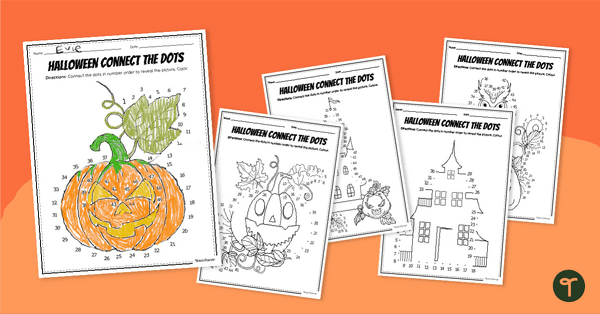
Practise counting up to 50 with a set of fun Halloween Connect the Dots worksheets.
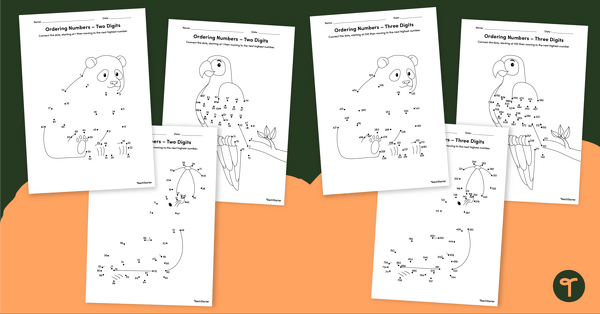
Share these dot-to-dot number ordering worksheet sets with your students to give them an engaging way to practise ordering two and three-digit numbers.
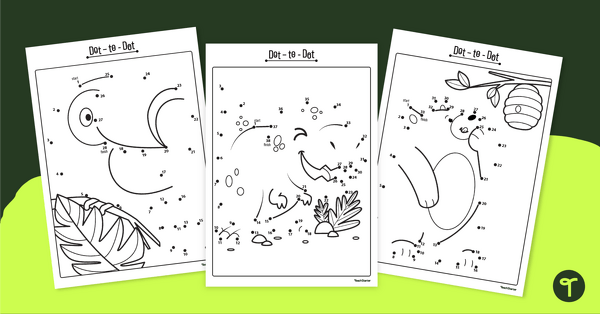
Use this set of 3 dot-to-dot worksheets to get your youngest students practising how to count by ones.
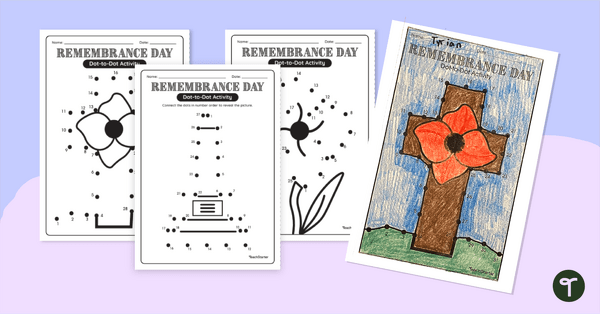
Practice counting up to 50 and create beautiful Remembrance art using a set of printable Remembrance Day Connect the Dots Printables.
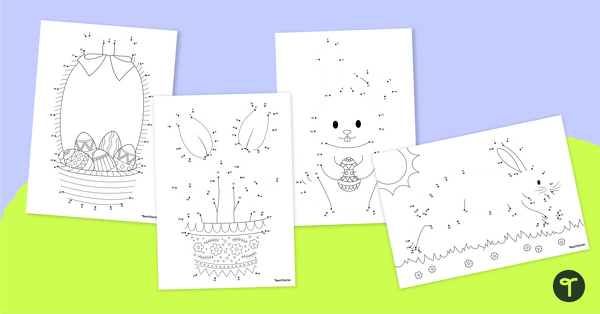
Practise counting in 1s, 2s, 5s and 10s with these Easter-themed dot-to-dot worksheets.
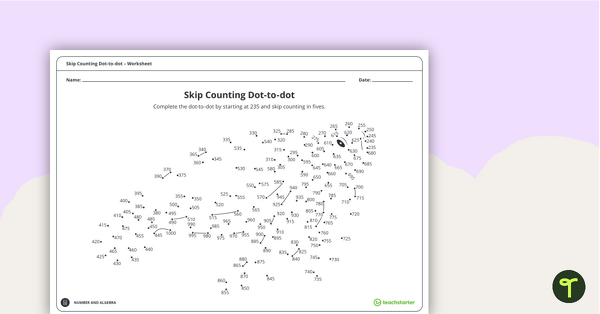
A complex dot-to-dot where students demonstrate skip counting by fives.
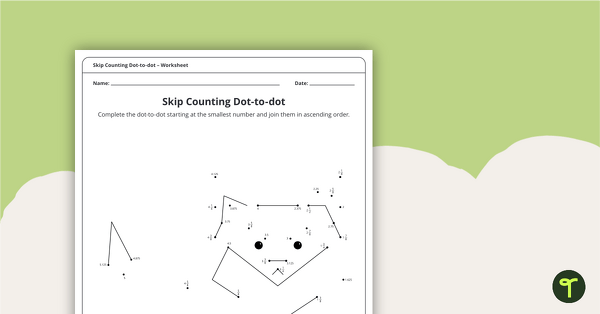
Challenge year 6 students with a complex dot-to-dot where students demonstrate understanding of fractions and decimals.
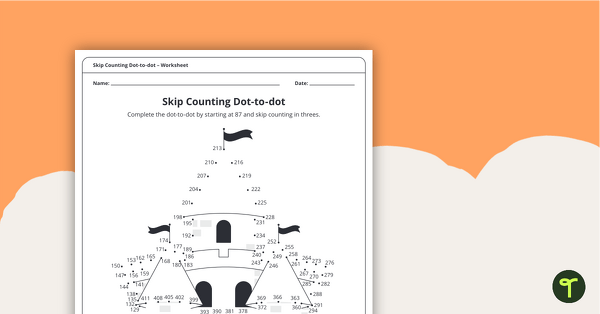
A complex dot-to-dot where students demonstrate skip counting by threes.
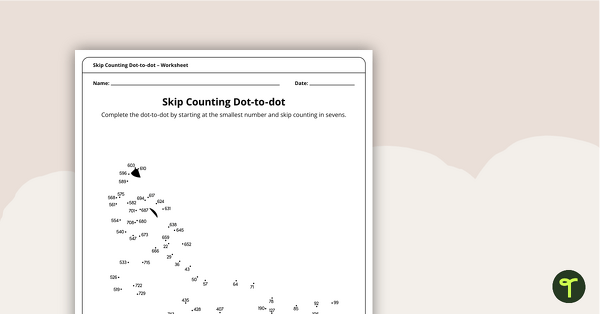
A complex dot-to-dot where students demonstrate skip counting by sevens.
0 Comments
Write a review to help other teachers and parents like yourself. If you'd like to request a change to this resource, or report an error, select the corresponding tab above.