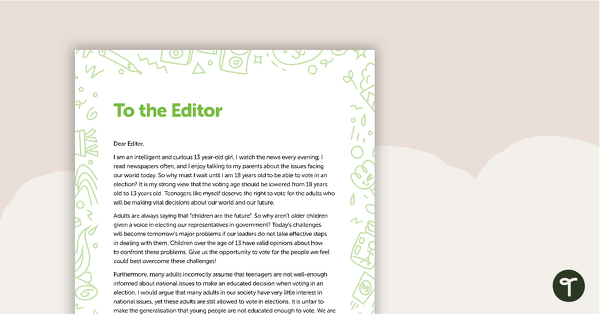
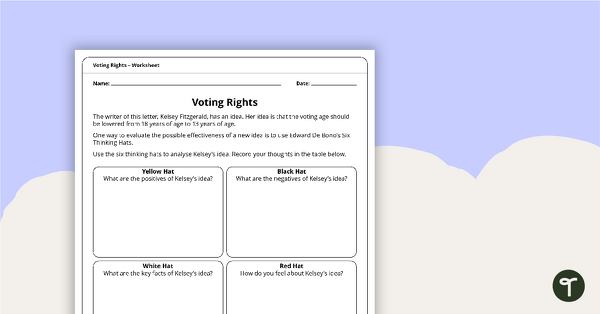
A comprehension worksheet for a letter to the editor from the Year 6 magazine (Issue 3).
This teaching resource is a comprehension worksheet for the magazine article, ‘Letter to the Editor’ from the Year 6 magazine, ‘What’s Buzzing?’ (Issue 3).
Updated: 14 Jun 2023
A comprehension worksheet for a letter to the editor from the Year 6 magazine (Issue 3).
Non-Editable: PDF
Years: 5 - 6
Use comprehension strategies, such as visualising, predicting, connecting, summarising, monitoring and questioning, to evaluate information and ideas to build literal and inferred meanings
Use comprehension strategies, such as visualising, predicting, connecting, summarising, monitoring and questioning, and connect and compare ideas from a variety of sources to build literal and inferred meanings
Fluently reads and comprehends texts for wide purposes, analysing text structures and language, and by monitoring comprehension
Plans, creates and revises written texts for multiple purposes and audiences through selection of text features, sentence-level grammar, punctuation and word-level language
Analyses representations of ideas in literature through genre and theme that reflect perspective and context, argument and authority, and adapts these representations when creating texts
Use comprehension strategies to analyse information, integrating and linking ideas from a variety of print and digital sourcesElaborationsusing research skills including identifying research purpose, locating texts, gathering and organising informati...
Use comprehension strategies to interpret and analyse information and ideas, comparing content from a variety of textual sources including media and digital textsElaborationsmaking connections between the text and studentsâ own experience or oth...
Use comprehension strategies such as visualising, predicting, connecting, summarising, monitoring and questioning to build literal and inferred meaning to evaluate information and ideas
Use comprehension strategies such as visualising, predicting, connecting, summarising, monitoring and questioning to build literal and inferred meaning, and to connect and compare content from a variety of sources
A comprehension worksheet for a letter to the editor from the Year 6 magazine (Issue 3).
This teaching resource is a comprehension worksheet for the magazine article, ‘Letter to the Editor’ from the Year 6 magazine, ‘What’s Buzzing?’ (Issue 3).
Use comprehension strategies, such as visualising, predicting, connecting, summarising, monitoring and questioning, to evaluate information and ideas to build literal and inferred meanings
Use comprehension strategies, such as visualising, predicting, connecting, summarising, monitoring and questioning, and connect and compare ideas from a variety of sources to build literal and inferred meanings
Fluently reads and comprehends texts for wide purposes, analysing text structures and language, and by monitoring comprehension
Plans, creates and revises written texts for multiple purposes and audiences through selection of text features, sentence-level grammar, punctuation and word-level language
Analyses representations of ideas in literature through genre and theme that reflect perspective and context, argument and authority, and adapts these representations when creating texts
Use comprehension strategies to analyse information, integrating and linking ideas from a variety of print and digital sourcesElaborationsusing research skills including identifying research purpose, locating texts, gathering and organising informati...
Use comprehension strategies to interpret and analyse information and ideas, comparing content from a variety of textual sources including media and digital textsElaborationsmaking connections between the text and studentsâ own experience or oth...
Use comprehension strategies such as visualising, predicting, connecting, summarising, monitoring and questioning to build literal and inferred meaning to evaluate information and ideas
Use comprehension strategies such as visualising, predicting, connecting, summarising, monitoring and questioning to build literal and inferred meaning, and to connect and compare content from a variety of sources

We create premium quality, downloadable teaching resources for primary/elementary school teachers that make classrooms buzz!
Write a review to help other teachers and parents like yourself. If you'd like to request a change to this resource, or report an error, select the corresponding tab above.
Would you like something changed or customised on this resource? While our team makes every effort to complete change suggestions, we can't guarantee that every change will be completed.
Did you spot an error on this resource? Please let us know and we will fix it shortly.
Are you having trouble downloading or viewing this resource? Please try the following steps:
If you are still having difficulty, please visit the Teach Starter Help Desk or contact us .
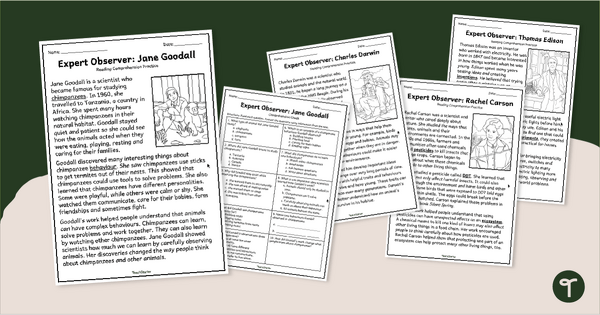
Boost reading skills and introduce your students to a world of expert observers with a set of printable Expert Observers Reading Comprehension Worksheets.
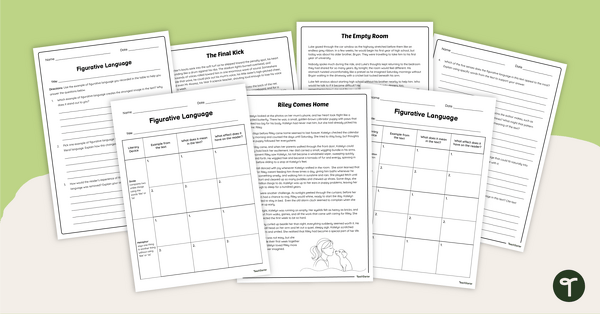
Explore figurative language in literature with engaging reading passages and targeted worksheets that help students identify, analyse and explain how authors use figurative devices to create meaning and impact.
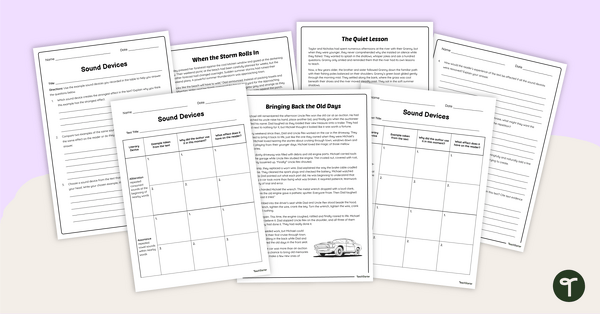
Teach sound devices in literature with three engaging passages and accompanying worksheets that help students identify, analyse and explain the effect of key sound devices in meaningful reading contexts.
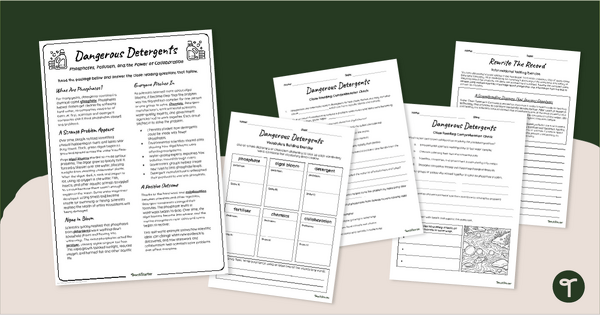
Explore the importance of collaboration between scientists and the effects of phosphates on the environment with our printable ‘Dangerous Detergents’ Reading Comprehension Worksheet Pack.
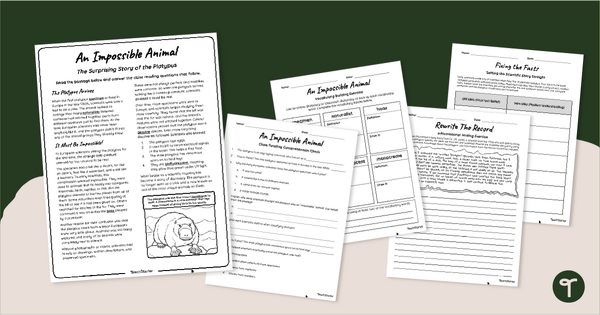
Explore how scientific study and collaboration allowed for understanding more about an animal species using our ‘An Impossible Animal’ Platypus Reading Comprehension Worksheets.
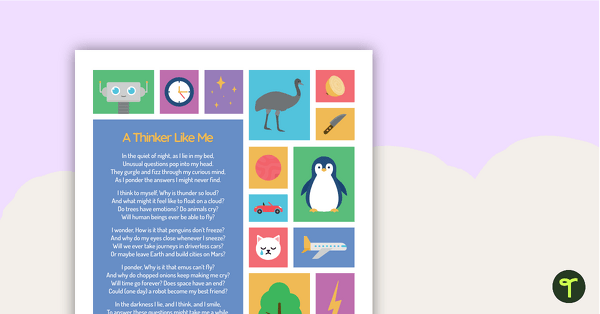
Strengthen poetry analysis skills with this set of engaging poems for upper primary students, accompanied by analysis worksheets exploring purpose, audience, structure, sound devices and figurative language.
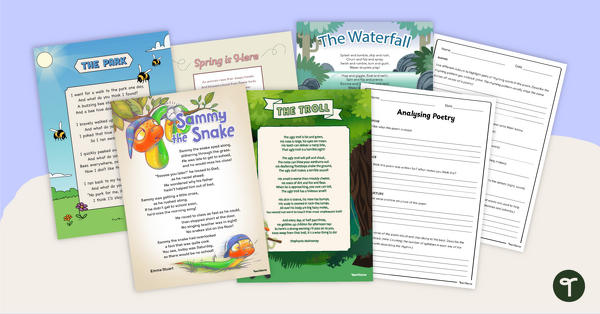
Teach poetry analysis skills with this set of engaging children’s poems, accompanied by an analysis worksheet exploring purpose, audience, structure, sound and imagery.
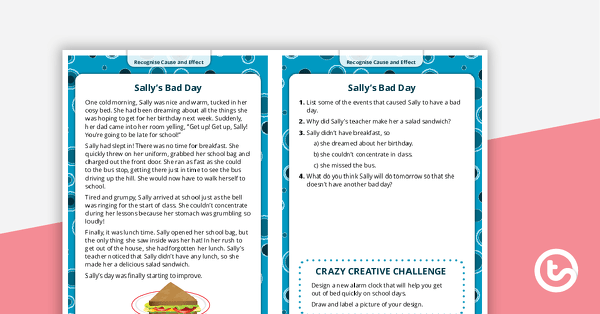
Use these cause and effect task cards to help your students identify relationships between events, understand why things happen, and improve overall reading comprehension.
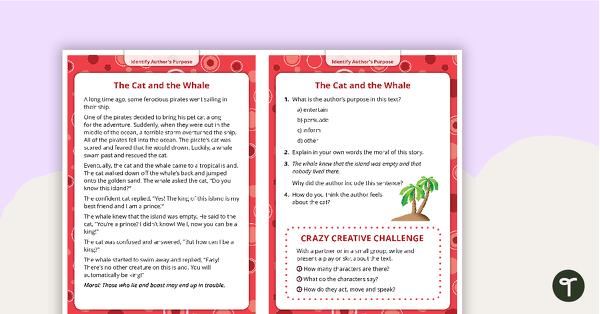
Download these identifying author’s purpose task cards to help students identify and understand why authors write various types of texts.
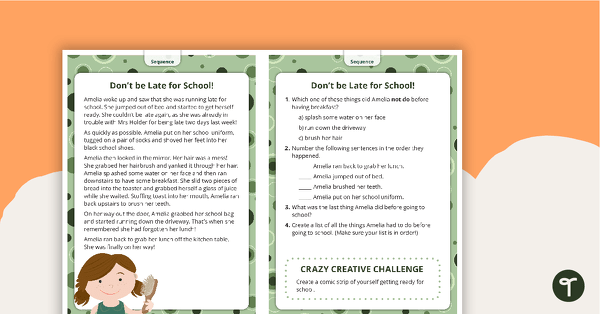
Use these sequencing reading comprehension task cards to help your students identify, organise and retell events in the correct order when reading various texts.
It would be really useful to have documents like this in a word doc format for remote learning
Thanks!
Hi Meghan, if you'd like to click on the changes & updates tab above the comments section, you can request a Word version of this resource.