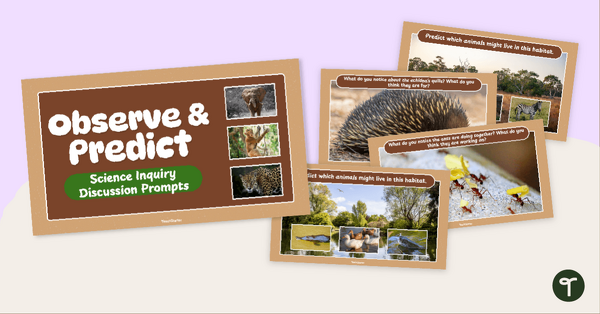
Practise making observations and scientific predictions about the natural world with engaging Science Inquiry Discussion Prompts.
Encourage Scientific Thinking With Science Inquiry Discussion Prompts
Build curiosity and confidence in young scientists with this engaging digital teaching slideshow designed to help early learners practise two essential science inquiry skills: making careful observations and forming thoughtful predictions.
Using real-world images from the natural world, this slideshow provides ready-to-use discussion prompts that support rich classroom conversations, oral language development, and early scientific thinking.
Observe and Make Predictions About Animals & Nature
This slideshow features a variety of high-interest animal and habitat photographs. Each slide encourages students to:
- Observe the details in the picture
- Make predictions about animal habitats, features, and behaviours
- Predict the habitats animals may live in and explain their thinking
- Share ideas and reasoning with classmates using sentence starters
Students might predict where an animal lives, how it behaves, or what it may eat. These discussions help strengthen vocabulary, listening skills, and scientific thinking, all without requiring writing.
Download Your Science Inquiry Discussion Slides
This resource is available as an easy-to-use digital slideshow that you can project on your interactive whiteboard or display screen. Simply download, open the file, and begin prompting thoughtful science conversations.
This resource is available in both PowerPoint and editable Google Slides format. To get your copy, click the dropdown arrow on the download button and choose your preferred file type.
This resource was created by Lindsey Phillips, a teacher and Teach Starter Collaborator.
More Science Inquiry Resources for Early Learners
teaching resource
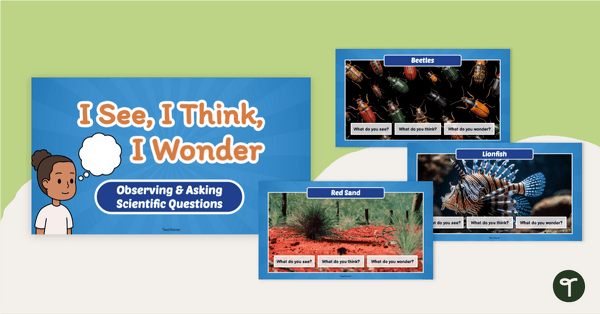
I See, I Think, I Wonder - Science Inquiry PowerPoint
Teach students to ask scientific questions, make observations, and inspire discussions with an engaging ‘I See, I Think, I Wonder’ Science Inquiry Slide Deck.




0 Comments
Write a review to help other teachers and parents like yourself. If you'd like to request a change to this resource, or report an error, select the corresponding tab above.