Telling the Time Teaching Resources
Browse telling the time worksheets, clock games and templates and more teacher-created resources to help your students learn how to read digital and analogue clocks.
Aligned with Australian maths curriculum standards, this collection is stocked with everything you need to build lesson plans that engage your students and make it fun to learn all about how we tell time. Each resource has undergone careful review by a member of our teacher team to ensure it's ready for your classroom and your students!
New to teaching students how to tell time or just looking for some fresh ideas? Read on for a primer from our teacher team, including a look at whether or not kids should learn to read analogue clocks and some of our teacher team's favourite activities and tips for teaching kids to tell what time it is.
What Is 'Telling Time?' A Kid-Friendly Definition
Your students have likely heard people talk about time countless ... well ... times in their young lives. Still, it can be helpful to kick off your time-telling unit with an explanation of what it actually means to tell time.
Here's one from our teacher team that's just for kids:
Telling time is understanding what the clock is showing us so that we know what time it is.

Teaching Time With Analogue Clocks vs. Digital Clocks — Which Is Better?
Maybe you have an analogue clock in your classroom ... then again, your students may have never even seen an analog clock! So, do you really need to teach students how to read one?
The answer is yes!
Kids should certainly learn how to tell digital time. But even as cellphone clocks and digital watches have become ubiquitous, knowing how to read an 'old-fashioned' analogue clock remains an important skill and a standard in the Australian curriculum!
Benefits of Reading Analogue Clocks
There are myriad benefits to this, and not just because it ensures kids will be able to tell time if they're in a situation where the only clock available sports hour and minute hands.
- Counting by 5s — as you do when reading an analogue clock — is a skill that will help students when they begin to learn multiplication.
- Analogue clocks reinforce the concept of a difference between two numbers.
- Traditional clocks help our students grapple with the concept of elapsed time as they provide a visual representation.
5 Parts of an Analog Clock to Teach Your Students
Teaching students how to read a clock typically begins by teaching kids about the different parts of a clock — from the face to the various hands. Here are the four main parts of an analog clock or watch:
1. Clock Face
The 'face' of a clock is the area that is marked with numbers and sometimes marked with small lines to represent the minutes.
2. Numbers
Most clocks and watches are marked with numbers that represent the hours. The space between them is divided into minutes.
3. Hour Hand
Most clocks have at least two 'hands' on the face. The hour hand is the shortest and thickest hand, and it points to the hour.
4. Minute Hand
The minute hand on most clocks or watches is the part that points to the minutes. It is longer than the hour hand, and it is thicker than the second hand.
5. Second Hand
Some — but not all — clocks and watches featured a thin third hand. Just as the name implies, the second hand is the hand that points to the seconds.
How to Teach Kids to Tell the Time — Activity Ideas for Your Classroom
Looking for more tips on teaching kids to tell time? Our teacher team has stocked this collection with plenty of resources to help kids learn the difference between a minute and an hour, how to use a.m. and p.m. and more, but we didn't stop there!
Here are a few favourite activities and tips that you might want to try in your classroom!
- Build telling time into your classroom routines. For example, you might say, 'We have 20 minutes to do this. What time will it be when we're done?' or 'We will have tea at 11:40. Where will the hands of the clock be?"
- Give your students plenty of practise with writing the time by making it part of your daily maths warm-up.
- When you provide times for upcoming events, don't just provide the literal time but also what it would look like on the clock. For example, 'In 15 minutes, when the hour hand is on the 1 and the minute hand is on the 7, we will line up for recess.'
- Hang two clocks in your classroom to make a two-step process out of learning to tell time. One clock can display the hour hand, while the other displays the minute hand!
- Free Plan
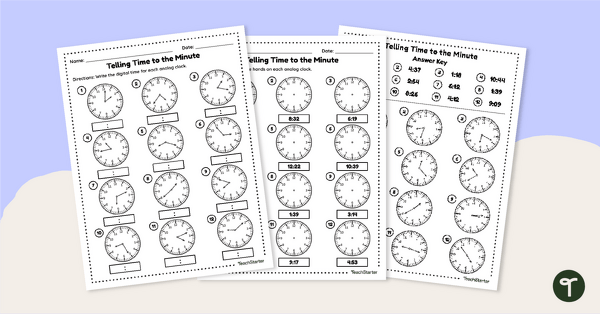
Free Telling Time to the Minute Worksheets
A worksheet for telling time to the minute and converting between analogue and digital times.
- Plus Plan
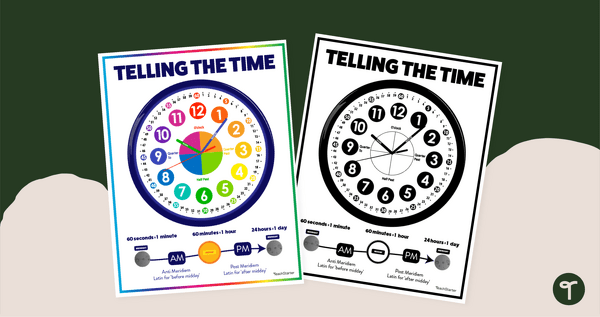
Telling the Time Poster
Help your students learn to tell the time to the hour, half-hour, quarter, and minute with a printable Telling the Time anchor chart PDF.
- Plus Plan
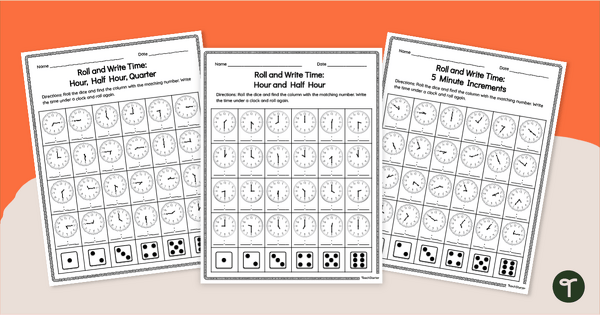
Roll and Write - Telling Time Dice Game
Have fun learning how to tell time with a Roll and Write Telling Time Dice Game!
- Plus Plan
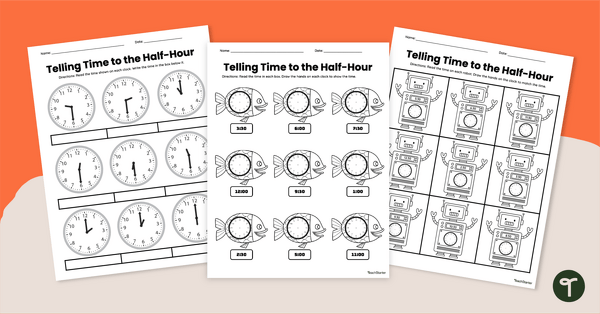
Analogue Time to the Half Hour – Worksheets
Practise telling time to the half-hour with a fun set of printable Telling Time Worksheets for Grade 1.
- Free Plan
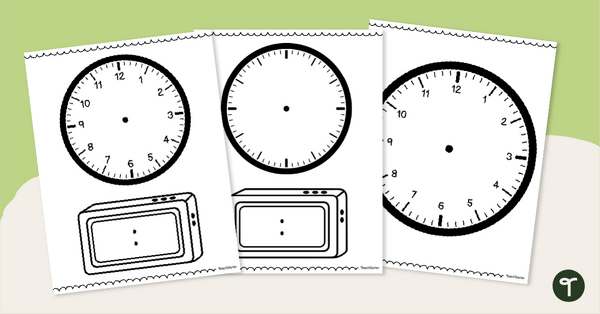
Blank Digital and Analogue Clock Templates
Practise writing the time in digital and analogue form with this set of blank clock faces.
- Plus Plan
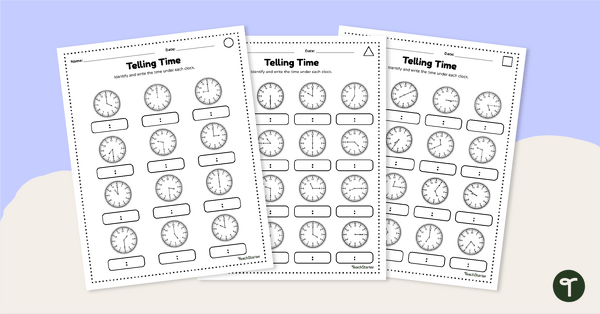
Telling Time Worksheets - Differentiated Maths
Practise using analogue clocks with this set of differentiated tell-the-time clock worksheets.
- Plus Plan
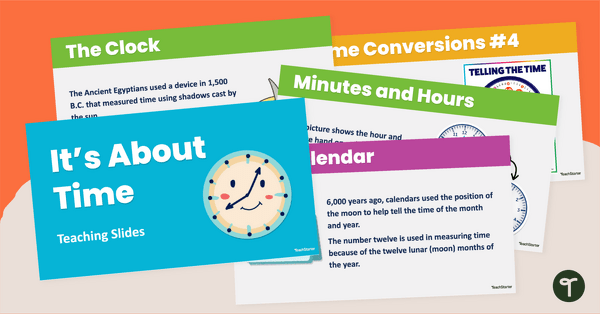
It's About Time! Introduction to Time PowerPoint
Introduce your students to the concepts and history of time and for investigate the relationship between units of time with an interactive teaching slide deck.
- Plus Plan
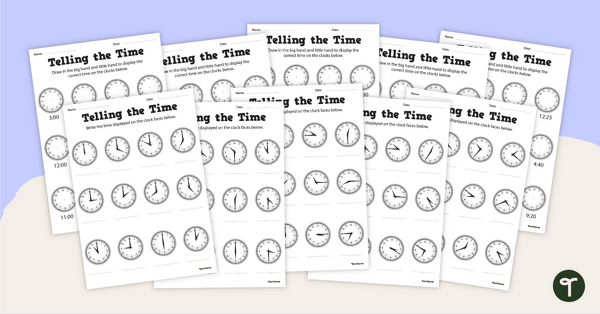
Telling Time Years 2 & 3 Worksheets
Practise telling time on a clock with a set of 5 printable telling time Year 2 & 3 worksheets.
- Plus Plan
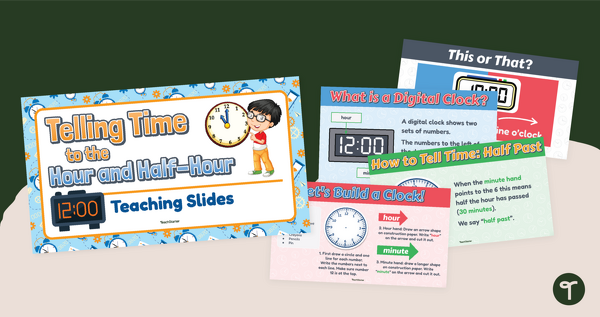
Telling Time to the Hour and Half Hour Teaching Slides
Teach how to tell time to the hour and half hour with an interactive teaching slide deck.
- Plus Plan
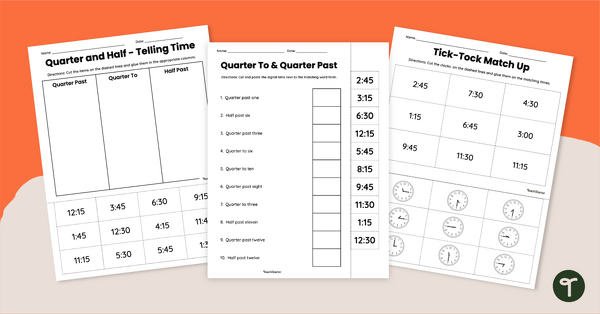
Telling the Time Worksheets- Quarter Hours
Tell and write time to the nearest quarter-hour and half-hour with printable telling time cut and paste worksheets.
- Plus Plan
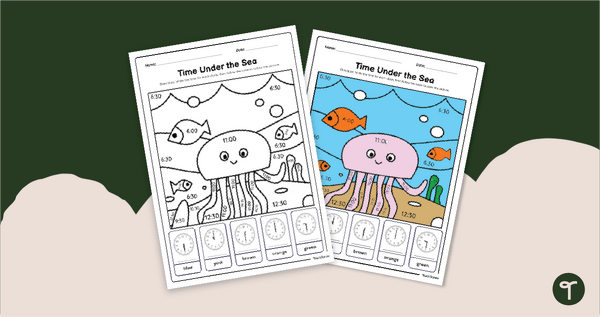
Telling Time - Year 1 Maths Colouring Sheet
Practise telling time to the hour and half hour with a fun Telling Time Colour By Code maths worksheet!
- Plus Plan
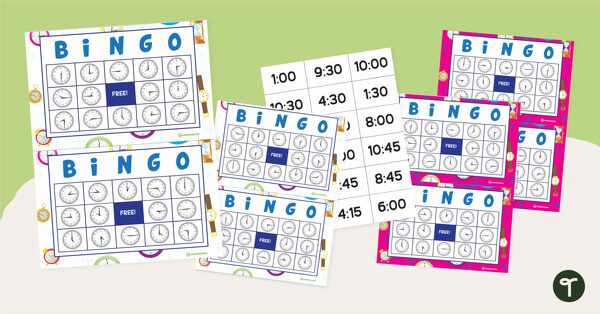
Telling the Time Bingo – Hour, Half-hour, Quarter To and Quarter Past
Play a few rounds of Telling the Time Bingo to practise telling the time to the quarter hours.
- Plus Plan
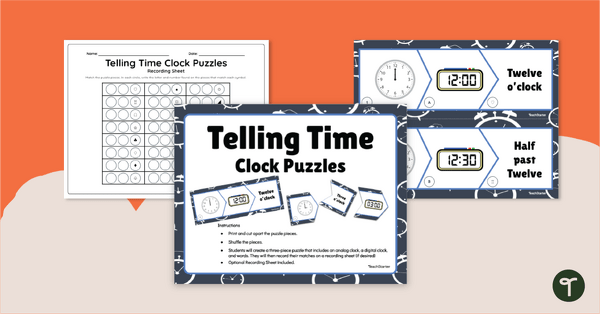
Telling Time Puzzles – Hour and Half-Hour Times
Practise reading analogue clocks, digital clocks and time in word form with a set of printable time puzzles.
- Plus Plan
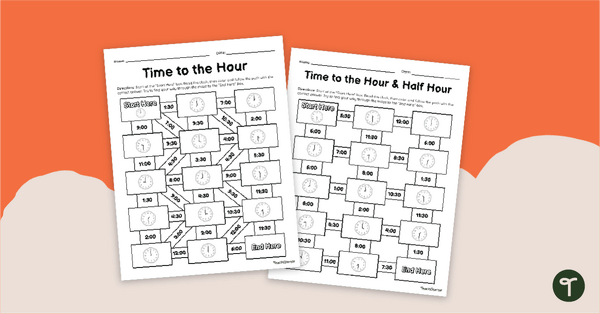
Time to the Hour and Half Hour - Maths Mazes
Engage your students with exciting telling time practise activities with a set of printable Time to the Hour and Half Hour Maths Mazes.
- Plus Plan
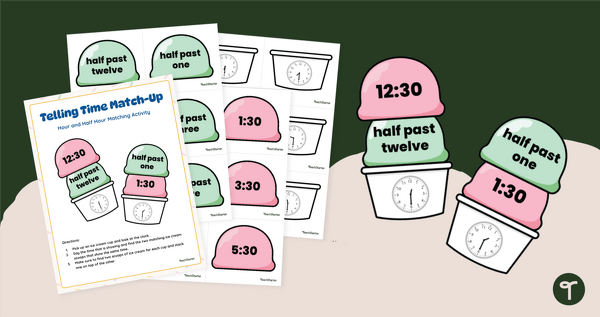
Year 2 Telling Time Game - Hour and Half Hour Ice Cream Match
Create a maths centre to practise telling time to the hour and half hour with a printable ice cream matching game.
- Plus Plan
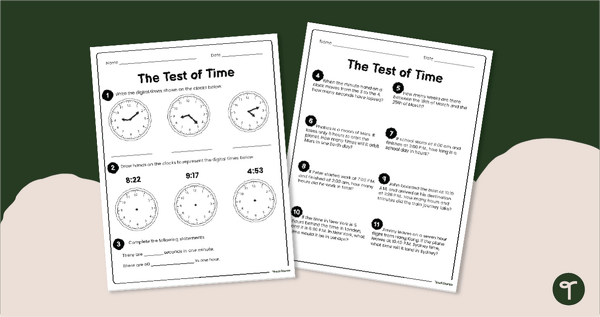
Clock Reading & Elapsed Time Quiz
Assess your students' knowledge of telling time to the minute and working with elapsed time with this 2-page Telling Time Quiz.
- Plus Plan
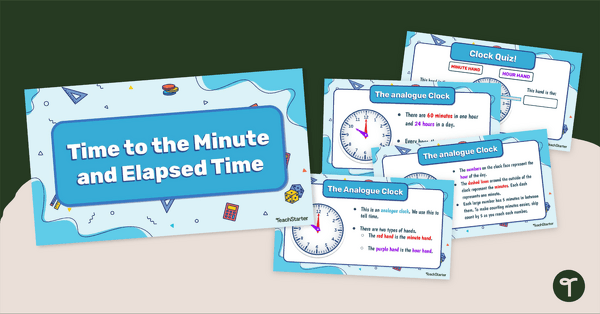
Time to the Minute and Elapsed Time – Teaching PowerPoint
Teach telling the time to the nearest minute and calculate elapsed time with this 18-slide PowerPoint for teachers.
- Plus Plan
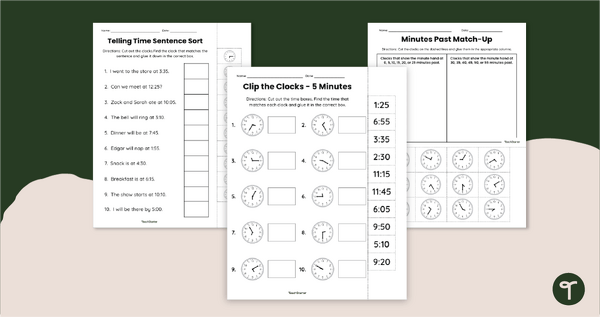
Telling Time to 5 Minutes - Activity Sheets
Tell time to the nearest five minutes with a pack of printable cut-and-paste telling time activity sheets.
- Plus Plan
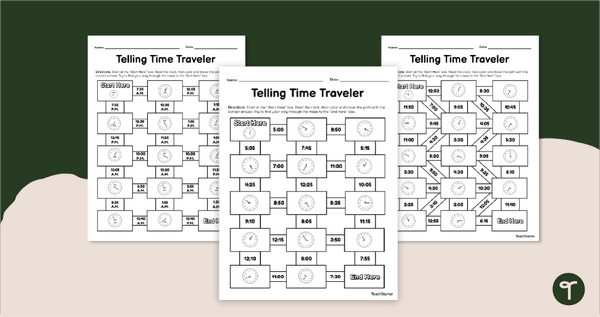
Telling Time Maths Mazes - 5 Minutes
Tell time to the nearest five-minute mark and make maths fun with a printable pack of Telling Time maths mazes.
- Plus Plan
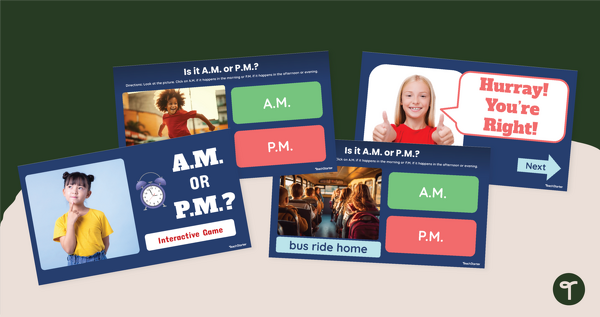
AM or PM? Year 4 Time Game
Differentiate between events that occur in A.M. and P.M. times with an interactive self-checking maths game.
- Plus Plan
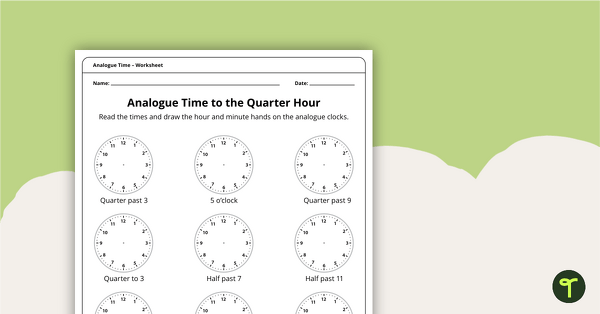
Analogue Time to the Quarter Hour
A worksheet to use when teaching analogue times in o'clock, half past and quarter past/to.
- Plus Plan
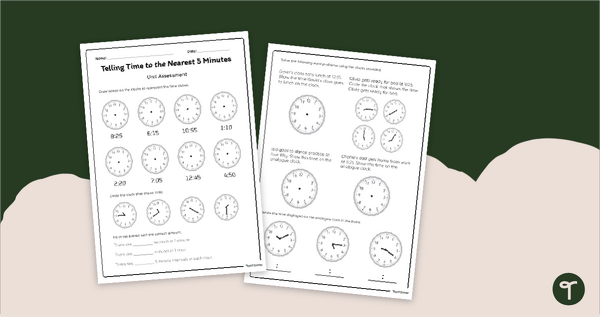
Telling Time Test - Nearest 5 Minutes
Assess your student's abilities to tell time to the nearest five minutes with a printable telling time assessment.
- Plus Plan
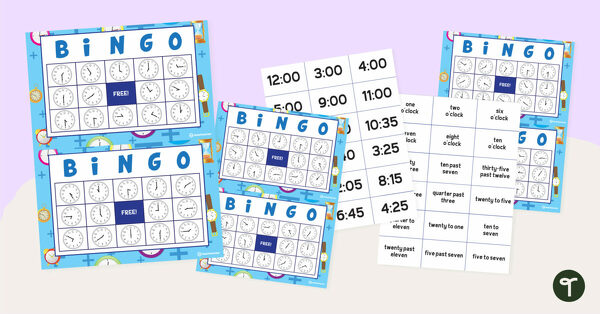
Telling the Time Bingo – Mixed Times
Thirty-two different bingo cards using analogue clocks.
- Plus Plan
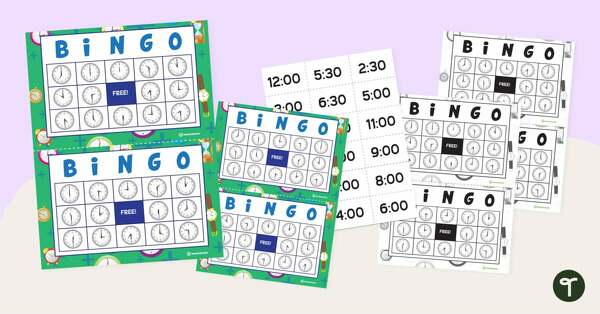
Telling the Time Bingo – Hour and Half-hour
Thirty different bingo cards using analogue clocks.
- Plus Plan
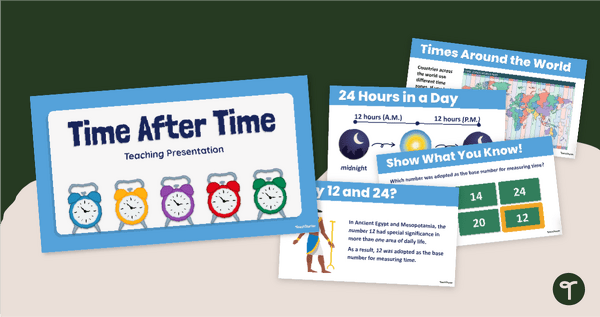
Time After Time Mathematics PowerPoint
Introduce your students to the history of the clock, time zones, and telling time with an interactive teaching presentation.
- Plus Plan
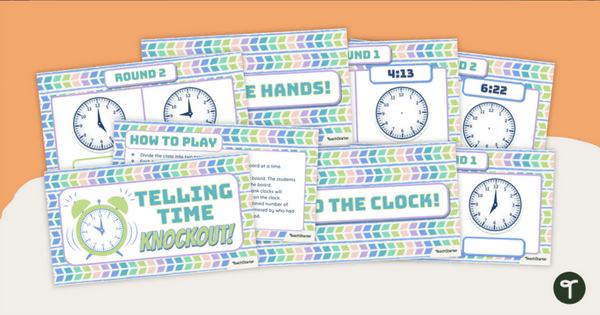
Time Knockout Game - Telling Time to The Minute Year 3
Practise telling time to the minute by reading analogue and digital clocks with this competitive whole-class telling time game.
- Plus Plan
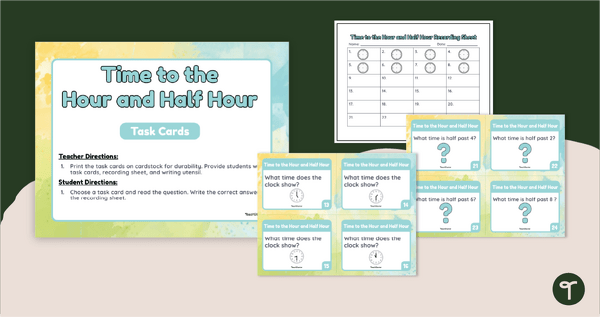
Telling Time Task Cards - Hour & Half-Hour
Practise telling time to the hour and half hour with a set of printable Telling Time Task Cards.
- Plus Plan
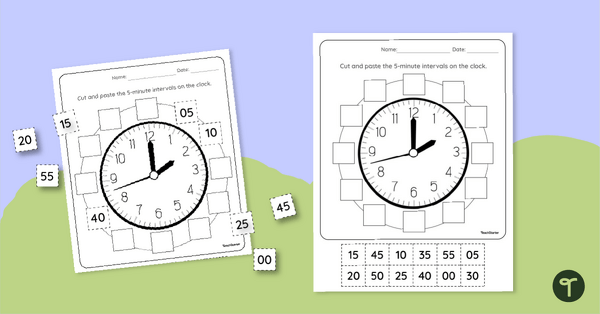
Clock Worksheet Cut and Paste– 5-Minute Intervals
Use a clock worksheet to cut, paste and build a clock with five minute increments.
- Plus Plan
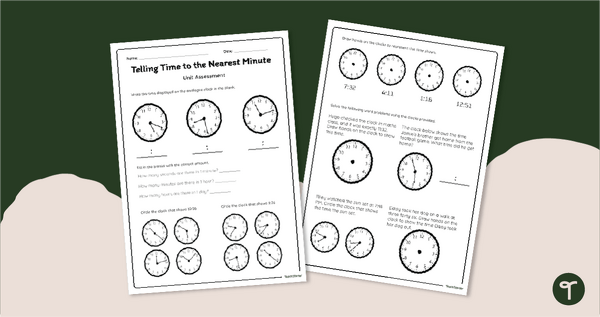
Telling Time to the Nearest Minute Test
Assess your student's abilities to tell time to the nearest minute with a Telling Time to the Minute Unit Test for Year 3.
- Plus Plan
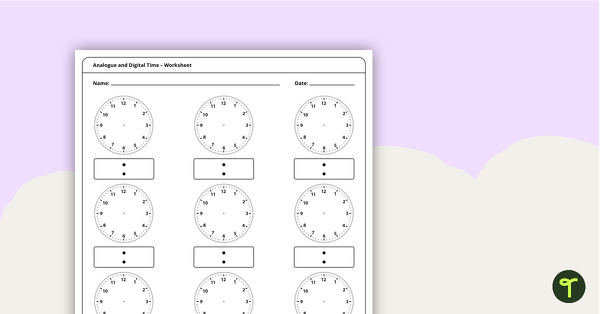
Blank Digital and Analogue Clock Worksheet
A blank analogue and digital worksheet to use when teaching students about time.
- Plus Plan
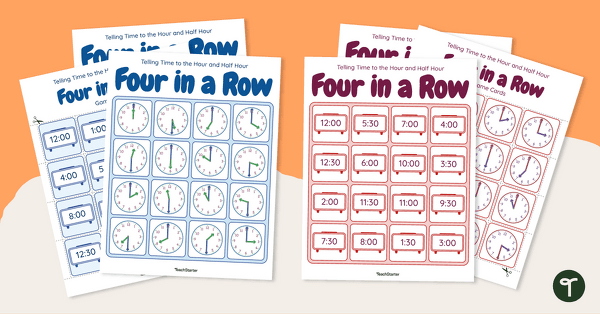
Four in a Row - Tell the Time Clock Game -Hour and Half Hour
Play a Four in a Row Telling Time Game to demonstrate the ability to tell time to the nearest hour and half hour.
- Plus Plan
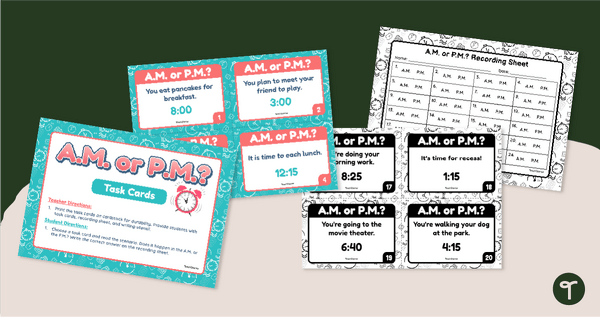
Task Cards - A.M. and P.M. Time
Help your students tell A.M. times from P.M. times with a set of 24 A.M./P.M. task cards.